Ecclesiastes 2
LXX2012: Septuagint in British/International English 2012 · Tap a verse to see its cross-references.
The Futility of Pleasure
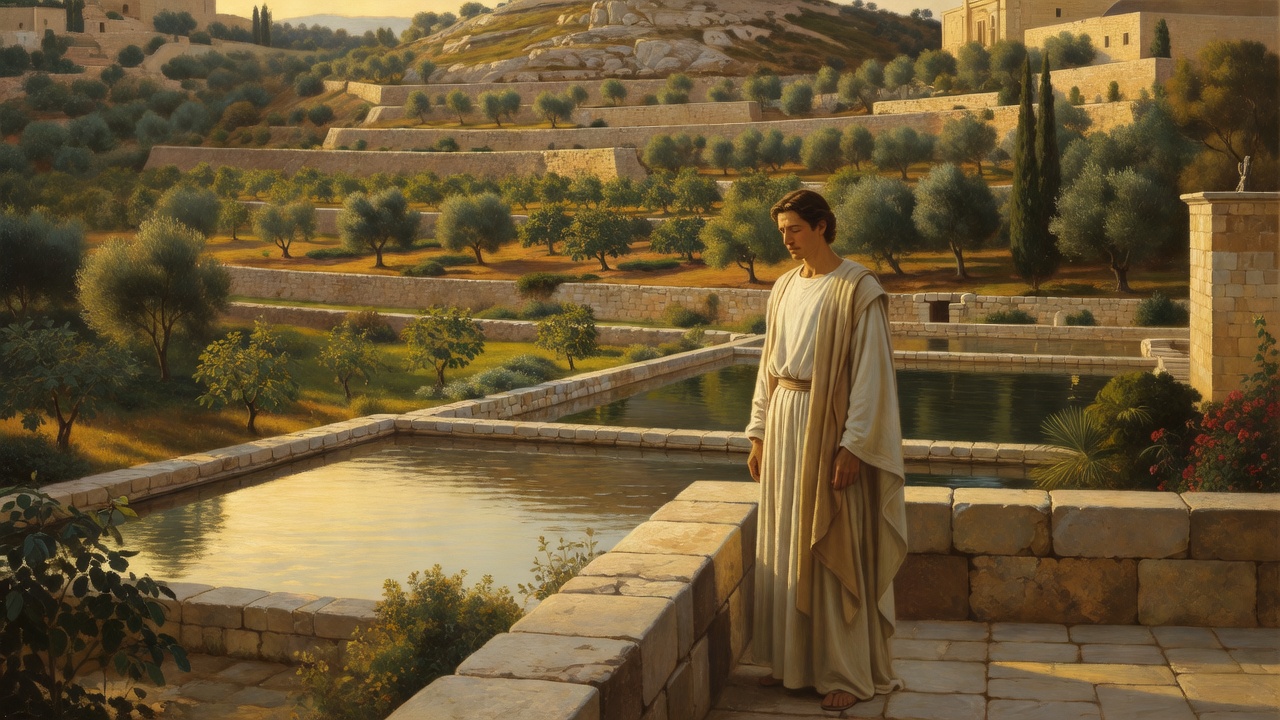
1I said in my heart, Come now, I will prove you with mirth, and behold you good: and, behold, this is also vanity. 2I said to laughter, Madness: and to mirth, Why do you this: 3And I examined whether my heart would excite my flesh as with wine, (though my heart guided me in wisdom,) and I desired to lay hold of mirth, until I should see of what kind is the good to the sons of men, which they should do under the sun all the days of their life. 4I enlarged my work; I built me houses; I planted me vineyards. 5I made me gardens and orchards, and planted in them every kind of fruit tree. 6I made me pools of water, to water from them the timber-bearing wood. 7I got servants and maidens, and servants were born to me in the house: also I had abundant possession of flocks and herds, beyond all who were before me in Jerusalem. 8Moreover I collected for myself both silver and gold also, and the peculiar treasures of kings and provinces: I procured me singing men and singing women, and delights of the sons of men, a butler and female cupbearers. 9So I became great, and advanced beyond all that were before in Jerusalem: also my wisdom was established to me. 10And whatever my eyes desired, I withheld not from them, I withheld not my heart from all my mirth: for my heart rejoiced in all my labour; and this was my portion of all my labour. 11And I looked on all my works which my hands had wrought, and on my labour which I laboured to perform: and behold, all was vanity and waywardness of spirit, and there is no advantage under the sun.
The Wise and the Foolish
12Then I looked on to see wisdom, and madness, and folly: for who is the man who will follow after counsel, in all things where in he employs it? 13And I saw that wisdom excels folly, as much as light excels darkness. 14The wise man's eyes are in his head; but the fool walks in darkness: and I perceived, even I, that one event shall happen to them all. 15And I said in my heart, As the event of the fool is, so shall it be to me, even to me: and to what purpose have I gained wisdom? I said moreover in my heart, This is also vanity, because the fool speaks of his abundance. 16For there is no remembrance of the wise man with the fool for ever; forasmuch as now in the coming days all things are forgotten: and how shall the wise man die with the fool? 17So I hated life; because the work that was wrought under the sun was evil before me: for all is vanity and waywardness of spirit.
The Futility of Work
18And I hated the whole of my labour which I took under the sun; because I must leave it to the man who will come after me. 19And who knows whether he will be a wise man or a fool? and whether he will have power over all my labour in which I laboured, and wherein I grew wise under the sun? this is also vanity. 20so I went about to dismiss from my heart all my labour wherein I had laboured under the sun. 21For there is such a man that his labour is in wisdom, and in knowledge, and in fortitude; yet this man shall give his portion to one who has not laboured therein. This is also vanity and great evil. 22For it happens to a man in all his labour, and in the purpose of his heart wherein he labours under the sun. 23For all his days are days of sorrows, and vexation of spirit is his; in the night also his heart rests not. This is also vanity. 24A man has nothing really good to eat, and to drink, and to show his soul as good in his trouble. This also I saw, that it is from the hand of God. 25For who shall eat, or who shall drink, without him? 26For God has given to the man who is good in his sight, wisdom, and knowledge, and joy: but he has given to the sinner trouble, to add and to heap up, that he may give to him that is good before God; for this is also vanity and waywardness of spirit.
Did you know?
The Search for Pleasure and Meaning
- The speaker in Ecclesiastes tests the value of wealth by undertaking massive building projects, planting vineyards and orchards, constructing reservoirs, and accumulating gold, silver, and servants, surpassing everyone who ruled in Jerusalem before him.Sources: the Bible text itself · Jerusalem
- Although wisdom is recognized as excelling folly just as light exceeds darkness, the author observes that both the wise and the foolish ultimately face the exact same fate of death and being forgotten.Sources: the Bible text itself
- Despite despairing over the futility of leaving hard-earned labor to an unknown successor, the chapter concludes that being able to eat, drink, and find joy in daily work is a gift from the hand of God.Sources: the Bible text itself
Notes written with AI assistance from open sources (Theographic Bible Metadata, CC BY-SA 4.0; Easton’s Bible Dictionary, public domain) and reviewed before publishing.
Places in this chapter
Only places identified with high confidence are shown (90% or more according to the scholarly sources compiled by OpenBible). Period map: DARE (Digital Atlas of the Roman Empire), CC BY 4.0; modern map: © OpenStreetMap contributors; places: OpenBible.info (CC BY 4.0).
Credits and license for this translation
LXX2012: Septuagint in British/International English 2012
The Septuagint with Apocrypha, translated from Greek to English by Sir Lancelot C. L. Brenton and published in 1885, with some language updates (British/International English)
Public Domain
Language: English
Dialect (if applicable): British
Language in English: English
Translation by: Sir Lancelot Charles Lee Breton
LXX2012: Septuagint in English 2012, British/International English Edition
This is a translation of the Old Testament and Apocrypha/Deuterocanon from Hebrew to Greek to 19th Century British English, with some updates of spelling and word usage to contemporary British/International English. The original English translation was done by Sir Lancelot Charles Lee Brenton and published by Samuel Bagster & Sons, Ltd., in London in 1851. It has entered the Public Domain due to the passage of sufficient time. In the process of scanning and typing the text, the original poetry and prose formatting, as well as peripheral material like introductions and notes, have been omitted.
This edition of the Septuagint has some language updates. Brenton's word order and punctuation has been mostly retained, meaning that quotation marks are not used, and sentences within quotes may not start with capital letters, as was standard usage in 1851. Names transliterated from Greek to those transliterated from Hebrew in the common English Bibles often differ. These language updates are dedicated to the Public Domain by the author of those edits, Michael Paul Johnson. Therefore this edition may be freely copied, published, etc.
Before considering making changes to the text of this work, I recommend that you consult with God, because this is really His Book.
If you find errors in the text, please report them so that we can correct them.
Donations to help with the expenses of operating this web site and thus help others have free access to the Word of God may be made to us, but are not required. Please see http://MLJohnson.org/partner/ for more about that.
Section headings adapted from the Berean Standard Bible (public domain); they are not part of this translation’s text.
Source: http://ebible.org/eng-uk-lxx2012/ · eBible.org