Psalms 1
Translation for Translators · Tap a verse to see its cross-references.
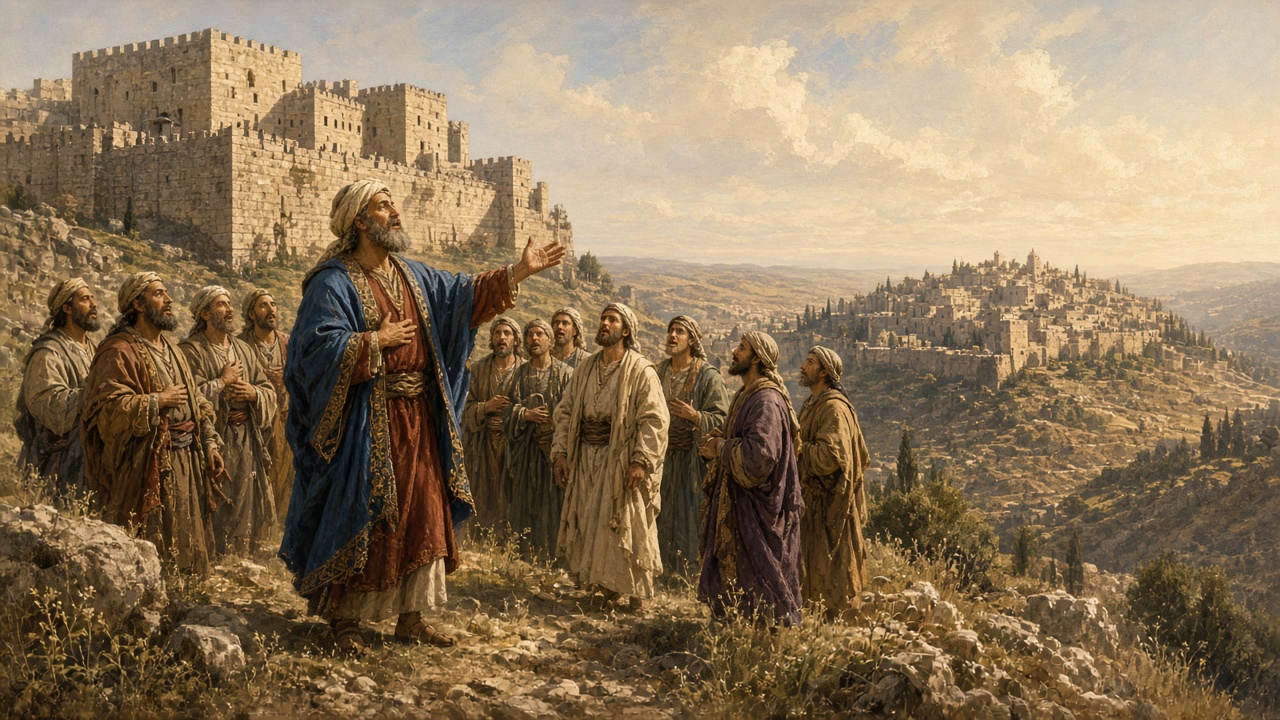
About this book
About Psalms
- Easton's Bible Dictionary (1897) presents the Psalms as the work of various authors, owed especially to David and his contemporaries, while poets of later generations added further songs. Easton remarks that, for this reason, the collection more completely reflects every phase of human emotion and circumstance than it otherwise could. The titles ascribe 73 psalms to David; Easton also notes that Peter and John (Acts 4:25) attribute the anonymous Psalm 2 to him, and that about two-thirds of the collection have been ascribed to David.Sources: Easton: Psalms
- Easton's Bible Dictionary (1897) holds that no psalm can be proved later than the time of Ezra and Nehemiah, so the collection spans about a thousand years. It records the presumption that the five smaller collections were made at times of high religious life: the first near the close of David's life, the second in the days of Solomon, the third by the singers of Jehoshaphat, the fourth by the men of Hezekiah, and the fifth in the days of Ezra.Sources: Easton: Psalms
- Like the Pentateuch, the Psalter is divided into five books, each closing with a doxology or benediction: Psalms 1-41, 42-72, 73-89, 90-106, and the remaining 44. Easton reports many ascriptions to David, to Solomon in Psalms 72 and 127, to Moses in Psalm 90, to Heman the Ezrahite in Psalm 88, and to Ethan the Ezrahite in Psalm 89, while many other psalms are anonymous.Sources: Easton: Psalms
- Some titles connect psalms with singers of worship. Psalms 50 and 73-83 are addressed to Asaph, a Levite and one of the leaders of David's choir, skilled in music and called a seer; the Asaph entry says the sons of Asaph were his descendants or, more probably, a class of poets or singers who recognized him as their master. The sons of Korah, a leading part of the Kohathite singers, were entrusted with arranging and singing Psalms 42, 44-49, 84, 85, 87, and 88, and Psalms 39, 62, and 77 are addressed to Jeduthun, to be sung after his manner or in his choir.Sources: Easton: Psalms · Asaph (Levite)
- Psalm 136 is generally called the great hallel, though the Talmud also includes Psalms 120-135. Psalms 113-118 form the hallel recited at the three great feasts, at the new moon, and on the eight days of the feast of dedication. Easton counts 116 direct quotations from the Psalter in the New Testament, and notes that in Luke 24:44 the word psalms means the Hagiographa, the holy writings, one of the sections into which the Jews divided the Old Testament.Sources: Easton: Psalms
Notes written with AI assistance from open sources (Theographic Bible Metadata, CC BY-SA 4.0; Easton’s Bible Dictionary, public domain) and reviewed before publishing.
The people God is pleased with
1God is pleased with those who do not do what [MET] wicked people advise them to do,
and who do not imitate the behavior of [MET] sinful people,
and who do not join in with people who ◄ridicule/sneer at► God.
2Those whom God is pleased with delight in doing the things that he has instructed/taught us to do.
They read and think about Yahweh’s requirements, day and night.
3They constantly produce/do things that please God
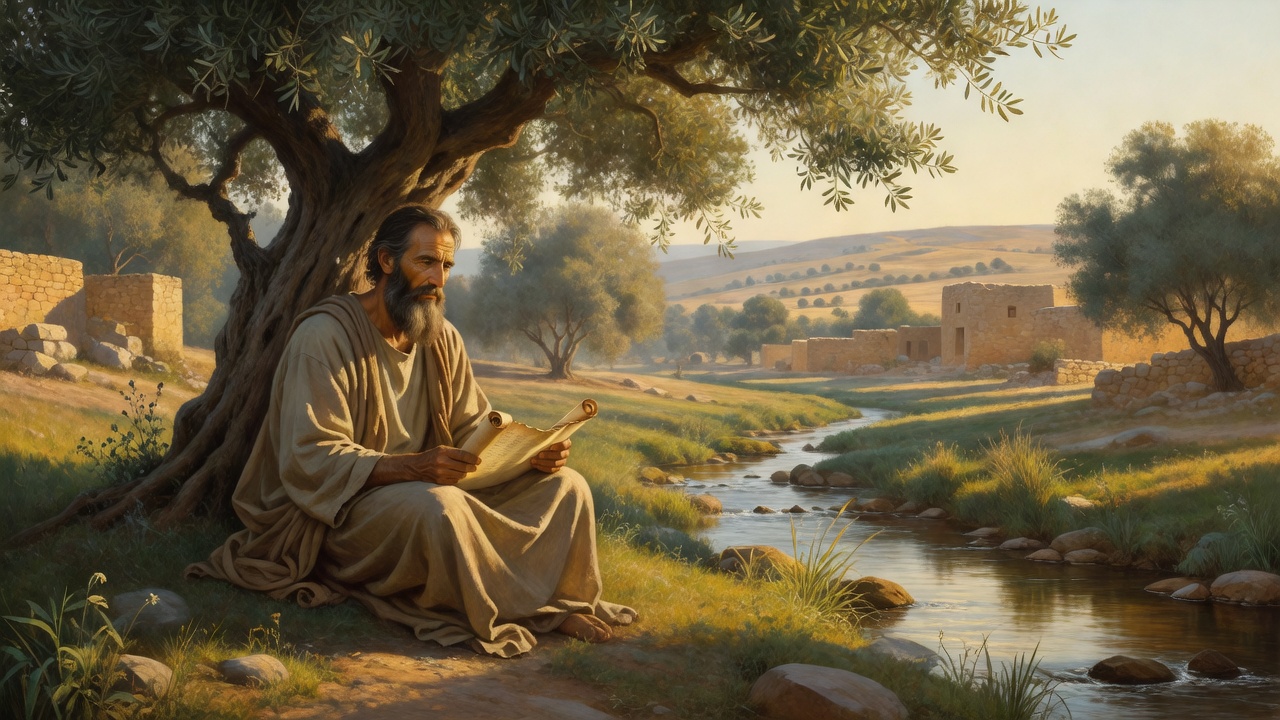
just like fruit trees that have been planted along the banks of a stream produce fruit at the right time every year.
Like trees that never wither,
they succeed in everything that they do.
4But wicked people are not like that!
Wicked people are as worthless as chaff
that is blown away by the wind.
5Therefore, wicked people ◄will not be acquitted/will be condemned► [LIT] when God judges people,
and furthermore, sinful people will not even be present when God gathers righteous people together,
6because he guides and protects righteous people,
but the path that the wicked walk on leads them to where they will be destroyed/punished by God forever.
Did you know?
The Two Paths
- Psalm 1 contrasts two ways of living through vivid agricultural imagery: the righteous person is compared to a fruitful tree nourished beside streams of water, while the wicked are likened to light chaff easily blown away by the wind.Sources: the Bible text itself
- The opening verses describe a clear progression away from evil—refusing to walk in the counsel of the wicked, stand in the path of sinners, or sit among mockers—and turning instead to constant meditation on the Law of the LORD.Sources: the Bible text itself
Notes written with AI assistance from open sources (Theographic Bible Metadata, CC BY-SA 4.0; Easton’s Bible Dictionary, public domain) and reviewed before publishing.
Credits and license for this translation
Translation for Translators
A Bible Translation for Bible Translators which makes implied information explicit in the text as an aid to the translator who may need that information to correctly translate into a particular language.
Copyright © 2008-2017 Ellis W. Deibler, Jr.
Language: English
Dialect: American
This translation is made available to you under the terms of the
Creative Commons Attribution Share-Alike license 4.0.
You have permission to share and redistribute this Bible translation in any format and to make reasonable revisions and adaptations of this translation, provided that:
You include the above copyright and source information.
If you make any changes to the text, you must indicate that you did so in a way that makes it clear that the original licensor is not necessarily endorsing your changes.
If you redistribute this text, you must distribute your contributions under the same license as the original.
Pictures included with Scriptures and other documents on this site are licensed just for use with those Scriptures and documents.
For other uses, please contact the respective copyright owners.
Note that in addition to the rules above, revising and adapting God's Word involves a great responsibility to be true to God's Word. See Revelation 22:18-19.
2026-10-02
Source: http://ebible.org/eng-t4t/ · eBible.org