Joshua 20
Translation for Translators · Tap a verse to see its cross-references.
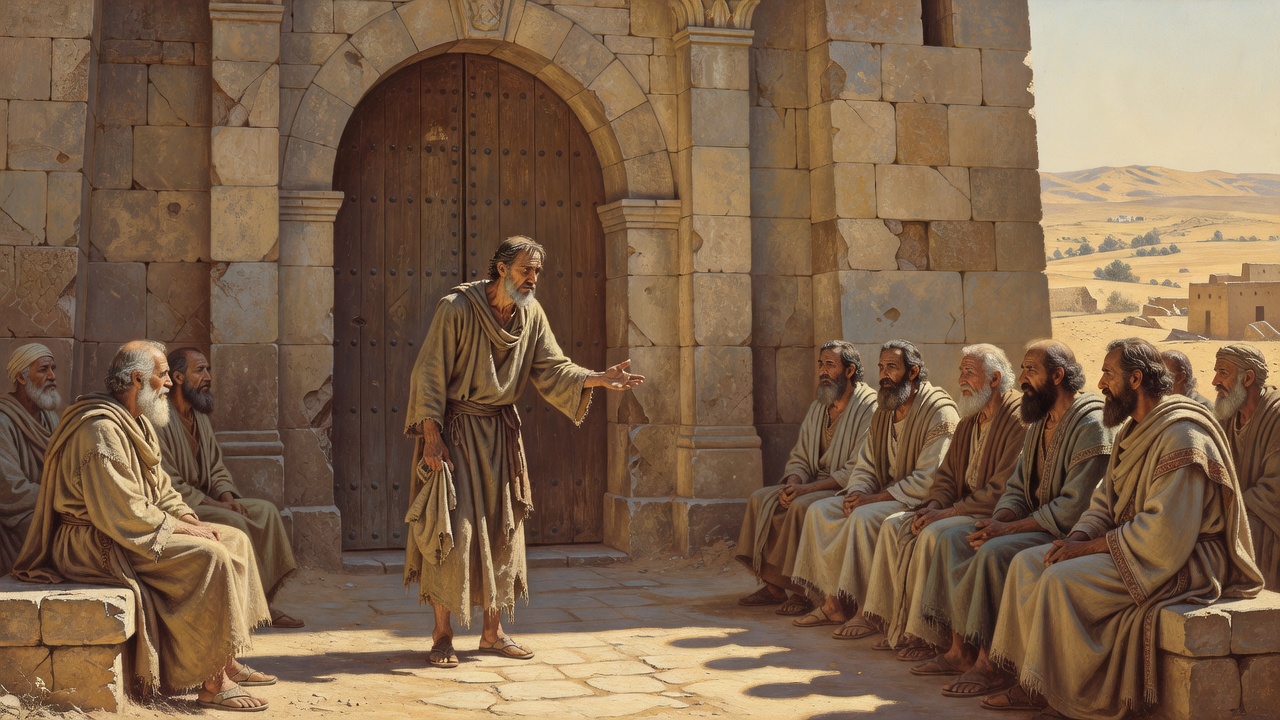
Cities of refuge
1Then Yahweh said to Joshua, 2“Tell the Israeli people that they should choose some cities to which people can run in order to be safe/protected, like I told Moses that they should do. 3If someone kills another person accidentally, not intending to kill that person, the one who killed that person may run/escape to one of these cities and be safe/protected from someone trying to get revenge for that person’s death [MTY].
4When the one who killed someone arrives at the gate of one of those cities, he must stop there and tell the leaders of the city what happened. If they believe him, they must allow him to enter the city, and they must give him a place to live among them. 5If some relative of the one who was killed comes to that city to get revenge, the leaders of that city must not allow the relative to take the killer, because what happened was accidental. He did not hate that person and as a result deliberately kill him. 6But the person who killed someone must stay in that city until the city judges put him on trial. Only if the judges decide that the person who has run/escaped to their city did not deliberately kill the other person will they allow him to stay in that city, and he must stay there until the Supreme Priest dies. Then he may safely go back to his own town, because the death of the Supreme Priest will be considered to atone/pay for the death of the person who was killed.”
7So the Israelis chose these cities to be cities to which people could run to be safe/protected: Kedesh in the Galilee district in the hilly area where the tribe of Naphtali lived; Shechem in the hilly area where the tribe of Ephraim lived; Kiriath-Arba (which is now named Hebron) in the hilly area where the tribe of Judah lived; 8Bezer, on the east side of the Jordan River near Jericho, in the flat land in the desert where the tribe of Reuben lived; Ramoth in the Gilead region in the land where the tribe of Gad lived; and Golan in the Bashan region where the tribe of Manasseh lived. 9Any Israeli or any foreigner who lived among us, anyone who killed someone ◄accidentally/without planning to do it►, was allowed to run to one of those cities, and be safe/protected from some relative of the person who died coming there and killing him to get revenge. He could stay in that city until there was a trial there to decide whether he was telling the truth or not when he said that he did not plan to kill that person.
Did you know?
The Cities of Refuge
- The cities of refuge provided sanctuary for anyone who caused an accidental death, protecting them from retaliation by the victim's avenger of blood. A fugitive had to present their case to the elders at the city gate and could remain safely inside until standing trial before the assembly and until the death of the serving high priest.Sources: the Bible text itself
- Six cities were designated across the land, divided evenly with three on each side of the Jordan River. Kedesh, Shechem, and Hebron served the hill country west of the Jordan, while Bezer, Ramoth in Gilead, and Golan in Bashan served the eastern tribes.Sources: the Bible text itself · Hebron · Shechem · Kedesh
- The legal protection provided by the cities of refuge applied equally to native Israelites and to foreigners residing among them.Sources: the Bible text itself
Notes written with AI assistance from open sources (Theographic Bible Metadata, CC BY-SA 4.0; Easton’s Bible Dictionary, public domain) and reviewed before publishing.
Places in this chapter
- Galilee · 32.760, 35.527 · verse 7
- Hebron · Today: Tel Rumeida · 31.525, 35.102 · verse 7
- Kedesh · Today: Tel Kedesh · 33.112, 35.530 · verse 7
- Shechem · Today: Tell Balatah · 32.214, 35.282 · verse 7
- Bashan · 32.781, 35.935 · verse 8
- Gilead · Today: Gilead 1 · 32.187, 35.692 · verse 8
- Jericho · Today: Tell es Sultan · 31.872, 35.445 · verse 8
- Jordan · Today: Jordan River · 31.761, 35.558 · verse 8
- Ramoth · Today: Tall er Rumeith · 32.500, 36.015 · verse 8
Only places identified with high confidence are shown (90% or more according to the scholarly sources compiled by OpenBible). Period map: DARE (Digital Atlas of the Roman Empire), CC BY 4.0; modern map: © OpenStreetMap contributors; places: OpenBible.info (CC BY 4.0).
Credits and license for this translation
Translation for Translators
A Bible Translation for Bible Translators which makes implied information explicit in the text as an aid to the translator who may need that information to correctly translate into a particular language.
Copyright © 2008-2017 Ellis W. Deibler, Jr.
Language: English
Dialect: American
This translation is made available to you under the terms of the
Creative Commons Attribution Share-Alike license 4.0.
You have permission to share and redistribute this Bible translation in any format and to make reasonable revisions and adaptations of this translation, provided that:
You include the above copyright and source information.
If you make any changes to the text, you must indicate that you did so in a way that makes it clear that the original licensor is not necessarily endorsing your changes.
If you redistribute this text, you must distribute your contributions under the same license as the original.
Pictures included with Scriptures and other documents on this site are licensed just for use with those Scriptures and documents.
For other uses, please contact the respective copyright owners.
Note that in addition to the rules above, revising and adapting God's Word involves a great responsibility to be true to God's Word. See Revelation 22:18-19.
2026-10-02
Source: http://ebible.org/eng-t4t/ · eBible.org