Deuteronomy 16
Translation for Translators · Tap a verse to see its cross-references.
The Passover Festival
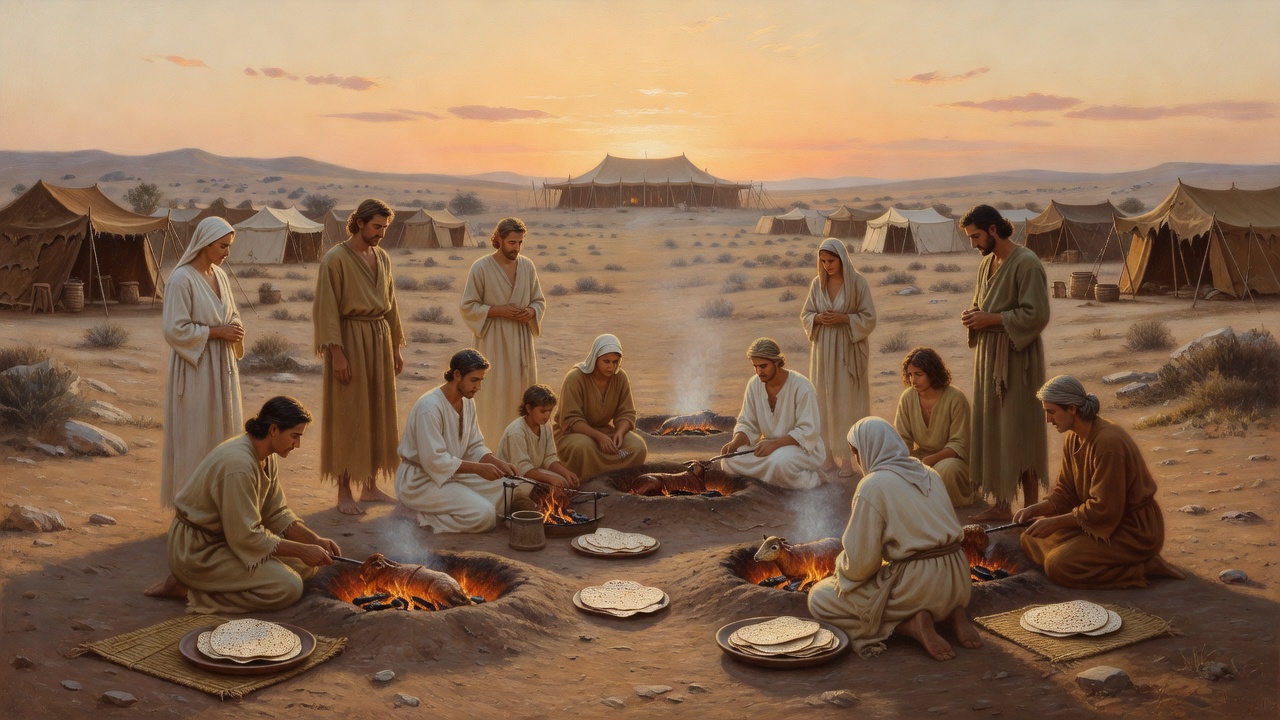
1“ Each year honor Yahweh our God by celebrating the Passover Festival in the month of Abib in early spring. It was on a night in that month that Yahweh rescued your ancestors from Egypt. 2In order to celebrate that festival, go to the place that Yahweh will choose for you to worship him, and offer there one young animal from your cattle or your sheep to be the Passover sacrifice, to honor Yahweh [MTY]. 3When you eat the Passover meal, the bread that you eat must not have yeast in it. You must eat this kind of bread, which will be called the bread of suffering/misery, for seven days. This is to help you to remember all during the time that you are alive that when your ancestors left Egypt, where they were suffering because they were slaves, they left very quickly. They did not put in yeast and wait for the dough to swell up. 4During that festival, you must not have any yeast in any house in your land for seven days. Furthermore, the meat of the animals that you sacrifice on the evening of the first day of the Passover Festival must be eaten during that night; do not allow any of it to remain until the next day.
5“To honor Yahweh our God, you must offer the Passover sacrifice only at the place that he chooses for you to worship him; do not offer that sacrifice in any other town in the land that Yahweh is giving to you. Offer that sacrifice when the sun is setting, at the same time of day that your ancestors started to leave Egypt. 7Boil the meat and eat it at the place of worship that Yahweh our God chooses. The next morning, you may return to your tents. 8Each day for six days the bread that you eat must have no yeast in it. On the seventh day, you must all gather to worship Yahweh our God. It will be a day of rest; you must not do any work on that day.”
The festival for harvesting grain
9“ Each year, from the day that you start to harvest your grain, count seven weeks. 10Then, to honor Yahweh our God, celebrate the Harvest Festival. Do that by bringing to him an offering of grain. Yahweh has blessed you by causing it to grow in your fields during that year. If you had a big harvest, bring a big offering. If you had a small harvest, bring a small offering. 11Each married couple should be joyful in the presence of Yahweh. Their children, their servants, the descendants of Levi who are in that town, and the foreigners, orphans, and widows who are living among you, should also be joyful. Bring those offerings to the place of worship that Yahweh will choose.
12“When you celebrate these festivals by obeying these commands, remember that your ancestors were previously slaves in Egypt.”
The Festival of Living in Shelters
13“ Each year, after you have threshed all your grain and pressed the juice from all your grapes, you must celebrate the Festival of Living in Temporary Shelters for seven days. 14Each married couple along with their children, their servants, the descendants of Levi who are in that town, and the foreigners, orphans, and widows who are living among you, should be joyful in the presence of Yahweh. 15Honor Yahweh our God by celebrating this festival for seven days in the place that Yahweh chooses for you to worship him. You should all be joyful, because Yahweh will have blessed your harvest and all the other work that you have done.
16“So, each year all of you Israeli men must gather with your families to worship Yahweh our God at the place that he will choose, to celebrate three festivals: The Passover Festival, the Harvest Festival, and the Festival of Living in Temporary Shelters. Each of you men must bring [LIT] an offering for Yahweh to these festivals 17in proportion to the blessings that Yahweh has given you during that year.”
Judging people fairly
18“Appoint judges and other officials throughout your tribes, in all the towns in the land that Yahweh our God is giving to you. They must judge people fairly/justly. 19They must not judge unjustly. They must not favor one person more than another. The judges must not accept bribes, because if a judge accepts a bribe, even if he is wise and honest, it will be very difficult for him to judge fairly [IDM]; he will do what the person who gave him the bribe wants him to do and declare that the righteous/innocent people must be punished. 20You must be completely fair and just [DOU], in order that you will enter and occupy the land that Yahweh our God is giving to you.”
Warning against worshiping other gods
21“When you make an altar to worship Yahweh our God, do not put next to it any wooden statue that represents the goddess Asherah. 22And do not set up any stone pillar to worship any idol, because Yahweh hates them.”
Did you know?
Appointed Feasts and Righteous Justice
- Deuteronomy mandates three annual pilgrimage festivals—the Feast of Unleavened Bread (Passover), the Feast of Weeks, and the Feast of Tabernacles. For these occasions, the men of Israel were required to travel and appear before God not in their local towns, but at the specific central location chosen as a dwelling for His Name.Sources: the Bible text itself
- The celebrations of the Feast of Weeks and the Feast of Tabernacles explicitly included vulnerable members of society, such as servants, Levites, foreigners, orphans, and widows. These communal rejoicings were tied to the memory of Israel's liberation from slavery in Egypt.Sources: the Bible text itself
- In addition to religious assemblies, the text commands the appointment of local judges and officials across every town. They were forbidden from taking bribes or showing partiality, establishing the standard to pursue justice alone throughout the land.Sources: the Bible text itself
Notes written with AI assistance from open sources (Theographic Bible Metadata, CC BY-SA 4.0; Easton’s Bible Dictionary, public domain) and reviewed before publishing.
Places in this chapter
Only places identified with high confidence are shown (90% or more according to the scholarly sources compiled by OpenBible). Period map: DARE (Digital Atlas of the Roman Empire), CC BY 4.0; modern map: © OpenStreetMap contributors; places: OpenBible.info (CC BY 4.0).
Credits and license for this translation
Translation for Translators
A Bible Translation for Bible Translators which makes implied information explicit in the text as an aid to the translator who may need that information to correctly translate into a particular language.
Copyright © 2008-2017 Ellis W. Deibler, Jr.
Language: English
Dialect: American
This translation is made available to you under the terms of the
Creative Commons Attribution Share-Alike license 4.0.
You have permission to share and redistribute this Bible translation in any format and to make reasonable revisions and adaptations of this translation, provided that:
You include the above copyright and source information.
If you make any changes to the text, you must indicate that you did so in a way that makes it clear that the original licensor is not necessarily endorsing your changes.
If you redistribute this text, you must distribute your contributions under the same license as the original.
Pictures included with Scriptures and other documents on this site are licensed just for use with those Scriptures and documents.
For other uses, please contact the respective copyright owners.
Note that in addition to the rules above, revising and adapting God's Word involves a great responsibility to be true to God's Word. See Revelation 22:18-19.
2026-10-02
Source: http://ebible.org/eng-t4t/ · eBible.org