2 Chronicles 17
Translation for Translators · Tap a verse to see its cross-references.
King Jehoshaphat’s rule in Judah
1Asa’s son Jehoshaphat became the king of Judah, and he enabled his army to become very strong, with the result that they could resist attacks from the army of Israel. 2He put soldiers in all the cities in Judah around which they had built walls, and he put soldiers in other places in Judah and in the towns in the area belonging to the tribe of Ephraim that soldiers of his father Asa had captured.
3Yahweh helped Jehoshaphat because when he started to rule Judah, he did the things that pleased Yahweh like his ancestor King David had done. He did not worship the idols of Baal. 4Instead, he sought advice from the God whom his father had worshiped, and he obeyed God’s commands, and did not do the evil things that the kings of Israel continually did. 5Yahweh enabled him to completely control his kingdom. All the people of Judah brought gifts to him, with the result that he became very rich and was greatly honored. 6He was completely devoted to doing what pleased Yahweh. His workers got rid of the shrines on the hilltops and the poles for worshiping the goddess Asherah throughout Judah.
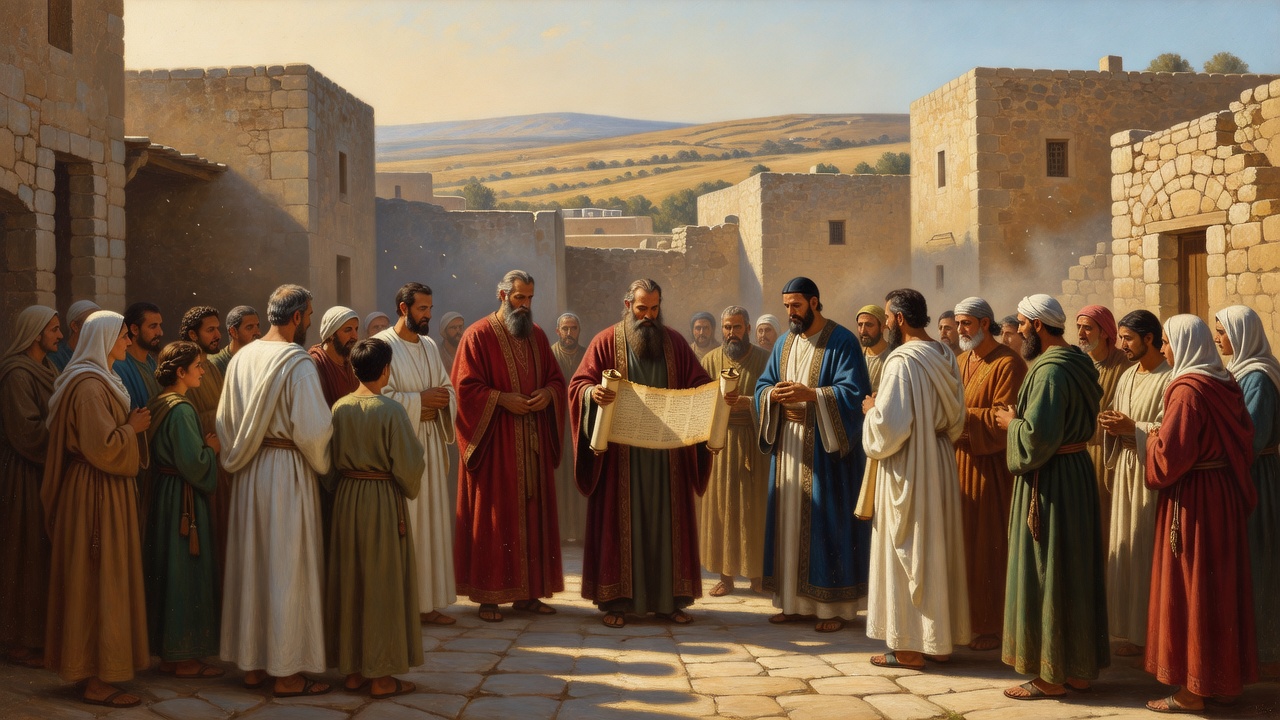
7When he had been ruling Judah for almost three years, he sent some of his officials—Ben-Hail, Obadiah, Zechariah, Nethanel, and Micaiah—to teach the people in various towns in Judah. 8With them he sent several descendants of Levi—Shemaiah, Nethaniah, Zebadiah, Asahel, Shemiramoth, Jehonathan, Adonijah, Tobijah, and Tob-Adonijah—and two priests, Elishama and Jehoram. 9They took with them a scroll on which were written the laws of Yahweh and taught them to the people in all the towns throughout Judah,
10The people in all the kingdoms surrounding Judah became very afraid of what Yahweh might do to punish them if they fought against Judah, so they did not start wars with Jehoshaphat’s army. 11Some people from Philistia brought gifts to Jehoshaphat, and they also brought to him the silver that he demanded that they pay to him. Some Arabs brought to him 7,700 rams and 7,700 goats.
12Jehoshaphat continued to become more powerful/influential. His workers built forts and places to store supplies in various towns in Judah. 13Then they put large amounts of supplies in those storehouses.
Jehoshaphat also placed in Jerusalem soldiers who were experienced. 14The leaders and numbers from each tribe were as follows:
From the tribe of Judah,
Adnah was the leader of the soldiers, and he commanded 300,000 soldiers.
15His assistant was Jehohanan, who commanded 280,000 soldiers.
16Next was Zicri’s son Amasiah, who volunteered to serve Yahweh in this way; he commanded 200,000 soldiers.
17From the tribe of Benjamin,
Eliada, who was a brave soldier, was the leader of the soldiers; he commanded 200,000 men who had bows and arrows and shields.
18Next was Jehozabad, who commanded 180,000 men who had weapons for fighting battles.
19Those were the soldiers who served the king in Jerusalem, in addition to the men whom the king had placed in the other cities in Judah that had walls around them.
Did you know?
Jehoshaphat's Reforms and Strength
- In the third year of his reign, Jehoshaphat initiated a nationwide educational campaign. He dispatched royal officials, Levites, and priests throughout all the towns of Judah with the Book of the Law of the LORD to instruct the people directly.Sources: the Bible text itself · Jehoshaphat
- To secure his realm against the northern kingdom of Israel, Jehoshaphat placed troops and garrisons throughout Judah's fortified cities as well as in the towns of Ephraim that his father Asa had previously captured.Sources: the Bible text itself · Jehoshaphat · Asa
- Because surrounding kingdoms feared making war against Judah, Jehoshaphat received substantial tribute, including silver from Philistines and large livestock contributions of 7,700 rams and 7,700 goats from Arabs.Sources: the Bible text itself
Notes written with AI assistance from open sources (Theographic Bible Metadata, CC BY-SA 4.0; Easton’s Bible Dictionary, public domain) and reviewed before publishing.
Places in this chapter
Only places identified with high confidence are shown (90% or more according to the scholarly sources compiled by OpenBible). Period map: DARE (Digital Atlas of the Roman Empire), CC BY 4.0; modern map: © OpenStreetMap contributors; places: OpenBible.info (CC BY 4.0).
Credits and license for this translation
Translation for Translators
A Bible Translation for Bible Translators which makes implied information explicit in the text as an aid to the translator who may need that information to correctly translate into a particular language.
Copyright © 2008-2017 Ellis W. Deibler, Jr.
Language: English
Dialect: American
This translation is made available to you under the terms of the
Creative Commons Attribution Share-Alike license 4.0.
You have permission to share and redistribute this Bible translation in any format and to make reasonable revisions and adaptations of this translation, provided that:
You include the above copyright and source information.
If you make any changes to the text, you must indicate that you did so in a way that makes it clear that the original licensor is not necessarily endorsing your changes.
If you redistribute this text, you must distribute your contributions under the same license as the original.
Pictures included with Scriptures and other documents on this site are licensed just for use with those Scriptures and documents.
For other uses, please contact the respective copyright owners.
Note that in addition to the rules above, revising and adapting God's Word involves a great responsibility to be true to God's Word. See Revelation 22:18-19.
2026-10-02
Source: http://ebible.org/eng-t4t/ · eBible.org