1 Chronicles 7
Translation for Translators · Tap a verse to see its cross-references.
The descendants of Issachar
1Issachar’s four sons were Tola, Puah, Jashub, and Shimron.
2Tola’s sons were Uzzi, Rephaiah, Jeriel, Jahmai, Ibsam, and Samuel (OR, Shemuel). They were all leaders of the clans descended from them.
In the record of Tola’s descendants were the names of 22,600 men who served in the army during the time that David was the king of Israel.
3Uzzi’s son was Izrahiah. Izrahiah’s five sons were Michael, Obadiah, Joel, and Isshiah. Izrahiah and his sons were all leaders of their clans.
4In the record of Izrahiah’s descendants were the names of 36,000 men who served in the army because they had many wives and children.
5In the records of the clans descended from Issachar were the names of 87,000 men who served in the army.
The descendants of Benjamin
6Some of the sons of Benjamin were Bela, Beker, and Jediael.
7Bela’s five sons were Ezbon, Uzzi, Uzziel, Jerimoth, and Iri. They were all leaders of clans.
In the records of the clans descended from Bela there were names of 22,034 men who served in the army.
8Beker’s sons were Zemirah, Joash, Eliezer, Elioenai, Omri, Jeremoth, Abijah, Anathoth, and Alemeth.
9In the records of the clans descended from Beker were the names of 20,200 men and leaders of the clans who served in the army.
10Jediael’s son was Bilhan. Bilhan’s sons were Jeush, Benjamin, Ehud, Kenaanah, Zethan, Tarshish, and Ahishahar. 11They were all leaders of clans descended from them.
There were 17,200 of them who served in the army.
12Shuppim and Huppim were descendants of Ir.
One of the descendants of Aher was Hushim.
Naphtali’s sons
13Naphtali’s sons were Jahziel, Guni, Jezer, and Shillem. They were all descendants of Jacob’s slave wife Bilhah.
Manasseh’s descendants
14This is a list of Manasseh’s descendants. Manasseh had a slave wife who was from Syria. She was the mother of Asriel and Makir.
Makir was the father of Gilead.
15Makir had two wives. They were from the clans of Huppim and Shuppim.
One of Makir’s wives was named Maacah.
Another descendant of Makir was Zelophehad. Zelophehad had no sons; he had only daughters.
16Makir’s wife Maacah gave birth to two sons whom she named Peresh and Sheresh. Sheresh’s sons were Ulam and Rakem. 17Ulam’s son was Bedan.
All those men were considered to be descendants of Gilead, who was the son of Makir and grandson of Manasseh.
18Makir’s sister name was Hammoleketh who was the mother of Ishdod, Abiezer, and Mahlah.
19One son of Gilead was Shemida, whose sons were Ahian, Shechem, Likhi, and Aniam.
Descendants of Ephraim
20This is a list of the descendants of Ephraim.
One son of Ephraim’s was Shuthelah.
Shuthelah’s son was Bered.
Bered’s son was Tahath.
Tahath’s son was Eleadah.
Eleadah’s son was also named Tahath.
21Tahath’s son was Zabad.
Zabad’s son was Shuthelah.
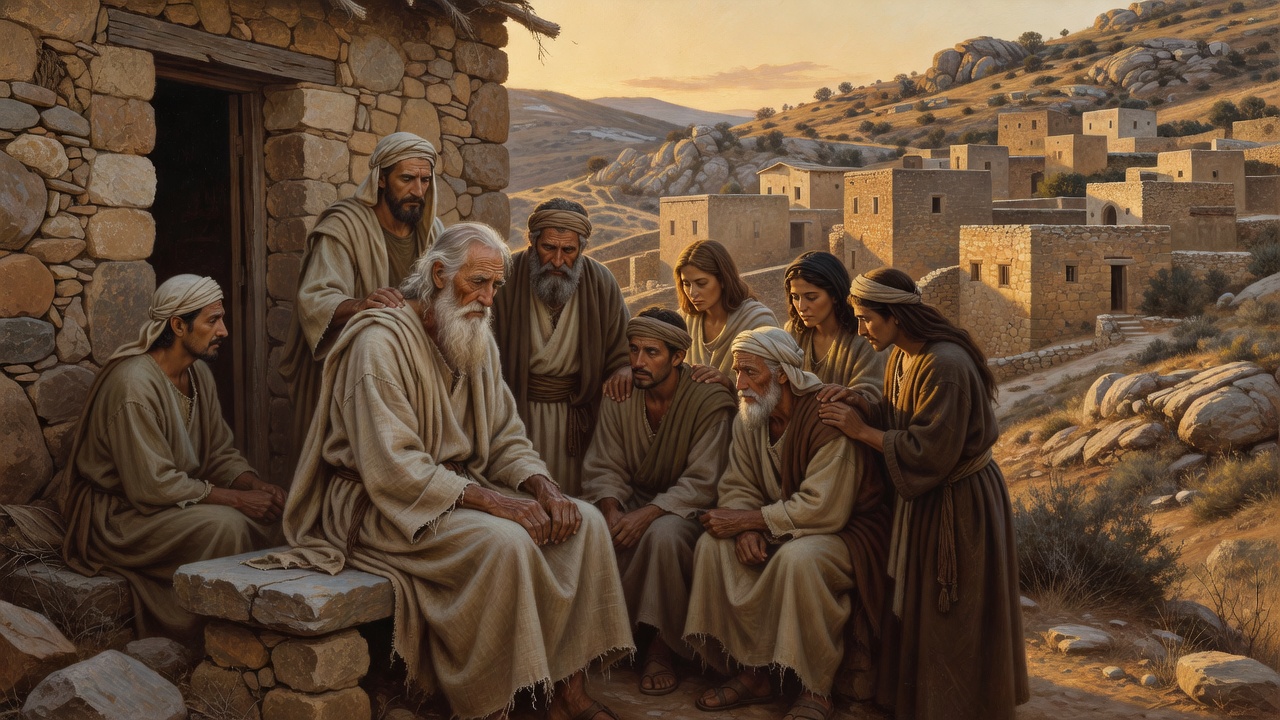
Ephraim’s other sons, Ezer and Elead, went to Gath city to steal some cows and sheep. But they were both killed by some of the men from that city. 22Their father Ephraim cried/mourned for them for many days, and his family came to comfort him. 23Then he and his wife had sex [EUP] again, and she became pregnant and gave birth to a son. Ephraim named him Beriah which resembles the word ‘trouble’, because of the trouble that his family had experienced. 24Ephraim’s daughter was Sheerah. Her workers built three towns: Lower Beth-Horon, Upper Beth-Horon, and Uzzen-Sheerah.
25Another son of Ephraim was Rephah.
Rephah’s son was Resheph.
Resheph’s son was Telah.
Telah’s son was Tahan.
26Tahan’s son was Ladan.
Ladan’s son was Ammihud.
Ammihud’s son was Elishama.
27Elishama’s son was Nun.
Nun’s son was Joshua, the man who led the Israelis after Moses died.
28This is a list of the cities and areas where the descendants of Ephraim lived:
Bethel and the nearby villages;
Naaran to the east;
Gezer to the west and the nearby villages; and
Shechem and the nearby villages. Those villages extended north as far as Ayyah and the nearby villages.
29Along the border of the area where the descendants of Manasseh lived were these towns: Beth-Shan, Taanach, Megiddo, and Dor, and the nearby villages.
The people who lived in all those places were descendants of Jacob’s son Joseph.
The descendants of Asher
30Asher’s sons were Imnah, Ishvah, Ishvi, and Beriah. Their sister was Serah.
31Beriah’s sons were Heber and Malkiel.
Malkiel was the father of Birzaith
32Heber was the father of Japhlet, Shomer, and Hotham. Their sister was Shua.
33Japhlet’s sons were Pasach, Bimhal, and Ashvath.
34Japhlet’s younger brother was Shomer. Shomer’s sons were Rohgah, Hubbah, and Aram.
35Shomer’s younger brother was Hotham (OR, Helem). Hotham’s sons were Zophah, Imna, Shelesh, and Amal.
36Zophah’s sons were Suah, Harnepher, Shual, Beri, Imrah, 37Bezer, Hod, Shamma, Shilshah, Ithran whose other name was Jether, and Beera.
38Jether’s sons were Jephunneh, Pispah, and Ara.
39Another descendant of Asher was Ulla, whose sons were Arah, Hanniel, and Rizia.
40All those men were descendants of Asher, and they were all leaders of their clans. They were brave warriors and excellent leaders. In the record of the clans that are descended from Asher are the names of 26,000 men who served in the army.
Did you know?
Genealogies of the Northern Tribes
- The genealogy of Ephraim highlights a woman named Sheerah, who is credited with building Upper and Lower Beth-horon as well as Uzzen-sheerah. These strategic settlements were situated along the mountain pass leading down toward the coastal plain.Sources: Beth-horon · Uzzen-sheerah · the Bible text itself
- A brief narrative recounts that Ephraim's sons Ezer and Elead were killed by the natives of Gath during an attempt to steal livestock. Ephraim mourned their loss for many days before his relatives came to comfort him, and his next son was named Beriah because of the tragedy.Sources: Gath · the Bible text itself
- The chapter traces the lineage of Ephraim down to Joshua the son of Nun, placing the prominent leader of the conquest within his tribal ancestry alongside figures such as Elishama and Ammihud.Sources: the Bible text itself
Notes written with AI assistance from open sources (Theographic Bible Metadata, CC BY-SA 4.0; Easton’s Bible Dictionary, public domain) and reviewed before publishing.
Places in this chapter
- Lower Beth-horon · Today: Beit Ur al Tahta · 31.895, 35.084 · verse 24
- Upper Beth-horon · Today: Beit Ur al Fauqa · 31.886, 35.114 · verse 24
- Gezer · Today: Tel Gezer · 31.859, 34.919 · verse 28
- Shechem · Today: Tell Balatah · 32.214, 35.282 · verse 28
- Megiddo · Today: Tel Megiddo · 32.585, 35.184 · verse 29
- Taanach · Today: Tell Ta’anakh · 32.522, 35.219 · verse 29
Only places identified with high confidence are shown (90% or more according to the scholarly sources compiled by OpenBible). Period map: DARE (Digital Atlas of the Roman Empire), CC BY 4.0; modern map: © OpenStreetMap contributors; places: OpenBible.info (CC BY 4.0).
Credits and license for this translation
Translation for Translators
A Bible Translation for Bible Translators which makes implied information explicit in the text as an aid to the translator who may need that information to correctly translate into a particular language.
Copyright © 2008-2017 Ellis W. Deibler, Jr.
Language: English
Dialect: American
This translation is made available to you under the terms of the
Creative Commons Attribution Share-Alike license 4.0.
You have permission to share and redistribute this Bible translation in any format and to make reasonable revisions and adaptations of this translation, provided that:
You include the above copyright and source information.
If you make any changes to the text, you must indicate that you did so in a way that makes it clear that the original licensor is not necessarily endorsing your changes.
If you redistribute this text, you must distribute your contributions under the same license as the original.
Pictures included with Scriptures and other documents on this site are licensed just for use with those Scriptures and documents.
For other uses, please contact the respective copyright owners.
Note that in addition to the rules above, revising and adapting God's Word involves a great responsibility to be true to God's Word. See Revelation 22:18-19.
2026-10-02
Source: http://ebible.org/eng-t4t/ · eBible.org