Proverbs 14
Revised Version with Apocrypha (1895) · Tap a verse to see its cross-references.
The Wise Woman
1Every wise woman buildeth her house: but the foolish plucketh it down with her own hands. 2He that walketh in his uprightness feareth the LORD: but he that is perverse in his ways despiseth him. 3In the mouth of the foolish is a rod of pride: but the lips of the wise shall preserve them. 4Where no oxen are, the crib is clean: but much increase is by the strength of the ox. 5A faithful witness will not lie: but a false witness uttereth lies. 6A scorner seeketh wisdom, and findeth it not: but knowledge is easy unto him that hath understanding. 7Go into the presence of a foolish man, and thou shalt not perceive in him the lips of knowledge. 8The wisdom of the prudent is to understand his way: but the folly of fools is deceit. 9The foolish make a mock at guilt: but among the upright there is good will. 10The heart knoweth its own bitterness; and a stranger doth not intermeddle with its joy. 11The house of the wicked shall be overthrown: but the tent of the upright shall flourish. 12There is a way which seemeth right unto a man, but the end thereof are the ways of death. 13Even in laughter the heart is sorrowful; and the end of mirth is heaviness. 14The backslider in heart shall be filled with his own ways: and a good man shall be satisfied from himself. 15The simple believeth every word: but the prudent man looketh well to his going. 16A wise man feareth, and departeth from evil: but the fool beareth himself insolently, and is confident. 17He that is soon angry will deal foolishly: and a man of wicked devices is hated. 18The simple inherit folly: but the prudent are crowned with knowledge. 19The evil bow before the good; and the wicked at the gates of the righteous. 20The poor is hated even of his own neighbour: but the rich hath many friends. 21He that despiseth his neighbour sinneth: but he that hath pity on the poor, happy is he. 22Do they not err that devise evil? but mercy and truth shall be to them that devise good. 23In all labour there is profit: but the talk of the lips tendeth only to penury. 24The crown of the wise is their riches: but the folly of fools is only folly. 25A true witness delivereth souls: but he that uttereth lies causeth deceit. 26In the fear of the LORD is strong confidence: and his children shall have a place of refuge. 27The fear of the LORD is a fountain of life, to depart from the snares of death. 28In the multitude of people is the king’s glory: but in the want of people is the destruction of the prince. 29He that is slow to anger is of great understanding: but he that is hasty of spirit exalteth folly. 30A sound heart is the life of the flesh: but envy is the rottenness of the bones. 31He that oppresseth the poor reproacheth his Maker: but he that hath mercy on the needy honoureth him. 32The wicked is thrust down in his evil-doing: but the righteous hath hope in his death. 33Wisdom resteth in the heart of him that hath understanding: but that which is in the inward part of fools is made known. 34Righteousness exalteth a nation: but sin is a reproach to any people. 35The king’s favour is toward a servant that dealeth wisely: but his wrath shall be against him that causeth shame.
Did you know?
Wisdom, Labor, and Justice
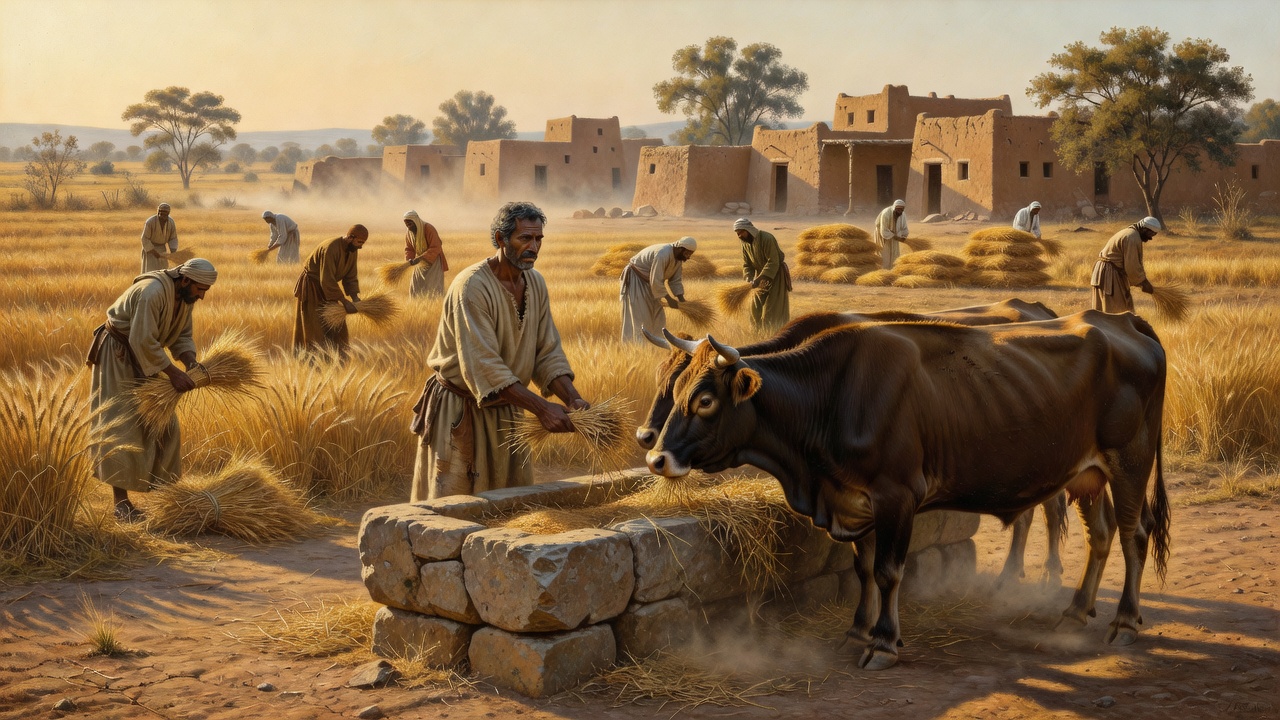
- Proverbs 14 uses practical agricultural life to illustrate that meaningful productivity requires labor and investment. While an empty manger stays clean without oxen, an abundant harvest depends directly on the strength and work of draft animals.Sources: the Bible text itself
- The chapter directly links social justice to reverence for God. Mistreating or despising the poor and needy is described as an insult to their Maker, whereas showing kindness and generosity to them honors God.Sources: the Bible text itself
- The proverbs extend moral guidance to governance and national health, stating that a king's glory depends on a thriving population and that moral righteousness exalts an entire nation, while sin brings collective disgrace.Sources: the Bible text itself
Notes written with AI assistance from open sources (Theographic Bible Metadata, CC BY-SA 4.0; Easton’s Bible Dictionary, public domain) and reviewed before publishing.
Credits and license for this translation
Revised Version with Apocrypha (1895)
The Revised Version of the Holy Bible (1895) with Apocrypha
Public Domain
Language: English
Dialect: archaic British
This work is in the Public Domain. You may copy and use it freely.
2026-10-02
Section headings adapted from the Berean Standard Bible (public domain); they are not part of this translation’s text.
Source: http://ebible.org/eng-rv/ · eBible.org