Isaiah 15
Revised Version with Apocrypha (1895) · Tap a verse to see its cross-references.
The Burden against Moab
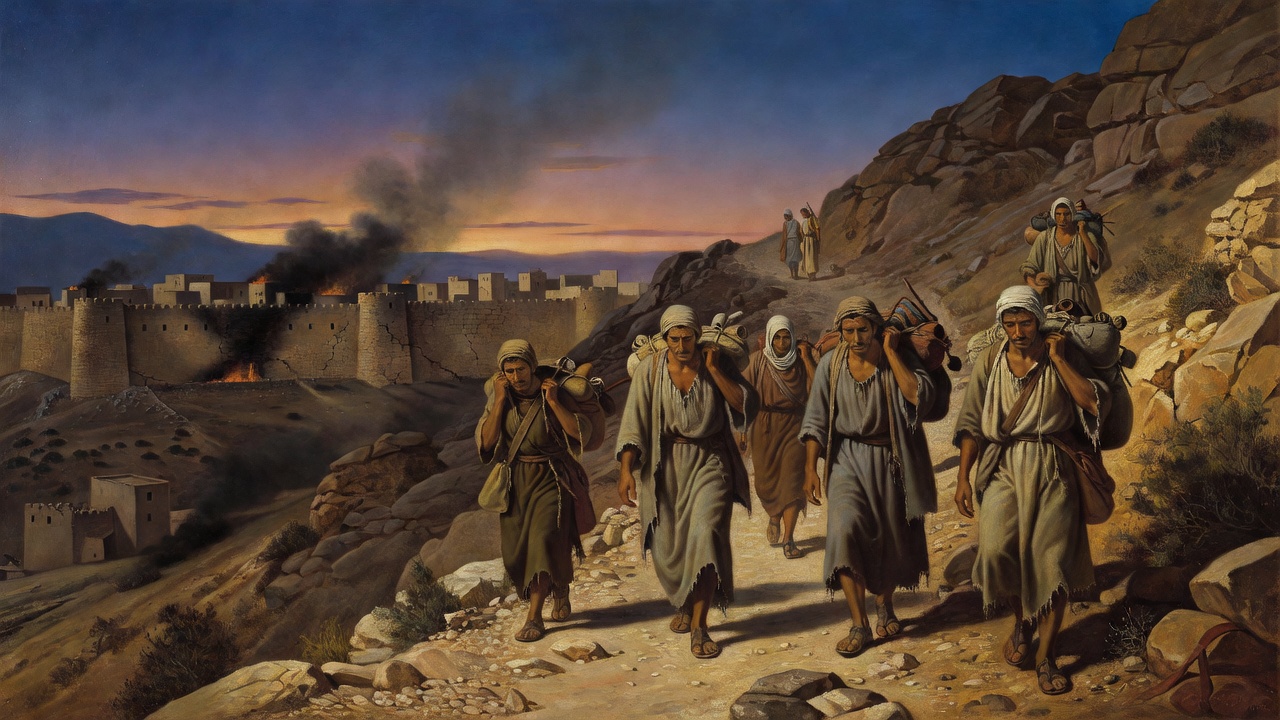
1The burden of Moab. For in a night Ar of Moab is laid waste, and brought to nought; for in a night Kir of Moab is laid waste, and brought to nought. 2He is gone up to Bayith, and to Dibon, to the high places, to weep: Moab howleth over Nebo, and over Medeba: on all their heads is baldness, every beard is cut off. 3In their streets they gird themselves with sackcloth: on their housetops, and in their broad places, every one howleth, weeping abundantly. 4And Heshbon crieth out, and Elealeh; their voice is heard even unto Jahaz: therefore the armed men of Moab cry aloud; his soul trembleth within him. 5My heart crieth out for Moab; her nobles flee unto Zoar, to Eglath-shelishiyah: for by the ascent of Luhith with weeping they go up; for in the way of Horonaim they raise up a cry of destruction. 6For the waters of Nimrim shall be desolate: for the grass is withered away, the tender grass faileth, there is no green thing. 7Therefore the abundance they have gotten, and that which they have laid up, shall they carry away to the brook of the willows. 8For the cry is gone round about the borders of Moab; the howling thereof unto Eglaim, and the howling thereof unto Beer-elim. 9For the waters of Dimon are full of blood: for I will bring yet more upon Dimon, a lion upon him that escapeth of Moab, and upon the remnant of the land.
Did you know?
The Oracle Concerning Moab
- Moab was a territory situated east of the Dead Sea and the Jordan River, containing ancient settlements such as Ar, Kir, and Medeba. In this chapter, the prophet laments the sudden overnight destruction and wailing throughout these Moabite towns and high places.Sources: Moab · Medeba · the Bible text itself
- The chapter depicts traditional ancient mourning rituals practiced across the region in times of catastrophe. As grief overtakes the land, the people of Moab shave their heads, cut off their beards, and put on sackcloth while weeping publicly in the squares and on flat rooftops.Sources: the Bible text itself
- The city of Dibon, situated north of the Arnon River and east of the Dead Sea, is also identified as Dimon in Isaiah 15:9. The oracle vividly portrays the severity of the invasion by describing the waters of Dimon filled with blood while surviving refugees flee.Sources: Dibon · the Bible text itself
Notes written with AI assistance from open sources (Theographic Bible Metadata, CC BY-SA 4.0; Easton’s Bible Dictionary, public domain) and reviewed before publishing.
Places in this chapter
- Moab · Today: Moab 1 · 31.181, 35.701 · verses 1, 2, 4, 5, 8, 9
- Dibon · Today: Tall Dhiban · 31.502, 35.777 · verse 2
- Medeba · Today: Madaba · 31.716, 35.795 · verse 2
Only places identified with high confidence are shown (90% or more according to the scholarly sources compiled by OpenBible). Period map: DARE (Digital Atlas of the Roman Empire), CC BY 4.0; modern map: © OpenStreetMap contributors; places: OpenBible.info (CC BY 4.0).
Credits and license for this translation
Revised Version with Apocrypha (1895)
The Revised Version of the Holy Bible (1895) with Apocrypha
Public Domain
Language: English
Dialect: archaic British
This work is in the Public Domain. You may copy and use it freely.
2026-10-02
Section headings adapted from the Berean Standard Bible (public domain); they are not part of this translation’s text.
Source: http://ebible.org/eng-rv/ · eBible.org