Hebrews 5
Revised Version with Apocrypha (1895) · Tap a verse to see its cross-references.
The Perfect High Priest
1For every high priest, being taken from among men, is appointed for men in things pertaining to God, that he may offer both gifts and sacrifices for sins: 2who can bear gently with the ignorant and erring, for that he himself also is compassed with infirmity; 3and by reason thereof is bound, as for the people, so also for himself, to offer for sins. 4And no man taketh the honour unto himself, but when he is called of God, even as was Aaron. 5So Christ also glorified not himself to be made a high priest, but he that spake unto him, Thou art my Son, This day have I begotten thee: 6as he saith also in another place, Thou art a priest for ever After the order of Melchizedek. 7Who in the days of his flesh, having offered up prayers and supplications with strong crying and tears unto him that was able to save him from death, and having been heard for his godly fear, 8though he was a Son, yet learned obedience by the things which he suffered; 9and having been made perfect, he became unto all them that obey him the author of eternal salvation; 10named of God a high priest after the order of Melchizedek.
Milk and Solid Food
11Of whom we have many things to say, and hard of interpretation, seeing ye are become dull of hearing. 12For when by reason of the time ye ought to be teachers, ye have need again that some one teach you the rudiments of the first principles of the oracles of God; and are become such as have need of milk, and not of solid food. 13For every one that partaketh of milk is without experience of the word of righteousness; for he is a babe. 14But solid food is for fullgrown men, even those who by reason of use have their senses exercised to discern good and evil.
Did you know?
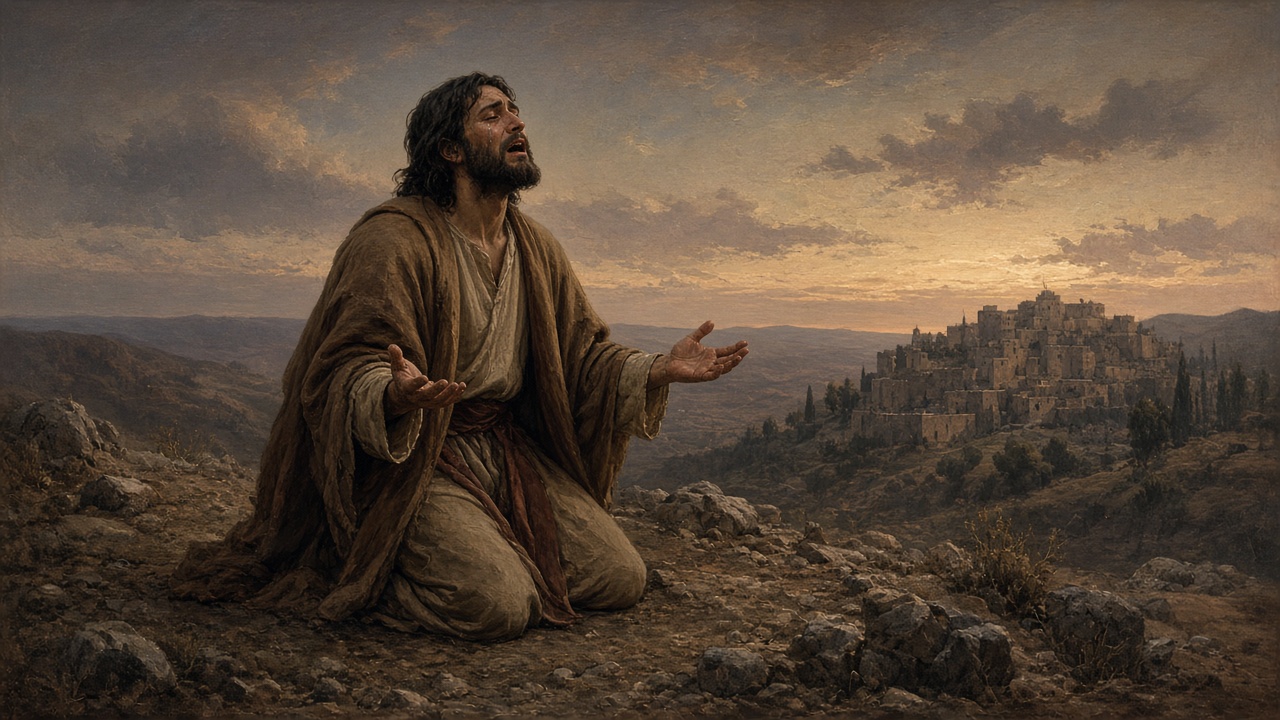
A High Priest Called by God
- Hebrews 5 presents Aaron as the pattern of a high priest who does not take the honor upon himself but is called by God. Aaron, eldest son of Amram and Jochebed, was born in Egypt three years before his brother Moses. When the time drew near for Israel’s deliverance from Egypt, God sent him to meet his long-absent brother so that they might work together toward the Exodus.Sources: the Bible text itself · Aaron
- Melchizedek, whose name Easton's Bible Dictionary (1897) explains as “king of righteousness,” was king of Salem. All that the Old Testament records of him is in Genesis 14:18–20, and he is mentioned only once more, in Psalm 110:4. Hebrews 5 applies to Christ the words “You are a priest forever in the order of Melchizedek,” and the same dictionary says that Hebrews 7 sets out the significance of his story in detail and presents his priesthood as superior to Aaron’s, noting that Abraham paid him tithes and that Melchizedek blessed Abraham.Sources: the Bible text itself · Melchisedec
Notes written with AI assistance from open sources (Theographic Bible Metadata, CC BY-SA 4.0; Easton’s Bible Dictionary, public domain) and reviewed before publishing.
Credits and license for this translation
Revised Version with Apocrypha (1895)
The Revised Version of the Holy Bible (1895) with Apocrypha
Public Domain
Language: English
Dialect: archaic British
This work is in the Public Domain. You may copy and use it freely.
2026-10-02
Section headings adapted from the Berean Standard Bible (public domain); they are not part of this translation’s text.
Source: http://ebible.org/eng-rv/ · eBible.org