Joshua 15
LXX2012: Septuagint in American English 2012 · Tap a verse to see its cross-references.
Judah’s Inheritance
1And the borders of the tribe of Juda according to their families were from the borders of Idumea from the wilderness of sin, as far as Cades southward. 2And their borders were from the south as far as a part of the salt sea from the high country that extends southward. 3And they proceed before the ascent of Acrabin, and go out round Sena, and go up from the south to Cades Barne; and go out to Asoron, and proceed up to Sarada, and go out by the way that is west of Cades. 4And they go out to Selmona, and issue at the valley of Egypt; and the termination of its boundaries shall be at the sea: these are their boundaries southward. 5And their boundaries eastward are all the salt sea as far as Jordan; and their borders from the north, and from the border of the sea, and from part of Jordan— 6the borders go up to Baethaglaam, and they go along from the north to Baetharaba, and the borders go on up to the stone of Baeon the son of Ruben. 7And the borders continue on to the fourth part of the valley of Achor, and go down to Galgal, which is before the approach of Adammin, which is southward in the valley, and terminate at the water of the fountain of the sun; and their going forth shall be the fountain of Rogel. 8And the borders go up to the valley of Ennom, behind Jebus southward; this is Jerusalem: and the borders terminate at the top of the mountain, which is before the valley of Ennom toward the sea, which is by the side of the land of Raphain northward. 9And the border going forth from the top of the mountain terminates at the fountain of the water of Naphtho, and terminates at mount Ephron; and the border will lead to Baal; this is the city of Jarim. 10And the border will go round from Baal to the sea, and will go on to the mount of Assar behind the city of Jarin northwards; this is Chaslon: and it will come down to the city of Sun, and will go on to the south. 11And the border terminates behind Accaron northward, and the borders will terminate at Socchoth, and the borders will go on to the south, and will terminate at Lebna, and the issue of the borders will be at the sea; and their borders shall be toward the sea, the great sea shall be the boundary. 12These are the borders of the children of Juda round about according to their families.
Caleb’s Portion and Conquest
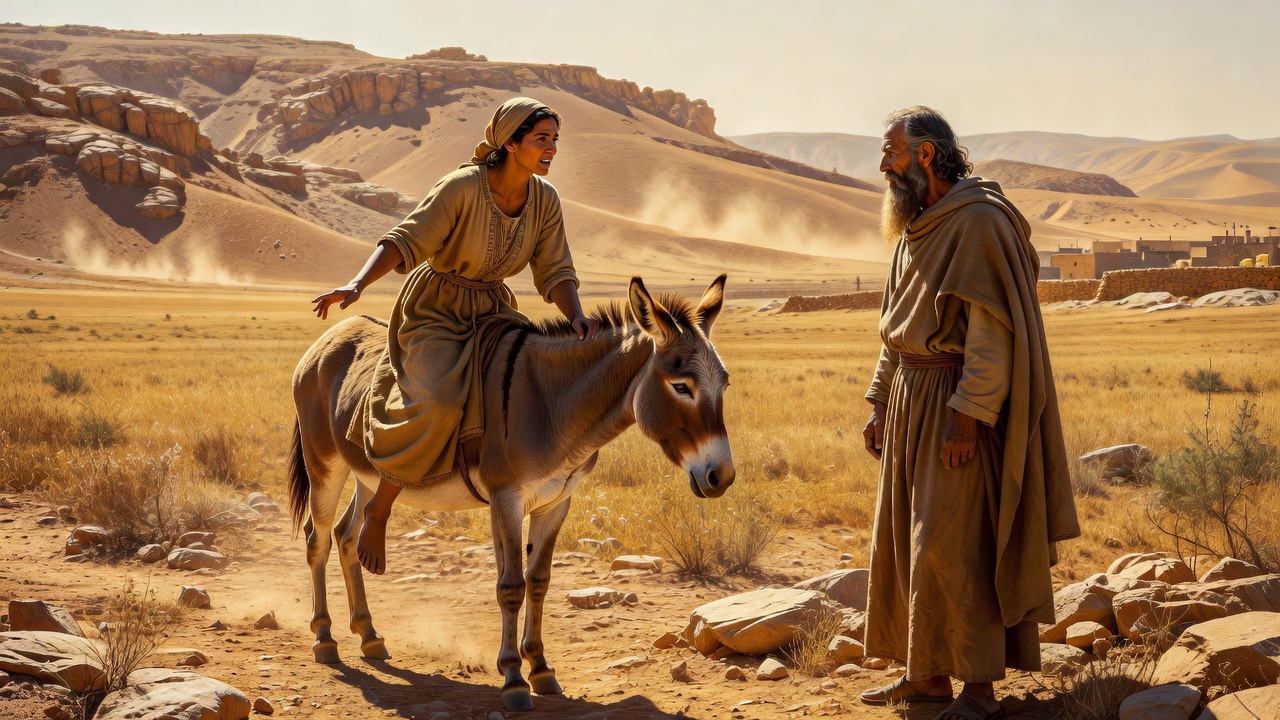
13And to Chaleb the son of Jephone he gave a portion in the midst of the children of Juda by the command of God; and Joshua gave him the city of Arboc the metropolis of Enac; this is Chebron. 14And Chaleb the son of Jephone destroyed thence the three sons of Enac, Susi, and Tholami, and Achima. 15And Chaleb went up thence to the inhabitants of Dabir; and the name of Dabir before was the city of Letters. 16And Chaleb said, Whosoever shall take and destroy the city of Letters, and master it, to him will I give my daughter Ascha to wife. 17And Gothoniel the son of Chenez the brother of Chaleb took it; and he gave him Ascha his daughter to wife. 18And it came to pass as she went out that she counselled him, saying, I will ask of my father a field; and she cried from off her ass; and Chaleb said to her, What is it? 19And she said to him, Give me a blessing, for you have set me in the land of Nageb; give me Botthanis: and he gave her Gonaethla the upper, and Gonaethla the lower.
The Cities of Judah
20This is the inheritance of the tribe of the children of Juda. 21And their cities were cities belonging to the tribe of the children of Juda on the borders of Edom by the wilderness, and Baeseleel, and Ara, and Asor, 22and Icam, and Regma, and Aruel, 23and Cades, and Asorionain, and Maenam, 24and Balmaenan, and their villages, 25and the cities of Aseron, this is Asor, 26and Sen, and Salmaa, and Molada, 27and Seri, and Baephalath, 28and Cholaseola, and Beersabee; and their villages, and their hamlets, 29Bala and Bacoc, and Asom, 30and Elboudad, and Baethel, and Herma, 31and Sekelac, and Macharim, and Sethennac, 32and Labos, and Sale, and Eromoth; twenty-nine cities, and their villages. 33In the plain country Astaol, and Raa, and Assa, 34and Ramen, and Tano, and Iluthoth, and Maeani, 35and Jermuth, and Odollam, and Membra, and Saocho, and Jazeca. 36And Sacarim and Gadera, and its villages; fourteen cities, and their villages; 37Senna, and Adasan, and Magadalgad, 38and Dalad, and Maspha, and Jachareel, 39and Basedoth, and Ideadalea; 40and Chabra, and Maches, and Maachos, 41and Geddor, and Bagadiel, and Noman, and Machedan: sixteen cities, and their villages; 42Lebna, and Ithac, and Anoch, 43and Jana, and Nasib, 44and Keilam, and Akiezi, and Kezib, and Bathesar, and Aelom: ten cities, and their villages; 45Accaron and her villages, and their hamlets: 46from Accaron, Gemna, and all the cities that are near Asedoth; and their villages. 47Asiedoth, and her villages, and her hamlets; Gaza, and its villages and its hamlets as far as the river of Egypt, and the great sea is the boundary. 48And in the hill country Samir, and Jether, and Socha, 49and Renna and the city of Letters, this is Dabir; 50and Anon, and Es, and Man, and Aesam, 51and Gosom, and Chalu, and Channa, and Gelom: eleven cities, and their villages; 52Aerem, and Remna, and Soma, 53and Jemain, and Baethachu, and Phacua, 54and Euma, and the city Arboc, this is Chebron, and Soraith: nine cities and their villages: 55Maor, and Chermel, and Ozib, and Itan, 56and Jariel, and Aricam, and Zacanaim, 57and Gabaa, and Thamnatha; nine cities, and their villages; 58Aelua, and Bethsur, and Geddon, 59and Magaroth, and Baethanam, and Thecum; six cities, and their villages; Theco, and Ephratha, this is Baethleem, and Phagor, and Aetan, and Culon, and Tatam, and Thobes, and Carem, and Galem, and Thether, and Manocho: eleven cities, and their villages, 60Cariathbaal, this is the city of Jarim, and Sotheba: two cities, and their villages: 61and Baddargeis, and Tharabaam, and Aenon; 62and Aeochioza, and Naphlazon, and the cities of Sadon, and Ancades; seven cities, and their villages. 63And the Jebusite lived in Jerusalem, and the children of Juda could not destroy them; and the Jebusites lived in Jerusalem to this day.
Did you know?
The Allotment of Judah and Caleb's Inheritance
- In accordance with the command given to Joshua, Caleb received Kiriath-arba (Hebron), named after Arba the forefather of Anak. From there, Caleb drove out the three descendants of Anak: Sheshai, Ahiman, and Talmai.Sources: the Bible text itself · Caleb · Anak
- When Othniel captured Kiriath-sepher (Debir), he won Caleb's daughter Achsah as his wife. Recognizing the arid nature of her land in the Negev, Achsah asked her father for water sources and was granted both the upper and lower springs.Sources: the Bible text itself · Achsah · Caleb
- The territory allotted to the tribe of Judah spanned widely from the Dead Sea to the Mediterranean coastline, reaching south toward Edom and the Brook of Egypt. Despite this vast allotment of towns and villages, the people of Judah were unable to dislodge the Jebusites inhabiting Jerusalem.Sources: the Bible text itself · Jerusalem · Edom · Salt Sea
Notes written with AI assistance from open sources (Theographic Bible Metadata, CC BY-SA 4.0; Easton’s Bible Dictionary, public domain) and reviewed before publishing.
Places in this chapter
- Edom · 30.746, 35.604 · verses 1, 21
- Negeb · 31.245, 34.841 · verses 1, 19, 21
- Zin · Today: Zin Desert · 30.971, 35.325 · verse 1
- Salt Sea · Today: Dead Sea · 31.500, 35.500 · verses 2, 5
- Great Sea · Today: Mediterranean Sea · 31.805, 34.170 · verses 4, 11, 12, 47
- Jordan · Today: Jordan River · 31.761, 35.558 · verse 5
- Adummim · 31.817, 35.362 · verse 7
- Jerusalem · 31.777, 35.234 · verses 8, 63
- Valley of Hinnom · Today: Hinnom Valley · 31.769, 35.228 · verse 8
- Valley of Rephaim · 31.763, 35.219 · verse 8
- Baalah · Today: Deir el Azar · 31.809, 35.104 · verses 9, 10
- Kiriath-jearim · Today: Deir el Azar · 31.809, 35.104 · verses 9, 60
- Mount Jearim · Today: within 1 km of Kesla · 31.781, 35.051 · verse 10
- Ekron · Today: Tel Miqne · 31.777, 34.852 · verses 11, 45, 46
- Hebron · Today: Tel Rumeida · 31.525, 35.102 · verses 13, 14, 54
- Gulloth-mayim · Today: within 5 km of Khirbet Rabud · 31.432, 35.015 · verse 19
- Lower Gulloth · Today: within 5 km of Khirbet Rabud · 31.432, 35.015 · verse 19
- Upper Gulloth · Today: within 5 km of Khirbet Rabud · 31.432, 35.015 · verse 19
- Shephelah · 31.692, 34.875 · verse 33
- Jarmuth · Today: Tel Yarmuth · 31.708, 34.975 · verse 35
- Socoh · Today: Tel Socho · 31.682, 34.975 · verse 35
- Lachish · Today: Tell ed Duweir · 31.565, 34.849 · verse 39
- Mareshah · Today: Tel Maresha · 31.593, 34.898 · verse 44
- Ashdod · Today: Tel Ashdod · 31.757, 34.658 · verses 46, 47
- Gaza · Today: Tell Harube · 31.504, 34.464 · verse 47
- Jattir · Today: Khirbet Attir · 31.352, 35.016 · verse 48
- Maon · Today: Tel Main · 31.409, 35.134 · verse 55
- Engedi · Today: Ein Gedi · 31.450, 35.383 · verse 62
Only places identified with high confidence are shown (90% or more according to the scholarly sources compiled by OpenBible). Period map: DARE (Digital Atlas of the Roman Empire), CC BY 4.0; modern map: © OpenStreetMap contributors; places: OpenBible.info (CC BY 4.0).
Credits and license for this translation
LXX2012: Septuagint in American English 2012
The Septuagint with Apocrypha, translated from Greek to English by Sir Lancelot C. L. Brenton and published in 1885, with some language updates (American English)
Public Domain
Language: English
Dialect (if applicable): American
Language in English: English
Translation by:
Sir Lancelot Charles Lee Brenton
Michael Paul Johnson
LXX2012: Septuagint in English 2012
This is a translation of the Old Testament and Apocrypha/Deuterocanon from Hebrew to Greek to 19th Century British English, with some updates of spelling and word usage to contemporary American English. The original English translation was done by Sir Lancelot Charles Lee Brenton and published by Samuel Bagster & Sons, Ltd., in London in 1851. It has entered the Public Domain due to the passage of sufficient time. In the process of scanning and typing the text, the original poetry and prose formatting, as well as peripheral material like introductions and notes, have been omitted.
This edition of the Septuagint has some language updates. Brenton's word order and punctuation has been mostly retained, meaning that quotation marks are not used, and sentences within quotes may not start with capital letters, as was standard usage in 1851. Names transliterated from Greek to those transliterated from Hebrew in the common English Bibles often differ. These language updates are dedicated to the Public Domain by the author of those edits, Michael Paul Johnson. Therefore this edition may be freely copied, published, etc.
Before considering making changes to the text of this work, I recommend that you consult with God, because this is really His Book.
If you find errors in the text, please report them so that we can correct them.
Donations to help with the expenses of operating this web site and thus help others have free access to the Word of God may be made to us, but are not required. Please see http://MLJohnson.org/partner/ for more about that.
Section headings adapted from the Berean Standard Bible (public domain); they are not part of this translation’s text.
Source: http://ebible.org/eng-lxx2012/ · eBible.org