1 Kings 14
LXX2012: Septuagint in American English 2012 · Tap a verse to see its cross-references.
AI-generated narration · text: LXX2012: Septuagint in American English 2012 (public domain)
21And Roboam son of Solomon ruled over Juda. Roboam was forty and one years old when he began to reign, and he reigned seventeen years in the city Jerusalem, which the Lord chose to put his name there out of all the tribes of Israel: and his mother's name [was] Naama the Ammonitess. 22And Roboam did evil in the sight of the Lord; and he provoked him in all the things which their fathers did in their sins which they sinned. 23And they built for themselves high places, and pillars, and [planted] groves on every high hill, and under every shady tree. 24And there was a conspiracy in the land, and they did according to all the abominations of the nations which the Lord removed from before the children of Israel. 25And it came to pass in the fifth year of the reign of Roboam, Susakim king of Egypt came up against Jerusalem; 26and took all the treasures of the house of the Lord, and the treasures of the king's house, and the golden spears which David took out of the hand of the sons of Adrazaar king of Suba, and brought them into Jerusalem, even all that he took, [and] the golden shields which Solomon had made, [and carried them away into Egypt.] 27And king Roboam made brazen shields instead of them; and the chiefs of the golden shields which Solomon had made, and the chiefs of the body guard, who kept the gate of the house of the king, were placed in charge over them. 28And it came to pass when the king went into the house of the Lord, that the body guard took them up, and fixed them in the chamber of the body guard. 29And the rest of the history of Roboam, and all that he did, behold, are they not written in the book of the chronicles of the kings of Juda? 30And there was war between Roboam and Jeroboam continually. 31And Roboam slept with his fathers, and was buried with his fathers in the city of David: and Abiu his son reigned in his stead.
Did you know?
Judgment on Jeroboam and the Invasion of Judah
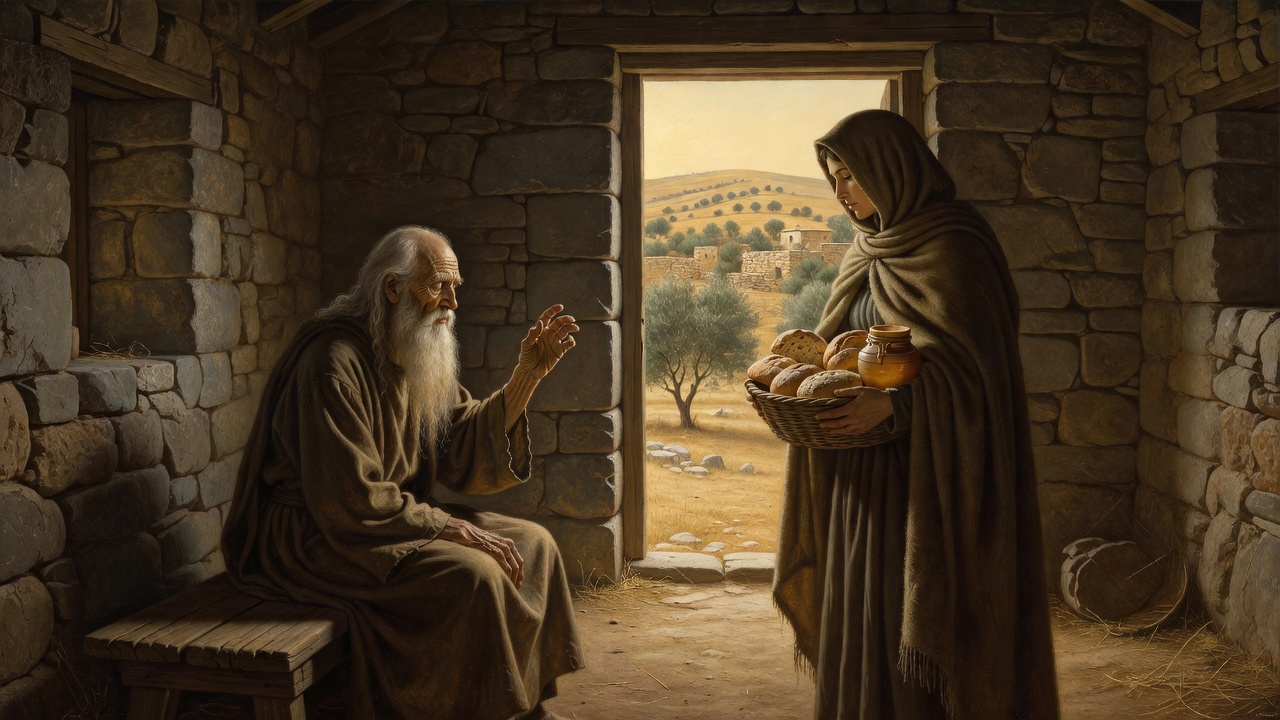
- When Jeroboam's son Abijah fell ill, the king sent his wife in disguise to Shiloh to consult the prophet Ahijah, who had originally foretold Jeroboam's rise to the throne. Though Ahijah was blind due to old age, God forewarned him of her arrival, prompting the prophet to announce the demise of Jeroboam's dynasty and the child's immediate death upon her return to Tirzah.Sources: the Bible text itself · Ahijah · Abijah · Tirzah
- In the fifth year of King Rehoboam's reign in Jerusalem, Pharaoh Shishak of Egypt invaded Judah and looted the treasures of the temple and royal palace. Among the seized items were the elaborate golden shields made during Solomon's reign, which Rehoboam subsequently replaced with cheaper bronze shields for the royal guard.Sources: the Bible text itself · Rehoboam · Solomon · Jerusalem
- The chapter highlights the ongoing conflict and division between the two kingdoms: Rehoboam ruled Judah from Jerusalem, while Jeroboam ruled the northern tribes from Tirzah, with continuous warfare persisting between them throughout their reigns.Sources: the Bible text itself · Jeroboam · Rehoboam · Tirzah
Notes written with AI assistance from open sources (Theographic Bible Metadata, CC BY-SA 4.0; Easton’s Bible Dictionary, public domain) and reviewed before publishing.
Places in this chapter
- Shiloh · Today: Khirbet Seilun · 32.056, 35.290 · verses 2, 4
- Euphrates · Today: Euphrates River · 31.004, 47.442 · verse 15
- Jerusalem · 31.777, 35.234 · verses 21, 25
- Egypt · 30.129, 31.308 · verse 25
- City of David · 31.774, 35.236 · verse 31
Only places identified with high confidence are shown (90% or more according to the scholarly sources compiled by OpenBible). Period map: DARE (Digital Atlas of the Roman Empire), CC BY 4.0; modern map: © OpenStreetMap contributors; places: OpenBible.info (CC BY 4.0).
Credits and license for this translation
LXX2012: Septuagint in American English 2012
The Septuagint with Apocrypha, translated from Greek to English by Sir Lancelot C. L. Brenton and published in 1885, with some language updates (American English)
Public Domain
Language: English
Dialect (if applicable): American
Language in English: English
Translation by:
Sir Lancelot Charles Lee Brenton
Michael Paul Johnson
LXX2012: Septuagint in English 2012
This is a translation of the Old Testament and Apocrypha/Deuterocanon from Hebrew to Greek to 19th Century British English, with some updates of spelling and word usage to contemporary American English. The original English translation was done by Sir Lancelot Charles Lee Brenton and published by Samuel Bagster & Sons, Ltd., in London in 1851. It has entered the Public Domain due to the passage of sufficient time. In the process of scanning and typing the text, the original poetry and prose formatting, as well as peripheral material like introductions and notes, have been omitted.
This edition of the Septuagint has some language updates. Brenton's word order and punctuation has been mostly retained, meaning that quotation marks are not used, and sentences within quotes may not start with capital letters, as was standard usage in 1851. Names transliterated from Greek to those transliterated from Hebrew in the common English Bibles often differ. These language updates are dedicated to the Public Domain by the author of those edits, Michael Paul Johnson. Therefore this edition may be freely copied, published, etc.
Before considering making changes to the text of this work, I recommend that you consult with God, because this is really His Book.
If you find errors in the text, please report them so that we can correct them.
Donations to help with the expenses of operating this web site and thus help others have free access to the Word of God may be made to us, but are not required. Please see http://MLJohnson.org/partner/ for more about that.
Source: http://ebible.org/eng-lxx2012/ · eBible.org