Leviticus 22
American Standard Version (1901) · Tap a verse to see its cross-references.
Restrictions against the Unclean
1And Jehovah spake unto Moses, saying, 2Speak unto Aaron and to his sons, that they separate themselves from the holy things of the children of Israel, which they hallow unto me, and that they profane not my holy name: I am Jehovah. 3Say unto them, Whosoever he be of all your seed throughout your generations, that approacheth unto the holy things, which the children of Israel hallow unto Jehovah, having his uncleanness upon him, that soul shall be cut off from before me: I am Jehovah. 4What man soever of the seed of Aaron is a leper, or hath an issue; he shall not eat of the holy things, until he be clean. And whoso toucheth anything that is unclean by the dead, or a man whose seed goeth from him; 5or whosoever toucheth any creeping thing, whereby he may be made unclean, or a man of whom he may take uncleanness, whatsoever uncleanness he hath; 6the soul that toucheth any such shall be unclean until the even, and shall not eat of the holy things, unless he bathe his flesh in water. 7And when the sun is down, he shall be clean; and afterward he shall eat of the holy things, because it is his bread. 8That which dieth of itself, or is torn of beasts, he shall not eat, to defile himself therewith: I am Jehovah. 9They shall therefore keep my charge, lest they bear sin for it, and die therein, if they profane it: I am Jehovah who sanctifieth them.
10There shall no stranger eat of the holy thing: a sojourner of the priest’s, or a hired servant, shall not eat of the holy thing. 11But if a priest buy any soul, the purchase of his money, he shall eat of it; and such as are born in his house, they shall eat of his bread. 12And if a priest’s daughter be married unto a stranger, she shall not eat of the heave-offering of the holy things. 13But if a priest’s daughter be a widow, or divorced, and have no child, and be returned unto her father’s house, as in her youth, she shall eat of her father’s bread: but there shall no stranger eat thereof. 14And if a man eat of the holy thing unwittingly, then he shall put the fifth part thereof unto it, and shall give unto the priest the holy thing. 15And they shall not profane the holy things of the children of Israel, which they offer unto Jehovah, 16and so cause them to bear the iniquity that bringeth guilt, when they eat their holy things: for I am Jehovah who sanctifieth them.
Worthy Offerings
17And Jehovah spake unto Moses, saying, 18Speak unto Aaron, and to his sons, and unto all the children of Israel, and say unto them, Whosoever he be of the house of Israel, or of the sojourners in Israel, that offereth his oblation, whether it be any of their vows, or any of their freewill-offerings, which they offer unto Jehovah for a burnt-offering; 19that ye may be accepted, ye shall offer a male without blemish, of the bullocks, of the sheep, or of the goats. 20But whatsoever hath a blemish, that shall ye not offer: for it shall not be acceptable for you. 21And whosoever offereth a sacrifice of peace-offerings unto Jehovah to accomplish a vow, or for a freewill-offering, of the herd or of the flock, it shall be perfect to be accepted; there shall be no blemish therein. 22Blind, or broken, or maimed, or having a wen, or scurvy, or scabbed, ye shall not offer these unto Jehovah, nor make an offering by fire of them upon the altar unto Jehovah. 23Either a bullock or a lamb that hath anything superfluous or lacking in his parts, that mayest thou offer for a freewill-offering; but for a vow it shall not be accepted. 24That which hath its stones bruised, or crushed, or broken, or cut, ye shall not offer unto Jehovah; neither shall ye do thus in your land. 25Neither from the hand of a foreigner shall ye offer the bread of your God of any of these; because their corruption is in them, there is a blemish in them: they shall not be accepted for you.
26And Jehovah spake unto Moses, saying, 27When a bullock, or a sheep, or a goat, is brought forth, then it shall be seven days under the dam; and from the eighth day and thenceforth it shall be accepted for the oblation of an offering made by fire unto Jehovah. 28And whether it be cow or ewe, ye shall not kill it and its young both in one day. 29And when ye sacrifice a sacrifice of thanksgiving unto Jehovah, ye shall sacrifice it that ye may be accepted. 30On the same day it shall be eaten; ye shall leave none of it until the morning: I am Jehovah. 31Therefore shall ye keep my commandments, and do them: I am Jehovah. 32And ye shall not profane my holy name; but I will be hallowed among the children of Israel: I am Jehovah who halloweth you, 33who brought you out of the land of Egypt, to be your God: I am Jehovah.
Did you know?
Holiness in Offerings and the Priesthood
- The sacred offerings contributed by Israelites were designated as food for the priests and their households. However, strict rules governed who could eat them: an unclean descendant of Aaron was barred until evening after washing, outsiders and hired hands were excluded, while a purchased or home-born servant could partake.Sources: the Bible text itself
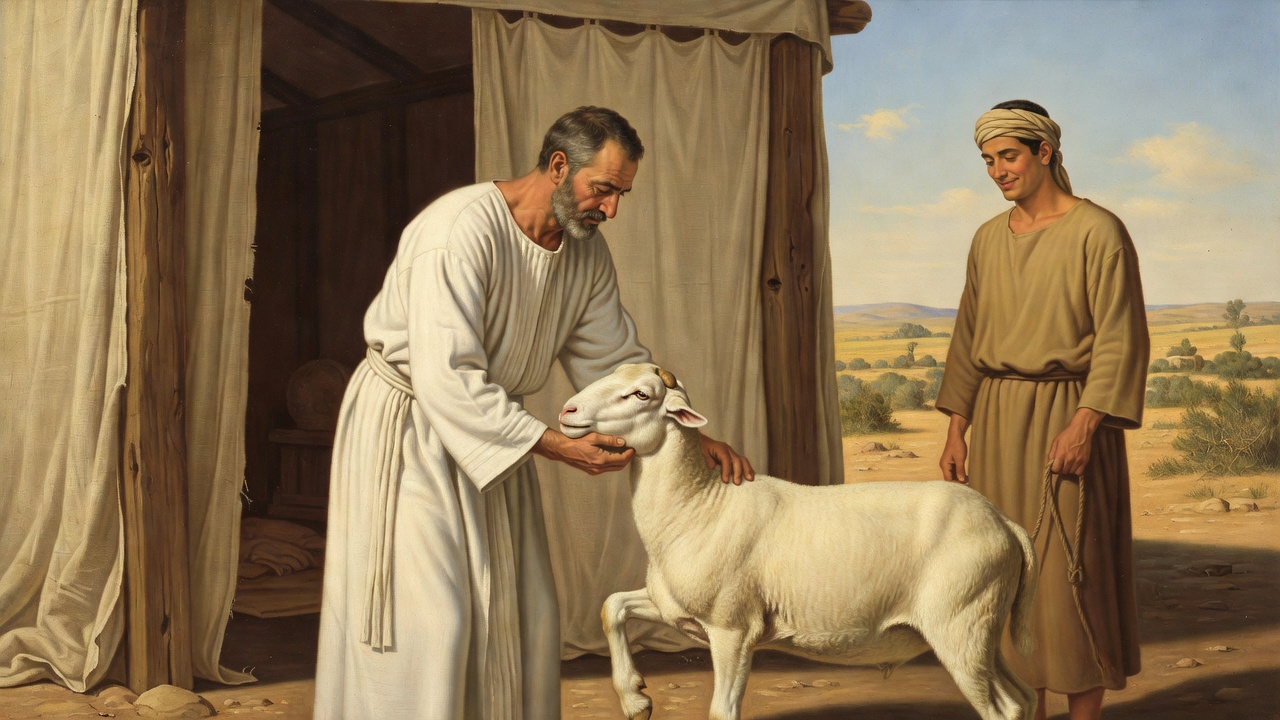
- Animals brought as sacrifices for burnt offerings or peace offerings had to be without blemish, such as blindness, injuries, sores, or physical deformities. In addition, newborn livestock had to remain with their mother for seven days before becoming eligible for sacrifice on the eighth day.Sources: the Bible text itself
- If a non-priest unintentionally ate of the sacred food, the law required full restitution plus an additional fifth of its value paid to the priest. This ensured sacred contributions consecrated to God were not treated carelessly by the community.Sources: the Bible text itself
Notes written with AI assistance from open sources (Theographic Bible Metadata, CC BY-SA 4.0; Easton’s Bible Dictionary, public domain) and reviewed before publishing.
Places in this chapter
- Egypt · 30.129, 31.308 · verse 33
Only places identified with high confidence are shown (90% or more according to the scholarly sources compiled by OpenBible). Period map: DARE (Digital Atlas of the Roman Empire), CC BY 4.0; modern map: © OpenStreetMap contributors; places: OpenBible.info (CC BY 4.0).
Credits and license for this translation
American Standard Version (1901)
The American Standard Version of the Holy Bible, first published in 1901.
Public Domain
Language: English
Dialect: Archaic American
This public domain Bible translation is brought to you courtesy of eBible.org.
If you would like to make a donation to help keep free Bible access like this going, please visit https://eBible.org/give.php .
2026-10-02
Section headings adapted from the Berean Standard Bible (public domain); they are not part of this translation’s text.
Source: http://ebible.org/eng-asv/ · eBible.org