Ecclesiastes 7
American Standard Version (1901) · Tap a verse to see its cross-references.
The Value of Wisdom
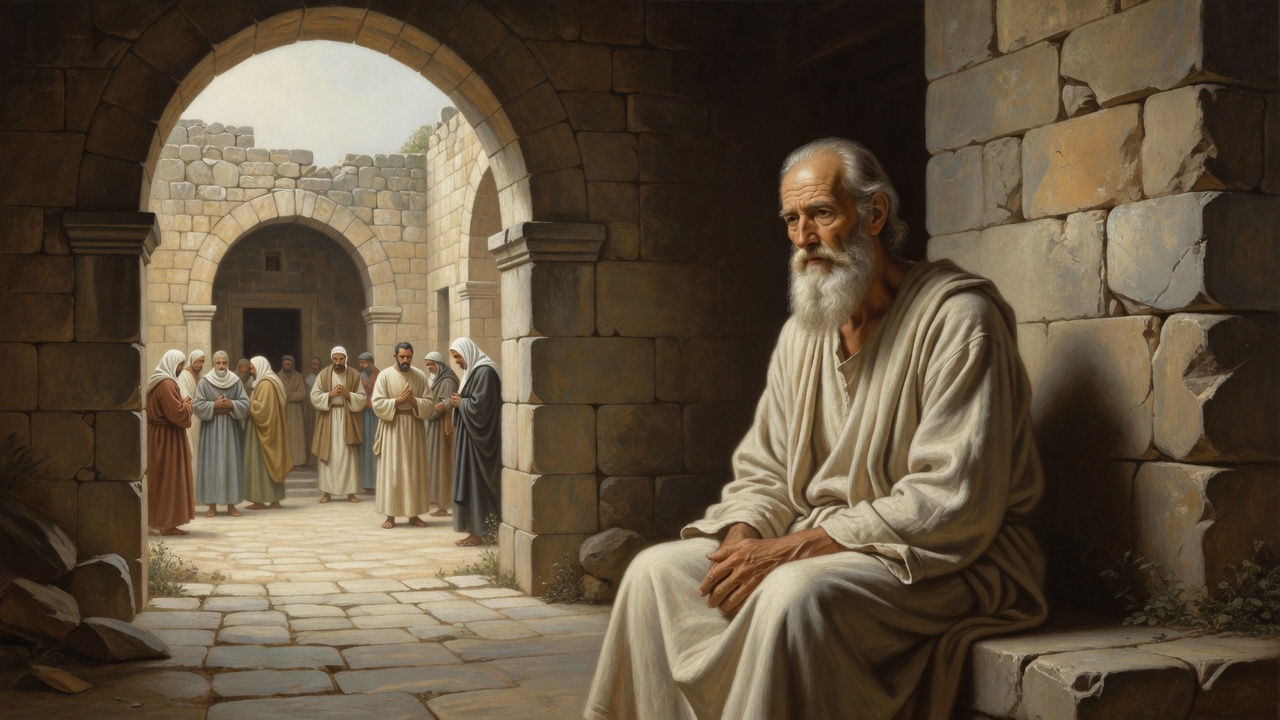
1A good name is better than precious oil; and the day of death, than the day of one’s birth. 2It is better to go to the house of mourning than to go to the house of feasting: for that is the end of all men; and the living will lay it to his heart. 3Sorrow is better than laughter; for by the sadness of the countenance the heart is made glad. 4The heart of the wise is in the house of mourning; but the heart of fools is in the house of mirth.
5It is better to hear the rebuke of the wise, than for a man to hear the song of fools. 6For as the crackling of thorns under a pot, so is the laughter of the fool: this also is vanity. 7Surely extortion maketh the wise man foolish; and a bribe destroyeth the understanding.
8Better is the end of a thing than the beginning thereof; and the patient in spirit is better than the proud in spirit. 9Be not hasty in thy spirit to be angry; for anger resteth in the bosom of fools. 10Say not thou, What is the cause that the former days were better than these? for thou dost not inquire wisely concerning this.
11Wisdom is as good as an inheritance; yea, more excellent is it for them that see the sun. 12For wisdom is a defence, even as money is a defence; but the excellency of knowledge is, that wisdom preserveth the life of him that hath it. 13Consider the work of God: for who can make that straight, which he hath made crooked? 14In the day of prosperity be joyful, and in the day of adversity consider; yea, God hath made the one side by side with the other, to the end that man should not find out anything that shall be after him.
The Limits of Human Wisdom
15All this have I seen in my days of vanity: there is a righteous man that perisheth in his righteousness, and there is a wicked man that prolongeth his life in his evil-doing. 16Be not righteous overmuch; neither make thyself overwise: why shouldest thou destroy thyself? 17Be not overmuch wicked, neither be thou foolish: why shouldest thou die before thy time? 18It is good that thou shouldest take hold of this; yea, also from that withdraw not thy hand: for he that feareth God shall come forth from them all.
19Wisdom is a strength to the wise man more than ten rulers that are in a city. 20Surely there is not a righteous man upon earth, that doeth good, and sinneth not. 21Also take not heed unto all words that are spoken, lest thou hear thy servant curse thee; 22for oftentimes also thine own heart knoweth that thou thyself likewise hast cursed others.
23All this have I proved in wisdom: I said, I will be wise; but it was far from me. 24That which is, is far off and exceeding deep; who can find it out? 25I turned about, and my heart was set to know and to search out, and to seek wisdom and the reason of things, and to know that wickedness is folly, and that foolishness is madness. 26And I find more bitter than death the woman whose heart is snares and nets, and whose hands are bands: whoso pleaseth God shall escape from her; but the sinner shall be taken by her. 27Behold, this have I found, saith the Preacher, laying one thing to another, to find out the account; 28which my soul still seeketh, but I have not found: one man among a thousand have I found; but a woman among all those have I not found. 29Behold, this only have I found: that God made man upright; but they have sought out many inventions.
Did you know?
Wisdom, Mortality, and the Limits of Understanding
- Ecclesiastes 7 begins with a series of comparative proverbs arguing that moments of solemn reflection, such as visiting a house of mourning or facing sorrow, provide greater insight into life than superficial laughter and feast houses.Sources: the Bible text itself
- The Teacher reflects on the reality of human experience, noting that God has appointed both prosperous and adverse days so that humans cannot foresee their future, and that righteous people sometimes perish while the wicked live long.Sources: the Bible text itself
- The chapter highlights the universal limitation of human goodness, observing that there is no one on earth who does good and never sins, and concluding that while God created humanity upright, people pursue many complex schemes.Sources: the Bible text itself
Notes written with AI assistance from open sources (Theographic Bible Metadata, CC BY-SA 4.0; Easton’s Bible Dictionary, public domain) and reviewed before publishing.
Credits and license for this translation
American Standard Version (1901)
The American Standard Version of the Holy Bible, first published in 1901.
Public Domain
Language: English
Dialect: Archaic American
This public domain Bible translation is brought to you courtesy of eBible.org.
If you would like to make a donation to help keep free Bible access like this going, please visit https://eBible.org/give.php .
2026-10-02
Section headings adapted from the Berean Standard Bible (public domain); they are not part of this translation’s text.
Source: http://ebible.org/eng-asv/ · eBible.org