Psalms 96
Brenton Septuagint Translation · Tap a verse to see its cross-references.
Sing to the LORD, All the Earth
1For David, when his land is established.
The Lord reigns, let the earth exult, let many islands rejoice.
2Cloud and darkness are round about him; righteousness and judgment are the establishment of his throne. 3Fire shall go before him, and burn up his enemies round about. 4His lightnings appeared to the world; the earth saw, and trembled. 5The mountains melted like wax at the presence of the Lord, at the presence of the Lord of the whole earth. 6The heavens have declared his righteousness, and all the people have seen his glory.
7Let all that worship graven images be ashamed, who boast of their idols; worship him, all ye his angels.
8Sion heard and rejoiced; and the daughters of Judea exulted, because of thy judgments, O Lord. 9For thou art Lord most high over all the earth; thou art greatly exalted above all gods.
10Ye that love the Lord, hate evil; the Lord preserves the souls of his saints; he shall deliver them from the hand of sinners. 11Light is sprung up for the righteous, and gladness for the upright in heart. 12Rejoice in the Lord, ye righteous; and give thanks for a remembrance of his holiness.
Did you know?
A Universal Song of Praise and Judgment
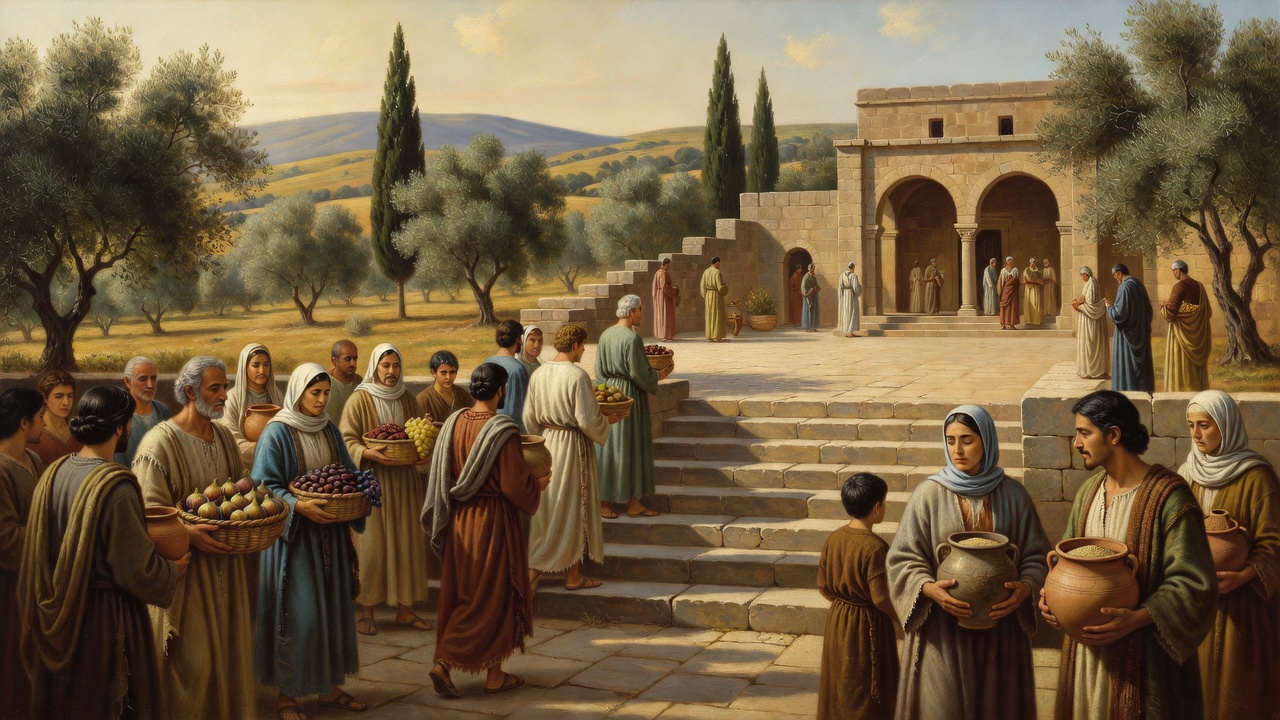
- Psalm 96 extends an invitation beyond Israel, calling all families of the nations to acknowledge the Lord, bring offerings into his courts, and abandon the idols of the peoples in recognition of the Creator of the heavens.Sources: the Bible text itself
- The psalm portrays the natural world—including the heavens, the earth, the roaring seas, fields, and forest trees—as actively rejoicing because the Lord comes to govern and judge all peoples with righteousness and equity.Sources: the Bible text itself
Notes written with AI assistance from open sources (Theographic Bible Metadata, CC BY-SA 4.0; Easton’s Bible Dictionary, public domain) and reviewed before publishing.
Credits and license for this translation
Translation of the Greek Septuagint into English by Sir Lancelot Charles Lee Brenton
Published in 1851, and now in the Public Domain.
If you find errors in the text, please report them so that we can correct them.
Section headings adapted from the Berean Standard Bible (public domain); they are not part of this translation’s text.
Source: http://ebible.org/eng-Brenton/ · eBible.org