Psalms 28
Brenton Septuagint Translation · Tap a verse to see its cross-references.
The LORD Is My Strength
1A Psalm of David on the occasion of the solemn assembly of the Tabernacle.
Bring to the Lord, ye sons of God, bring to the Lord young rams; bring to the Lord glory and honour. 2Bring to the Lord glory, due to his name; worship the Lord in his holy court.
3The voice of the Lord is upon the waters: the God of glory has thundered: the Lord is upon many waters. 4The voice of the Lord is mighty; the voice of the Lord is full of majesty. 5There is the voice of the Lord who breaks the cedars; the Lord will break the cedars of Libanus. 6And he will beat them small, even Libanus itself, like a calf; and the beloved one is as a young unicorn. 7There is a voice of the Lord who divides a flame of fire. 8A voice of the Lord who shakes the wilderness; the Lord will shake the wilderness of Cades. 9The voice of the Lord strengthens the hinds, and will uncover the thickets: and in his temple every one speaks of his glory. 10The Lord will dwell on the waterflood: and the Lord will sit a king for ever. 11The Lord will give strength to his people; the Lord will bless his people with peace.
Did you know?
A Plea for Mercy and a Song of Trust
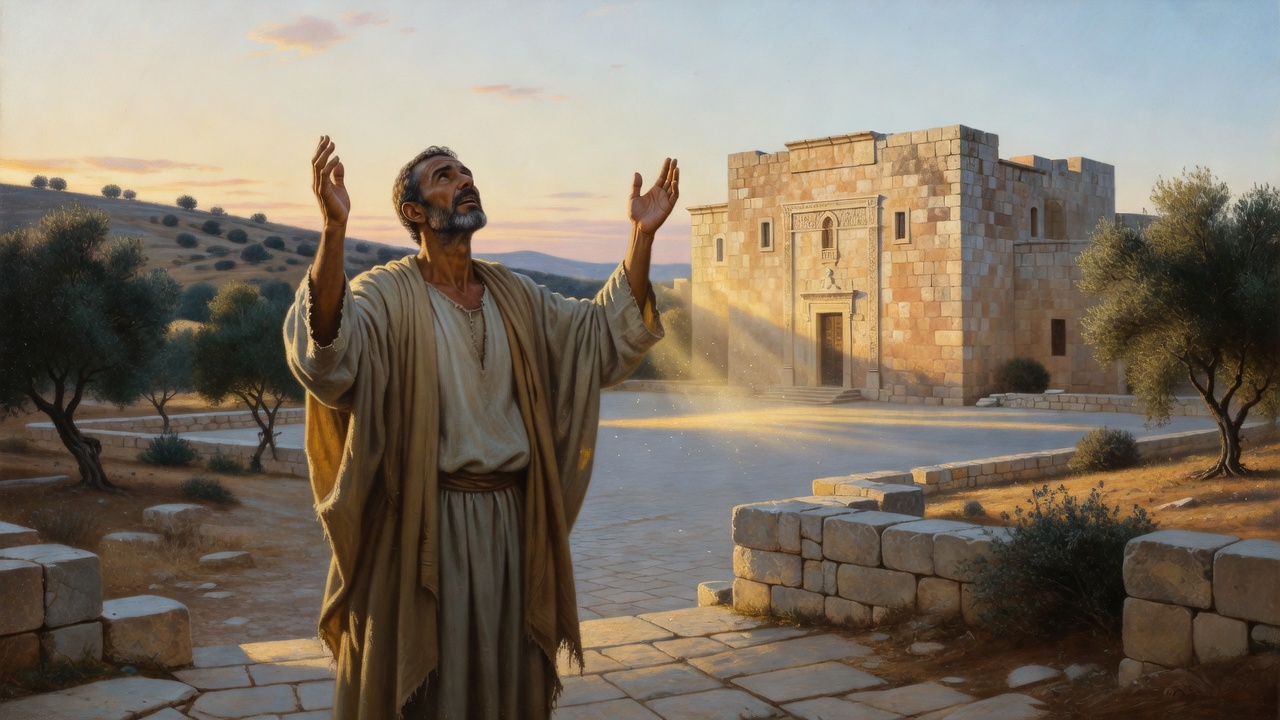
- Lifting up hands toward the sanctuary was a customary ancient posture of earnest prayer in Israel, visibly demonstrating supplication, humility, and full dependence on God.Sources: the Bible text itself
- The psalm transitions dramatically from a desperate plea for deliverance from death and judgment alongside the wicked to joyful thanksgiving, concluding with pastoral imagery where God is asked to shepherd and carry His people forever.Sources: the Bible text itself
Notes written with AI assistance from open sources (Theographic Bible Metadata, CC BY-SA 4.0; Easton’s Bible Dictionary, public domain) and reviewed before publishing.
Places in this chapter
- Most Holy Place · Today: on Mount Moriah · 31.778, 35.236 · verse 2
Only places identified with high confidence are shown (90% or more according to the scholarly sources compiled by OpenBible). Period map: DARE (Digital Atlas of the Roman Empire), CC BY 4.0; modern map: © OpenStreetMap contributors; places: OpenBible.info (CC BY 4.0).
Credits and license for this translation
Translation of the Greek Septuagint into English by Sir Lancelot Charles Lee Brenton
Published in 1851, and now in the Public Domain.
If you find errors in the text, please report them so that we can correct them.
Section headings adapted from the Berean Standard Bible (public domain); they are not part of this translation’s text.
Source: http://ebible.org/eng-Brenton/ · eBible.org