Psalms 129
Brenton Septuagint Translation · Tap a verse to see its cross-references.
The Cords of the Wicked
1A Song of Degrees.
Out of the depths have I cried to thee, O Lord. 2O Lord, hearken to my voice; let thine ears be attentive to the voice of my supplication. 3If thou, O Lord, shouldest mark iniquities, O Lord, who shall stand? 4For with thee is forgiveness: for thy name's sake 5have I waited for thee, O Lord, my soul has waited for thy word. 6My soul has hoped in the Lord; from the morning watch till night. 7Let Israel hope in the Lord: for with the Lord is mercy, and with him is plenteous redemption. 8And he shall redeem Israel from all his iniquities.
Did you know?
Endurance in Affliction and the Fate of Zion’s Foes
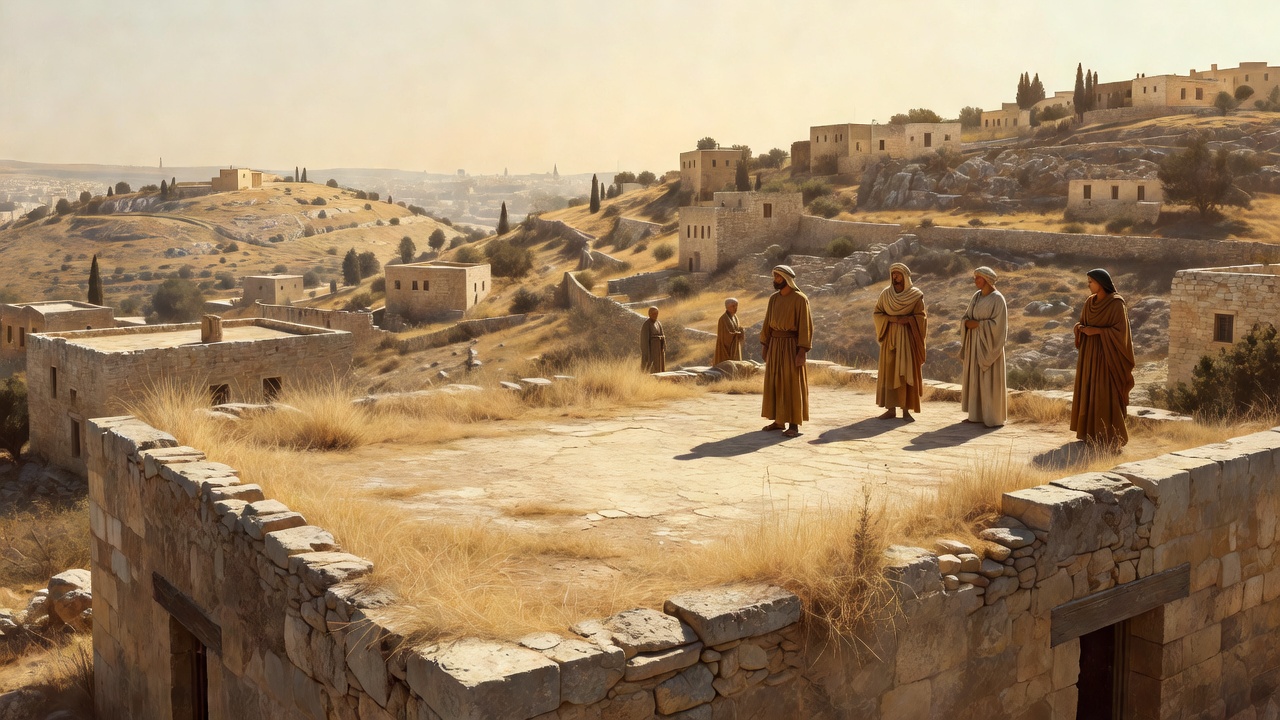
- The imagery of grass growing on rooftops reflects ancient construction, where flat roofs were often covered with packed earth. Seeds might sprout there after rains, but because the soil layer was shallow and exposed to the sun, the grass withered before it could mature or produce a harvest.Sources: the Bible text itself
- The phrase spoken by passersby in verse 8 mirrors the traditional agricultural greetings exchanged in ancient Israel, where travelers routinely blessed reapers and laborers working in the fields.Sources: the Bible text itself
- Zion was the prominent hill in Jerusalem where King David built his citadel, and in biblical poetry it often stands as a representation of God’s dwelling place and His people.Sources: the Bible text itself · Zion
Notes written with AI assistance from open sources (Theographic Bible Metadata, CC BY-SA 4.0; Easton’s Bible Dictionary, public domain) and reviewed before publishing.
Places in this chapter
Only places identified with high confidence are shown (90% or more according to the scholarly sources compiled by OpenBible). Period map: DARE (Digital Atlas of the Roman Empire), CC BY 4.0; modern map: © OpenStreetMap contributors; places: OpenBible.info (CC BY 4.0).
Credits and license for this translation
Translation of the Greek Septuagint into English by Sir Lancelot Charles Lee Brenton
Published in 1851, and now in the Public Domain.
If you find errors in the text, please report them so that we can correct them.
Section headings adapted from the Berean Standard Bible (public domain); they are not part of this translation’s text.
Source: http://ebible.org/eng-Brenton/ · eBible.org