Psalms 120
Brenton Septuagint Translation · Tap a verse to see its cross-references.
In My Distress I Cried to the LORD
1A Song of Degrees.
I lifted up mine eyes to the mountains, whence my help shall come. 2My help shall come from the Lord, who made the heaven and the earth. 3Let not thy foot be moved; and let not thy keeper slumber. 4Behold, he that keeps Israel shall not slumber nor sleep. 5The Lord shall keep thee: the Lord is thy shelter upon thy right hand. 6The sun shall not burn thee by day, neither the moon by night. 7May the Lord preserve thee from all evil: the Lord shall keep thy soul. 8The Lord shall keep thy coming in, and thy going out, from henceforth and even for ever.
Did you know?
A Plea for Peace in Exile
- Psalm 120 opens the series of fifteen "songs of ascents", beginning with a personal cry for deliverance from deceitful speech and hostile surroundings.Sources: the Bible text itself
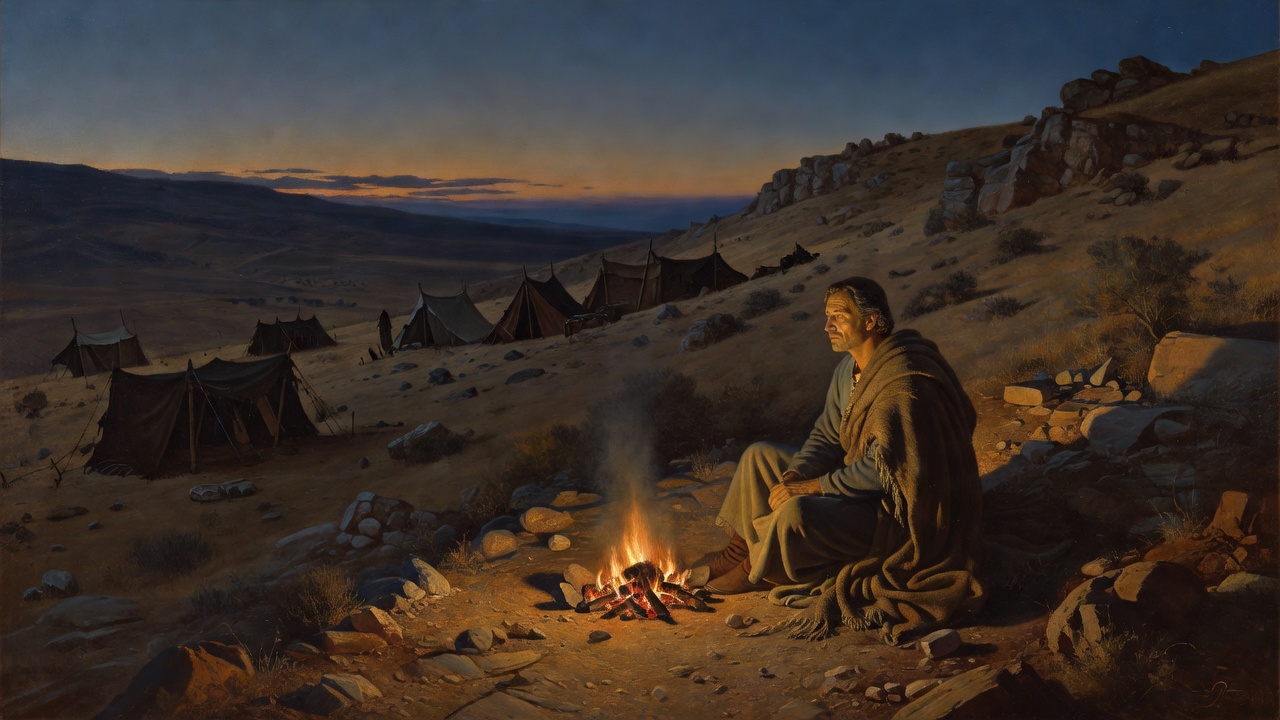
- The psalmist laments living in Meshech and among the tents of Kedar. Meshech was associated with northern peoples near the Black and Caspian Seas, while Kedar referred to nomadic tribes living in black tents in northwestern Arabia; together they symbolize distant, alien lands far from the community of worship.Sources: Meshech · Kedar · the Bible text itself
Notes written with AI assistance from open sources (Theographic Bible Metadata, CC BY-SA 4.0; Easton’s Bible Dictionary, public domain) and reviewed before publishing.
Places in this chapter
- Jerusalem · 31.777, 35.234 · verse 1
- Kedar · 29.811, 39.868 · verse 5
- Meshech · Today: about 200 km around Gordion · 39.655, 31.994 · verse 5
Only places identified with high confidence are shown (90% or more according to the scholarly sources compiled by OpenBible). Period map: DARE (Digital Atlas of the Roman Empire), CC BY 4.0; modern map: © OpenStreetMap contributors; places: OpenBible.info (CC BY 4.0).
Credits and license for this translation
Translation of the Greek Septuagint into English by Sir Lancelot Charles Lee Brenton
Published in 1851, and now in the Public Domain.
If you find errors in the text, please report them so that we can correct them.
Section headings adapted from the Berean Standard Bible (public domain); they are not part of this translation’s text.
Source: http://ebible.org/eng-Brenton/ · eBible.org