Deuteronomy 16
Brenton Septuagint Translation · Tap a verse to see its cross-references.
Passover and the Feast of Unleavened Bread
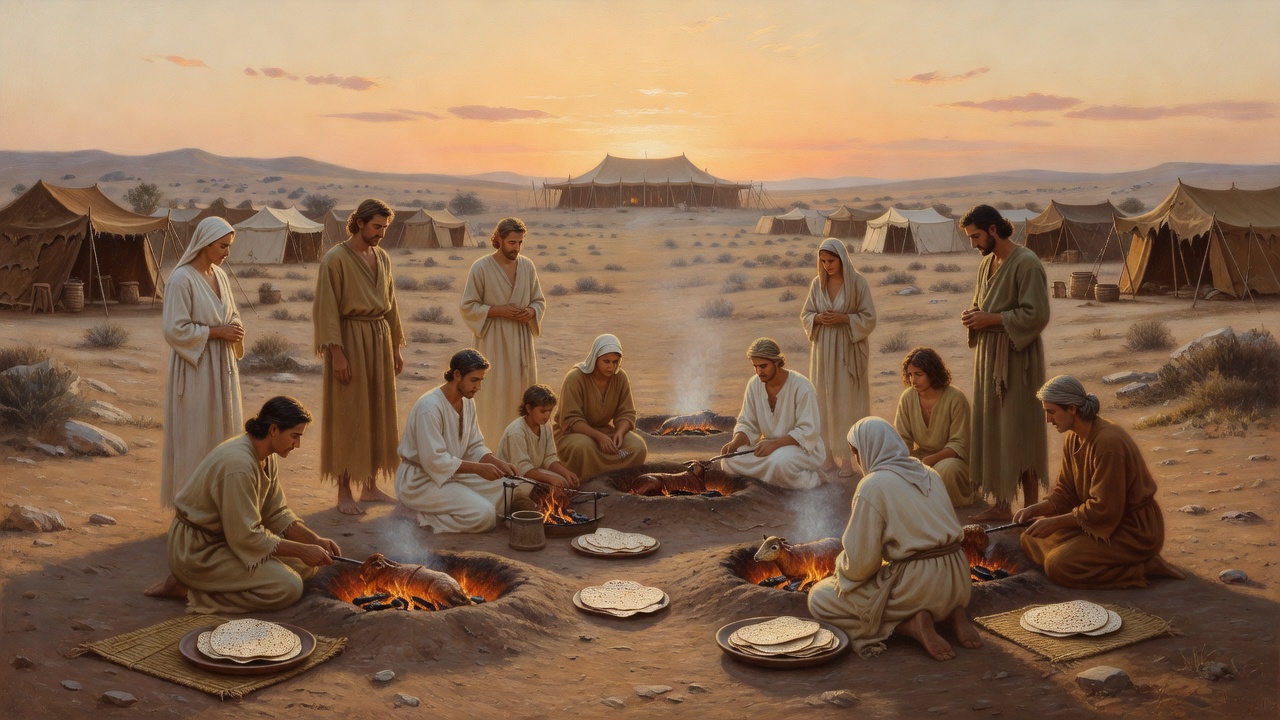
1Observe the month of new corn, and thou shalt sacrifice the passover to the Lord thy God; because in the month of new corn thou camest out of Egypt by night. 2And thou shalt sacrifice the passover to the Lord thy God, sheep and oxen in the place which the Lord thy God shall choose to have his name called upon it. 3Thou shalt not eat leaven with it; seven days shalt thou eat unleavened bread with it, bread of affliction, because ye came forth out of Egypt in haste; that ye may remember the day of your coming forth out of the land of Egypt all the days of your life. 4Leaven shall not be seen with thee in all thy borders for seven days, and there shall not be left of the flesh which thou shalt sacrifice at even on the first day until the morning. 5Thou shalt not have power to sacrifice the passover in any of the cities, which the Lord thy God gives thee. 6But in the place which the Lord thy God shall choose, to have his name called there, thou shalt sacrifice the passover at even at the setting of the sun, at the time when thou camest out of Egypt. 7And thou shalt boil and roast and eat it in the place, which the Lord thy God shall choose; and thou shalt return in the morning, and go to thy house. 8Six days shalt thou eat unleavened bread, and on the seventh day is a holiday, a feast to the Lord thy God: thou shalt not do in it any work, save what must be done by any one.
The Feast of Weeks
9Seven weeks shalt thou number to thyself; when thou hast begun to put the sickle to the corn, thou shalt begin to number seven weeks. 10And thou shalt keep the feast of weeks to the Lord thy God, accordingly as thy hand has power in as many things as the Lord thy God shall give thee.
11And thou shalt rejoice before the Lord thy God, thou and thy son, and thy daughter, thy man-servant and thy maid-servant, and the Levite, and the stranger, and the orphan, and the widow which dwells among you, in whatsoever place the Lord thy God shall choose, that his name should be called there.
12And thou shalt remember that thou wast a servant in the land of Egypt, and thou shalt observe and do these commands.
The Feast of Tabernacles
13Thou shalt keep for thyself the feast of tabernacles seven days, when thou gatherest in thy produce from thy corn-floor and thy wine-press. 14And thou shalt rejoice in thy feast, thou, and thy son, and thy daughter, thy man-servant, and thy maid-servant, and the Levite, and the stranger, and the orphan, and the widow that is in thy cities. 15Seven days shalt thou keep a feast to the Lord thy God in the place which the Lord thy God shall choose for himself; and if the Lord thy God shall bless thee in all thy fruits, and in every work of thy hands, then thou shalt rejoice.
16Three times in the year shall all thy males appear before the Lord thy God in the place which the Lord shall choose in the feast of unleavened bread, and in the feast of weeks, and in the feast of tabernacles: thou shalt not appear before the Lord thy God empty. 17Each one according to his ability, according to the blessing of the Lord thy God which he has given thee.
Judges and Justice
18Thou shalt make for thyself judges and officers in thy cities, which the Lord thy God gives thee in thy tribes, and they shall judge the people with righteous judgment: 19they shall not wrest judgment, nor favour persons, nor receive a gift; for gifts blind the eyes of the wise, and pervert the words of the righteous. 20Thou shalt justly pursue justice, that ye may live, and go in and inherit the land which the Lord thy God gives thee.
Forbidden Forms of Worship
21Thou shalt not plant for thyself a grove; thou shalt not plant for thyself any tree near the altar of thy God. 22Thou shalt not set up for thyself a pillar, which the Lord thy God hates.
Did you know?
Appointed Feasts and Righteous Justice
- Deuteronomy mandates three annual pilgrimage festivals—the Feast of Unleavened Bread (Passover), the Feast of Weeks, and the Feast of Tabernacles. For these occasions, the men of Israel were required to travel and appear before God not in their local towns, but at the specific central location chosen as a dwelling for His Name.Sources: the Bible text itself
- The celebrations of the Feast of Weeks and the Feast of Tabernacles explicitly included vulnerable members of society, such as servants, Levites, foreigners, orphans, and widows. These communal rejoicings were tied to the memory of Israel's liberation from slavery in Egypt.Sources: the Bible text itself
- In addition to religious assemblies, the text commands the appointment of local judges and officials across every town. They were forbidden from taking bribes or showing partiality, establishing the standard to pursue justice alone throughout the land.Sources: the Bible text itself
Notes written with AI assistance from open sources (Theographic Bible Metadata, CC BY-SA 4.0; Easton’s Bible Dictionary, public domain) and reviewed before publishing.
Places in this chapter
Only places identified with high confidence are shown (90% or more according to the scholarly sources compiled by OpenBible). Period map: DARE (Digital Atlas of the Roman Empire), CC BY 4.0; modern map: © OpenStreetMap contributors; places: OpenBible.info (CC BY 4.0).
Credits and license for this translation
Translation of the Greek Septuagint into English by Sir Lancelot Charles Lee Brenton
Published in 1851, and now in the Public Domain.
If you find errors in the text, please report them so that we can correct them.
Section headings adapted from the Berean Standard Bible (public domain); they are not part of this translation’s text.
Source: http://ebible.org/eng-Brenton/ · eBible.org