Leviticus 1
Ãcõrẽ Bed̶ea · Tap a verse to see its cross-references.
About this book
About Leviticus
- Easton's Bible Dictionary (1897) presents Leviticus as the third book of the Pentateuch and as the third book of Moses. The name, used in the Vulgate following the LXX, reflects the book's chief concern: the Levitical service.Sources: Easton: Leviticus
- Easton states that every ordinance in the book was delivered within one month, the first month of the second year after the Exodus. His entry on Sinai, also called Horeb, says the Hebrews reached that mountain district in the third month after the Exodus and remained encamped for about a whole year, and that the whole of Leviticus records what occurred there.Sources: Easton: Leviticus · Mount Sinai
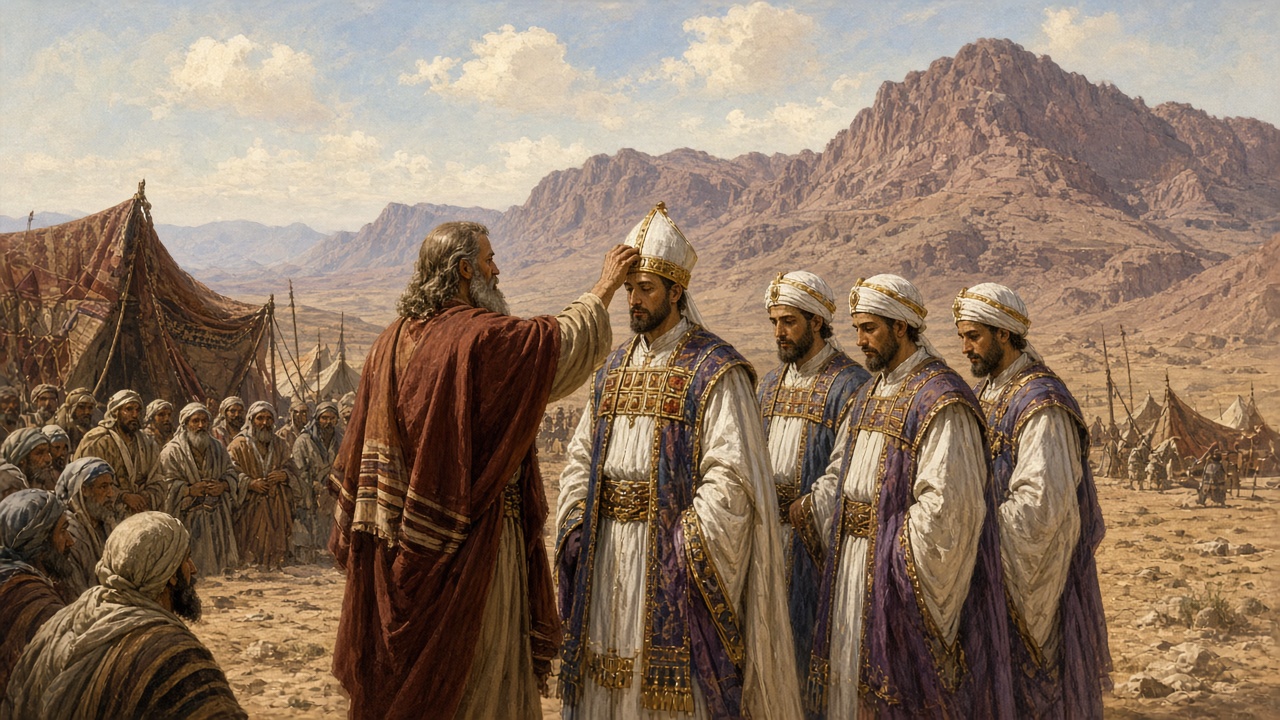
- Chapters 1–7 give laws for burnt offerings, meat offerings, and thank offerings, then for sin offerings and trespass offerings, and for the priests' duties in offering sacrifice. Chapters 8–10 recount the consecration of Aaron and his sons, Aaron's first offering for himself and the people, and the death of Nadab and Abihu, who were struck dead and buried outside the camp after offering strange, or common, fire not taken from the great brazen altar. Chapters 11–16 concern purity and the sacrifices and ordinances for putting impurity away.Sources: Easton: Leviticus · Nadab · Abihu
- Easton describes chapters 17–20 as laws marking the separation between Israel and other peoples. Further laws concern the priests' personal purity and their eating of holy things, offerings without blemish, and the due celebration of the great festivals in chapters 23 and 25. Promises and warnings about obedience follow, the book closes with a section on vows, and Easton notes that God is the direct speaker through almost the whole of it.Sources: Easton: Leviticus
- In the rites of chapter 16, one goat is associated with Azazel, which the Authorized Version renders scapegoat and the Revised Version leaves as Azazel. Easton reports that some Jewish interpreters take it as a place in the wilderness about twelve miles east of Jerusalem, while others take it as an evil spirit or even Satan, and he also notes a root meaning of separation.Sources: Azazel
Notes written with AI assistance from open sources (Theographic Bible Metadata, CC BY-SA 4.0; Easton’s Bible Dictionary, public domain) and reviewed before publishing.
Sãwã animarã Ãcõrẽa babue diaida b̶ʌd̶ebema
1Ãcõrẽba idji wua ded̶eba Moisea jarasia:
2–Israelerãa nãwã jaradua: “Ab̶aʌba idji animarãnebemada Ãcõrẽa diaibʌrʌ, pacada, ovejada, wa chiwatuda diaida b̶ʌa.
3Pacada babue diaibʌrʌ, dji umaquĩrãdrʌ diaida b̶ʌa. Maʌ̃ pacara jũma bia b̶aida b̶ʌa. Maʌ̃ra Ãcõrẽ wua ded̶e ed̶a wãbadamaa edeida b̶ʌa idjia diabʌrʌra Ãcõrẽba bia unumãrẽã. 4Dji diabʌrʌba idji jʌwara paca boro ʌ̃rʌ̃ b̶ʌida b̶ʌa. Mãwã Ãcõrẽba maʌ̃ pacara dji ẽberã cacuabari edaya idjia cadjirua od̶a quĩrãdoai carea. 5Maʌ̃be Ãcõrẽ quĩrãpita pacara o ʌrrãgo beaida b̶ʌa. Maʌ̃ne Aaroʌ̃ warrarã sacerdoterãba dji oara piad̶aped̶a animarã babue diabada orroza jĩãpod̶ida panʌa Ãcõrẽ wua de quĩrãpe. 6Dji diad̶aba pacara epaped̶a, drapetaped̶a tʌcuaida b̶ʌa. 7Mãwã o b̶ʌd̶e sacerdote Aaroʌ̃ warrarãba animarã babue diabada ʌ̃rʌ̃ tʌbʌra uruga nũmʌnida panʌa. 8Dji diad̶aba paca jʌ̃sira, dji jĩrũ sid̶a baidoba sʌgʌida b̶ʌa. Sʌgʌd̶acarea Aaroʌ̃ warrarã sacerdoterãba maʌ̃gʌra, dji animarã tʌcuad̶ara, dji borora, dji draga sid̶a animarã babue diabadad̶e tʌbʌ uruga nũmʌ ʌ̃rʌ̃ b̶ʌd̶aped̶a jũma babue diad̶ida panʌa. Maʌ̃ paca babue diabʌrʌra Ãcõrẽba bia unuya.
10Ab̶aʌba idji animarãnebema ovejada wa chiwatuda Ãcõrẽa babue diaibʌrʌ, dji umaquĩrãdrʌ diaida b̶ʌa. Maʌ̃ animarãra jũma bia b̶aida b̶ʌa. 11Maʌ̃ra Ãcõrẽ quĩrãpita animarã babue diabada jʌwa araare o ʌrrãgo beaida b̶ʌa. Maʌ̃ne Aaroʌ̃ warrarã sacerdoterãba dji oara piad̶aped̶a animarã babue diabada orroza jĩãpod̶ida panʌa. 12Dji diad̶aba animarãra drapetaped̶a tʌcuaida b̶ʌa. Tʌcuaped̶a dji jʌ̃sira, dji jĩrũ sid̶a baidoba sʌgʌida b̶ʌa. Maʌ̃gʌra, dji animarã tʌcuad̶ara, dji borora, dji draga sid̶a sacerdoteba animarã babue diabadad̶e tʌbʌ uruga nũmʌ ʌ̃rʌ̃ b̶ʌped̶a jũma babue diaida b̶ʌa. Maʌ̃ animarã babue diabʌrʌra Ãcõrẽba bia unuya.
14Ab̶aʌba ĩbanada Ãcõrẽa babue diaibʌrʌ, puchirãda wa putujuda diaida b̶ʌa. 15Sacerdoteba maʌ̃ ĩbanara animarã babue diabadamaa edeped̶a otapuya beaida b̶ʌa. Beaped̶a dji borora animarã babue diabadad̶e babueida b̶ʌa. Dji oara animarã babue diabada orrod̶e zowuabida b̶ʌa. 16Maʌ̃be carab̶aped̶a, jẽsaped̶a dji jʌ̃sida, dji cara sid̶a animarã babue diabada orrocawa b̶ʌida b̶ʌa dji tʌbʌ pora b̶ʌmaa. Dji tʌbʌ porara animarã babue diabada ʌ̃mãdau odjabariare b̶ʌa. 17Maʌ̃be dji id̶e jidaped̶a ĩbanara drawe ewara cob̶ʌida b̶ʌa. Mãwã cob̶ʌped̶a animarã babue diabadad̶e babue diaida b̶ʌa. Maʌ̃ ĩbana babue diabʌrʌra Ãcõrẽba bia unuya.”–
Did you know?
The Burnt Offering
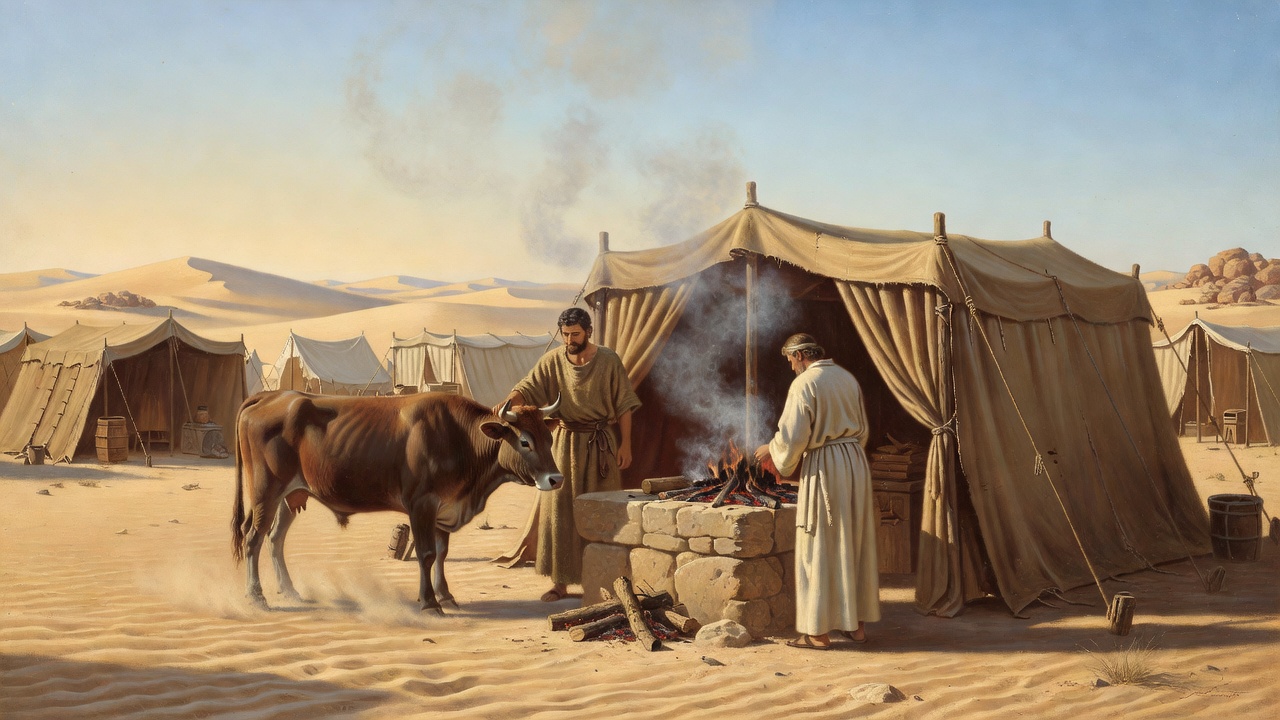
- The instructions for the burnt offering accommodate different economic means by allowing offerings from the herd, the flock (sheep or goats), or birds (turtledoves or young pigeons). For livestock, the animal was required to be a male without blemish.Sources: the Bible text itself
- The ritual required a clear division of roles between the worshiper and the priests. The worshiper brought the animal, laid a hand on its head for atonement, slaughtered it, skinned it, and washed its inner parts, while the sons of Aaron sprinkled the blood and burned the entire offering on the altar.Sources: the Bible text itself · Aaron
Notes written with AI assistance from open sources (Theographic Bible Metadata, CC BY-SA 4.0; Easton’s Bible Dictionary, public domain) and reviewed before publishing.
Credits and license for this translation
Ãcõrẽ Bed̶ea
New Testament in Emberá, Northern (PM:emp:Emberá, Northern)
copyright © 2011 Wycliffe Bible Translators, Inc.
Language: Emberá, Northern
Translation by: Wycliffe Bible Translators, Inc.
Copyright Information
© 2011, Wycliffe Bible Translators, Inc. All rights reserved.
This translation text is made available to you under the
terms of the Creative Commons License: Attribution-Noncommercial-No Derivative Works.
( http://creativecommons.org/licenses/by-nc-nd/3.0/ )
In addition, you have permission to port the text to different file formats, as long as you
do not change any of the text or punctuation of the Bible.
You may share, copy, distribute, transmit, and extract portions
or quotations from this work, provided that you include the above copyright
information:
You must give Attribution to the work.
You do not sell this work for a profit.
You do not make any derivative works that change any of the actual words or punctuation of the Scriptures.
Permissions beyond the scope of this license may be
available if you contact
us with your request.
The New Testament
in Emberá, Northern
© 2011, Wycliffe Bible Translators, Inc. All rights reserved.
This translation is made available to you under the terms of the
Creative Commons Attribution-Noncommercial-No Derivatives license 4.0.
You may share and redistribute this Bible translation or extracts from it in any format, provided that:
You include the above copyright and source information.
You do not sell this work for a profit.
You do not change any of the words or punctuation of the Scriptures.
Pictures included with Scriptures and other documents on this site are licensed just for use with those Scriptures and documents.
For other uses, please contact the respective copyright owners.
2014-04-24
Source: http://ebible.org/empNTpo/ · eBible.org