Genesis 46
Ãcõrẽ Bed̶ea · Tap a verse to see its cross-references.
1Ara maʌ̃da Jacobo Israel abadara wãsia jũma idjia erob̶ʌ bara. Wãbʌrʌd̶e Beersebád̶e jũẽsia. Mama idjia animarãda idji zeza Isaba ĩjã b̶ad̶a Ãcõrẽa babue diacuasia. 2Maʌ̃ diamasi Israelba cãĩmocara quĩrãca ũrĩsia Ãcõrẽra idji ume bed̶ea b̶ʌda. Ãcõrẽba trʌ̃ jarasia:
–Jacobo, Jacobo.–
Jacoboba panusia:
–Mʌ̃ra nama b̶ʌa.–
3Ãcõrẽba jarasia:
–Mʌ̃ra bʌ zezaba ĩjã b̶ad̶a Ãcõrẽa. Wayarãdua Egiptod̶aa wãi carea. Jãma mʌ̃a puru waib̶ʌada bʌd̶eba yõbiya. 4Mʌ̃ra bʌ ume Egiptod̶aa wãya. Maʌ̃be bʌd̶eba yõbʌdarãra jẽda eneya. Idjab̶a bʌ beubʌrʌd̶e Josera arima b̶aya.–
5Ara maʌ̃da Jacobora Beersebád̶eba wãsia. Egiptod̶ebema boroba carreta diabuecuad̶ad̶e Jacobo warrarãba idjira, ãdji warrarãra, ãdji quimarã sid̶a edesid̶aa. 6Jacoboba idji warrarã bid̶a ãdji animarã b̶eara idjab̶a jũma ãdjia Canaaʌ̃ druad̶e edaped̶ad̶a sid̶a Egiptod̶aa edesid̶aa. 7Jacoboba idji warrarãra, idji caurãra, idji wiuzaquerãra, idji ãĩzaquerã sid̶a Egiptod̶aa jũma edesia.
Jacobo ẽberãrã Egiptod̶aa wãped̶ad̶a
8Jacobo Israel abada warrarã Egiptod̶aa wãped̶ad̶ara naʌ̃gʌrã basía:
Jacobo warra iwina Rubeʌ̃da wãsia. 9Rubeʌ̃ba edesia idji warrarã Hanoc, Palú, Hezroʌ̃, Carmi sid̶a.
10Jacobo warra Simeoʌ̃ sid̶a wãsia. Simeoʌ̃ba edesia idji warrarã Jemuel, Jamiʌ̃, Ohad, Jaquiʌ̃, Zohar, Saul sid̶a. Saulora cananeo wẽrãba tod̶a basía.
11Jacobo warra Levi sid̶a wãsia. Leviba edesia idji warrarã Gersoʌ̃, Coá, Merari sid̶a.
12Jacobo warra Juda sid̶a wãsia. Judaba edesia idji warrarã Sela, Paré, Zará sid̶a. Idji warrarã Erera, Onaʌ̃ sid̶a Canaaʌ̃ druad̶e beusid̶aa. Paréba idji warrarã Hezroʌ̃da, Hamul sid̶a edesia.
13Jacobo warra Isacar sid̶a wãsia. Isacarba idji warrarã Tola, Puvá, Job, Simroʌ̃ sid̶a edesia.
14Jacobo warra Zabuloʌ̃ sid̶a wãsia. Zabuloʌ̃ba idji warrarã Sered, Eloʌ̃, Jahleel sid̶a edesia.
15Maʌ̃ warrarã sei panʌra Leaba Jacoboa Araʌ̃ druad̶e to diasia. Leaba Jacobo cau Dina sid̶a tosia. Ãdjid̶eba yõped̶ad̶ara 33 wãsid̶aa dji umaquĩrãrã, dji wẽrãrã ãbaa.
16Jacoboba Lea edasid̶e dji zãwãrẽ Labaʌ̃ba nezocawẽrã Zilpara Leaa diasia. Zilpaba warrarãda Jacoboa to diasia. Maʌ̃gʌrã sid̶a Egiptod̶aa wãsid̶aa ãdji warrarã bara. Jũma ãbaa diecisei wãsid̶aa.
Ãdji warra Gaba idji warrarã Zipioʌ̃, Hagui, Ezboʌ̃, Suni, Eri, Arodi, Areli sid̶a edesia.
Ãdji warra Aserba edesia idji warrarã Imna, Isúa, Isúi, Beria, dji cau Será sid̶a. Beria warrarãra Hebere idjab̶a Malquiel basía.
19Jacobo quima Raquel warrarãra Jose idjab̶a Benjamiʌ̃ basía. 20Jose warrarã Egiptod̶e toped̶ad̶ara Manase idjab̶a Epraiʌ̃ basía. Ãdji papara Asena basía. Asena zezara Potipera basía. Idjira Oʌ̃ purud̶e ʌ̃mãdaúa bia bed̶eabadarã sacerdote basía. 21Benjamiʌ̃ warrarãra naʌ̃gʌrã basía: Bela, Bequer, Asbel, Gera, Naamaʌ̃, Ehi, Ros, Mupiʌ̃, Hupiʌ̃, idjab̶a Ard. 22Jũma maʌ̃gʌrãra Raqueld̶eba Jacobo ume yõsid̶aa. Jũma ãbaa catorce wãsid̶aa.
23Jacoboba Raquel edasid̶e dji zãwãrẽ Labaʌ̃ba nezocawẽrã Bilhara Raquelea diasia. Bilhaba warrarãda Jacoboa to diasia. Maʌ̃gʌrã sid̶a Egiptod̶aa wãsid̶aa ãdji warrarã bara. Ãdji warra Daʌ̃ba idji warra Husiʌ̃ edesia. Ãdji warra Neptaliba edesia idji warrarã Jahzeel, Guni, Jezer, Sileʌ̃ sid̶a. Jũma ãbaa siete wãsid̶aa.
26Jũma Jacobod̶eba yõped̶ad̶arãra idji ume Egiptod̶aa wãsid̶aa. Idji ãĩgurã juachaẽ́, jũma ãbaa 66 wãsid̶aa. 27Maʌ̃gʌ awara Jose warrarã Egiptod̶e toped̶ad̶ada umé panasid̶aa. Jũma ãbaa Jacobo ẽberãrã Egiptod̶e jũẽped̶ad̶ara setenta panasid̶aa.
Jacoboba waya Jose ununa
28Jacobo Israel abadaba Judada Josemaa na wãbisia ãdjira Goseʌ̃ ẽjũãne acʌd̶e zemãrẽã. Maʌ̃misa ãdjirãra Goseʌ̃ ẽjũãne jũẽsid̶aa. 29Ãdji jũẽsid̶ad̶e Joseba idji nezocaa jarasia idji carreta enemãrẽã. Ara maʌ̃da Goseʌ̃naa idji zeza Israel audiab̶arid̶e wãsia. Idji zeza unusid̶e ojũẽped̶a dãrã jĩãsia. 30Mãwã b̶ʌd̶e Israelba Josea jarasia:
–Mʌ̃a bʌ quĩrãra unubʌrʌ bẽrã cawa b̶ʌa bʌra wad̶i zocai b̶ʌda. Jãʌ̃be mʌ̃ra necai beuya.–
Joseba idji djabarã Egiptod̶ebema boromaa eded̶a
31Maʌ̃be Joseba idji djabarãa, jũma idji zeza ẽberãrãa bid̶a jarasia:
–Egiptod̶ebema boromaa mʌ̃a jarad̶e wãya bãrãra jũẽsid̶ada. Mʌ̃a idjía jaraya: “Mʌ̃ djabarãra, mʌ̃ zeza ẽberãrã Canaaʌ̃ druad̶e duananara jũma mʌ̃maa zesid̶aa. 32Ãdjirãra animarã wagabada bẽrã ãdji ovejada, paca sid̶a enesid̶aa. Jũma ãdjirãba erob̶ea sid̶a enesid̶aa.” 33Maʌ̃be dji boroba bãrã trʌ̃ped̶a iwid̶ibʌrʌd̶e “¿Bãrãba cãrẽda obada?”, nãwã jarad̶adua: “Daira warra ed̶aʌba animarã daupẽ cawa b̶eaa, dai drõã naẽnabemarãba obadaped̶ad̶a quĩrãca.” Mãwã jarasid̶ara dji boroba bãrãra jĩga Goseʌ̃ ẽjũãne idu b̶ebiya, egiptorãmaarã oveja wagabadara dji biaẽ́ bẽrã.–
Did you know?
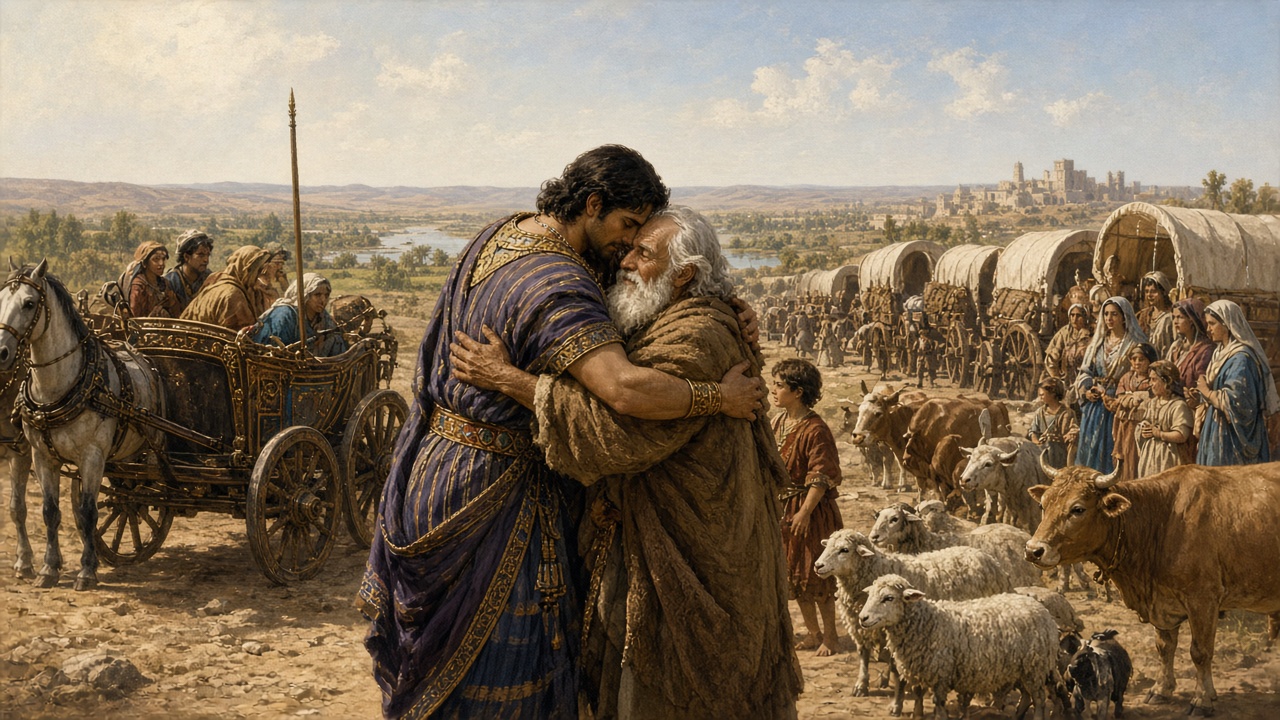
Israel Goes Down to Egypt
- As Israel set out for Egypt with all that he had, he stopped at Beersheba and offered sacrifices to the God of his father Isaac. Beersheba, meaning well of the oath or well of seven, was a well Abraham dug and named after a compact with Abimelech; when Isaac reopened it, he gave it the same name. It was a favorite dwelling of both patriarchs, and there that night God spoke to Jacob in a vision, telling him not to fear going down to Egypt, for he would make him a great nation there.Sources: the Bible text itself · Beersheba
- Jacob sent Judah ahead to Joseph for directions to Goshen, an Egyptian district east of the Nile, apparently near the royal residence, where the family remained until the Exodus. Easton's Bible Dictionary (1897) calls it the best of the land, now a desert, and also the land of Rameses. Joseph told his brothers to say they had raised livestock from youth, so they might settle there, because shepherds were detestable to the Egyptians; that dictionary suggests Pharaoh was probably Apopi, last of the Hyksos, who welcomed these Asiatic shepherds, while native Egyptians abhorred them, though some argue Joseph arrived later, under Thothmes III, after the Hyksos were expelled.Sources: the Bible text itself · Goshen · Pharaoh (of Joseph)
- The chapter counts sixty-six of Jacob's direct descendants who came to Egypt, not counting the wives of his sons, and seventy when Joseph's two sons already born in Egypt are included. Leah's sons and her daughter Dinah are named in that tally, although Easton's Bible Dictionary (1897) says Leah herself had died in Canaan before the journey and was buried in the cave of Machpelah; Rachel had died earlier giving birth to Benjamin and was buried on the way to Ephrath, that is, Bethlehem. Manasseh and Ephraim were born to Joseph in Egypt by Asenath, daughter of Potiphera, priest of On, a center of sun-worship that the Septuagint and Vulgate call Heliopolis.Sources: the Bible text itself · Leah · Rachel · On
Notes written with AI assistance from open sources (Theographic Bible Metadata, CC BY-SA 4.0; Easton’s Bible Dictionary, public domain) and reviewed before publishing.
Places in this chapter
- Egypt · 30.129, 31.308 · verses 1, 3, 4, 5, 6, 7, 8, 20, 26, 27
- Canaan · 32.767, 35.333 · verses 6, 12, 31
- Heliopolis · Today: Ain Shams · 30.129, 31.308 · verse 20
- Goshen · Today: Goshen 1 · 30.799, 31.834 · verses 28, 29, 34
Only places identified with high confidence are shown (90% or more according to the scholarly sources compiled by OpenBible). Period map: DARE (Digital Atlas of the Roman Empire), CC BY 4.0; modern map: © OpenStreetMap contributors; places: OpenBible.info (CC BY 4.0).
Credits and license for this translation
Ãcõrẽ Bed̶ea
New Testament in Emberá, Northern (PM:emp:Emberá, Northern)
copyright © 2011 Wycliffe Bible Translators, Inc.
Language: Emberá, Northern
Translation by: Wycliffe Bible Translators, Inc.
Copyright Information
© 2011, Wycliffe Bible Translators, Inc. All rights reserved.
This translation text is made available to you under the
terms of the Creative Commons License: Attribution-Noncommercial-No Derivative Works.
( http://creativecommons.org/licenses/by-nc-nd/3.0/ )
In addition, you have permission to port the text to different file formats, as long as you
do not change any of the text or punctuation of the Bible.
You may share, copy, distribute, transmit, and extract portions
or quotations from this work, provided that you include the above copyright
information:
You must give Attribution to the work.
You do not sell this work for a profit.
You do not make any derivative works that change any of the actual words or punctuation of the Scriptures.
Permissions beyond the scope of this license may be
available if you contact
us with your request.
The New Testament
in Emberá, Northern
© 2011, Wycliffe Bible Translators, Inc. All rights reserved.
This translation is made available to you under the terms of the
Creative Commons Attribution-Noncommercial-No Derivatives license 4.0.
You may share and redistribute this Bible translation or extracts from it in any format, provided that:
You include the above copyright and source information.
You do not sell this work for a profit.
You do not change any of the words or punctuation of the Scriptures.
Pictures included with Scriptures and other documents on this site are licensed just for use with those Scriptures and documents.
For other uses, please contact the respective copyright owners.
2014-04-24
Source: http://ebible.org/empNTpo/ · eBible.org