Genesis 32
Ãcõrẽ Bed̶ea · Tap a verse to see its cross-references.
Jacoboba Esaú wayad̶a
1Mamaʌba Jacobora nocod̶aa wãsia. Wãbʌrʌd̶e Ãcõrẽ nezocarã bajãnebemada idjimaa zesid̶aa. 2Maʌ̃gʌrã unubʌrʌd̶e Jacoboba jarasia: “Ãcõrẽ sordaorãda nama duanʌa.” Maʌ̃ carea mama trʌ̃ b̶ʌsia Mahanaiʌ̃.
3Mamaʌba Jacoboba idji nezocarãda Seír druad̶aa diabuesia idji djaba Esaúmaa. Seír druara idjab̶a Edoʌ̃ abadaa. 4Idji nezocarã diabuei naẽna Jacoboba jarasia:
–Mʌ̃ djaba Esaúa nãwã jarad̶e wãnadua: “Dai boro, bʌ nezoca Jacoboba nãwã jarabisia: mʌ̃ wãna ewarid̶eba ʌ̃taa mʌ̃ra dadji djabadrõã Labaʌ̃ma b̶asia. 5Mʌ̃a pacada, burroda, ovejada, nezoca umaquĩrãrãda, nezoca wẽrãrã sid̶a erob̶ʌa. Mʌ̃a naʌ̃ bed̶eara diabuebʌrʌa mʌ̃ quĩrã djuburia bʌra mʌ̃ ume bia b̶amãrẽã.”–
Mãwã jaraped̶a idji nezocarãra diabuesia. 6Dji nezocarã Jacobomaa jẽda zed̶aped̶a nãwã jarasid̶aa:
–Dairãra bʌ djaba Esaúmaa wãnaped̶a bʌ bed̶eara jarasid̶aa. Ara nawena idjira bʌmaa zebʌrʌa. Maʌ̃ awara idji ume ẽberãrãda cuatrociento zebʌdaa.–
7Maʌ̃ ũrĩbʌrʌd̶e Jacobora bio ne wayasia. Maʌ̃ba cawa crĩchaẽ́ basía. Maʌ̃ bẽrã idji ẽberãrãda ẽsadra awara b̶ʌsia. Idji ovejada, pacada, cameyo sid̶a ara maʌ̃ quĩrãca osia. 8Nãwã crĩcha b̶asia: “Esaúda zeped̶a ab̶abemada uraibʌrʌ, waabemada ẽdrʌd̶ia.” 9Maʌ̃be Jacoboba Ãcõrẽa iwid̶isia:
–Mʌ̃ zezadrõã Abrahaʌ̃ Ãcõrẽ, mʌ̃ zeza Isa Ãcõrẽ, mʌ̃ Boro, bʌa mʌ̃́a jarasia: “Wãdua bʌ djibarirã druad̶aa. Mʌ̃a bʌra ne jũmane carebaya.” 10Mʌ̃ra ẽberã biaẽ́ bẽrã bʌa mʌ̃ra quĩrã djuburiaiẽ́ b̶ʌa. Baribʌrʌ bʌa mʌ̃ra wãrãda careba b̶ʌa. Labaʌ̃maa wãi carea naʌ̃ Jordaʌ̃ do chãsid̶e mʌ̃ jʌwad̶e ab̶abe bacuruda erob̶asia. Baribʌrʌ id̶ira mʌ̃a ẽberãrãra zocãrã pe erob̶ʌ bẽrã daira puru umé panʌ quĩrãca panʌa. 11Mʌ̃a waya b̶ʌa mʌ̃ djaba Esaúra zeped̶a mʌ̃da, mʌ̃ wẽrãrãda, mʌ̃ warrarã sid̶a quenaida. Bʌa jarasia mʌ̃ra ne jũmane careba b̶aida idjab̶a mʌ̃ warrarãra zocãrã yõni bẽrã pusa ĩbʌ quĩrãca poya juachad̶aca baida. Wãrãda mãwã b̶aibʌrʌ, mʌ̃ quĩrã djuburia mʌ̃ra ẽdrʌ edadua mʌ̃ djaba Esaú jʌwad̶ebemada.–
13Maʌ̃ diamasi Jacobora mama cãĩsia. Nurẽma idjia animarã erob̶ʌd̶ebemada jʌrʌ pesia idji djaba Esaúa diai carea: 14chiwatu wẽrãda dosciento, dji umaquĩrãda veinte, oveja wẽrãda dosciento, dji umaquĩrãda veinte, 15cameyo wẽrã warra bara b̶eada treinta, paca wẽrãda cuarenta, dji umaquĩrãda die, burro wẽrãda veinte, idjab̶a dji umaquĩrãda die. 16Mãwã oped̶a maʌ̃ animarãra idji nezocarãa diasia. Maʌ̃ne ãdjía jarasia:
–Bãrãra mʌ̃ na wãnadua. Chiwatura, ovejara, cameyora, paca sid̶a awara awara pe eded̶adua.–
17Maʌ̃be dji nocoare wãbʌrʌ nezocaa jarasia:
–Mʌ̃ djaba Esaúba bʌ unubʌrʌd̶e bʌ́a nãwã iwid̶isicada: “¿Bʌra cai nezoca, sãmaa wã, naʌ̃ animarã edebʌrʌra caid̶e?” 18Mãwã iwid̶isira nãwã panudua: “Mʌ̃ boro Esaú, naʌ̃gʌra bʌ nezoca Jacoboba bʌ itea diabuebʌrʌa. Idjira dai caid̶u zebʌrʌa.”–
19Jacoboba waabema nezoca dji animarã edebʌdarãa jarasia:
–Esaú unubʌdad̶e ab̶arida jarad̶adua. 20Maʌ̃ awara jarad̶adua: “Bʌ nezoca Jacobora dairã caid̶u zebʌrʌa.”–
Jacoboba crĩchasia: “Mʌ̃a jãwã diabuebʌrʌd̶eba Esaú quĩrũbira tumabiya. Maʌ̃be dji unubʌdad̶e ãĩbẽrã idjia mʌ̃ra bia edaisicada.” 21Mãwã Jacoboba Esaúa diaira na diabuesia baribʌrʌ maʌ̃ diamasi wad̶i arima cãĩsia.
Jacobo bajãnebema ume djõna
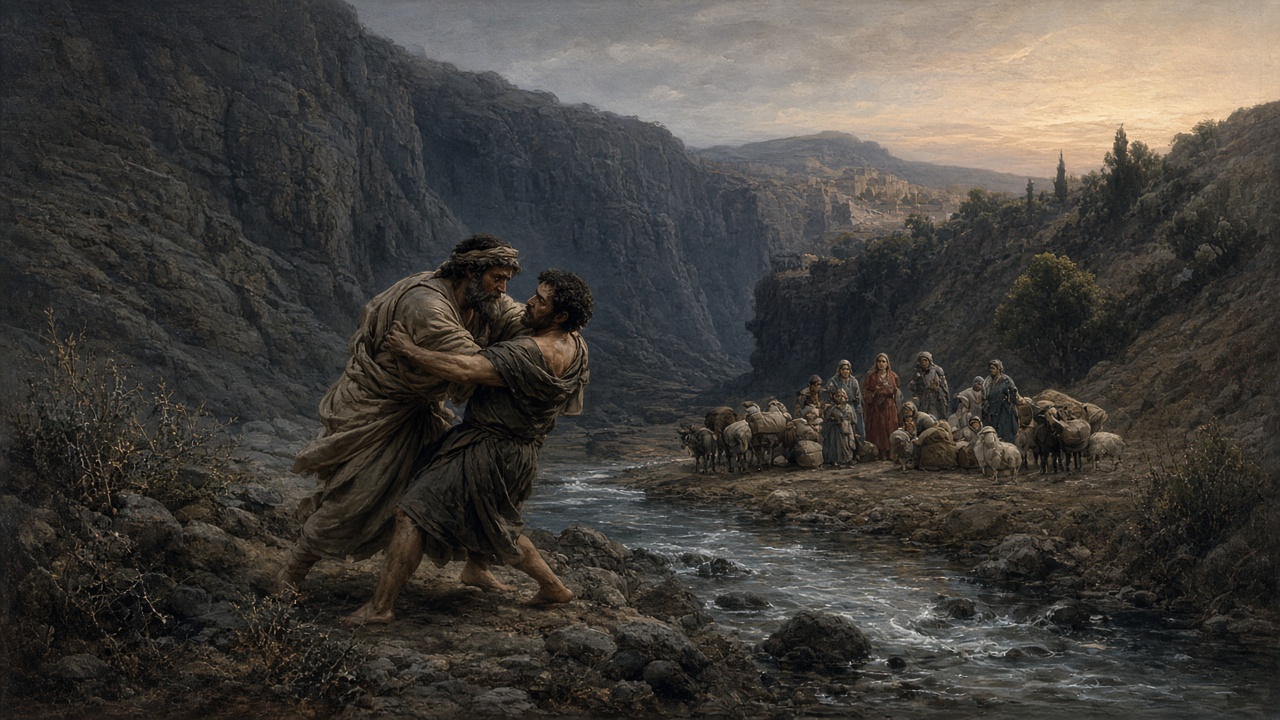
22Ara maʌ̃ diamasi Jacobora piradrʌped̶a idji quima umena, idji nezocawẽrã umena, idji once warrarã sid̶a Jabó do ĩchitad̶e chãbigasia. 23Ãdjirã chãbigaped̶a jũma idjia erob̶ʌ sid̶a chãbisia. 24Mãwã Jacobora idub̶a b̶esia. Maʌ̃ne ẽberãda idji ume djõsia ab̶a ʌ̃mãdau odjabʌrʌd̶aa. 25Djõ panʌne maʌ̃ ẽberãba cawasia Jacobora poyaẽ́da. Maʌ̃ bẽrã Jacobo chĩded̶e chĩsia. Maʌ̃ba Jacobo chĩdera ãĩ dogosia. 26Maʌ̃ne dji ẽberãba Jacoboa jarasia:
–Mʌ̃ra quenab̶aridua. Ʌ̃nadrʌbʌrʌa.–
Jacoboba panusia:
–Bʌa mʌ̃da bia jara b̶ʌẽ́bʌrʌ, mʌ̃a quenab̶ariẽ́a.–
27Maʌ̃be dji ẽberãba iwid̶isia:
–¿Bʌra casa trʌ̃bada?–
Jacoboba panusia:
–Mʌ̃ra Jacobo abadaa.–
28Maʌ̃ne dji ẽberãba jarasia:
–Waa bʌra Jacobo ad̶aẽ́a. Namaʌba ʌ̃taa bʌ trʌ̃ra Israel ad̶ia, bʌra Ãcõrẽ ume, ẽberãrã ume bid̶a djõna bẽrã. Maʌ̃ne bʌa poyasia.–
29Maʌ̃be Jacoboba jarasia:
–Jãʌ̃be mʌ̃ djuburia bʌ trʌ̃ra jaradua.–
Dji ẽberãba panusia:
–¿Cãrẽ cãrẽã mʌ̃ trʌ̃ra iwid̶i b̶ʌ? Mʌ̃ trʌ̃ra mʌ̃a bʌ́a jaraẽ́a.–
Mama dji ẽberãba Jacobora bia jara b̶ʌsia. 30Maʌ̃ne Jacoboba jarasia: “Mʌ̃dji dauba Ãcõrẽ quĩrãdarrada ununamĩna mʌ̃ra wad̶i zocai b̶ʌa.” Mãwã mama trʌ̃ b̶ʌsia Penuel.
31Ʌ̃mãdau odjabʌrʌd̶e Jacobora maʌ̃ Penueld̶eba wãsia. Baribʌrʌ idji chĩdera ãĩ wãna bẽrã pĩãca b̶ʌcaeda wãsia. 32Bajãnebemaba Jacobora chĩded̶e chĩna bẽrã id̶ibema ewarid̶e israelerãba chĩded̶ebema quẽgura cod̶acaa.
Did you know?
At the Jabbok, on the Way to Esau
- Mahanaim means “two camps.” Jacob gave that name to the place near the Jabbok, beyond the Jordan, when the angels of God met him and he said, “This is the camp of God.” There he also divided his people, flocks, herds, and camels into two camps, hoping one might escape if Esau attacked the other.Sources: Mahanaim · the Bible text itself
- The Jabbok, whose name is explained as “a pouring out, or a wrestling,” is a stream east of the Jordan. It joins the Jordan about midway between the Sea of Galilee and the Dead Sea, after a course of about 65 miles through a wild, deep ravine. At its ford Jacob sent his two wives, two maidservants, eleven sons, and all he owned across, then remained alone and wrestled with a man until daybreak.Sources: Jabbok · the Bible text itself
- Jacob sent messengers to Esau in the land of Seir, the country of Edom, calling him lord and himself a servant. Seir is a mountainous region along the east side of the Arabah, from the southeastern end of the Dead Sea toward Akabah, the eastern branch of the Red Sea; the Edomites occupied it, and it was allotted to Esau’s descendants. Esau, the firstborn twin and a hunter, had sold his birthright for red lentil stew and was also called Edom, “red,” while Jacob—whose name means “one who follows on another’s heels,” or “supplanter”—had conspired with his mother to deceive Isaac.Sources: the Bible text itself · Seir · Esau (Edom) · Jacob (Israel)
Notes written with AI assistance from open sources (Theographic Bible Metadata, CC BY-SA 4.0; Easton’s Bible Dictionary, public domain) and reviewed before publishing.
Places in this chapter
- Edom · 30.746, 35.604 · verse 3
- Jordan · Today: Jordan River · 31.761, 35.558 · verse 10
- Jabbok · Today: Zarqa River · 32.115, 35.543 · verse 22
Only places identified with high confidence are shown (90% or more according to the scholarly sources compiled by OpenBible). Period map: DARE (Digital Atlas of the Roman Empire), CC BY 4.0; modern map: © OpenStreetMap contributors; places: OpenBible.info (CC BY 4.0).
Credits and license for this translation
Ãcõrẽ Bed̶ea
New Testament in Emberá, Northern (PM:emp:Emberá, Northern)
copyright © 2011 Wycliffe Bible Translators, Inc.
Language: Emberá, Northern
Translation by: Wycliffe Bible Translators, Inc.
Copyright Information
© 2011, Wycliffe Bible Translators, Inc. All rights reserved.
This translation text is made available to you under the
terms of the Creative Commons License: Attribution-Noncommercial-No Derivative Works.
( http://creativecommons.org/licenses/by-nc-nd/3.0/ )
In addition, you have permission to port the text to different file formats, as long as you
do not change any of the text or punctuation of the Bible.
You may share, copy, distribute, transmit, and extract portions
or quotations from this work, provided that you include the above copyright
information:
You must give Attribution to the work.
You do not sell this work for a profit.
You do not make any derivative works that change any of the actual words or punctuation of the Scriptures.
Permissions beyond the scope of this license may be
available if you contact
us with your request.
The New Testament
in Emberá, Northern
© 2011, Wycliffe Bible Translators, Inc. All rights reserved.
This translation is made available to you under the terms of the
Creative Commons Attribution-Noncommercial-No Derivatives license 4.0.
You may share and redistribute this Bible translation or extracts from it in any format, provided that:
You include the above copyright and source information.
You do not sell this work for a profit.
You do not change any of the words or punctuation of the Scriptures.
Pictures included with Scriptures and other documents on this site are licensed just for use with those Scriptures and documents.
For other uses, please contact the respective copyright owners.
2014-04-24
Source: http://ebible.org/empNTpo/ · eBible.org