Genesis 23
Ãcõrẽ Bed̶ea · Tap a verse to see its cross-references.
Abrahaʌ̃ba Sara tʌb̶ari carea ẽjũã nẽdod̶a
1Abrahaʌ̃ quima Sarara 127 poa b̶asia. 2Maʌ̃ne Arbá purud̶e Canaaʌ̃ druad̶e jaid̶asia. Arbá purura idjab̶a Hebroʌ̃ abadaa. Abrahaʌ̃ra Sara carea jĩã b̶ʌba sopua ewarira wagasia.
3Mãwã b̶ʌd̶e Abrahaʌ̃ra idji quima jaid̶ad̶amaʌba hititarãmaa bed̶ead̶e wãsia. Ãdjirãa nãwã jarasia:
4–Mʌ̃ra drua ãĩbema bẽrã bãrã tãẽna ẽjũã neẽ́ b̶ʌa. Mʌ̃a quĩrĩã b̶ʌa bãrãba mʌ̃́a ẽjũãda nẽdobued̶ida mʌ̃ quima tʌb̶ari carea.–
5Maʌ̃ne hititarãba Abrahaʌ̃a panusid̶aa:
6–Dai boro, ũrĩdua dai bed̶eara. Ãcõrẽba bʌra dairã tãẽna dji dromada b̶ʌsia. Maʌ̃ bẽrã bʌ quimara tʌb̶aridua daiba coro eropanʌ uria dji biara b̶ʌd̶e. Dairãba wãgad̶aẽ́a.–
7Maʌ̃ne Abrahaʌ̃ra ʌ̃ta nũmeped̶a quĩrã ed̶aa b̶arrusia hititarã quĩrãpita bia quiruad̶a ai carea. 8Maʌ̃be jarasia:
–Bãrãmaa mʌ̃ quimara nama tʌb̶arida wãrãda bia b̶ʌbʌrʌ, mʌ̃ djuburia Zohar warra Eproʌ̃ ume bed̶ead̶adua. 9Iwid̶id̶adua bẽwãrã joubada uria Macpela abadara mʌ̃́a nẽdobuemãrẽã. Maʌ̃ uriara idji ẽjũã icawa b̶ʌa. Maʌ̃ uria carea mʌ̃a diaya idjia iwid̶ibʌrʌ quĩrãca. Mãwãra naʌ̃ druad̶e ẽjũãda erob̶aya mʌ̃ ẽberãrã tʌb̶ari carea.–
10Maʌ̃ Eproʌ̃ra hitita basía. Idjira arima chũmasia. Maʌ̃ne idji ẽberãrã quĩrãpita, purud̶e ed̶a wãbʌdarã quĩrãpita bid̶a idjia Abrahaʌ̃a nãwã jĩgua jarasia:
11–Mãwãẽ́a, mʌ̃ boro, ũrĩdua. Mʌ̃ ẽberãrã quĩrãpita mʌ̃a maʌ̃ ẽjũãra dji uria sid̶a bari diaya bʌ quima tʌb̶arimãrẽã.–
12Maʌ̃ne Abrahaʌ̃ra hititarã quĩrãpita waya quĩrã ed̶aa b̶arrusia. 13B̸arruped̶a jũmarã quĩrãpita Eproʌ̃a nãwã jĩgua jarasia:
–Mʌ̃ quĩrã djuburia waya ũrĩdua. Dji ẽjũãbari bʌa parata iwid̶ibʌrʌ quĩrãca mʌ̃a diaya. Mʌ̃a jara b̶ʌra ĩjãdua. Mãwãbʌrʌ mʌ̃ quimara maʌ̃ ẽjũãne tʌb̶ariya.–
14Eproʌ̃ba panusia:
15–Mʌ̃ boro, ũrĩdua. Dji ẽjũãra nẽdobueida b̶ʌa cuatrociento parata torrobari, baribʌrʌ ¿dadjimaarã maʌ̃da parataca? Bʌ quimara tʌb̶aridua.–
16Eproʌ̃ba jarad̶ara Abrahaʌ̃ba bia ũrĩsia. Ara maʌ̃da hititarã quĩrãpita cuatrociento parata torroda juachaped̶a Eproʌ̃a jũma daucha diasia. 17Maʌ̃ juachad̶ara hititarãba, purud̶e ed̶a wãbʌdarã bid̶a unusid̶aa. Mãwã cawasid̶aa Abrahaʌ̃ba Eproʌ̃ ẽjũã Macpela abadara nẽdosida. Maʌ̃ ẽjũãra Mamred̶eba ʌ̃mãdau odjabariare b̶ʌa. Abrahaʌ̃ba nẽdosia dji ẽjũãra, dji joubada uriara, bacuru dji ẽjũãne b̶ea sid̶a.
19Mãwãnacarea Abrahaʌ̃ba idji quima Sarara idjia nẽdod̶a uriad̶e tʌb̶arisia. Maʌ̃ uriara ẽjũã Macpela abadad̶e b̶ʌa. Maʌ̃ ẽjũãra Mamred̶eba ʌ̃mãdau odjabariare b̶ʌa. Mamrera idjab̶a Hebroʌ̃ abadaa. Hebroʌ̃ra Canaaʌ̃ druad̶e b̶ʌa. 20Mãwã Macpela ẽjũã, dji uria sid̶a hititarãne bad̶ada Abrahaʌ̃ba jũma edasia.
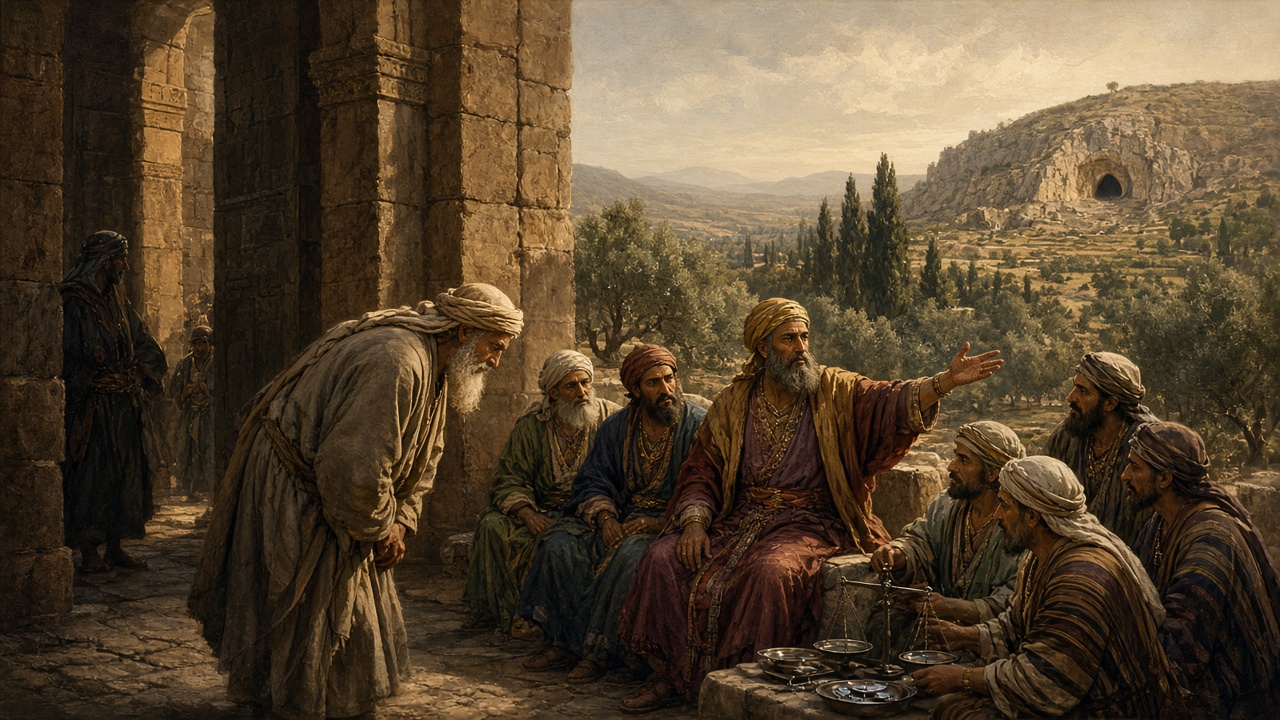
Did you know?
Sarah’s death and the cave of Machpelah
- Sarah died at the age of 127 in Kiriath-arba, that is, Hebron, in the land of Canaan. Easton's Bible Dictionary (1897) notes that this is the only place in Scripture where a woman’s age is recorded, and that her death led Abraham to buy the cave of Machpelah as a family burial place.Sources: the Bible text itself · Sarah
- Abraham told the sons of Heth—the Hittites, descended from Canaan through Heth and living near Hebron—that he was a foreigner among them and needed a burial site. At the city gate, before the Hittites gathered there, he bought the field and cave of Ephron son of Zohar for four hundred shekels of silver, weighed according to the merchants’ standard.Sources: the Bible text itself · Heth · Ephron
- The name Machpelah is explained as “portion” or “double cave.” The cave Abraham bought stood in Ephron’s field near Mamre, on a hillside east of Hebron, and the same place later received the bodies of Abraham and Sarah, Isaac and Rebekah, and Jacob and Leah.Sources: Machpelah · the Bible text itself
Notes written with AI assistance from open sources (Theographic Bible Metadata, CC BY-SA 4.0; Easton’s Bible Dictionary, public domain) and reviewed before publishing.
Places in this chapter
- Canaan · 32.767, 35.333 · verses 2, 19
- Hebron · Today: Tel Rumeida · 31.525, 35.102 · verses 2, 19
- Machpelah · Today: Cave of the Patriarchs · 31.525, 35.111 · verses 9, 17, 19
Only places identified with high confidence are shown (90% or more according to the scholarly sources compiled by OpenBible). Period map: DARE (Digital Atlas of the Roman Empire), CC BY 4.0; modern map: © OpenStreetMap contributors; places: OpenBible.info (CC BY 4.0).
Credits and license for this translation
Ãcõrẽ Bed̶ea
New Testament in Emberá, Northern (PM:emp:Emberá, Northern)
copyright © 2011 Wycliffe Bible Translators, Inc.
Language: Emberá, Northern
Translation by: Wycliffe Bible Translators, Inc.
Copyright Information
© 2011, Wycliffe Bible Translators, Inc. All rights reserved.
This translation text is made available to you under the
terms of the Creative Commons License: Attribution-Noncommercial-No Derivative Works.
( http://creativecommons.org/licenses/by-nc-nd/3.0/ )
In addition, you have permission to port the text to different file formats, as long as you
do not change any of the text or punctuation of the Bible.
You may share, copy, distribute, transmit, and extract portions
or quotations from this work, provided that you include the above copyright
information:
You must give Attribution to the work.
You do not sell this work for a profit.
You do not make any derivative works that change any of the actual words or punctuation of the Scriptures.
Permissions beyond the scope of this license may be
available if you contact
us with your request.
The New Testament
in Emberá, Northern
© 2011, Wycliffe Bible Translators, Inc. All rights reserved.
This translation is made available to you under the terms of the
Creative Commons Attribution-Noncommercial-No Derivatives license 4.0.
You may share and redistribute this Bible translation or extracts from it in any format, provided that:
You include the above copyright and source information.
You do not sell this work for a profit.
You do not change any of the words or punctuation of the Scriptures.
Pictures included with Scriptures and other documents on this site are licensed just for use with those Scriptures and documents.
For other uses, please contact the respective copyright owners.
2014-04-24
Source: http://ebible.org/empNTpo/ · eBible.org