Genesis 10
Ãcõrẽ Bed̶ea · Tap a verse to see its cross-references.
Noé warrarãneba yõped̶ad̶a
1Dopapa wãnacarea Noé warrarã Seʌ̃ba, Caʌ̃ba, Jape bid̶a warrarãda unucuasid̶aa. Nama b̶ʌ́ b̶ʌa ãdjid̶eba yõped̶ad̶ad̶ebemada.
2Japed̶eba yõped̶ad̶ara naʌ̃gʌrã basía: Gomer, Magog, Madai, Javaʌ̃, Tubal, Mesec, Tiras sid̶a. 3Jape warra Gomerd̶eba yõped̶ad̶ara naʌ̃gʌrã basía: Asquenaz, Ripat, Togarmá sid̶a. 4Jape warra Javaʌ̃neba yõped̶ad̶ara naʌ̃gʌrã basía: Elisá, Tarsi, Quitiʌ̃, Rodaniʌ̃ sid̶a. 5Javaʌ̃neba yõped̶ad̶ara pusa icawa drua osid̶aa. Maʌ̃ne jũma Jape warrarãba ãdjirãza puruda osid̶aa idjab̶a ãdji puruza ãdji quĩrãmera awara awara bed̶ea b̶easia.
6Caʌ̃neba yõped̶ad̶ara naʌ̃gʌrã basía: Cus, Mizraiʌ̃, Put, Canaaʌ̃ sid̶a. 7Caʌ̃ warra Cusd̶eba yõped̶ad̶ara naʌ̃gʌrã basía: Sebá, Havila, Sabtá, Raamá, Sabteca sid̶a. Raamáneba yõped̶ad̶ara Chebá idjab̶a Dedaʌ̃ basía. 8Cusba idjab̶a Nimroda unusia. Maʌ̃ Nimrora naʌ̃ ẽjũãne nabema ẽberã dji droma basía. 9Nimrora mẽã wãi carea dji bia basía Ãcõrẽba mãwã quĩrĩãna bẽrã. Maʌ̃ bẽrã ẽberãrãba jarabadjid̶aa: “Nimro quĩrãca jãʌ̃ ẽberãda mẽã wãi carea dji biaa, Ãcõrẽba mãwã quĩrĩã b̶ʌ bẽrã.” 10Idji jʌwaed̶a erob̶asia puru dromarãda. Naãrã Sinar druad̶e erob̶asia Babelda, Erecoda, Acada, Calne sid̶a. 11Mamaʌba Asiria druad̶aa wãsia. Mama puru osia Niniveda, Rehoboda, Cala sid̶a. 12Idjab̶a Reseʌ̃ puru dromada osia Ninive idjab̶a Cala ẽsi.
13Caʌ̃ warra Mizraiʌ̃neba yõsid̶aa naʌ̃gʌrãda: Ludiʌ̃, Anamiʌ̃, Lehabiʌ̃, Naptuhiʌ̃, 14Patrusiʌ̃, Casluhiʌ̃, Captoriʌ̃ sid̶a. Captoriʌ̃neba pilisteorãda yõsid̶aa.
15Caʌ̃ warra Canaaʌ̃ba idji warra iwina Sidoʌ̃da unusia. Maʌ̃are unusia Het. 16Idjab̶a Canaaʌ̃neba yõsid̶aa jebuseorãda, amorreorãda, gergeseorãda, 17heveorãda, araceorãda, sineorãda, 18arvadeorãda, zemareorãda, hamateorã sid̶a. Canaaʌ̃neba yõped̶ad̶aba puru zocãrã o wãsid̶aa. 19Naãrã ãdji druara b̶asia Sidoʌ̃ purud̶eba ab̶a Gaza purud̶aa idjab̶a Guerar caita bid̶a. Maʌ̃ awara ãdji puru Sodomada, Gomorrada, Admada, Zeboiʌ̃da, Lasa sid̶a ãdji drua daucha icawa panasid̶aa. 20Jũma maʌ̃gʌrãra Caʌ̃neba yõsid̶aa. Ãdjirãza ãdji ẽberãrãra erob̶easia, ãdji bed̶eara quĩrã awara b̶easia, ãdji druara awara erob̶easia, idjab̶a ãdji puru sid̶a awara erob̶easia.
21Seʌ̃ra Jape djaba dji nabema basía. Seʌ̃ bid̶a warrarãda unusia. Hebere warrarãda jũma Seʌ̃neba yõsid̶aa. 22Seʌ̃neba yõped̶ad̶ara naʌ̃gʌrã basía: Elaʌ̃, Asur, Arpaxa, Lud, Araʌ̃ sid̶a. 23Seʌ̃ warra Araʌ̃neba yõped̶ad̶ara naʌ̃gʌrã basía: Uz, Hul, Gueter, Mas sid̶a. 24Seʌ̃ warra Arpaxaba Salada unusia. Salara Hebere zeza basía. 25Hebereba warrarãda umé unusia. Ab̶abemara trʌ̃ b̶ʌsid̶aa Pele, idji ewarid̶e ẽberãra druaza ãyã wãbʌrʌsid̶a bẽrã.
Pele djabara Joctaʌ̃ basía. 26Joctaʌ̃neba yõped̶ad̶ara naʌ̃gʌrã basía: Almodad, Selep, Hazar-mavet, Jerá, 27Adoraʌ̃, Uzal, Dicla, 28Obal, Abimael, Sebá, 29Opir, Havila, Jobá sid̶a. Jũma maʌ̃gʌrãra Joctaʌ̃ warrarã basía. 30Ãdjirãba birasid̶aa Mesá purud̶eba Sepa ẽjũã eyaid̶a b̶ʌd̶aa. Separa Mesád̶eba ʌ̃mãdau odjabariare b̶ʌa. 31Jũma maʌ̃gʌrãra Seʌ̃neba yõped̶ad̶arã basía. Ãdjirãza ãdji ẽberãrãra erob̶easia, ãdji bed̶eara quĩrã awara b̶easia, ãdji druara awara erob̶easia, idjab̶a ãdji puru sid̶a awara erob̶easia.
32Jũma maʌ̃gʌrãra Noé warrarãneba yõsid̶aa. Dopapa wãnacarea ãdjirãra ãyã wãbʌrʌd̶aped̶a ãdjiza druada osid̶aa. Mãwã jũma naʌ̃ ẽjũãne duanesid̶aa.
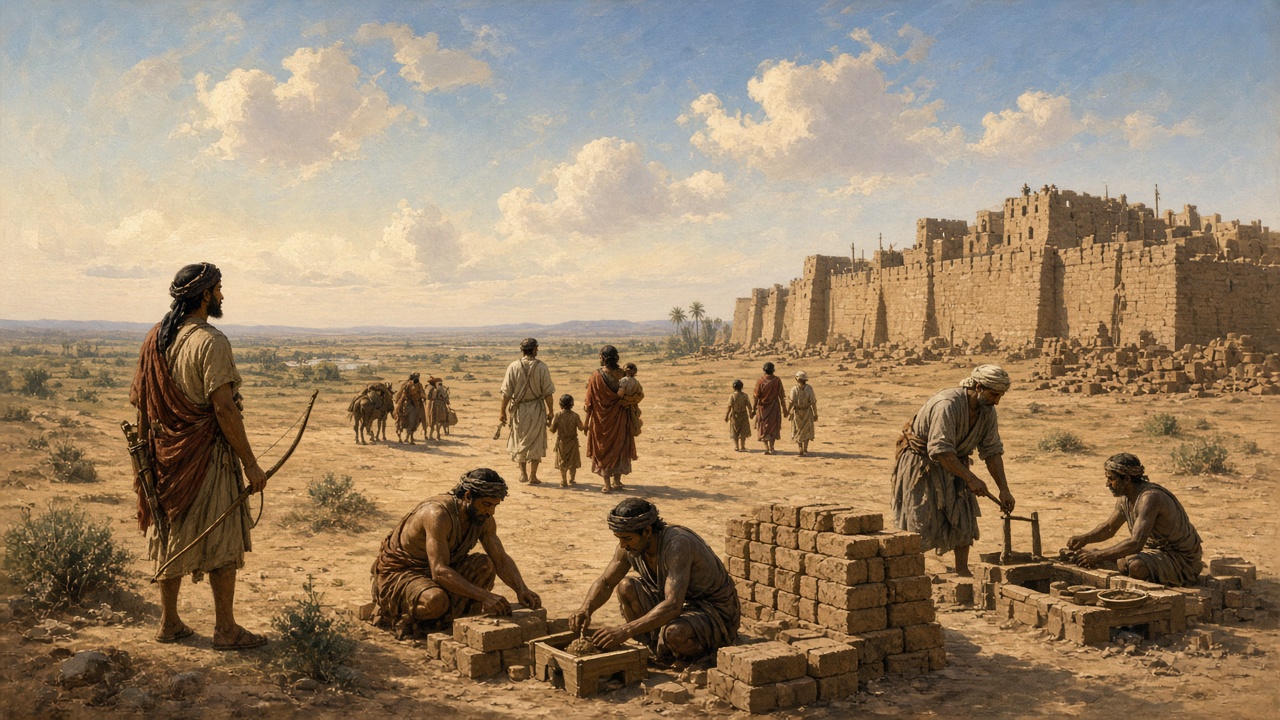
Did you know?
The Nations after the Flood
- Genesis 10 follows the families of Noah’s three sons, Shem, Ham, and Japheth, and says that after the flood the nations of the earth spread out from them, grouped by clans, languages, lands, and nations. Japheth’s line is linked with peoples of eastern Europe and northern Asia: Gomer is generally regarded as an ancestor of the Celts and the Cimmerians, who in early times settled north of the Black Sea, and Javan became the Hebrew name that the peoples of the East used for the Greeks, especially those of Ionia.Sources: the Bible text itself · Japheth · Gomer (son of Japheth) · Javan
- Cush, a son of Ham, was the father of Nimrod, remembered as a mighty hunter before the Lord, whose kingdom began at Babylon, Erech, Accad, and Calneh in the land of Shinar, probably Babylonia or southern Mesopotamia. From that land he went into Assyria and built Nineveh, Rehoboth-Ir, Calah, and Resen; Calah’s site is probably the Nimrud ruins on the left bank of the Tigris.Sources: the Bible text itself · Shinar · Nineveh · Calah
- Mizraim, the dual form of a Hebrew word for a mound or fortress, may point to Upper and Lower Egypt and is the name the Hebrews usually gave that country; Arabic still calls it Muzr. Shem is called the older brother of Japheth and the forefather of all the sons of Eber, regarded as the founder of the Hebrew people, while an Arab tradition remembers Eber’s son Joktan, Kahtan in Arabic, as the ancestor of tribes of central and southern Arabia.Sources: the Bible text itself · Mizraim · Eber (Heber) · Joktan
Notes written with AI assistance from open sources (Theographic Bible Metadata, CC BY-SA 4.0; Easton’s Bible Dictionary, public domain) and reviewed before publishing.
Places in this chapter
- Erech · Today: Uruk · 31.322, 45.636 · verse 10
- Shinar · Today: Babylonia · 32.543, 44.422 · verse 10
- Assyria · 36.359, 43.153 · verse 11
- Calah · Today: Nimrud · 36.098, 43.329 · verses 11, 12
- Nineveh · 36.359, 43.153 · verses 11, 12
- Canaan · 32.767, 35.333 · verse 19
- Gaza · Today: Tell Harube · 31.504, 34.464 · verse 19
- Sidon · Today: Sandikli archaeological site in Sidon · 33.561, 35.372 · verse 19
Only places identified with high confidence are shown (90% or more according to the scholarly sources compiled by OpenBible). Period map: DARE (Digital Atlas of the Roman Empire), CC BY 4.0; modern map: © OpenStreetMap contributors; places: OpenBible.info (CC BY 4.0).
Credits and license for this translation
Ãcõrẽ Bed̶ea
New Testament in Emberá, Northern (PM:emp:Emberá, Northern)
copyright © 2011 Wycliffe Bible Translators, Inc.
Language: Emberá, Northern
Translation by: Wycliffe Bible Translators, Inc.
Copyright Information
© 2011, Wycliffe Bible Translators, Inc. All rights reserved.
This translation text is made available to you under the
terms of the Creative Commons License: Attribution-Noncommercial-No Derivative Works.
( http://creativecommons.org/licenses/by-nc-nd/3.0/ )
In addition, you have permission to port the text to different file formats, as long as you
do not change any of the text or punctuation of the Bible.
You may share, copy, distribute, transmit, and extract portions
or quotations from this work, provided that you include the above copyright
information:
You must give Attribution to the work.
You do not sell this work for a profit.
You do not make any derivative works that change any of the actual words or punctuation of the Scriptures.
Permissions beyond the scope of this license may be
available if you contact
us with your request.
The New Testament
in Emberá, Northern
© 2011, Wycliffe Bible Translators, Inc. All rights reserved.
This translation is made available to you under the terms of the
Creative Commons Attribution-Noncommercial-No Derivatives license 4.0.
You may share and redistribute this Bible translation or extracts from it in any format, provided that:
You include the above copyright and source information.
You do not sell this work for a profit.
You do not change any of the words or punctuation of the Scriptures.
Pictures included with Scriptures and other documents on this site are licensed just for use with those Scriptures and documents.
For other uses, please contact the respective copyright owners.
2014-04-24
Source: http://ebible.org/empNTpo/ · eBible.org