Exodus 27
Ãcõrẽ Bed̶ea · Tap a verse to see its cross-references.
Animarã babue diabada
1Idjab̶a animarã babue diabada acacia bacurud̶eda od̶adua. Dji drasoara bicaca juesuma b̶aida b̶ʌa. Dji joub̶ʌa sid̶a bicaca juesuma b̶aida b̶ʌa quĩrã quĩmãrẽena ab̶arica b̶amãrẽã. Dji ʌ̃tʌara bicaca ũbea b̶aida b̶ʌa. 2Ab̶ari bacurud̶e iquid̶aza cachu quĩrãca od̶aped̶a maʌ̃ animarã babue diabadara bronceba jũma bʌrad̶adua. 3Idjab̶a tʌbʌ pora ãyã cuabadada, tʌbʌ pora tãĩbadada, oa piabadada, warebada mĩãsuda, tʌbʌdau edebada sid̶a jũma bronced̶eda od̶adua. 4Idjab̶a jʌrrʌjʌrrʌa bronced̶eda od̶adua. Maʌ̃ jʌrrʌjʌrrʌara animarã babue diabadad̶e dji id̶eba ed̶aa ẽsidra cara b̶ʌd̶adua. Maʌ̃be pĩrũ omoa bronced̶eda quĩmãrẽ od̶aped̶a jʌrrʌjʌrrʌa b̶ʌmaa animarã babue diabada iquid̶aza cara b̶ʌd̶adua. 6Maʌ̃be acacia bacuruda umé erad̶aped̶a bronceba bʌrad̶adua. Maʌ̃ bacurura animarã babue diabada orroza pĩrũ b̶ead̶e berajud̶adua jira eded̶i carea. 8Animarã babue diabadara wãyã uria b̶aya bacuru ʌrrad̶ad̶eda od̶i bẽrã. Ara mʌ̃a naʌ̃ eyad̶e unubid̶a quĩrãca jũma daucha od̶adua.
Ãcõrẽ wua de aud̶u jũrã b̶ʌd̶a
9Mʌ̃ wua dera aud̶u jũrã b̶ʌd̶adua dji biara b̶ʌ lino wuaba. Maʌ̃ aud̶u jũrã b̶ʌ orroza veinte bronce od̶a uria b̶eada b̶ʌd̶aped̶a bacuru tẽnara maʌ̃gʌd̶e ed̶a wẽãju nũmʌnadua. Maʌ̃ bacuru quẽbʌra parataba bʌrad̶adua idjab̶a wua jũẽbari parata od̶a sid̶a cara b̶ʌd̶adua. Lino wuara maʌ̃ne eatʌ jũẽcuad̶adua. Mʌ̃ wua de aud̶u jũrã b̶ʌ drasoara cien bicaca b̶aya.
12Jẽdaare bid̶a bronce od̶a uria b̶eada die b̶ʌd̶aped̶a maʌ̃ne bacuru tẽnara ed̶a wẽãju nũmʌnadua. Lino wuara maʌ̃gʌd̶e eatʌ jũẽcuad̶adua. Mʌ̃ wua de aud̶u jũrã b̶ʌ jẽdaarebemara cincuenta bicaca b̶aya idjab̶a ʌ̃mãdau b̶aebariare b̶aida b̶ʌa. 13Dji nocoarebemara ʌ̃mãdau odjabariare b̶aida b̶ʌa. Maʌ̃ sid̶a cincuenta bicaca b̶aya. 14Maʌ̃ne dji ed̶a wãbadara ẽsidra b̶aya. Dji ed̶a wãbada jʌwa acʌare bronce od̶a uria b̶eada ũbea b̶ʌd̶aped̶a bacuru tẽnara maʌ̃ne ed̶a wẽãju nũmʌnadua. Jʌwa araare bid̶a ab̶ari quĩrãca od̶adua. Maʌ̃ne lino wuara eatʌ jũẽcuad̶adua. Dji ed̶a wãbada orro ab̶aare wuara quince bicaca b̶aya idjab̶a dewarabema orroare bid̶a quince bicaca b̶aya. 16Mʌ̃ wua de aud̶u jũrã b̶ʌd̶e ed̶a wãbadara veinte bicaca b̶aya. Bronce od̶a uria b̶eada quĩmãrẽ dji ed̶a wãbadama b̶ʌd̶aped̶a bacuru tẽnara wẽãju nũmʌnadua. Maʌ̃be dji biara b̶ʌ lino wuada edad̶aped̶a maʌ̃ wuad̶e ed̶a oveja cara nayãna pãwãrã od̶ada, pursupursua od̶ada, purea od̶a sid̶a cad̶adua. Maʌ̃ wuaba dji ed̶a wãbadara jũãtrʌ b̶ʌd̶adua.
17Jũma mʌ̃ wua de aud̶u jũrã b̶ʌ bacuru tẽnara bronce od̶a uria b̶ead̶e ed̶a wẽãju nũmeania. Bacuru quẽbʌza parata od̶a wua jũẽbarida erob̶ead̶ia idjab̶a parataba bʌrá b̶ead̶ia. Maʌ̃ bacurud̶e eatʌ jũẽ b̶ʌ lino wua joub̶ʌara bicaca juesuma b̶aya. Mʌ̃ wua de aud̶u jũrã b̶ʌ ẽjũã drasoara cien bicaca b̶aya. Dji jed̶eara cincuenta bicaca b̶aya. 19Jũma mʌ̃ wua de dajadaarebema sid̶a bronce od̶a baya. Dji egorod̶e cachid̶i careabema sid̶a bronce od̶a baya.
Olivo draga ĩbĩrã coad̶i careabema
20Israelerãa jaradua olivo draga idji awa quiruda enenamãrẽã. Maʌ̃ dragara ĩbĩrãne wead̶ia urua b̶amãrẽã. 21Aaroʌ̃ba idji warrarã bid̶a mʌ̃ wua ded̶e b̶ʌ ĩbĩrãra quewaraza coad̶ida panʌa mʌ̃ quĩrãpita urua b̶amãrẽã quewara ed̶aʌba ab̶a ʌ̃nadrʌbʌrʌd̶aa. Maʌ̃ ĩbĩrãra mʌ̃ baurude quĩrãpe b̶aya dji wua eatʌ jira b̶ʌ nocoare. Mʌ̃a ĩbĩrã coabi b̶ʌ leyra bãrã israelerãba, bãrã warrarãneba yõbʌdarã bid̶a ewariza ĩjã o pananida panʌa.
Did you know?
The bronze altar, the courtyard, and the lamps
- This chapter calls for a square altar of acacia wood, five cubits long, five cubits wide, and three cubits high, with a horn on each of its four corners, the horns of one piece, and the altar overlaid with bronze. It was to be built hollow, of boards, with a bronze-mesh grate set beneath a ledge so that the mesh came halfway up, and with poles of acacia wood overlaid with bronze, inserted into rings so the altar could be carried. All its utensils—pots for removing ashes, shovels, sprinkling bowls, meat forks, and firepans—were to be bronze, and the altar was to be made just as shown on the mountain.Sources: the Bible text itself
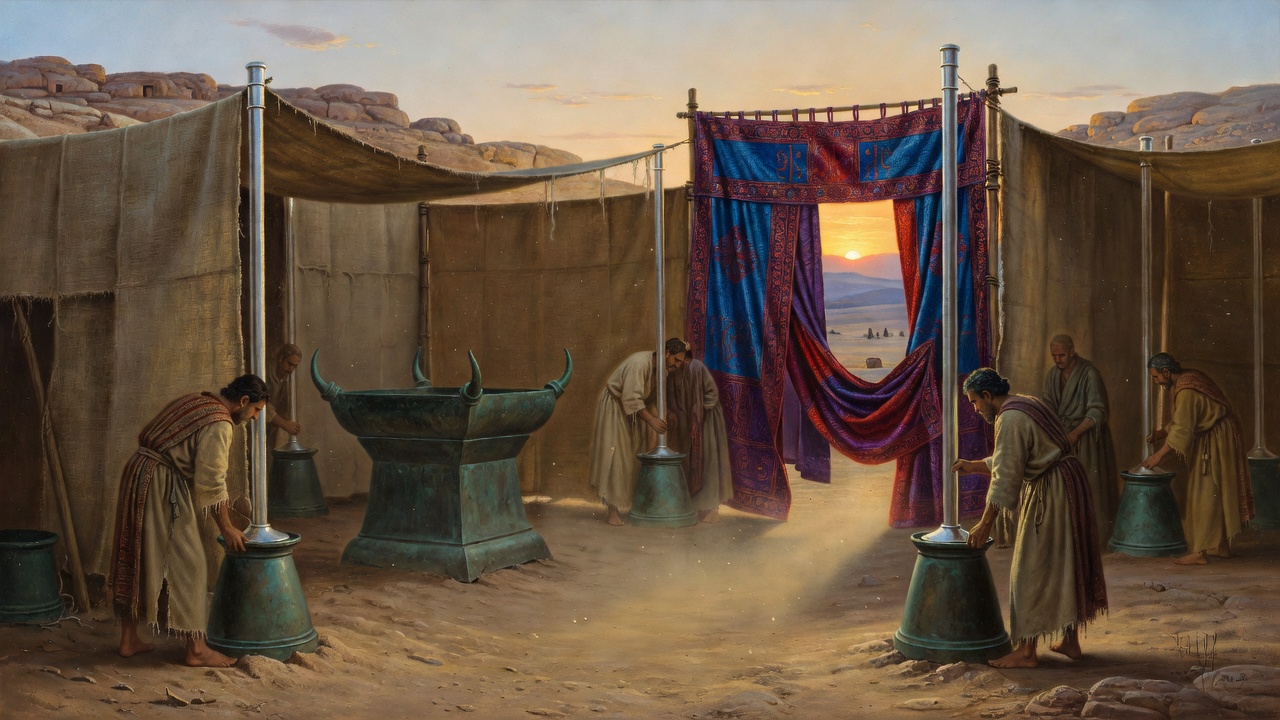
- The courtyard of the tabernacle was to be a hundred cubits long and fifty cubits wide, with curtains of finely spun linen five cubits high. The south and north sides, each a hundred cubits long, were to have twenty posts and twenty bronze bases, with silver hooks and bands; the west side, fifty cubits wide, was to have ten posts and ten bases. The east side, toward the sunrise, was also fifty cubits wide, with a twenty-cubit gate curtain embroidered with blue, purple, and scarlet yarn and finely spun linen, on four posts, and with curtains of fifteen cubits on either side.Sources: the Bible text itself
- The Israelites were to bring pure oil of pressed olives for the light, so that the lamps would keep burning continually. In the Tent of Meeting, outside the veil in front of the Testimony, Aaron and his sons were to tend the lamps before the LORD from evening until morning, a permanent statute for the Israelites for the generations to come. Aaron, eldest son of Amram and Jochebed, was born in Egypt three years before his brother Moses, and by Elisheba, daughter of Amminadab of the house of Judah, whom he married, he had four sons: Nadab, Abihu, Eleazar, and Ithamar.Sources: the Bible text itself · Aaron
Notes written with AI assistance from open sources (Theographic Bible Metadata, CC BY-SA 4.0; Easton’s Bible Dictionary, public domain) and reviewed before publishing.
Credits and license for this translation
Ãcõrẽ Bed̶ea
New Testament in Emberá, Northern (PM:emp:Emberá, Northern)
copyright © 2011 Wycliffe Bible Translators, Inc.
Language: Emberá, Northern
Translation by: Wycliffe Bible Translators, Inc.
Copyright Information
© 2011, Wycliffe Bible Translators, Inc. All rights reserved.
This translation text is made available to you under the
terms of the Creative Commons License: Attribution-Noncommercial-No Derivative Works.
( http://creativecommons.org/licenses/by-nc-nd/3.0/ )
In addition, you have permission to port the text to different file formats, as long as you
do not change any of the text or punctuation of the Bible.
You may share, copy, distribute, transmit, and extract portions
or quotations from this work, provided that you include the above copyright
information:
You must give Attribution to the work.
You do not sell this work for a profit.
You do not make any derivative works that change any of the actual words or punctuation of the Scriptures.
Permissions beyond the scope of this license may be
available if you contact
us with your request.
The New Testament
in Emberá, Northern
© 2011, Wycliffe Bible Translators, Inc. All rights reserved.
This translation is made available to you under the terms of the
Creative Commons Attribution-Noncommercial-No Derivatives license 4.0.
You may share and redistribute this Bible translation or extracts from it in any format, provided that:
You include the above copyright and source information.
You do not sell this work for a profit.
You do not change any of the words or punctuation of the Scriptures.
Pictures included with Scriptures and other documents on this site are licensed just for use with those Scriptures and documents.
For other uses, please contact the respective copyright owners.
2014-04-24
Source: http://ebible.org/empNTpo/ · eBible.org