2 Samuel 5
Ãcõrẽ Bed̶ea · Tap a verse to see its cross-references.

About this book
About 2 Samuel
- Easton's Bible Dictionary (1897) says the books of Samuel were probably written by Samuel, Gad, and Nathan. According to that entry, Samuel penned the first twenty-four chapters of the first book; Gad, David's companion, continued the history, and Nathan completed it, probably arranging the whole. The entry gives no date of writing, but says Second Samuel covers perhaps fifty years, the reign of David.Sources: Easton: Samuel, Books of
- After Saul's death, David was made king over Judah and reigned in Hebron, while Abner, commander of Saul's army, had Ish-bosheth proclaimed king. Ish-bosheth reigned at Mahanaim, beyond the Jordan, and a state of war existed between the two kings. Joab, captain of the host throughout David's reign, led the assault on the fortress on Mount Zion in Jerusalem and for that service was raised to the rank of prince of the king's army.Sources: Abner · Mahanaim · Joab · Jerusalem
- Easton describes 2 Samuel as a history of David's reign, mainly in its political aspects: over Judah in chapters 1-4, and over all Israel in chapters 5-24. The last four chapters are treated as a sort of appendix, recording various events but not in chronological order. The books are not complete histories; frequent gaps appear because, in Easton's view, their aim is the gradual development of the kingdom of God rather than a full account of each reign.Sources: Easton: Samuel, Books of
- The Septuagint translators regarded the books of Samuel and of Kings as one continuous history, which they divided into four books called the Books of the Kingdom. The Vulgate followed this division but named them the Books of the Kings, so the books called First and Second Samuel in modern Protestant versions were the First and Second Books of Kings. Easton also notes that the account of David's sin in the matter of Bathsheba, in 2 Samuel 11:2-12:29, is omitted from the corresponding passage in 1 Chronicles 20.Sources: Easton: Samuel, Books of
Notes written with AI assistance from open sources (Theographic Bible Metadata, CC BY-SA 4.0; Easton’s Bible Dictionary, public domain) and reviewed before publishing.
Davi israelerã boroda b̶ed̶a
1Saul jaid̶ad̶acarea Israeld̶eba doce puru yõped̶ad̶ada Hebroʌ̃ purud̶aa Davimaa wãnaped̶a nãwã jarasid̶aa:
–Dadjirãra ab̶ari ẽberãrãa. 2Saulora dadjirã boro bad̶amĩna djõne wãbʌdaza bʌabʌrʌ dadji israelerãra edeped̶a bia enebadjia. Maʌ̃ awara Ãcõrẽba jarasia bʌdrʌ idji puru Israel boroda b̶eida. Bʌabʌrʌ oveja waga b̶ʌ quĩrãca idji ẽberãrãra pe erob̶ayad̶a asia.–
3Maʌ̃ne Hebroʌ̃ne Ãcõrẽ quĩrãpita Israeld̶ebema dji dromarãda Davi ume bed̶ea b̶ʌd̶aped̶a nedragada idji borod̶e weasid̶aa israelerã boroda b̶ʌd̶i carea. 4Davi israelerã boroda b̶ʌsid̶ad̶e treinta poa b̶asia. Maʌ̃be cuarenta poa ãdjirã boroda b̶esia. 5Naãrã Hebroʌ̃ne idjira siete poa aud̶u ẽsidra Judad̶eba yõped̶ad̶arã boro basía. Mãwãnacarea 33 poa Jerusaleʌ̃ne jũma israelerã boroda b̶asia.
Daviba Jerusaleʌ̃ puru poyad̶a
6Israelerã boro Davira idji sordaorã ume Jerusaleʌ̃naa djõne wãsid̶aa. Maʌ̃ ewarid̶e jebuseorãda jãma panabadjid̶aa. Ãdjirãba crĩchasid̶aa Davira poya ãdji purud̶e ed̶a zeẽ́da. Maʌ̃ carea idjía jarasid̶aa:
–Bʌra nama ed̶a poya zeẽ́a. Daub̶errea b̶eaba, jĩrũ biẽ́ b̶ea bid̶a naʌ̃ puruda poya wagad̶ia bãrã ed̶a zerãnamãrẽã.–
7Baribʌrʌ Daviba Jerusaleʌ̃ra poyaped̶a maʌ̃ purud̶e sordaorã panabada Sioʌ̃ abada sid̶a poyasia. Id̶ira Sioʌ̃ra Davi puru abadaa.
8Israelerãba jebuseorã poyad̶i naẽna Daviba jarasia:
–Jebuseorãda poya quĩrĩã b̶ʌbʌrʌ, Sioʌ̃ purud̶e ed̶a baido weamãrẽã oped̶ad̶a uriad̶eba wãida b̶ʌa. Mãwãbʌrʌ jãʌ̃ daub̶errea b̶eamanada, jĩrũ biẽ́ b̶eamana sid̶a bead̶ia. Ãdjirãra mʌ̃a quĩrãma b̶ʌa.–
Daviba mãwã jarad̶a bẽrã id̶ira ab̶aʌba djãrãda quĩrãma b̶ʌbʌrʌ nãwã jarabaria: “Daub̶errea b̶eada, jĩrũ biẽ́ b̶ea sid̶a dadji boro de dromane ed̶a wãnacara panʌa.”
9Maʌ̃be Davira Sioʌ̃ne b̶esia. Sioʌ̃ra trʌ̃ b̶ʌsid̶aa Davi puru. Dji puru mõgaraba aud̶u jũrã ca b̶ʌra Daviba waib̶ʌara osia idjab̶a Milo abadad̶eba ed̶a dji jogoa b̶eara egoroba daucha pãrĩ wãsia. 10Ãcõrẽ ne jũma poya b̶ʌda idji ume b̶ʌ bẽrã Davira ewariza dji dromaara b̶esia.
11Maʌ̃ ewarid̶e Tiro druad̶ebema boro Hiraʌ̃ abadaba ʌ̃cʌrʌ Davimaa diabuesia idji ume dji bia bai carea. Maʌ̃ awara bacuru de obadarãda, mõgara de obadarãda, dji biara b̶ʌ bacuru sid̶a diabuesia. Ãdjirãba Davi itea de dromada osid̶aa. 12Maʌ̃neba Daviba cawasia Ãcõrẽba idjira wãrãda israelerã boroda b̶ʌsida. Maʌ̃ awara cawasia Ãcõrẽba idji puru Israelda quĩrĩã b̶ʌ bẽrã idjira careba b̶ʌda israelerã bia pe erob̶amãrẽã.
Davi warrarã Jerusaleʌ̃ne toped̶ad̶a
13Hebroʌ̃neba wãnacarea Jerusaleʌ̃ne Daviba quimada zocãrã edasia. Dewara wẽrãrã sid̶a zocãrã erob̶asia. Ãdjirãba warrarãda, caurã sid̶a Davia to diasid̶aa. 14Daviba naʌ̃ warrarãda Jerusaleʌ̃ne unusia: Samúa, Sobab, Nataʌ̃, Salomoʌ̃, 15Ibhar, Elisua, Nepeg, Japia, 16Elisamá, Eliadá, idjab̶a Elipelet.
Did you know?
David King Over All Israel and the Capture of Jerusalem
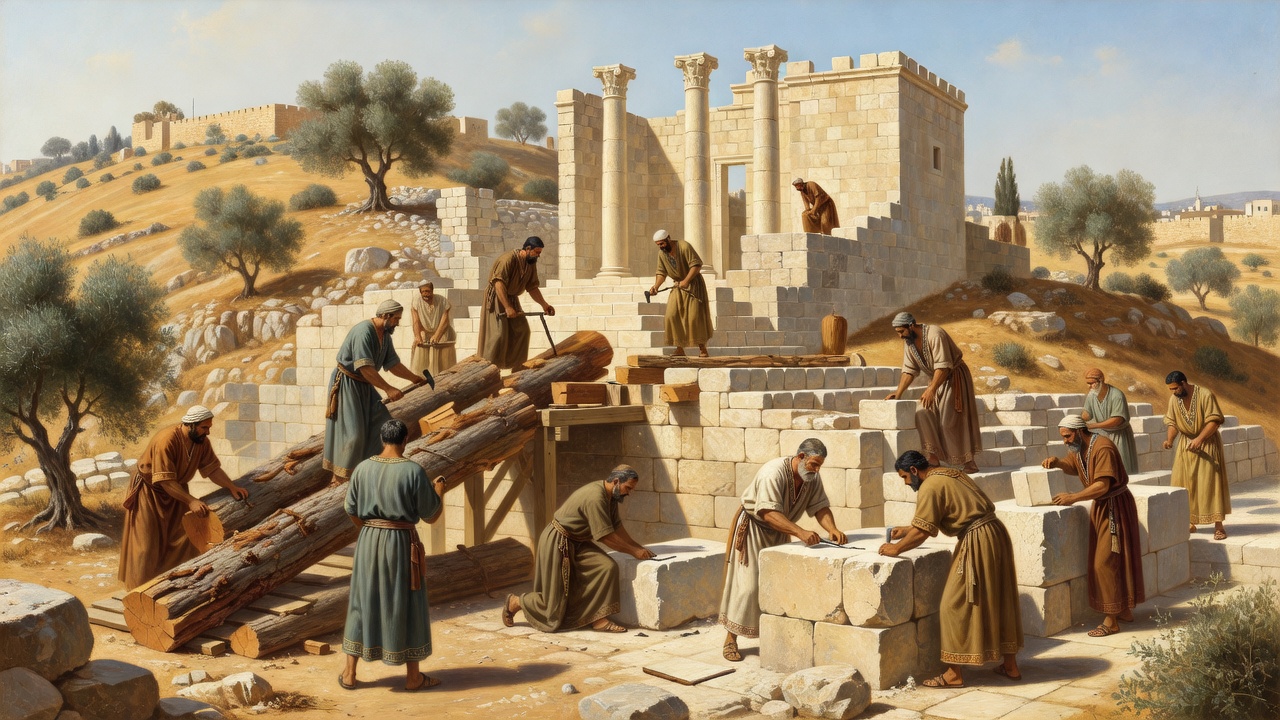
- After ruling for seven and a half years in Hebron, David unified Israel and captured the mountain stronghold of Zion from the Jebusites. He renamed the fortress the City of David and expanded its defenses around the Millo, or supporting terraces.Sources: the Bible text itself · Zion · Millo · Hebron
- Hiram, king of the Phoenician coastal city of Tyre, established an alliance with David by sending cedar timber, carpenters, and stonemasons to build a royal palace in Jerusalem.Sources: the Bible text itself · Hiram · Tyre
- Located southwest of Jerusalem, the Valley of Rephaim served as the staging ground for Philistine incursions once they learned David had been crowned king over all Israel.Sources: the Bible text itself · Valley of Rephaim
Notes written with AI assistance from open sources (Theographic Bible Metadata, CC BY-SA 4.0; Easton’s Bible Dictionary, public domain) and reviewed before publishing.
Places in this chapter
- Hebron · Today: Tel Rumeida · 31.525, 35.102 · verses 1, 3, 5, 13
- Jerusalem · 31.777, 35.234 · verses 5, 6, 13, 14
- City of David · 31.774, 35.236 · verses 7, 9
- Zion · Today: Jerusalem · 31.777, 35.234 · verse 7
- Tyre · 33.271, 35.196 · verse 11
- Valley of Rephaim · 31.763, 35.219 · verses 18, 22
- Gezer · Today: Tel Gezer · 31.859, 34.919 · verse 25
Only places identified with high confidence are shown (90% or more according to the scholarly sources compiled by OpenBible). Period map: DARE (Digital Atlas of the Roman Empire), CC BY 4.0; modern map: © OpenStreetMap contributors; places: OpenBible.info (CC BY 4.0).
Credits and license for this translation
Ãcõrẽ Bed̶ea
New Testament in Emberá, Northern (PM:emp:Emberá, Northern)
copyright © 2011 Wycliffe Bible Translators, Inc.
Language: Emberá, Northern
Translation by: Wycliffe Bible Translators, Inc.
Copyright Information
© 2011, Wycliffe Bible Translators, Inc. All rights reserved.
This translation text is made available to you under the
terms of the Creative Commons License: Attribution-Noncommercial-No Derivative Works.
( http://creativecommons.org/licenses/by-nc-nd/3.0/ )
In addition, you have permission to port the text to different file formats, as long as you
do not change any of the text or punctuation of the Bible.
You may share, copy, distribute, transmit, and extract portions
or quotations from this work, provided that you include the above copyright
information:
You must give Attribution to the work.
You do not sell this work for a profit.
You do not make any derivative works that change any of the actual words or punctuation of the Scriptures.
Permissions beyond the scope of this license may be
available if you contact
us with your request.
The New Testament
in Emberá, Northern
© 2011, Wycliffe Bible Translators, Inc. All rights reserved.
This translation is made available to you under the terms of the
Creative Commons Attribution-Noncommercial-No Derivatives license 4.0.
You may share and redistribute this Bible translation or extracts from it in any format, provided that:
You include the above copyright and source information.
You do not sell this work for a profit.
You do not change any of the words or punctuation of the Scriptures.
Pictures included with Scriptures and other documents on this site are licensed just for use with those Scriptures and documents.
For other uses, please contact the respective copyright owners.
2014-04-24
Source: http://ebible.org/empNTpo/ · eBible.org