2 Kings 2
Ãcõrẽ Bed̶ea · Tap a verse to see its cross-references.

About this book
About 2 Kings
- Easton's Bible Dictionary (1897) states that the authorship of the books of Kings is uncertain. Nearly identical passages shared with Jeremiah, together with events Jeremiah knew personally, give some support to the tradition that he wrote them, yet Easton regards it as more probable that Ezra compiled the books after the Captivity from earlier documents. Easton dates their composition between 561 B.C., when Evil-merodach released Jehoiachin, and 538 B.C., the year of Cyrus's decree of deliverance.Sources: Easton: Kings, The Books of
- The two books of Kings originally formed a single book in the Hebrew Scriptures. The Septuagint first divided them into two, and together with the Vulgate numbers them as the third and fourth books of Kings, counting the books of Samuel as the first and second.Sources: Easton: Kings, The Books of
- These books contain the annals of the Jewish commonwealth from the accession of Solomon until the subjugation of the kingdom by Nebuchadnezzar and the Babylonians, a period Easton describes as apparently about four hundred and fifty-three years. While Chronicles gives greater prominence to the priestly or Levitical office, Kings gives greater prominence to the kingly office, and the narrative refers to sources such as the book of the acts of Solomon and the chronicles of the kings of Judah and of Israel.Sources: Easton: Kings, The Books of
- In the threefold division of the Scriptures by the Jews, the books of Kings are ranked among the Prophets. Easton notes that they are frequently quoted or alluded to by Jesus and the apostles.Sources: Easton: Kings, The Books of
Notes written with AI assistance from open sources (Theographic Bible Metadata, CC BY-SA 4.0; Easton’s Bible Dictionary, public domain) and reviewed before publishing.
Ãcõrẽba Elía bajãnaa eded̶a
1Ãcõrẽba Elía nãũrã jũrẽb̶aribʌrʌba bajãnaa edei carea b̶asid̶e Elíara, Eliseo sid̶a Gilgald̶eba wãbʌda basía. 2Maʌ̃ne Elíaba Eliseoa nãwã jarasia:
–Nama b̶edua. Ãcõrẽba mʌ̃ra Betel purud̶aa wãbi b̶ʌa.–
Baribʌrʌ Eliseoba panusia:
–Ãcõrẽ zocai b̶ʌ quĩrãpita, bʌ quĩrãpita bid̶a wãrãneba jaraya: bʌdub̶a wãbiẽ́a.–
Ara maʌ̃da Betel purud̶aa wãsid̶aa. 3Jũẽbʌdad̶e Ãcõrẽneba bed̶eabadarã Beteld̶ebemada Eliseomaa zed̶aped̶a nãwã iwid̶isid̶aa:
–¿Bʌa cawa b̶ʌca id̶i Ãcõrẽba bʌ boro Elíara edeida?–
Eliseoba panusia:
–Mãẽ, cawa b̶ʌa. Chupea pananadua.–
4Maʌ̃be Elíaba Eliseoa jarasia:
–Eliseo, nama b̶edua. Ãcõrẽba mʌ̃ra Jerico purud̶aa wãbi b̶ʌa.–
Eliseoba panusia:
–Ãcõrẽ zocai b̶ʌ quĩrãpita, bʌ quĩrãpita bid̶a wãrãneba jaraya: bʌdub̶a wãbiẽ́a.–
Ara maʌ̃da Jerico purud̶aa wãsid̶aa. 5Jũẽbʌdad̶e Ãcõrẽneba bed̶eabadarã Jericod̶ebemada Eliseomaa zed̶aped̶a iwid̶isid̶aa:
–¿Bʌa cawa b̶ʌca id̶i Ãcõrẽba bʌ boro Elíara edeida?–
Eliseoba panusia:
–Mãẽ, cawa b̶ʌa. Chupea pananadua.–
6Maʌ̃be Elíaba Eliseoa jarasia:
–Nama b̶edua. Ãcõrẽba mʌ̃ra Jordaʌ̃ dod̶aa wãbi b̶ʌa.–
Eliseoba panusia:
–Ãcõrẽ zocai b̶ʌ quĩrãpita, bʌ quĩrãpita bid̶a wãrãneba jaraya: bʌdub̶a wãbiẽ́a.–
Ara maʌ̃da wãsid̶aa. 7Ãdji caid̶u Ãcõrẽneba bed̶eabadarãda cincuenta wãsid̶aa. Tʌmʌba ãdjirãba acʌ duanasid̶aa Elíada, Eliseo sid̶a Jordaʌ̃ do icawa nũpanʌda. 8Mãwã panʌne Elíaba cacuad̶e jʌ̃ b̶ʌra ẽrãped̶a b̶ed̶atʌ edasia. Maʌ̃ba dod̶e tawesia. Tawebʌrʌd̶e oda ewa dogosia. Elíara, Eliseo sid̶a maʌ̃ od̶e Jordaʌ̃ do chãsid̶aa. 9Chãnaped̶a Elíaba Eliseoa jarasia:
–Ãcõrẽba mʌ̃ edei naẽna ¿bʌa cãrẽda quĩrĩã b̶ʌ mʌ̃a bʌ itea oida?–
Eliseoba panusia:
–Mʌ̃ quĩrã djuburia bʌa erob̶ʌ jaured̶eba poya obarira dewararã cãyãbara mʌ̃́a aud̶uara diadua.–
10Elíaba jarasia:
–Bʌa iwid̶i b̶ʌra zarea b̶ʌa. Baribʌrʌ Ãcõrẽba mʌ̃ edebʌrʌda unuibʌrʌ, bʌa iwid̶id̶ara edaya. Unuẽ́bʌrʌ edaẽ́a.–
11Ãdji nẽbʌrʌ nĩnane cawaẽ́ne tʌbʌ uruada cawayo carreta bara b̶ʌ quĩrãca b̶ʌda zesia. Maʌ̃ra ãdji ẽsi dogosia jĩga wãnamãrẽã. Maʌ̃be nãũrã jũrẽb̶aribʌrʌba Elíara bajãnaa edesia. 12Mãwã unubʌrʌd̶e Eliseoba Elíaa b̶ia jarasia:
–¡Zeza, zeza! Carretad̶eba djõbadarã idjab̶a cawayod̶eba djõbadarã quĩrãca bʌa israelerãra bio careba b̶asia.–
Maʌ̃ne Eliseoba cacuad̶e jʌ̃ b̶ʌra sopuaba ẽsidra cõãtasia. Elíara waa unuẽ́ basía.
13Elía ʌ̃taa wãsid̶e idjia cacuad̶e jʌ̃ b̶ad̶ara egode ẽrã b̶aesia. Maʌ̃gʌra Eliseoba edaped̶a jẽda Jordaʌ̃ dod̶aa wãped̶a do icawa nũmesia. 14Maʌ̃ne Elíaba cacuad̶e jʌ̃ b̶ad̶aba dod̶e tawesia. Tawebʌrʌd̶e nãwã jĩgua jarasia:
–¿Elía Ãcõrẽra sãma b̶ʌ?–
Ara maʌ̃ne oda ewa dogosia. Maʌ̃ od̶e Eliseora chãsia. 15Idji chãbʌrʌda Ãcõrẽneba bed̶eabadarã Jericod̶ebemaba acʌ duanasid̶aa. Maʌ̃ bẽrã jarasid̶aa:
–Elíaba erob̶ad̶a jaureda Eliseoba edasia.–
Ara maʌ̃da ãdjirãra Eliseomaa wãnaped̶a idji quĩrãpita chĩrãborod̶e b̶arru copanesid̶aa. 16Maʌ̃be jarasid̶aa:
–Dairãra bʌ nezocarãa. Dairã tãẽna cacua ʌb̶ʌa b̶eada cincuenta panʌa. Ãdjirãa bʌ boro Elíara jʌrʌd̶e wãbidua. Ãĩbẽrã Ãcõrẽ Jaureba idjira ʌ̃taa edeped̶a eyad̶e wa jewed̶ad̶e b̶ʌsisicada.–
Baribʌrʌ Eliseoba panusia:
–Mãwãẽ́a. Ãdjirãra diabuerãnadua.–
17Mãwã jarad̶amĩna ãdjirãba ʌ̃cʌrʌ diabued̶i carea mĩã sẽ panesid̶aa. Maʌ̃ carea Eliseora peraped̶a ãdjirãa jarasia ʌ̃cʌrʌ diabued̶amãrẽã. Ara maʌ̃da ãdjirãba cincuenta diabuesid̶aa. Maʌ̃ ẽberãrãba Elíara ewari ũbea jʌrʌsid̶aa. Mãwãmĩna ununaẽ́ basía. 18Maʌ̃be Jericod̶aa Eliseo b̶ʌmaa jẽda zesid̶aa. Eliseoba ãdjirãa jarasia:
–¿Mʌ̃a jarasiẽ́ca bãdji quĩrĩãbe jʌrʌd̶e wãnida?–
Eliseoba baido biẽ́ b̶ad̶a bia b̶ʌd̶a
19Jericod̶ebemarãba Eliseoa nãwã jarasid̶aa:
–Dairã boro, bʌa cawa b̶ʌa naʌ̃ purura bio bia b̶ʌda. Baribʌrʌ baidoda biẽ́ b̶ʌ bẽrã dai ẽjũã sid̶a biẽ́ b̶ʌa.–
20Maʌ̃ carea Eliseoba jarasia:
–Eped̶eco djiwid̶id̶e tãda mʌ̃maa enenadua.–
Ara maʌ̃da edesid̶aa. 21Maʌ̃gʌra idjia baido ʌ̃taa bogadrʌ b̶ʌmaa edeped̶a maʌ̃ baidod̶e ed̶a peatasia. Maʌ̃ne jarasia:
–Ãcõrẽba nãwã jara b̶ʌa: mʌ̃a naʌ̃ baidora bia b̶ʌbʌrʌ bẽrã naʌ̃ baidoba ni ab̶aʌda waa beud̶aẽ́a. Bãrã ẽjũã sid̶a bia zau b̶aya.–
22Maʌ̃ ewarid̶eba ʌ̃taa maʌ̃ baidora bia b̶esia Eliseoba jarad̶a quĩrãca.
Eliseo ipid̶a jaraped̶ad̶a
23Jericod̶eba Eliseora Betel purud̶aa wãsia. Od̶e nĩne ʌ̃cʌrʌ cũdrarãda Betel purud̶eba idjimaa wãnaped̶a nãwã ipid̶a jara duanesid̶aa:
–Boro uru, ãyã wãdua. Boro uru, ãyã wãdua.–
24Maʌ̃ carea Eliseoba ãdjirãmaa acʌped̶a Ãcõrẽ trʌ̃neba biẽ́ jara b̶ʌsia. Ara maʌ̃da wi umé panʌba cũdrarãra orrad̶aped̶a 42 beasid̶aa. 25Maʌ̃be Eliseora Carmelo eyad̶aa wãped̶a jẽda Samaria purud̶aa wãsia. 2 Reye 2:23-24|src="LB00048B.tif" size="col" ref="end/2Kgs. 2"
Did you know?
The Departure of Elijah and the Succession of Elisha
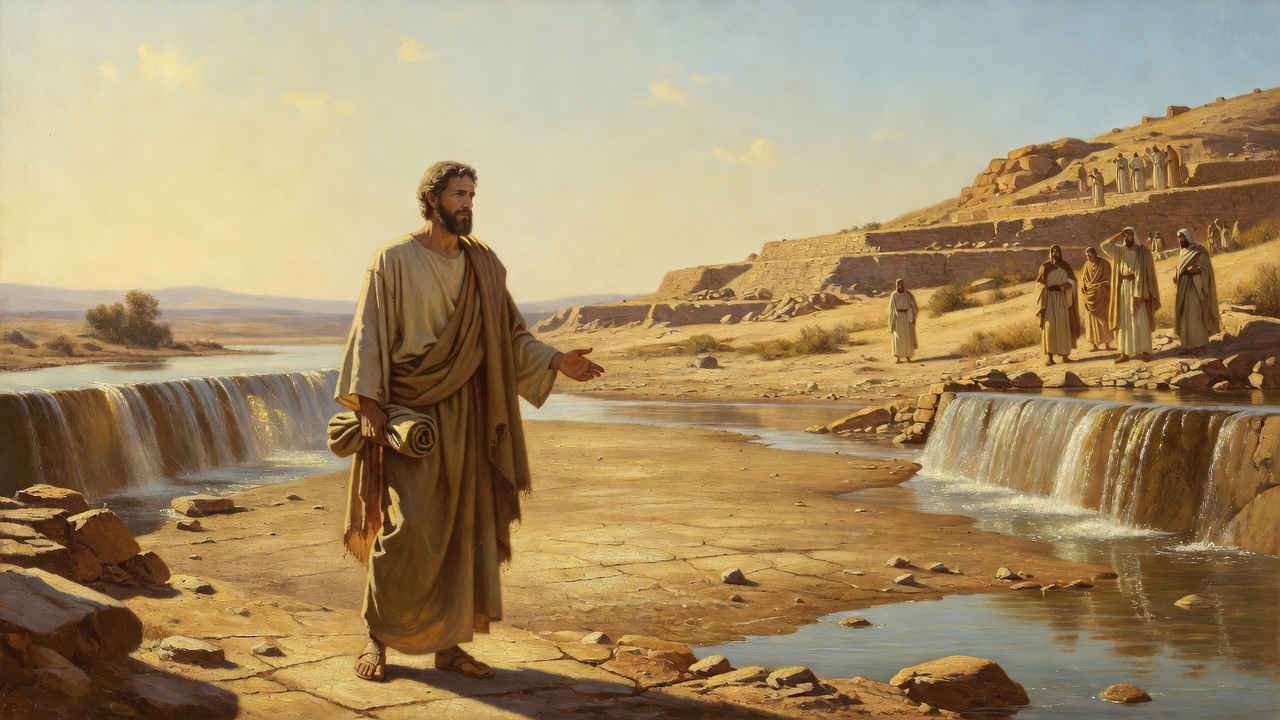
- Elijah's rough mantle had first marked Elisha's calling when Elijah threw it over his shoulders in the field. When Elijah was taken into heaven in a whirlwind, Elisha picked up the fallen cloak and struck the Jordan River with it, demonstrating to the watching prophets that he had received Elijah's spirit and succeeded him as prophet.Sources: Elisha · the Bible text itself
- The spring near Jericho, historically identified with Ain es-Sultan or Elisha's Fountain, had unwholesome water that left the surrounding land barren. Elisha purified the water by casting salt from a new bowl directly into the spring.Sources: Jericho · the Bible text itself
- Before crossing the Jordan, Elijah and Elisha visited communities of the sons of the prophets located at Bethel and Jericho. Fifty men from these prophetic groups watched the miraculous crossing from afar and later spent three days searching the surrounding hills and valleys for Elijah.Sources: Bethel (of Palestine) · Jericho · the Bible text itself
Notes written with AI assistance from open sources (Theographic Bible Metadata, CC BY-SA 4.0; Easton’s Bible Dictionary, public domain) and reviewed before publishing.
Places in this chapter
- Jericho · Today: Tell es Sultan · 31.872, 35.445 · verses 4, 5, 15, 18, 19, 23
- Jordan · Today: Jordan River · 31.761, 35.558 · verses 6, 7, 13
- Mount Carmel · 32.672, 35.023 · verse 25
- Samaria · 32.276, 35.195 · verse 25
Only places identified with high confidence are shown (90% or more according to the scholarly sources compiled by OpenBible). Period map: DARE (Digital Atlas of the Roman Empire), CC BY 4.0; modern map: © OpenStreetMap contributors; places: OpenBible.info (CC BY 4.0).
Credits and license for this translation
Ãcõrẽ Bed̶ea
New Testament in Emberá, Northern (PM:emp:Emberá, Northern)
copyright © 2011 Wycliffe Bible Translators, Inc.
Language: Emberá, Northern
Translation by: Wycliffe Bible Translators, Inc.
Copyright Information
© 2011, Wycliffe Bible Translators, Inc. All rights reserved.
This translation text is made available to you under the
terms of the Creative Commons License: Attribution-Noncommercial-No Derivative Works.
( http://creativecommons.org/licenses/by-nc-nd/3.0/ )
In addition, you have permission to port the text to different file formats, as long as you
do not change any of the text or punctuation of the Bible.
You may share, copy, distribute, transmit, and extract portions
or quotations from this work, provided that you include the above copyright
information:
You must give Attribution to the work.
You do not sell this work for a profit.
You do not make any derivative works that change any of the actual words or punctuation of the Scriptures.
Permissions beyond the scope of this license may be
available if you contact
us with your request.
The New Testament
in Emberá, Northern
© 2011, Wycliffe Bible Translators, Inc. All rights reserved.
This translation is made available to you under the terms of the
Creative Commons Attribution-Noncommercial-No Derivatives license 4.0.
You may share and redistribute this Bible translation or extracts from it in any format, provided that:
You include the above copyright and source information.
You do not sell this work for a profit.
You do not change any of the words or punctuation of the Scriptures.
Pictures included with Scriptures and other documents on this site are licensed just for use with those Scriptures and documents.
For other uses, please contact the respective copyright owners.
2014-04-24
Source: http://ebible.org/empNTpo/ · eBible.org