1 Samuel 26
Ãcõrẽ Bed̶ea · Tap a verse to see its cross-references.
Daviba Saul bea ama b̶ad̶a
1Maʌ̃ ewarid̶e Zip purud̶ebemarãda Guibead̶aa wãnaped̶a Sauloa nãwã jarasid̶aa:
–Davira Haquila eya zaqued̶e ẽjũã põãsa ewaraga b̶ʌ quĩrãpe mĩrũ b̶ʌa.–
2Ara maʌ̃da Saulba dji biara b̶ea Israeld̶ebema sordaorãda mil ũbea edaped̶a Zip ẽjũã põãsa ewaraga b̶ʌd̶aa Davi jʌrʌd̶e wãsid̶aa. 3Maʌ̃ne Haquila eya zaqued̶e o icawa cãĩsid̶aa. Maʌ̃ eya zaquera ẽjũã põãsa ewaraga b̶ʌ quĩrãpe b̶ʌa.
Maʌ̃ne Davira ẽjũã põãsa ewaraga b̶ʌd̶e b̶asia. Idjia cawasia Saulba idjira jidad̶e zebʌrʌda. 4Maʌ̃ bẽrã ʌ̃cʌrʌ diabuesia Saulora idji sordaorã sid̶a sãma panʌda cawai carea. Ãdjirã jẽda zesid̶ad̶e jarasid̶aa wãrãda Saulda jũẽsida. 5Maʌ̃be Davira Saul idji sordaorã ume panʌmaa chupea wãped̶a quĩrãcuita acʌsia Saulda, Ner warra Abne sid̶a sãma cãĩ panʌ cawaya. Maʌ̃ Abnera Saul sordaorã boro basía. Daviba unusia Saulora idji sordaorã ẽsi cãĩ b̶ʌda. 6Davira jẽda wãped̶a hititad̶ebema Ahimele ume idjab̶a Seruyá warra Abisai ume bed̶easia. Abisaira Joá djaba basía. Daviba ãdjía iwid̶isia:
–¿Caida mʌ̃ ume Saul cãĩ b̶ʌmaa wãi?
Abisaiba panusia:
–Mʌ̃da bʌ ume wãya.–
7Maʌ̃ diamasi Davira Abisai ume Saul sordaorã panʌmaa wãsid̶aa. Jũẽsid̶ad̶e unusid̶aa Saulora cãĩ b̶ʌda. Idji boro nocoare mĩãsuda egorod̶e su nũmasia. Maʌ̃ne Abneda, idji sordaorã sid̶a Saul cãĩ b̶ʌ orrocawa cãĩ panasid̶aa. 8Maʌ̃ carea Abisaiba Davia jarasia:
–Id̶i Ãcõrẽba bʌ dji quĩrũra bʌ jʌwad̶e b̶ʌbʌrʌa. Saulora mʌ̃́a idu beabidua. Ara idji mĩãsuba idjira egorod̶aa su jidaya. B̸arima ab̶a subʌrʌba beaya.–
9Baribʌrʌ Daviba jarasia:
–Idjira bearãdua. Ãcõrẽba b̶ʌd̶a boroda beasira idjia cawa oya. 10Ãcõrẽ quĩrãpita mʌ̃a jaraya ab̶abe idjiabʌrʌ Saulora beubida b̶ʌa. Ãĩbẽrã ewari ab̶a idjia Saulora ara jãwã beubiya wa dji quĩrũ ume djõ b̶ʌd̶e beubiya. 11Idjiabʌrʌ Saulora dadjirã boroda b̶ʌd̶a bẽrã mʌ̃a Saulora beaẽ́a. Baribʌrʌ idji jiadoda, mĩãsu sid̶a idji boro nocoare b̶eada edad̶aped̶a isabe wãnia.–
12Ara maʌ̃da Daviba mĩãsuda, jiado sid̶a Saul boro nocoare b̶eada edad̶aped̶a wãsid̶aa. Ãdjia oped̶ad̶ara ni ab̶aʌba ununaẽ́ basía ni ũrĩnaẽ́ basía. Ni ab̶aʌda ʌ̃rʌ̃manaẽ́ basía Ãcõrẽba jũmarãda bio cãĩbigad̶a bẽrã. 13Maʌ̃be Davira dewarabema eya zaque borod̶aa wãsia. Mama idjira Saul sordaorã panʌ quĩrãpe tʌmʌ arid̶e b̶esia. 14Maʌ̃ne Daviba Saul sordaorã boro Abneda trʌ̃ jarasia:
–¡Abne! ¿Ũrĩ b̶ʌca?–
Abneba panusia:
–¿Caida jãwã dadjirã boro Sauloa b̶ia b̶ʌ?–
15Daviba jarasia:
–¿Bʌra Israel druad̶e dji mẽsrãara b̶ʌẽ́ca? Maʌ̃da ¿cãrẽ cãrẽã dadjirã boro Saulora wagaẽ́ b̶ʌ? Id̶i ẽberãda bãrã cãĩ duanʌmaa wãped̶a dadjirã borora beaida b̶asia. 16Bʌa cadjiruada osia. Bʌa dadjirã borora wagaẽ́ b̶asia. Ãcõrẽ quĩrãpita mʌ̃a jaraya: Ãcõrẽba b̶ʌd̶a borora bãrãba wagaped̶ad̶aẽ́ bẽrã, bʌda bʌ sordaorã sid̶a jũma beud̶ida panʌa. Saul mĩãsuda, jiado sid̶a idji boro nocoare b̶ead̶ada jʌrʌdua unui cawaya.–
17Saulba cawasia Davida mãwã bed̶ea b̶ʌda. Maʌ̃ bẽrã jarasia:
–Mʌ̃ warra Davi, ¿bʌda jãwã bed̶ea b̶ʌca?–
Daviba panusia:
–Mãẽ, mʌ̃ boro. Mʌ̃da mãwã bed̶ea b̶ʌa. 18Bʌa ¿cãrẽ cãrẽã mʌ̃, bʌ nezocada biẽ́ oi carea ẽpẽ b̶ʌ? ¿Cãrẽneba mʌ̃a bʌra biẽ́ osi? ¿Cãrẽ cadjiruada osi? 19Mʌ̃ boro, mʌ̃ djuburia mʌ̃a jarabʌrʌra ũrĩdua. Ãcõrẽba bʌda mʌ̃ ume quĩrũbisibʌrʌ mʌ̃a idjía animarãda babue diaya bʌ quĩrũbira tumabimãrẽã. Baribʌrʌ ẽberãrãba bʌda mʌ̃ ume quĩrũbisid̶abʌrʌ, Ãcõrẽba ãdjirãra biẽ́ b̶ʌya. Ãdjirãba mʌ̃ra Ãcõrẽba diad̶a druad̶ebemada ãyã jʌretabʌda quĩrãca nama mĩrũ zebisid̶aa. Nãwã jarabʌdaca b̶ʌa: ãyã wãdua dewara ãcõrẽ b̶ea ẽpẽmãrẽã. 20Nama Ãcõrẽba diad̶a drua ãĩ mʌ̃ra bearãdua. Mʌ̃ra usa tʌ̃ quĩrãca ʌb̶ʌaẽ́ b̶ʌ bẽrã ¿bʌa cãrẽ cãrẽã mʌ̃ra beai carea jʌrʌ b̶ʌ? ¡Eyad̶e suẽrru beai carea jʌrʌ b̶ʌ quĩrãca mʌ̃ra ẽpẽ b̶ʌa!–
21Maʌ̃ carea Saulba panusia:
–Mʌ̃ warra Davi, mʌ̃a cadjiruada osia. Ẽberã crĩcha neẽ́ b̶ʌ quĩrãca mʌ̃a bio ãĩ o b̶asia. Mʌ̃ ume jẽda wãna. Id̶i bʌa mʌ̃ra bead̶aẽ́ bẽrã mʌ̃a bʌra waa biẽ́ oẽ́a.–
22Daviba panusia:
–Mʌ̃ boro, bʌ mĩãsura nama b̶ʌa. Sordaoda ab̶a diabuedua edad̶e zemãrẽã. 23Ãcõrẽba ẽberãza ne biada diaya ãdjia jipa o panʌ carea idjab̶a wãrãda ĩjã o panʌ carea. Id̶i Ãcõrẽba bʌra mʌ̃ jʌwad̶e b̶ʌsia. Baribʌrʌ mʌ̃a bʌra beaẽ́ basía, idjiabʌrʌ bʌra dai boroda b̶ʌd̶a bẽrã. 24Mʌ̃a Ãcõrẽa iwid̶i b̶ʌa mʌ̃da zocai b̶ʌmãrẽã, mʌ̃a id̶i bʌra zocai b̶ʌd̶a quĩrãca. Idjab̶a iwid̶i b̶ʌa mʌ̃ra jũma bia mĩga b̶ʌd̶ebemada ẽdrʌ b̶ʌmãrẽã.–
25Saulba panusia:
–Ãcõrẽba bʌra carebaya, mʌ̃ warra Davi. Wãrãda bʌa ne waib̶ʌada o b̶aya. Bʌa obʌrʌra jũma bia odjaya.–
Maʌ̃be Davira ãyã wãped̶a Saulora jẽda idji druad̶aa wãsia.
Did you know?
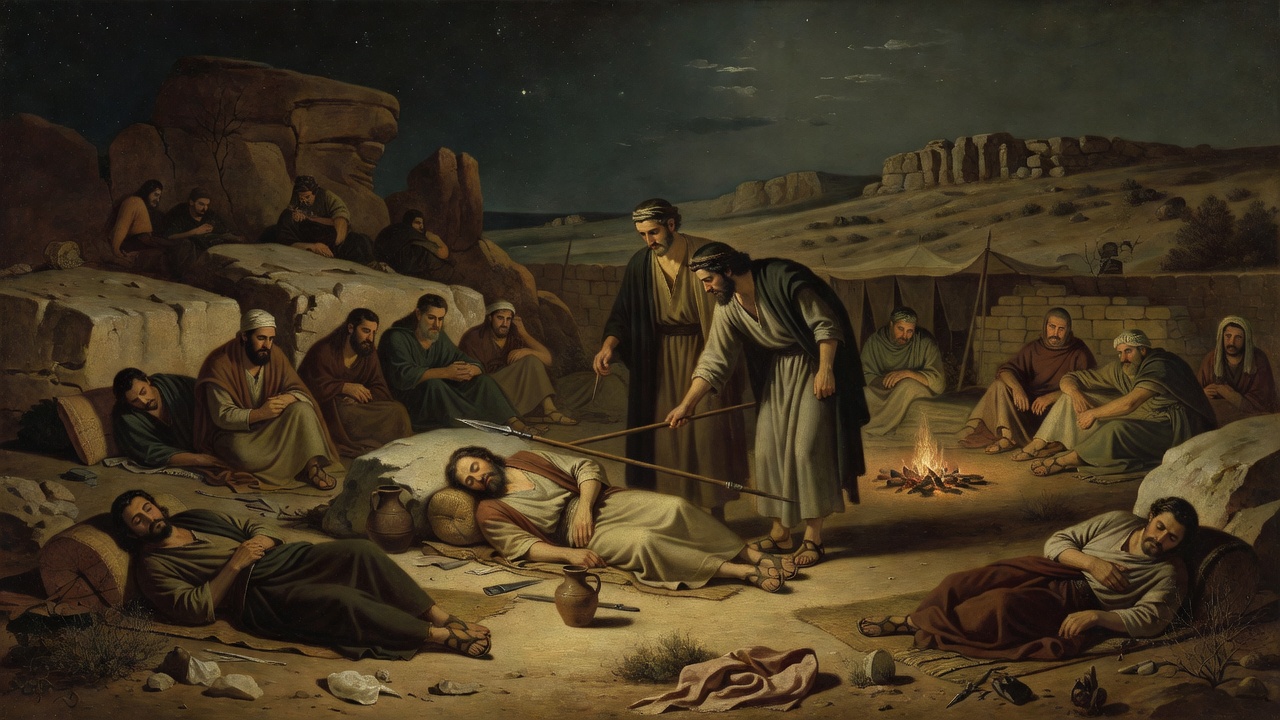
David Spares Saul at the Hill of Hachilah
- The Ziphites reported David's hiding place on the hill of Hachilah, facing Jeshimon (a waste or wilderness area), prompting Saul to mobilize 3,000 chosen men to hunt him down.Sources: the Bible text itself · Hachilah · Jeshimon
- Abishai, who volunteered to sneak into Saul's camp alongside David, was David's nephew—one of the three sons of David's sister Zeruiah.Sources: the Bible text itself · Abishai · Zeruiah
- Abner, the commander-in-chief of Israel's army whom David publicly rebuked for failing to guard the sleeping king, was Saul's cousin (the son of Ner).Sources: the Bible text itself · Abner · Ner
Notes written with AI assistance from open sources (Theographic Bible Metadata, CC BY-SA 4.0; Easton’s Bible Dictionary, public domain) and reviewed before publishing.
Places in this chapter
Only places identified with high confidence are shown (90% or more according to the scholarly sources compiled by OpenBible). Period map: DARE (Digital Atlas of the Roman Empire), CC BY 4.0; modern map: © OpenStreetMap contributors; places: OpenBible.info (CC BY 4.0).
Credits and license for this translation
Ãcõrẽ Bed̶ea
New Testament in Emberá, Northern (PM:emp:Emberá, Northern)
copyright © 2011 Wycliffe Bible Translators, Inc.
Language: Emberá, Northern
Translation by: Wycliffe Bible Translators, Inc.
Copyright Information
© 2011, Wycliffe Bible Translators, Inc. All rights reserved.
This translation text is made available to you under the
terms of the Creative Commons License: Attribution-Noncommercial-No Derivative Works.
( http://creativecommons.org/licenses/by-nc-nd/3.0/ )
In addition, you have permission to port the text to different file formats, as long as you
do not change any of the text or punctuation of the Bible.
You may share, copy, distribute, transmit, and extract portions
or quotations from this work, provided that you include the above copyright
information:
You must give Attribution to the work.
You do not sell this work for a profit.
You do not make any derivative works that change any of the actual words or punctuation of the Scriptures.
Permissions beyond the scope of this license may be
available if you contact
us with your request.
The New Testament
in Emberá, Northern
© 2011, Wycliffe Bible Translators, Inc. All rights reserved.
This translation is made available to you under the terms of the
Creative Commons Attribution-Noncommercial-No Derivatives license 4.0.
You may share and redistribute this Bible translation or extracts from it in any format, provided that:
You include the above copyright and source information.
You do not sell this work for a profit.
You do not change any of the words or punctuation of the Scriptures.
Pictures included with Scriptures and other documents on this site are licensed just for use with those Scriptures and documents.
For other uses, please contact the respective copyright owners.
2014-04-24
Source: http://ebible.org/empNTpo/ · eBible.org