1 Samuel 18
Ãcõrẽ Bed̶ea · Tap a verse to see its cross-references.
Jonataʌ̃ Davi ume dji bia
1Saul ume bed̶ead̶acarea Davira Saul warra Jonataʌ̃ ume dji biada panesid̶aa. Jonataʌ̃ba Davira quĩrĩã b̶asia ara idji quĩrĩã b̶ʌ quĩrãca. 2Maʌ̃ ewarid̶e Saulba Davira idji ume b̶ebisia. Waa idji zeza ume b̶amãrẽã idu wãbiẽ́ basía. 3Jonataʌ̃ba Davira quĩrĩã b̶asia ara idji quĩrĩã b̶ʌ quĩrãca. Maʌ̃ bẽrã bed̶ea b̶ʌsid̶aa dji biada paneni carea. 4Jonataʌ̃ba idji djiora Davia ẽrã diasia. Maʌ̃ awara idji djõbada necoda, enedrʌmada, cʌrrʌ trãjʌ̃badada, cacuad̶e jʌ̃bari sid̶a diasia.
5Saulba Davi djõne diabuebʌrʌza Daviba poyabadjia. Maʌ̃ carea Saulba idjira idji sordaorã boro dji dromada b̶ʌsia. Maʌ̃ra jũma Saul sordaorãba, idjiare b̶ea bid̶a bia unusid̶aa.
Davi trʌ̃ b̶ʌga b̶ʌ carea Saul so ãrĩna
6Daviba pilisteo Goliá bead̶acarea israelerã sordaorãra jẽda ãdji puruza wãsid̶aa. Israelerã puruza jũẽne wãbʌdad̶e wẽrãrãba Saulora audiab̶aribadjid̶aa. Maʌ̃ne b̶ʌsrid̶aba trʌ̃ãbadjid̶aa, caribadjid̶aa, idjab̶a tõnõãda, dewara sid̶a zabadjid̶aa. 7Mãwã cari panʌne nãwã trʌ̃ãbadjid̶aa:
Saulba ẽberãda mil beasia baribʌrʌ Daviba die mil beasia.
8Maʌ̃ ũrĩsid̶e Saulora so ãrĩsia. Maʌ̃ carea quĩrũbid̶eba jarasia:
–Ãdjirãba jara panʌa Daviba ẽberãda die mil beasida maʌ̃ne mʌ̃a milbe beasida. ¡Cawaẽ́ne idjira ãdjirã boroda b̶ʌd̶ia!–
9Mamaʌba ʌ̃taa Saulba Davira quĩrãcuita b̶abadjia.
10Nurẽma Ãcõrẽba jaida Saulmaa idu zebisia. Maʌ̃ jaiba idjira quĩrã cawaẽ́ nũmebisia idji de dromane. Maʌ̃ne Daviba Saul carebai carea idji arpara zá b̶asia idjia obari quĩrãca. Saulba mĩãsuda idji jʌwad̶e erob̶asia. 11Cawaẽ́ne Saulba maʌ̃ mĩãsuba araa tẽũtasia. Idjia crĩchasia Davira ded̶aa su jidaida. Baribʌrʌ Daviba b̶arima umé aubuesia su bearãmãrẽã.
12Saulba cawa b̶asia Ãcõrẽra idji ume b̶ad̶ada ãyã wãsida baribʌrʌ Davi ume b̶ʌda. Maʌ̃ bẽrã idjia Davira waya b̶asia. 13Maʌ̃ ewarid̶e Davira mil sordaorã boroda b̶ʌsia idji caita b̶arãmãrẽã. Djõne wãbʌdaza Daviba sordaorãda edeped̶a bia enebadjia. 14Ãcõrẽra idji ume b̶ʌ bẽrã ne jũmane bia wãbadjia. 15Davira ne jũmane bia wã bẽrã Saulba waya b̶asia. 16Baribʌrʌ jũma Judad̶ebemarãba, waabema israelerã bid̶a Davira bio quĩrĩã panasid̶aa djõne wãbʌdaza ãdjirãra edeped̶a bia enebadji bẽrã.
17Ewari ab̶a Saulba Davia jarasia:
–Mʌ̃ cau dji nabema Meráda bʌ́a diaya bʌ quima bamãrẽã. Mʌ̃a ab̶abe quĩrĩã b̶ʌa bʌra mʌ̃ itea sozarra djõ b̶aida Ãcõrẽba djõbibʌrʌd̶e.–
Baribʌrʌ Saulba wãrãda nãwã crĩcha b̶asia: “Mʌ̃a Davi beai cãyãbara biara b̶ʌa pilisteorãba bead̶ida.”
18Maʌ̃ne Daviba panusia:
–Baribʌrʌ mʌ̃ra dji dromaẽ́a bʌ wigu bai carea. Mʌ̃ ẽberãrã sid̶a dadji Israel druad̶e dji dromarãẽ́a.–
19Saulba Davia idji cau Merára diai jarad̶amĩna dji ewari jũẽsid̶e diaẽ́ basía. Ãtebʌrʌ ẽberã Adriel abadaa diasia. Adrielera Mehola purud̶ebema basía. 20Maʌ̃ne Saulba dewara cau Mical abadada erob̶asia. Maʌ̃ wẽrãba Davira quĩrĩã b̶asia. Saulba cawaped̶a b̶ʌsrid̶asia. 21Nãwã crĩchasia: “Mʌ̃ cau Micalera Davia diaya. Maʌ̃be idjid̶eba mʌ̃a Davira pilisteorã jʌwad̶e b̶aebiya.” Maʌ̃ carea Saulba wayacusa Davia jarasia:
–Id̶ibʌrʌ wãrãda bʌra mʌ̃ wigu baya.–
22Maʌ̃ ewarid̶e Saulba idjiare b̶eaa nãwã jarasia:
–Bãdub̶a Davi ume bed̶eabʌdad̶e jarad̶adua mʌ̃a idjira bio quĩrĩã b̶ʌda idjab̶a bãrã bid̶a idjira bia unu panʌda. Maʌ̃ bẽrã mʌ̃ caura edaduad̶a ad̶adua.–
23Sauloare b̶eaba Davia mãwã jarasid̶aa. Baribʌrʌ Daviba panusia:
–Mʌ̃ra ne neẽ́ quirua idjab̶a dji dromaẽ́a. ¿Ara jãwã quiruda dadjirã boro wigu baida b̶ʌca?–
24Sauloare b̶eara wãnaped̶a Daviba jarad̶ara Sauloa jũma nẽbʌrʌsid̶aa. 25Baribʌrʌ Saulba crĩcha b̶asia Davira pilisteorãa beabida. Maʌ̃ bẽrã jarasia:
–Davia jarad̶adua mʌ̃ cau carea paratara iwid̶iẽ́ b̶ʌda. Mʌ̃a ab̶abe quĩrĩã b̶ʌa idjia pilisteorã umaquĩrã cacua wẽãgod̶a eda cien eneida. Idjía jarad̶adua pilisteorãba dadjirã biẽ́ oped̶ad̶a carea mʌ̃a ãdjirãra ab̶ari quĩrãca biẽ́ o quĩrĩã b̶ʌda.–
26Sauloare b̶eaba Davia maʌ̃ra jarasid̶aa. Maʌ̃ bed̶eara Daviba bia ũrĩsia dji boro Saul cauda eda quĩrĩã b̶ad̶a bẽrã. Saulba jarad̶a ewari naẽna Davira idji sordaorã ume wãnaped̶a dosciento pilisteorãra quenasid̶aa. Daviba maʌ̃ umaquĩrãra cacua wẽãgocuaped̶a dji era Saulmaa edesia idji cau edai carea. Ara maʌ̃da Saulba idji cau Micalera diasia Davi quima bamãrẽã.
28Maʌ̃ne Saulba wãrãda cawasia Ãcõrẽra Davi ume b̶ʌda idjab̶a idji cau Micalba Davira bio quĩrĩã b̶ʌda. 29Maʌ̃ carea biara wayasia. Maʌ̃ne Davi ume dji quĩrũda b̶esia ab̶a beubʌrʌd̶aa. 30Maʌ̃ awara pilisteorã ãdjirã ume djõne zebʌdaza Daviba dewara sordaorã bororã cãyãbara aud̶uara poyabadjia. Maʌ̃ bẽrã idjira trʌ̃ b̶ʌga b̶esia.
Did you know?
David's Success and Saul's Jealousy
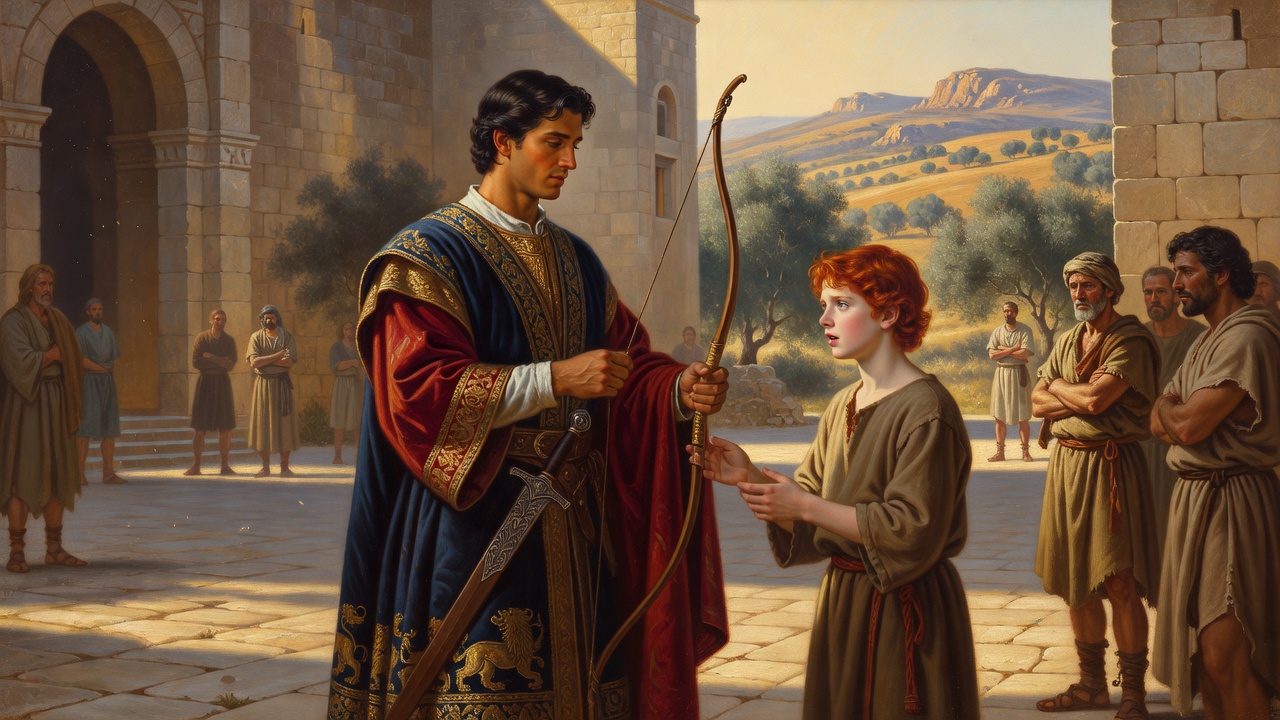
- Jonathan, the eldest son of King Saul, formed a close bond with David and made a covenant with him. To seal this friendship, Jonathan gave David his own royal robe, tunic, sword, bow, and belt.Sources: Jonathan · the Bible text itself
- The public celebration of David's military victories provoked Saul's enduring jealousy. When women from the cities of Israel sang that Saul had slain thousands while David had slain tens of thousands, Saul grew suspicious and feared losing his kingdom to him.Sources: the Bible text itself
- Although Saul initially promised his eldest daughter Merab to David, she was given in marriage to Adriel of Meholah. Saul then offered his younger daughter Michal, demanding a bride-price of one hundred Philistine foreskins in the hope that David would be killed in battle.Sources: Merab · Michal · Adriel · the Bible text itself
Notes written with AI assistance from open sources (Theographic Bible Metadata, CC BY-SA 4.0; Easton’s Bible Dictionary, public domain) and reviewed before publishing.
Credits and license for this translation
Ãcõrẽ Bed̶ea
New Testament in Emberá, Northern (PM:emp:Emberá, Northern)
copyright © 2011 Wycliffe Bible Translators, Inc.
Language: Emberá, Northern
Translation by: Wycliffe Bible Translators, Inc.
Copyright Information
© 2011, Wycliffe Bible Translators, Inc. All rights reserved.
This translation text is made available to you under the
terms of the Creative Commons License: Attribution-Noncommercial-No Derivative Works.
( http://creativecommons.org/licenses/by-nc-nd/3.0/ )
In addition, you have permission to port the text to different file formats, as long as you
do not change any of the text or punctuation of the Bible.
You may share, copy, distribute, transmit, and extract portions
or quotations from this work, provided that you include the above copyright
information:
You must give Attribution to the work.
You do not sell this work for a profit.
You do not make any derivative works that change any of the actual words or punctuation of the Scriptures.
Permissions beyond the scope of this license may be
available if you contact
us with your request.
The New Testament
in Emberá, Northern
© 2011, Wycliffe Bible Translators, Inc. All rights reserved.
This translation is made available to you under the terms of the
Creative Commons Attribution-Noncommercial-No Derivatives license 4.0.
You may share and redistribute this Bible translation or extracts from it in any format, provided that:
You include the above copyright and source information.
You do not sell this work for a profit.
You do not change any of the words or punctuation of the Scriptures.
Pictures included with Scriptures and other documents on this site are licensed just for use with those Scriptures and documents.
For other uses, please contact the respective copyright owners.
2014-04-24
Source: http://ebible.org/empNTpo/ · eBible.org