Mark 12
Ekajuk Scriptures Bible Portions · Tap a verse to see its cross-references.
Elgan ni li bade abayaame etahngga
1Jisos kehm kehme elbungu a bo go ngaane re, “Nne jolo go, no bahme avain, fere kak ega sennge. Á kehm rahme elbing ni bo jo kak akab nti, fere jo kaame akab nti nyao tv elbing nio, alahb jo lohng. Á si enyong, kak ane ba jo baabe edi jio, kehm yaame abahmgbe edi jio, toono eje tahm ejahbe jehko ji li fee. 2Ngare rehnge kan a, nyi bo kpo bong akab nti nyao. Nfono etahngga kehm tumu nlokeltum ewe awohng tv re á song ko akab nti enye goji ane ba á yaame bo etahngga eje. 3Bo kehm-e tubu ejahm, dv-e tꞌtahne, kam-e, á feere abo abo. 4Á kehm kpe tum nlokeltum noko. Bo kehm-e kpe dv, bom-e elok go esi, fere son-e. 5Á kehm kpe tum nne noko. Ye, bo wul-e na. Ano wo tob lim egom jindiki ji á kpe tum. Bandiki bo dv bo. Bandiki bo wul na.
6“Awohng no gohr-e sa, ekorokoro mmon ewe wo. Esꞌkohro, á kehm-e gohro tum tv bo. Á tiri re, ‘Mmon ewame bahke lubu bo.’
7“Abayaame etahngga bao kehm kehme elbungu atemtem re, ‘A wo li nne no bahke lehke elkv ene. Baan, wahr wulen ye, eji etahngga jia lꞌfere jol jꞌjahre.’ 8Bo kehm-e jabbe, wul-e, fere rod-e tub go nkpe etahngga.
9“Jen ji nfono etahngga noo bahke limi? Á bahke wulu abayaame etahngga bao, fere faake etahngga jio ka ane bandiki. 10Wahn ka lung a lung edi nwer Esowo jiaa, ji bungu re,
“ ‘Eltal ni asehketahk tene no,
ni ni ma fere jol nnahb ekahma?
11Jehova limi jia ji li nkpokosi go egahra ntim.’ ”
12Atubesi Jus kehm jo seb re bo bob Jisos. Bo jo kahne re, elgan nio á tubu bada bo. Bo jo fꞌfahl ellong ane ba jolo o. Bo kehm-e tahme sa, tahm ebo.
Mbahbe nyi li bade etak atahbe
13Bo kehm tumu egom Farisi jindiki, fere tob tum egom ane ba Herod tv Jisos re bo song bob-e go ege alum nnyo. 14Eji bo je no, bo kehm bungu tong-e re, “Ntꞌtibi, e kpꞌkahne re, wo etingi nne ji. E kpꞌkahne re, wo kpehme rang ane. Nne awohng awohng li jang jang go ega esamahr. Á kpo lohko tib mbang nyi Esowo go etingitingi. Nꞌnob re wahr jo tahb etak ka ntul a Roma, afi nobem? Wahr jo tahba, afi wahr kꞌjo tahb?”
15Jisos kꞌkahn awak ebo, kehm fere tong bo re, “Jen ji wahnge ń kp-m gare? Ka-m wahn nsiring, me n tohko nyehn!”
16Bo kehm koko nsiring ba ka-e. Á kehm bahbe bo re, “Esi jia ji nyehne ji? Mbing nyia nyi nyehne nyi?”
Bo kehm-e tongo re, “Esi jia ji ntul ji. Mbing nyia nyi ntul nyi.”
17Jisos kehm bungu re, “Ka-n ntul ji li ka ntul, wahn ka Esowo ji li ka Esowo!” Jisos, kehm kpoko bo esi.
Mbahbe nyi li bade elnyahme ngubjing go elkv
18Egom Sadusi jindiki kehm bake goji Jisos. Bo jo kono eltibi re, “Elnyahme ngubjing go elkv limm.” Bo kehm bungu re, 19“Ntꞌtibi, ntahm nyi Moses nyono ka-r li re, ‘Nne lꞌkpo, nkal ewe sa, eji á ki jel mmon awohng awohng, mmonannyehn nne no ma kpo wo bahke baange nnenkal noo, eji á lꞌjel abon ka mmonannyehn no ma kpo.’ 20Jolo abonanyehn nne na asehma. Ngbokambang baange nkal. Mmon awohng awohng á jelem, kehm kpoko. 21Etoono kpe baange nnenkal nonehm o. Mmon awohng awohng á jelem, á tob kpo. Ano wo tob jol a mmonannyehn noko no toon-e no. 22Erik abonanyehn bako ba sa njahm tob baange nnenkal nonehm o. Mmon awohng awohng bo tikem jel. Bo kpo kpee. Esꞌkohro, nnenkal noo gohro kpo. 23Go esꞌkohro efung, ane lꞌfere nyahme go elkv, nne awo bahke jolo nlum a nnenkal noo? Kpee abonanyehn bao na asehma ko nnenkal noo ana nkal abo.”
24Jisos kehm bungu tong bo re, “Wahn ebsoodo. Ń kpꞌkahne ji wahng kaa? Tibre ń nehme kahn nwer Esowo, ń nehme kahn nsahm nyi Esowo. 25Go efung elnyahme ngubjing go elkv, ane bahke fere jol ana babenjel go ejahbetul Esowo. Aneblum nehm kpe ko akal. Anebkal nehm kpe bal alum. 26Bade elnyahme ngubjing go elkv, ń ka lung a lung go nwer nyi Moses bade eti ji jo lula? Owo bo nyono re, ‘Esowo bungu tong Moses re, Me wo li Esowo bi Ebraham, a bi Aisik, a bi Jekob.’ 27Jia lohngo re, Ye wo li Esowo bi ane ba li go elkpin, bi akvne sang. Wahn ebsoodo tete.”
Ngbokambang a ntahm nyi ga gbal
28Ntꞌtibi no atahm awohng jolo o, no jo wuk ana bo jo bung. Á nyehne re, Jisos ebfaange Bab Sadusi nnooba nfaange. Á kehm lohngo ba, ba bahb Jisos re, “Ntahm anyi li li ngbokambang a ntahm nyi gbale sehnge atahm kpee?”
29Jisos kehm faange re, “A wo li ngbokambang a ntahm, ‘Wuken abon Israel! Esowo Ntul ewahre, ye wo li Esowo ntahngtahng. 30Nobo re Esowo Ntul ewa jo kor-a eltim eltim ena, a etohko etohko eja, a ntir ntir enya, a eko eko eja.’ 31Etoono ntahm nyehka li re, ‘Nne ebjing ewa jo kor-a ana ebjing eba.’ Ntahm anyehng anyehng go kpeem li, nyi li etahntahn ntahm sehnge nyia na ebal.”
32Ntꞌtibi no atahm noo kehm bungu tong Jisos re, “Ntꞌtibi, woblohko bung go etingitingi. Etingitingi, lohko li Esowo na abehng. Esowo abehng abehng kpeem li, sehngem ye ntahngtahng wo li no. 33Ano wo nobo re Esowo jo kor nne eltim eltim ene, a ntir ntir enye, a eko eko eje. Nne ebjing ewe jo kor-e ana ebjing ebe. Elbumu ni nne bahke jo bum ntahm nyia na ebal, ni ni ga nob sehnge enyam kpee bi á kpo ko, jahm fi ka Esowo, a nsol nyehko nyi á kpo ko lim njom ka Esowo.”
34Eji Jisos kahne re, yebfaange nnooba nfaange, á kehm-e tongo re, “Ebsa ntiil, a li etul bi Esowo.” Nnene kpeem sahb, bahb Jisos mbahbe anyehng anyehng.
Mbahbe nyi li bade Mesaya
35Eji Jisos jo tib go etahk Esowo, á kehm bahbe mbahbe anyehng re, “Jen ji wahnge atꞌtibi ba atahm kpo bung re, Mesaya bahke lohngo go etꞌtohngo ji Devid? 36Yefono Devid nyono ana Etingi Etohko tong-e no re,
“ ‘Esowo bungu tong ntul ewame re,
Ji go egame eboblum,
tete me n lim anebekv eba etikunakpade eja.’ 37Yefono Devid jo lung-e re,
‘Ntul ewame’.
Bahke jolo renan, ntul noo kehm fere jol mmon ewe?”
Ellong ane bao wuku alum nyao go eyebatahng.
Ana Jisos kake erehke bade atꞌtibi ba atahm
38Jisos kehm kpe tib ane re, “Gberen atꞌtibi ba atahm! Kpo kor bo re bo jo kak akpawobo, jo yannge. Go are, bo kpo seb re, ane jo gong, kak bo nnyo. 39Go ero, bo kpo ji go mbuksong. Go elkak, bo kpo ji adi nji nya fuumu re ajꞌjok ane ji. 40Bo kpo nehm akalebun, taare ntahk ebo. Bo kpo kak alaabe aro go nnyo a nnyo, go ntim kpehme rehng. Elam ji bo bahke bibi sehng.”
Ayare nya nkalebun ka no
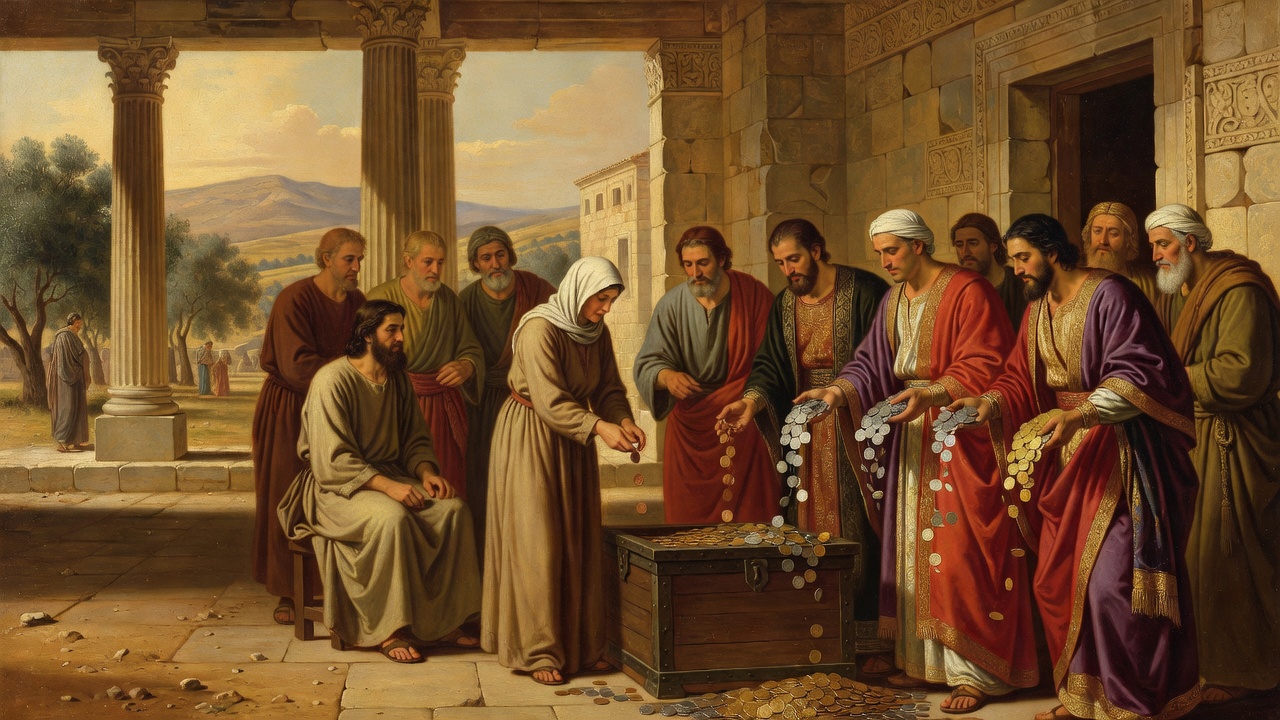
41Eji Jisos ji ona ekpꞌkpa Esowo kohlo edi ji bo kpo ka ayare, á jo nyehne ana bo kpi ayare ka. Afang ane tvv jo ba yaange na yaange akpohko ka. 42Nkpak a nkalebun kehm bake, ba tub ederi ebbal kak, bi limi mpene anyehng.
43Jisos kehm lungu abatꞌtoono ebe tv elne, kehm tongo bo re, “Etingitingi, n kp-n tongo re, Nkalebun noa ana, ye wo ga ka sehnge ane bao kpee. 44Egom jehko jo ka gbalee, jo sa bo gbalee go. Ye ji li nkpak, á ka kpee ji á bele no, ji kehn á jol ma ko, gunu nsol alehke.”
Did you know?
Debates in the Temple
- The Sadducees, who say there is no resurrection, question Jesus about seven brothers and one widow, appealing to what Moses wrote. He points them to the burning bush in the Book of Moses, where God says, “I am the God of Abraham, the God of Isaac, and the God of Jacob.” Abraham, “father of a multitude,” was Terah’s son; Isaac was Abraham’s only son by Sarah; and Jacob was the second-born of the twin sons of Isaac and Rebekah.Sources: the Bible text itself · Abraham · Isaac · Jacob (Israel)
- Asked which commandment is the most important, Jesus begins, “Hear, O Israel, the Lord our God, the Lord is One,” and adds, “Love your neighbor as yourself.” Israel is another name for Jacob, the second-born twin son of Isaac and Rebekah; Jacob’s name is explained as one who follows on another’s heels, or supplanter.Sources: the Bible text itself · Jacob (Israel)
- Teaching in the temple courts, Jesus asks how the scribes can say that the Christ is the Son of David if David himself calls him “Lord.” David, whose name means “Beloved,” was the eighth and youngest son of Jesse, a citizen of Bethlehem, and his early occupation was tending his father’s sheep on the uplands of Judah.Sources: the Bible text itself · David
Notes written with AI assistance from open sources (Theographic Bible Metadata, CC BY-SA 4.0; Easton’s Bible Dictionary, public domain) and reviewed before publishing.
Credits and license for this translation
Ekajuk Scriptures Bible Portions
Ekajuk: Ekajuk Scriptures Bible Portions (Bible)
copyright © 2024 Luke Initiative for Scripture Translation and The Seed Company
Language: Ekajuk
Contributor: Luke Initiative for Scripture Translation
This translation is made available to you under the terms of the
Creative Commons Attribution Share-Alike license 4.0.
You have permission to share and redistribute this Bible translation in any format and to make reasonable revisions and adaptations of this translation, provided that:
You include the above copyright and source information.
If you make any changes to the text, you must indicate that you did so in a way that makes it clear that the original licensor is not necessarily endorsing your changes.
If you redistribute this text, you must distribute your contributions under the same license as the original.
Pictures included with Scriptures and other documents on this site are licensed just for use with those Scriptures and documents.
For other uses, please contact the respective copyright owners.
Note that in addition to the rules above, revising and adapting God's Word involves a great responsibility to be true to God's Word. See Revelation 22:18-19.
2025-07-02
Source: http://ebible.org/eka/ · eBible.org