Matthew 10
Ekajuk Scriptures Bible Portions · Tap a verse to see its cross-references.
Abatꞌtoono ebe, ewubu ane abal
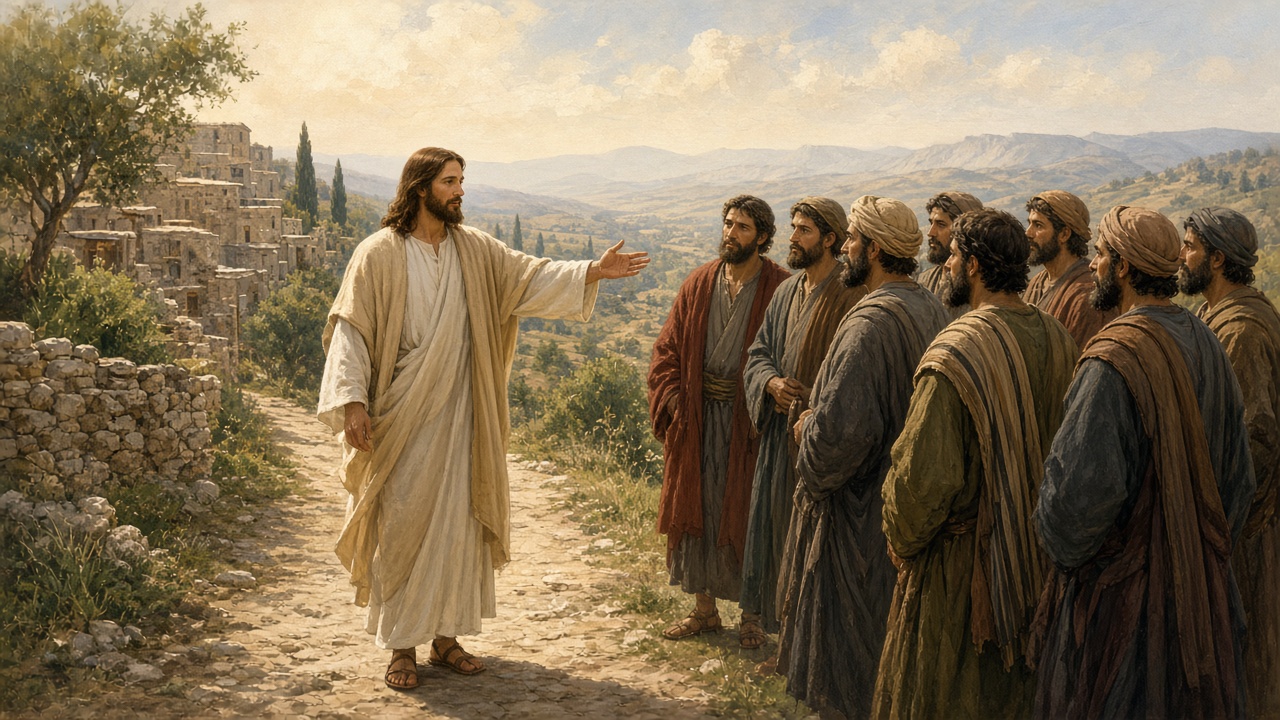
1Jisos kehm lungu abatꞌtoono ebe, ewubu ane abal tv elne, kehm kake bo nsahm re bo kam ane abi atohko yehke, fere lim ane, bo nob elkohn eyam abehng abehng. 2Abing abatiingetib ewubu ane abal nya a. Ngbokambang, Saimon ji bo jo lung-e re Pita, go Andru mmonannyehn, go Jems ji mmon a Sibidi, a Jon ji mmonannyehn Jems, 3go Filip, Batolomi, Tomos, go Matiu nkokatak, Jems ji mmon Alfeus, a Lebeus ji bo jo lung-e re Tadeus, 4a Saimon ji jo seb re ejahbe eje lohng go elwo ni aneb Rom, go Judas Iskariot ji gungu Jisos.
Eltum ni abatꞌtoono Jisos song lim
5Re Jisos kehm tumu ewubu ane abal bao, á tubu bo elle re, “Kana je ajahbe nya ane ba ki li Jus, a ajahbe Samaria. 6Songen goji ejoro bi Israel bi ma tan. 7Song bungen alum Esowo re, ‘Etul bi Esowo ebkabbe.’ 8Limen aneb ayam, bo nob, wahn lim aneb abili, bo nob, fere nyahme akvne go elkv, fere kam ane abi atohko yehke.
“Ana n ka-n mbol mbol, tob kaan go mbol mbol. 9Kana fili agul, a asilva, jol kana kak apene go egahne abam fili. 10Kana fili abam efilibo, fere fili mbomo ebal ebal, a akpaketa, a nti efilibo. Tibre nlimeltum fꞌfuumu re á bel nsol alehke.
11“Ejahbe ajehng ajehng ji ń lꞌsong rehng, afi jolo egburu ejahbe, afi jolo mmojahbe no nse, seben nne no bahke kahne re, eltum enahne ni nno ni. Kangen a ne o tete wahn tahm ejahbe jio. 12Ń lꞌyange go etahk nne, kaken bo nnyo. 13Ane bao lꞌvvr-n, nong, elkoono ni ń kpi no jol a bo. Bo tohko fere vvr-n, elkoono ni ń kpi no bahke feere, ba tob-n. 14Nne awohng awohng no tohk-n vvrv, kꞌwuungu atung go egahne alum, afi fere jolo ejahbe, tahmen edi jio, wahn kum ebtohko go egahne akpade. 15Etingitingi, n kp-n tongo re, Go efung elam, elam ji ejahbe jio bahke bibi sehnge ji Sodom, a Gomorra.
Ebnohko bi kpꞌbake
16“Anv, n kp-n tumu ana ejoro tv go ellong abi enyam. Jo bangen ana enyo, wahn fere jol ana mbehl nyi kil jo lim ebi ejum ajehng ajehng. 17Jo gberen! Tibre ane bahk-n jo kak go esub, fere jo dv-n go bo a ntahk ero.
18“Bo bahke jo ko-n, song yiimi go esamahr atubesi, a atul tib go egame esi. Nsol nyia nyi bahk-n jo lim, eji ń lꞌjo yiim-m ntianse go bo esamahr, a esamahr ane bako ba ki nyi Esowo. 19Bo lꞌkak-n go esub, kana jo tiiri bada nsol nyi ḿ bahke bungu, jol ana ḿ bahke bꞌbung. Tibre ngare nyio bo bahk-n kake alum nya ḿ bahke bungu. 20Tibre alum nya ḿ bahke bungu, nyanyahne sang, bahke lohngo goji Etohko ji Nso ejahne ji kpꞌbungu go egahne atahng.
21“Abonanyehn nne bahke jo yake abonanyehn ka re bo wul. Babnde nne bahke tob jo yake abon ebo ka re bo wul. Abon bahke jo kpiidi kuumu babnde, jo jabbe bo ka, bo wul. 22Nne awohng awohng bahke jo ko-n ekv tib go egama mbing. Nne no lꞌkpuumu tete rehng go esꞌkohro, ye wo bahke bele eltahre.
23“Bo lꞌnohk-n go ejahbe jehko, been, song ejahbe jehko. Tibre etingitingi, n kp-n tongo re, Ń nehm ma tiki lim eltum go ajahbe Israel kpee mal, tete Mmon no nne feere ba.
24“Nne no kpꞌkpili kpehme gbal sehnge ntꞌtibi ewe. Nlokeltum kpehme gbal sehnge nde. 25Nobo re nne no kpꞌkpili tob taame go eyebatahng jol ana ntꞌtibi ewe. Nobo re nlokeltum taame, jol ana nde. Nfontahk, bo lꞌlung-e re ntul a nnehm, bahke limi renan, bo kꞌtob lung ane ebe ano?
Nne awo fuumu re nne fahl-e?
26“Kana jo fahl ane! Ejum ajehng ajehng limm, ji bo bulu no, ji Esowo lꞌkꞌlennge. Ejum ajehng ajehng limm, ji bo behre no, ji ane lꞌkꞌkahn. 27Ejum ji n kp-n tongo a mbehr mbehr, ḿ bahke bungu gbul gbul gbuul. Ji m bungu go awꞌwa tong-n, ḿ bahke bungu go elkab ane.
28“Kana jo fahl ane ba kpo wul ngubjing, ba lꞌkꞌma wul etohko. Fahlen ye jio ji bahke ma rannge etohko, a ngubjing go ellulagun. 29Nne li ma gunu nruk ebal go are, ka mpene. Abehng abehng limm, bi bahke gboko go ndi, sehngem re no, Nso ejahne taame na. 30Wahn, alv enyahne kpee nya li go egahne asi, bobfange. 31Kana kpe fahl! Wahn ba ga lub sehnge nruk gbalee.
Ana nne bahke jo yiimi ntianse ka Jisos
32“Fvfo, nne awohng awohng no lꞌyiimi ntianse ka-m go esamahr ane, ye wo fvfo, m bahke tob yiimi ntianse ka-e go esamahr bi Nsoo no li go ejahbetul. 33Nne awohng awohng no lꞌten-m go esamahr ane, ye wo fvfo, m bahk-e tob ten go esamahr bi Nsoo no li go ejahbetul.
Elkoono sang, ekahngkahng bi
34“Kana tir re, n ko elkoono ba a ni go njini nyia. M baam re me n ko elkoono ba a ni, m ba re me n ko ekahngkahng ba a bi. 35M ba re ‘mmon fere kpiidi kuumu nde, mmon no nkal kpiidi kuumu nnyehn, nkal a nne kpiidi kuumu nnyehn nlum. 36Nne, ane ebe ba bahke fere jol anebekv ebe.’ 37Nne no nde, afi jolo nnyehn, bo lꞌkor-e sehnge me, á fuumem a name. Nne no abon ebe lꞌkor-e sehnge me, á fuumem a name. 38Nne awohng awohng no tohko rod ekros eje, tahm toon-m, á fuumem a name. 39Nne no lꞌgare re á tahre elkpin ene, á bahke tane na elkpin ene. Nne no lꞌtane elkpin ene tib go egame esi, á bahke tahre na elkpin ene.
Eltuuru
40“Nne no lꞌvvr-n, á vvrv me. Nne no lꞌvvr-m, á tob vvrv nne no tum-m no. 41Nne no lꞌvvrv nnyehnamahr, tib eji á kahne re nnyehnamahr Esowo wo, á bahke bele eltuuru ana ni nnyehnamahr kpo bel. Nne no lꞌvvrv etingitingi nne tib á li go etingitingi, á bahke bele eltuuru ana ni etingitingi nne kpo bel. 42Nne awohng awohng no lꞌka nne awohng go ellong abonse baa abon alahb re á wo, tib eji á kpꞌkahne re, ntꞌtoono ewame wo, á bahke bele eltuuru go etingitingi.”
Did you know?
The Twelve Sent on Mission
- Simon, called Peter, and his brother Andrew—the first pair named among the twelve—were fishermen from Bethsaida, on the western coast of the Sea of Galilee. James and John, listed next, were sons of Zebedee, a Galilean fisherman who had his own boats and hired servants.Sources: the Bible text itself · Simon Peter · Andrew · Zebedee
- Matthew, identified in the list as the tax collector, was the son of Alphaeus and had formerly been known as Levi; he collected taxes at Capernaum, and the name Matthew means “gift of God.” Thomas, named beside him, was also called Didymus, the Greek equivalent of the Hebrew name, meaning “twin.” Bartholomew means “son of Tolmai” and is generally supposed to have been the same person as Nathanael.Sources: the Bible text itself · Matthew · Thomas · Bartholomew
- Jesus warns that the day of judgment will be more bearable for Sodom and Gomorrah than for a town that refuses the twelve apostles. Easton's Bible Dictionary (1897) describes those cities of the plain of Siddim as destroyed by fire and proverbial for wickedness, and places them, probably close together, near the northern end of what is now the Dead Sea.Sources: the Bible text itself · Sodom · Gomorrah
Notes written with AI assistance from open sources (Theographic Bible Metadata, CC BY-SA 4.0; Easton’s Bible Dictionary, public domain) and reviewed before publishing.
Credits and license for this translation
Ekajuk Scriptures Bible Portions
Ekajuk: Ekajuk Scriptures Bible Portions (Bible)
copyright © 2024 Luke Initiative for Scripture Translation and The Seed Company
Language: Ekajuk
Contributor: Luke Initiative for Scripture Translation
This translation is made available to you under the terms of the
Creative Commons Attribution Share-Alike license 4.0.
You have permission to share and redistribute this Bible translation in any format and to make reasonable revisions and adaptations of this translation, provided that:
You include the above copyright and source information.
If you make any changes to the text, you must indicate that you did so in a way that makes it clear that the original licensor is not necessarily endorsing your changes.
If you redistribute this text, you must distribute your contributions under the same license as the original.
Pictures included with Scriptures and other documents on this site are licensed just for use with those Scriptures and documents.
For other uses, please contact the respective copyright owners.
Note that in addition to the rules above, revising and adapting God's Word involves a great responsibility to be true to God's Word. See Revelation 22:18-19.
2025-07-02
Source: http://ebible.org/eka/ · eBible.org