Joshua 1
Ekajuk Scriptures Bible Portions · Tap a verse to see its cross-references.
About this book
About Joshua
- Easton's Bible Dictionary (1897) explains Joshua's name as "Jehovah is his help" or "Jehovah the Saviour." He was the son of Nun, of the tribe of Ephraim, born in Egypt, and Moses' successor as leader of Israel; the wars of conquest he carried on are recorded in the book that bears his name. That entry does not name the book's author or give a date for its writing.Sources: Easton: Joshua · Joshua
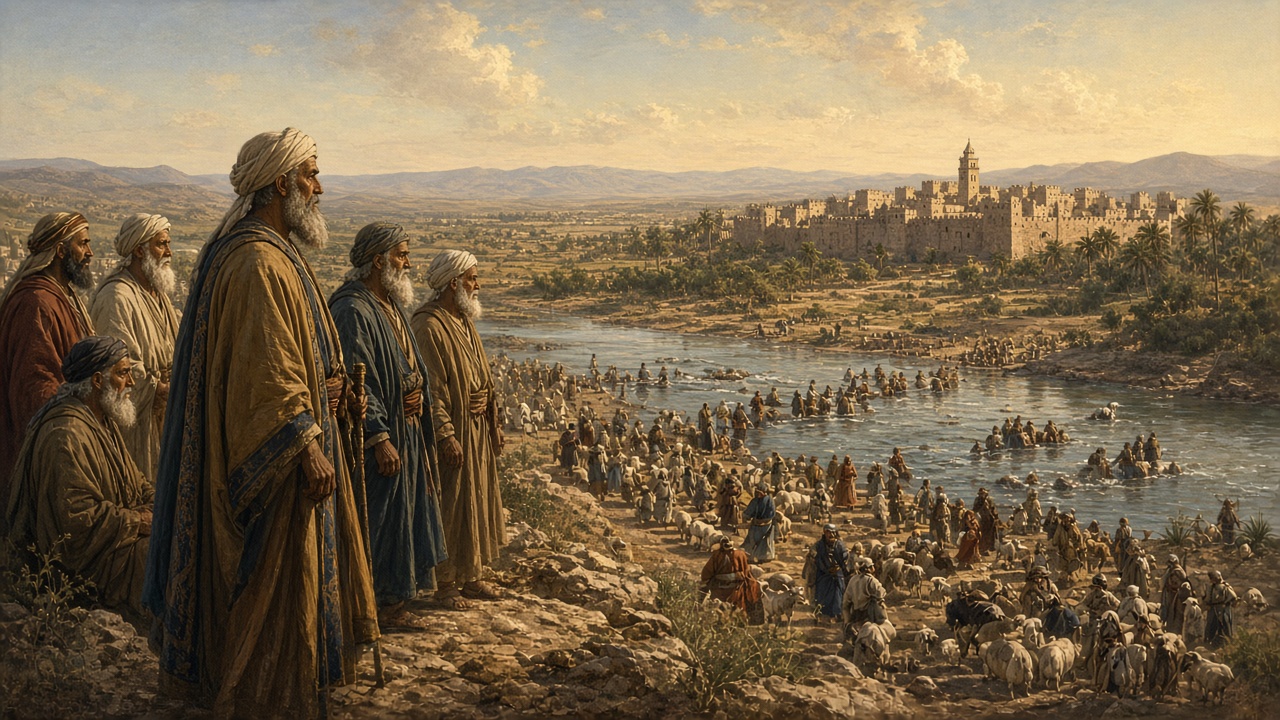
- When Joshua took command, the people were encamped at Shittim. They crossed the Jordan and camped at Gilgal, where, Easton says, he circumcised the people and kept the Passover. Jericho, a fortified city among palm trees about five miles west of the Jordan, is described as Canaan's strongest fortress and the key to western Palestine; Ai, east of Bethel, was the second Canaanite city taken, after an initial defeat.Sources: Easton: Joshua · Jericho · Ai
- Easton's Bible Dictionary (1897) says Joshua conquered six nations and thirty-one kings, then divided the land among the tribes, with Timnath-serah in Mount Ephraim assigned to himself. East of the Jordan, Gilead is described as a mountainous region held by the tribes of Gad and Reuben and the southern part of Manasseh.Sources: Easton: Joshua · Gilead
- Quoting Edersheim, the dictionary says Joshua's name was changed from Oshea, "help," to Jehoshua, "Jehovah is help," and notes that he is called Jesus in Acts 7:45 and Hebrews 4:8. It states that he died at the age of one hundred and ten, twenty-five years after crossing the Jordan, and was buried in his own city of Timnath-serah; of his father Nun, nothing more is recorded than that he was Joshua's father.Sources: Easton: Joshua · Joshua · Nun
- Before leading the conquest, Joshua commanded Israel's host against the Amalekites at Rephidim, served as Moses' minister, and was one of twelve sent to explore Canaan; only he and Caleb brought back an encouraging report. As Easton sketches the book, it runs from the crossing of the Jordan and the taking of Jericho through years of war to the division of the land and Joshua's last address.Sources: Easton: Joshua
Notes written with AI assistance from open sources (Theographic Bible Metadata, CC BY-SA 4.0; Easton’s Bible Dictionary, public domain) and reviewed before publishing.
Jehova Ka Josua Elkahn Re Á Rod Anebe Isreel Song Go Kenan.
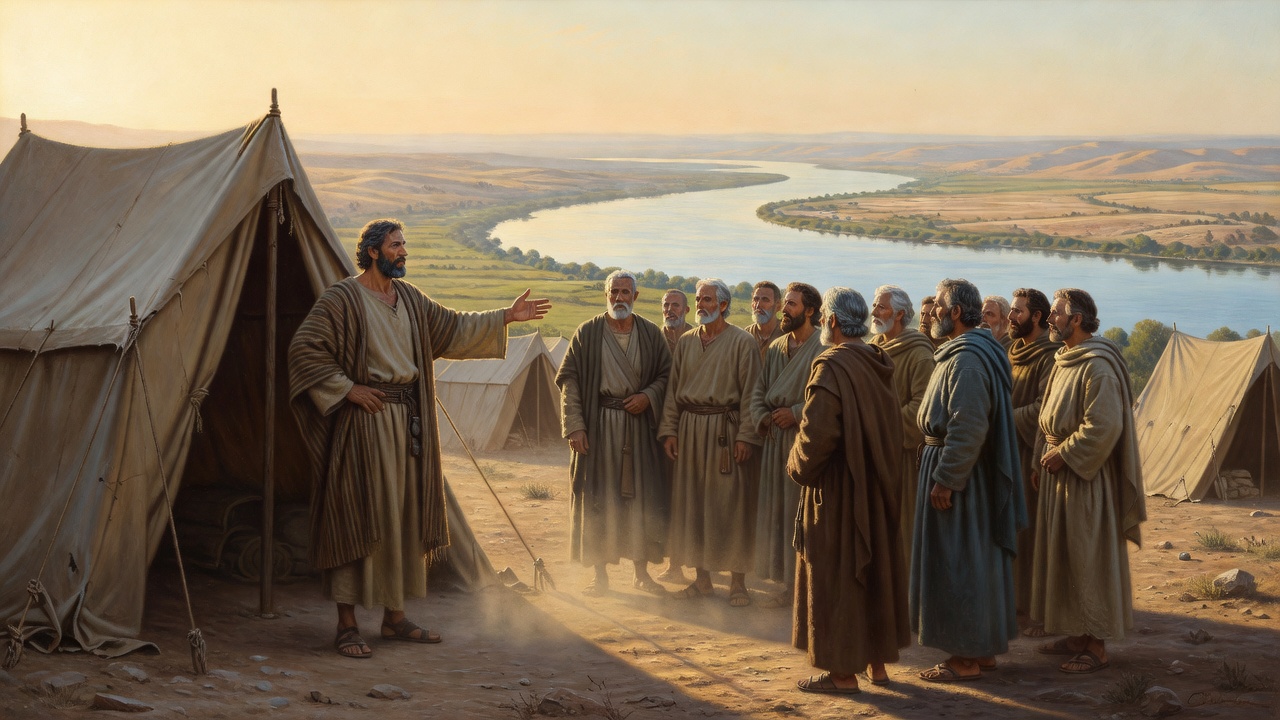
1Ngare nyi Mosis nlokeltum no Jehova ma kpo, owo Jehova kehm bungu tong Josua mmona Nun, ekpeele ji Mosis re: 2<<Mosis nlokeltum ewame ebkpo. Wo, a ane baa kpee, tooben ebjing, wahn song siiri aya ma Jodan, rehng go edi ndi ji m bahke kake anebe Isreel. 3Edi ajehng ajehng ji a kadde akpade enya, m bahke faake kak-a go abo, ana n nyame tong Mosis. 4Edi ndi ejahne bahke bomo go elka emahng ejang eboblum rehng go awong Lebanon go ejang ebobkal, fvfo bomo go agburu aya ma Yufritis go ero nfam, song rehng go ndi nyi anebe Hid, rehng aya ma ki kpi egbuk go erede nfam. 5Nnene limm no bahke ma yiimi abohng a na, afung nya a kpeka li go elkpin. Ana n jolo a Mosis, ano wo fvfo m bahke tob jol a na. Me wa nehm tiki yake abo, jol wa nehm tiki ten. 6<<Bel atahne, a ekakeltim, tibre wo wo li nne no bahke tohko ane baa tete bo song yel go edi ndi elehkelkv, ji n nyame tong babnde ebo ba nkul re, m bahke kake bo. 7Bel na bel atahne, wo sahb bˈbel esahbeltim, jo kunu ekpu wo bum atahm nya Mosis nlokeltum ewame ka-a no. Ka gbake je ejang eboblum, afi ejang ebobkal, eji lˈnob a na edi ajehng ajehng ji a fi no. 8Ka tiki rahke nwer atahm nyia go ellungu ngare anyehng anyehng. Jo tir bade, atv a njul, eji a lˈjo kunu ekpu fere jo lim ejum ajehng ajehng ji bo nyono o. Owo a bahke gboko afang, fere nˈnob a na. 9Wa n ka ka elkahna? Bel atahne, wo bel esahbeltim. Ka fahl, abo ki-a woono, tibre Jehova Esowo eba, bahke jolo a na edi ajehng ajehng ji a fi no.>> 10Owo Josua kehm kake atubesi abanoko ebta ba kpo fili ane elkahn re: 11<<Song yelen go atahng edi erekekv, wahn tong ane re, <Tooben nsol alehke enyahne bum, lˈbiingi nfung era, ḿ bahke siiri Jodan, song ko edi ndi ji Jehova Esowo ebahne ka-n no re jol jˈjahne.> >> 12Josua kehm lungu ane ba lohng go etˈtohngo ji Ruben, a ji Gad, a ejang etˈtonhgo ji Manase, kehm tongo bo re, 13<<Buumen ejehke ji Mosis nlokeltuma Jehova ka-n no: <Jehova Esowo ebahne bahk-n kake erekekv. Á ma-n ka edi ndi jia.> 14Akal ebahne, a abon ebahne, a atohkondi atohkondi enyahne kpee bahke ma jol go edi ji Mosis ka-n no, go ero bio bi aya ma Jodan. Abanokebta ebahne kpee, a nsol ebta ebo kpee go ebo abo, bahke gboko atˈtohngo nyako mbang siiri Jodan. Wahn bahke kake abonane ebahne ebo, 15tete Jehova ka bo erekekv ana á ma-n ka, eji bo lˈko nji go edi ndi ebo, ji Jehova Esowo ebahne bahke kake bo. Ń lˈlim ano, wahn kehm feere go egahna ndi nyi Mosis nloketuma Jehova ka-n no, go egbuk jehko ji aya ma Jodan, ejang bio bi njul kpo lohng. 16Ane bao kehm faange Josua re, <<Ejum ajehng ajehng ji a lꞌka elkahn re wahr lim, e bahke limi, fvfo edi ajehng ajehng ji a lꞌtum-r, e bahke jeke. 17Ana e jo wuku Mosis go ejum ajehng ajehng, ano wo fvfo e bahke tob jo wuk-a. Nong lub jol re Jehova Esowo eba bahke jolo a na ana á jolo a Mosis. 18Nne no lˈsiir-a go asi, kˈbum alum enya, go ejum ajehng ajehng ji a lꞌtong bo, bo bahk-e wulu. Li re wo bel atahne, a esahbeltim. >>
Did you know?
Joshua Assumes Leadership
- Joshua, the son of Nun from the tribe of Ephraim, served as Moses' assistant and military commander before being commissioned to succeed him as leader of Israel. His name means "Jehovah is his help" or "Jehovah the Saviour."Sources: Joshua · the Bible text itself
- The territory outlined in God's commission to Joshua stretches from the southern wilderness and the Lebanon mountain range in the north to the Euphrates (called "the great river") in the east and the Mediterranean ("the Great Sea") to the west.Sources: the Bible text itself · Lebanon · Euphrates · Great Sea
- The tribes of Reuben, Gad, and the half-tribe of Manasseh had already received territory east of the Jordan River under Moses. However, their armed warriors were required to cross over ahead of the other tribes to assist them until the entire land was secured.Sources: the Bible text itself · Manasseh (son of Joseph)
Notes written with AI assistance from open sources (Theographic Bible Metadata, CC BY-SA 4.0; Easton’s Bible Dictionary, public domain) and reviewed before publishing.
Places in this chapter
- Jordan · Today: Jordan River · 31.761, 35.558 · verses 2, 11, 14, 15
- Euphrates · Today: Euphrates River · 31.004, 47.442 · verse 4
- Great Sea · Today: Mediterranean Sea · 31.805, 34.170 · verse 4
- Lebanon · 33.540, 35.584 · verse 4
- Negeb · 31.245, 34.841 · verse 4
- Syria · Today: Aram · 33.511, 36.306 · verse 4
Only places identified with high confidence are shown (90% or more according to the scholarly sources compiled by OpenBible). Period map: DARE (Digital Atlas of the Roman Empire), CC BY 4.0; modern map: © OpenStreetMap contributors; places: OpenBible.info (CC BY 4.0).
Credits and license for this translation
Ekajuk Scriptures Bible Portions
Ekajuk: Ekajuk Scriptures Bible Portions (Bible)
copyright © 2024 Luke Initiative for Scripture Translation and The Seed Company
Language: Ekajuk
Contributor: Luke Initiative for Scripture Translation
This translation is made available to you under the terms of the
Creative Commons Attribution Share-Alike license 4.0.
You have permission to share and redistribute this Bible translation in any format and to make reasonable revisions and adaptations of this translation, provided that:
You include the above copyright and source information.
If you make any changes to the text, you must indicate that you did so in a way that makes it clear that the original licensor is not necessarily endorsing your changes.
If you redistribute this text, you must distribute your contributions under the same license as the original.
Pictures included with Scriptures and other documents on this site are licensed just for use with those Scriptures and documents.
For other uses, please contact the respective copyright owners.
Note that in addition to the rules above, revising and adapting God's Word involves a great responsibility to be true to God's Word. See Revelation 22:18-19.
2025-07-02
Source: http://ebible.org/eka/ · eBible.org