Ecclesiastes 7
Ekajuk Scriptures Bible Portions · Tap a verse to see its cross-references.
Ngbere
1Nnooba mbing kp'nobo sehnge atingi akehng es'sv eleenge,
fvfo efung bi nne kpo no kp'nobo senge efung bi bo jel-e no.
2Ga nob re nne je go etahk ji ane nong elkv, senge re á je go etahk elkak,
tibre elkv ni li ejum ji li ka nne awohng awohng;
nobo re ane ba elkpin ko jia kak go eltim.
3Ndon nyi ga nob sehnge asol,
tibre esahmahr ndon ndon kp'nobo ka eltim.
4Eltim ni nnea ngbere li go etahk elkv,
wo eltim ni agboolo ane li go etahk elfo alehke.
5Ga nob re nne wuk erehke ji nne a ngbere
sehnge re nne jo wuungu atung go ese ji agboolo ane.
6Ana ajoong kp'tahke go agun nya etu kun no, ano wo asol nya egbooko nne li no.
Jia fvfo ejumjum lohngem.
7Eloono nne kpo lim nnea ngbere fere jol egboolo nne,
fvfo ngu kpo rannge eltim nne.
8Nkahlsi ejum kp'nobo sehnge mbomannahm,
fvfo elkpuumu kp'nobo sehnge agaabe.
9Ka jo ware rak eltim sohk sohk go ega atahng,
tibre erakatahg wob go ntim nyi agboolo ane.
10Ka jo bung re, <<Jenji wahnge afung nya mahne mahne, nobo sehnge afung nya lela?>>
Tibre fuuemem re nne jo bahb abahbe ana nyao.
11Ngbere li nnoobo ejum ana elehkelkv,
kpi nsehng ka ane ba li go elkpin.
12Ngbere li ejum ji kpo bulu nne
ana akpohko li ejum ji kpo bulu nne,
wo nsehng nyi elkahne li re, ngbere kpo kuuru ane ba kpi-e no.
13Tir bada ji Esowo ma lim,
nne awoo bahke ma tanne ji á ma lim galle galle galle?
14L'nob a na, jo bel eyebatahng; wo l'sab a na, jo buumu jia, re, Esowo eblim ejum jia ana a limi jehko.
Fvfo, nnene nehm ma kahn ejumjum bade ana bahke jolo a ne behnjehle.
15Go elkpin ename nia ni kii lohng ejumjum, me n nyehn nsol ebal nyia:
Me n nyehn etinginne kp'kpoko tan go etingi eljini ene, ebi nne fere bel nlaabe elkpin go ege ebi eljini.
16Ka jo tir bade elna re wo wo ga kpi etingi eljini,
jol ka tir re wo wo ga kpi ngbere, jenji wahnge a bahke rannge elna?
17Ka jo gbal go ab'bi alimi,
fvfo ka jol egboolo nne, jenji wahnge a bahke kpoko ngare enya kehm rehnge.
18Ga nob re wo gbo ejahm go ejum ajehng go nsol nyia,
fvfo jol ka yake jehko.
Nne awohng awohng no kpo fahl Esowo nehm gbo yel nsol nyia.
19Ngbere kpo lim nnea ngbere awohng tahne
sehnge afiladi awubu ba li go nfam.
20Lohko li ano re, nnene lim go njini no li etinginne;
nnene lim no kpo lim nsol go nseenga nseenge k'tiki lim abiafem
21Ka jo kunu atung go ellum anehng anehng ni ane kp'bungu;
tohko jol ano, a bahke wuku nlokeltum ewa kp-a suku,
22tibre a kp'kahne go ega eltim
re, akpel tvv wofonantahng kpo t'tob su ane bako.
23Nsol nyia kpee n ko ngbere wuungu, n kehm bung re,
<<Me n ntoobo egame eltim re me n bel ngbere,>> wo ga ejum jia ebgbal sehng-m.
24Ejum ajehng ajehng ji li no, li go fee, fere r'rahbe,
nne awoo bahke ma seb kahn?
25Owo n kehm fere yehhke ntir enyame kunu re me n bel ekahnafem,
re me n feede, fere seb ngbere yehke, kahn ana nsol lohngo lohng,
fere lenng-m bade ademme nya li go ebiljini a esahl bi li go elgboolo.
26Me n nyehn re ejum jia kp'yame sehnge elkv,
nenkal no li ana ekpoko, ye ji eltim ene li ekpoko, fvfo abo enye li agbekobo.
Nenlum no kpo lim ji kpo kor Esowo bahke foro go ege abo, wo nne abiafem wo bahke gboko ege ekpoko.
27Nt'tibi kp'bungu re, <<Nyehn gae!>>
<<Ejum ji a ji m ma seb kahn, me n ko ejum ajehng budu a jehko, eji n l'kahn ana nsol lohngo lohng.>>
28Ana n jo seb asongo, jol eji n kala ny'nyehn,
wo nyehne nnelum na awohng no li songo songo go ellong ane atahl alon nkpel ewubu (1000), wo nenkal na awohng n nyehnem go ellong ane baa kpee.
29Ejum ajehn ji m ma nyehn ji a, ji li re, Esowo limi ane ba li elkpin songo songo,
wo bobtahm kp'sebe afehme abang gbalee.
Did you know?
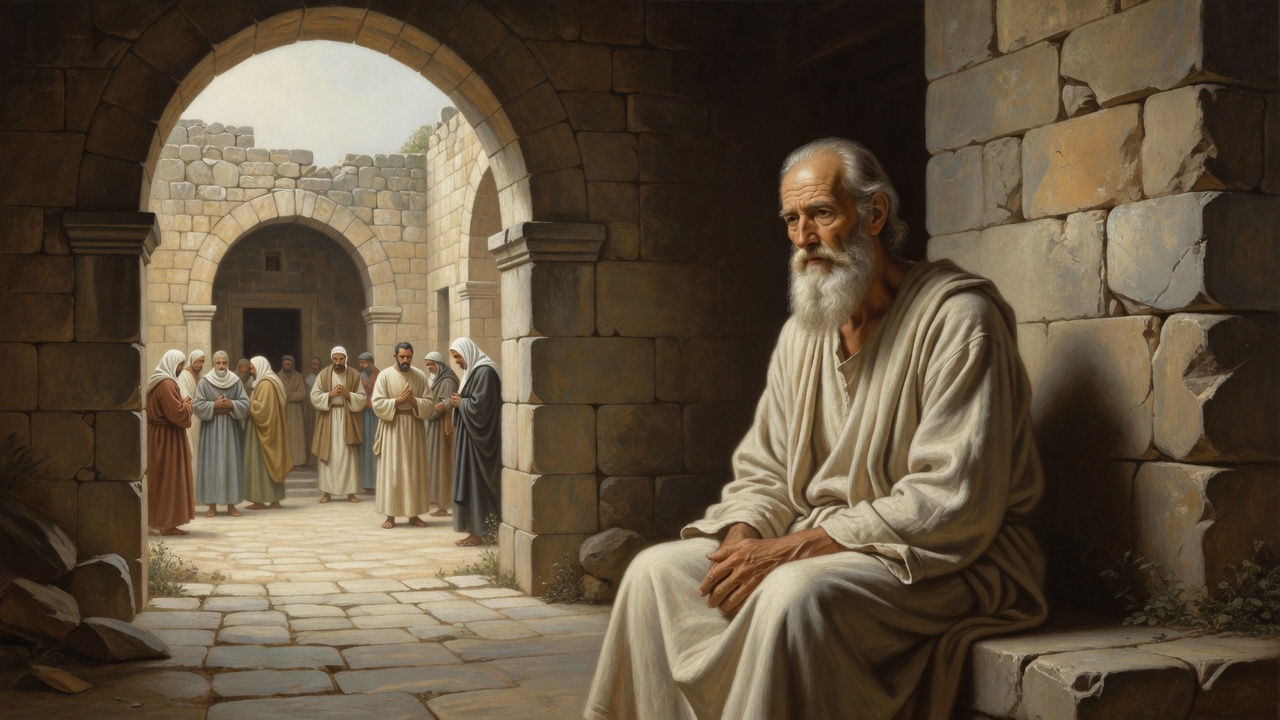
Wisdom, Mortality, and the Limits of Understanding
- Ecclesiastes 7 begins with a series of comparative proverbs arguing that moments of solemn reflection, such as visiting a house of mourning or facing sorrow, provide greater insight into life than superficial laughter and feast houses.Sources: the Bible text itself
- The Teacher reflects on the reality of human experience, noting that God has appointed both prosperous and adverse days so that humans cannot foresee their future, and that righteous people sometimes perish while the wicked live long.Sources: the Bible text itself
- The chapter highlights the universal limitation of human goodness, observing that there is no one on earth who does good and never sins, and concluding that while God created humanity upright, people pursue many complex schemes.Sources: the Bible text itself
Notes written with AI assistance from open sources (Theographic Bible Metadata, CC BY-SA 4.0; Easton’s Bible Dictionary, public domain) and reviewed before publishing.
Credits and license for this translation
Ekajuk Scriptures Bible Portions
Ekajuk: Ekajuk Scriptures Bible Portions (Bible)
copyright © 2024 Luke Initiative for Scripture Translation and The Seed Company
Language: Ekajuk
Contributor: Luke Initiative for Scripture Translation
This translation is made available to you under the terms of the
Creative Commons Attribution Share-Alike license 4.0.
You have permission to share and redistribute this Bible translation in any format and to make reasonable revisions and adaptations of this translation, provided that:
You include the above copyright and source information.
If you make any changes to the text, you must indicate that you did so in a way that makes it clear that the original licensor is not necessarily endorsing your changes.
If you redistribute this text, you must distribute your contributions under the same license as the original.
Pictures included with Scriptures and other documents on this site are licensed just for use with those Scriptures and documents.
For other uses, please contact the respective copyright owners.
Note that in addition to the rules above, revising and adapting God's Word involves a great responsibility to be true to God's Word. See Revelation 22:18-19.
2025-07-02
Source: http://ebible.org/eka/ · eBible.org