Revelation 11
Nan kalen apo Dios (Nan fiarú ay turag) · Tap a verse to see its cross-references.
Nan Chuwa Ay Nangepaneknek As Nan Tit-iwa
1Kun pay narpas sa, naichat kan ha-un nan pangluklukud ay kaman surkud, ya naifiakia us kan ha-un na: “Uymu lukchun nan templon Apo Dios ya nan altar, ya filangum nan chiyuycha munchaychayaw hid-i. 2Ngem pay-am ud-ay nan fiattaw nan templo. Achim lukchun, tay naipurang at sa as nan chiyuycha Gentil ay chicha nan mangepaassi henan nasantowan ay siyudad ay Jerusalem ay kamancha cha ikiatkiatin as opat puru ya chuwa ay furan. 3As nan unig nan hanacha furan ay munpachong as nan hinlifu ya chuwan kiasot ya unum puru ay urkiw, ifiaorkuntu nan chuwa ay tistigok. Mafiachuwanchantu as saku ay mangepaila as ngunguyuscha, ya paneknekanchantu as nan tataku nan epakaammok kan chicha.”
4Nan nauycha chuwa ay tistigu at chicha nan maepachong as nan chiyuycha chuwa ay kaiw ay olivo ya nan chuwa ay maepatpatngan chi silaw ay wacha as nan sangwanan Apo Dios ay Apon nan tataku asna's luta. 5Mu wachay mamadpachas ay manukiat kan chicha, fumud-ok chi apuy as tapakcha ay mangetemok kan hiya. Hiyachi nan ekatuytu nan am-in ay fumusor ay mamachas ay manukiat kan chicha. 6Naichat kan chicha nan kafiaelan ya kalibfengan ay mangepakinak as nan uchan ta achi umud-uchan as nan timpu ay chacha mangepaneknekan as nan enpakaammon Apo Dios kan chicha. Naichat kan chicha nan kafiaelan ay mangepafialin as nan am-in ay chanum as chara, ya palikiatuncha nan tataku asna's luta babaen as nan kumpurmi ay kauugyat ay pomatuy, uray mamen kaat mu hiyasa nan laychuncha ay atun.
7As nan marpasan nan nauycha chuwa ay mangepaneknek as nan enpakaammon Apo Dios kan chicha, fomoknagtu nan atap ay animar henan chiyuy lukiar ay kaman fitu ay maid papugna, at makikufiat hiya kan chicha. Amisunantu ya patayunantu chicha. 8Maenganuytu nan natuy ay achorcha as nan korsa henan nunchinngor ay siyudad ay naelansaan nan Apocha as nan koros. Nan siyudad ay anchi at maepachong ad Sodoma winnu Egipto. 9As nan turu ya kakudwa ay urkiw, nan tataku ay murpu henan tunggal nasyon ya tribu ya tataku ay tukutukún chi kalicha ya kubletcha at fuyfuyaunchantu nan achor nan hanacha. Achichantu us eparufus ay mailufok chasa. 10Nan am-in ay tataku asna's luta ay achi omafurot kan Apo Dios at munlagsakchantu kiapú as nan natuyan nan nauycha chuwa ay pomapadtu. Munfiastacha ya mun-eennettanchantu, tay penarpalikiat nan hanacha chuwa nan tataku asna's luta.
11Ngem as nan narpasan nan turu ya kakudwa ay urkiw, tenakon Apo Dios nan chiyuycha chuwa, at tenmakchugcha. Ongor chi ugyat nan am-in ay nangila kan chicha. 12As nan hiyachi, chinngor nan chiyuycha chuwa nan usa ay napigsa ay kali ay nurpu ad chaya ay kanana kan chicha, “Omabrat kayu hena!” Angkiay ya naetag-uycha ad chaya babaen as nan lifuu ay iilaun nan chiyuycha kafusorcha. 13As nan hiyasa ay uras, nunkichu as napigsa ay nanachael as nan pagkapuron nan siyudad, ya natuycha nan piton lifu ay tataku. Inmugyat as solet nan nayagyag ay tataku, ya finigfigcha nan pannakafialin Apo Dios ad chaya.
14Hiyana nan anongos nan maekadwa ay kauugyat ay likiat, ngem kiayud at omali nan maekatlu.
Nan Maekapitu Ay Tarampet
15Angkiay ya as nan nangepakiangosan nan maekapitu ay anghel as nan tarampetna, wachacha nan nadngor ay nunkapigsa ay kali ay nurpu ad chaya. Chacha kanan, “Munlapu ad wani, maid tukún as muntoray asna's luta mu achi yangkiay nan Apo takú ay Dios ya hi Cristo ay pinilina. Hi Apo Dios at muntoray in-inkiana.”
16Angkiay ya nan chuwan puru ya opat ay anam-amá ay nangatokor as nan tronocha as nan sangwanan Apo Dios at nunlukfubcha ay nunchaychayaw kan Apo Dios. 17Chacha kankanan,
“Apo Dios ay Mannakafialin as nan am-in ay mawawacha ad wani ya nawawacha ad maliyam, munyaman kami kan he-a, tay enpailam nan nakaskaschaaw ay pannakafialinmu, ya enlapom ay muntoray.
18Ongor chi fungat nan chiyuycha Gentil ay achi omafurot kan he-a, ngem finmungatka us. Ad wani inumchan at nan timpu ay mangokomám as nan am-in ay nunkatuy ya manggun-gunaam as nan chiyuycha pomapadtu ay munserserfi kan he-a ya nan am-in ay tatakom ay manangchaychayaw ay uray nangangatu winnu ap-apud.
Hiyana nan ustu ay timpu ay manachaelam as nan chiyuycha nanachael as nan tataku asna's luta.”
19Kun pay narpas chi, natkafian nan templon Apo Dios ad chaya, at naila hid-i nan kasón ay naiittuwan nan naisurat ay turag Apo Dios. Angkiay ya wachachay fiakilat, nunkapigsa ay kali ya komanikong ay kud-or. Nunkichu pay ya inmuchan as napigsa ay choraru.
Did you know?
The Two Witnesses and the Great City
- Revelation 11 says that the bodies of the two witnesses will lie in the street of the great city, figuratively called Sodom and Egypt, where their Lord was also crucified. A dictionary entry explains Sodom as Burning, or the walled, a city destroyed by fire from heaven because of its inhabitants' wickedness, a destruction that Scripture frequently recalls. Egypt, the land of the Nile and the pyramids, is likewise described as holding great significance in Scripture.Sources: the Bible text itself
- The two witnesses are empowered to prophesy for 1,260 days, clothed in sackcloth. They are the two olive trees and the two lampstands that stand before the Lord of the earth, and they have power to shut the sky so that no rain falls, to turn the waters into blood, and to strike the earth with every kind of plague.Sources: the Bible text itself
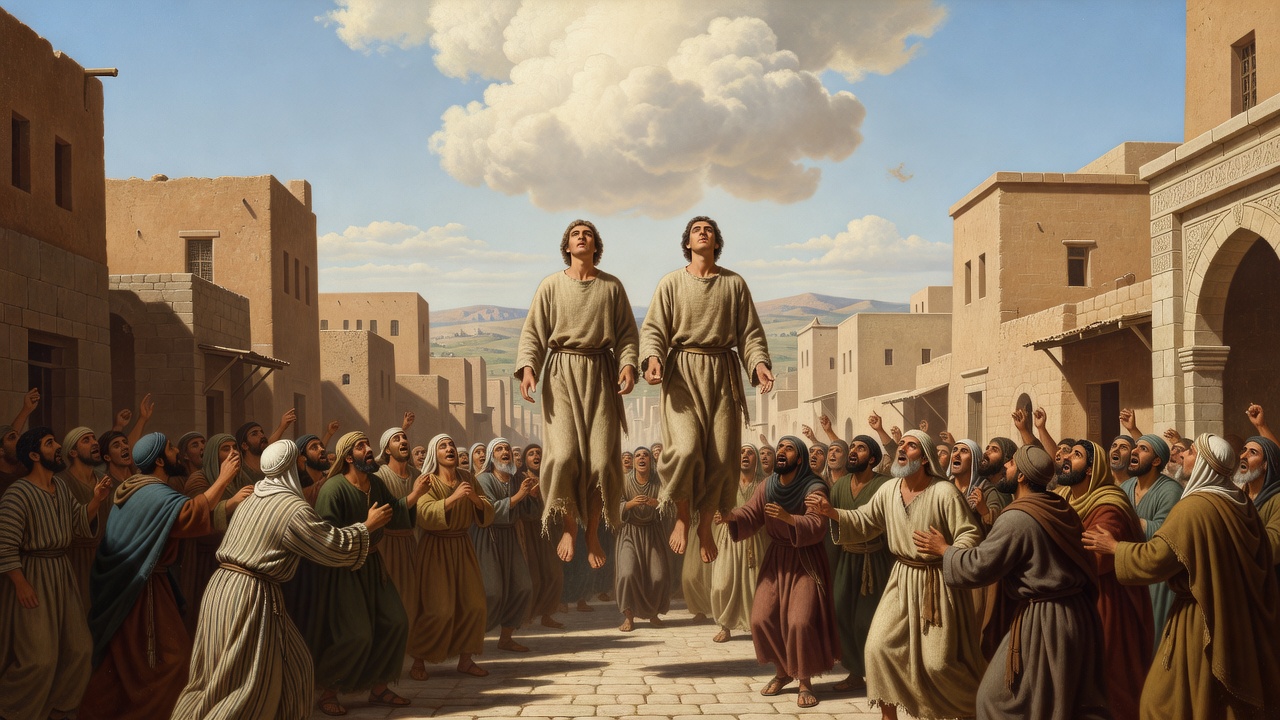
- When the two witnesses finish their testimony, the beast that comes up from the Abyss overpowers and kills them. For three and a half days, peoples, tribes, tongues, and nations view their bodies and will not permit them to be laid in a tomb, while the earth's inhabitants gloat over them, celebrate, and send one another gifts, because the two prophets had tormented them. After that, the breath of life from God enters them; they stand on their feet and go up to heaven in a cloud as their enemies watch.Sources: the Bible text itself
Notes written with AI assistance from open sources (Theographic Bible Metadata, CC BY-SA 4.0; Easton’s Bible Dictionary, public domain) and reviewed before publishing.
Places in this chapter
Only places identified with high confidence are shown (90% or more according to the scholarly sources compiled by OpenBible). Period map: DARE (Digital Atlas of the Roman Empire), CC BY 4.0; modern map: © OpenStreetMap contributors; places: OpenBible.info (CC BY 4.0).
Credits and license for this translation
Nan kalen apo Dios (Nan fiarú ay turag)
New Testament in Bontok, Eastern
copyright © 2003 Wycliffe Bible Translators, Inc.
Language: Eastern Bontok (Bontok, Eastern)
Translation by: Wycliffe Bible Translators, Inc.
Copyright Information
© 2003, Wycliffe Bible Translators, Inc. All rights reserved.
This translation text is made available to you under the
terms of the Creative Commons License: Attribution-Noncommercial-No Derivative Works.
( http://creativecommons.org/licenses/by-nc-nd/3.0/ )
In addition, you have permission to port the text to different file formats, as long as you
do not change any of the text or punctuation of the Bible.
You may share, copy, distribute, transmit, and extract portions
or quotations from this work, provided that you include the above copyright
information:
You must give Attribution to the work.
You do not sell this work for a profit.
You do not make any derivative works that change any of the actual words or punctuation of the Scriptures.
Permissions beyond the scope of this license may be
available if you contact
us with your request.
The New Testament
in Bontok, Eastern
© 2003, Wycliffe Bible Translators, Inc. All rights reserved.
This translation is made available to you under the terms of the
Creative Commons Attribution-Noncommercial-No Derivatives license 4.0.
You may share and redistribute this Bible translation or extracts from it in any format, provided that:
You include the above copyright and source information.
You do not sell this work for a profit.
You do not change any of the words or punctuation of the Scriptures.
Pictures included with Scriptures and other documents on this site are licensed just for use with those Scriptures and documents.
For other uses, please contact the respective copyright owners.
2014-08-06
Source: http://ebible.org/ebk/ · eBible.org