Job 30
Geeshsha Mas'aafaa · Tap a verse to see its cross-references.
1«Shin ha"i taappe yalagiyaa asatuu taana k'iliic'iino. Unttunttu ta dorssaa wudiyaa heemmiyaa kanatuwaa maaddana giinakka taani diggeedda aawotuwaa naanatuwaa. 2Unttunttu aawotuu wolk'k'ay is's'eeddawanttanne bollaa gilk'k'eeddawantta gideedda diraw, taana ayinne maaddibeykkino. 3Metuwaanne koshaa gaasuwaan k'amma denddiide, bazzuwaa biidde, s'ap'uwaa c'oommeeddino. 4K'ay sharafaanne bonc'c'iyaa mas'eeddino; mal"enna sankkaaraa s'ap'otuwaakka meeddino. 5Asay waassiidde, kayisotuwaa yedersseeddawaadan, asaa giddoppe unttuntta yedersseedda. 6Unttunttu zanggaaraa giddon, gonggolo giddoninne zaallaa gonggoluwaa giddon de'eeddino. 7Unttunttu buuraa giddon bazzo do'atuwaadan waasseeddino; doobbiyaa garssan shiik'iide, ittippe de'eeddino. 8Unttunttu k'ays's'eeriyaan shoc'ettiide, biittaappe yederssetteeddino. Unttunttu suntsaanna bayiide, booza gidiide de'eeddino.
9«Ha"i unttunttu naanatuu taana yetsan k'iliic'iino; taani unttunttu giddon leemisiide odiyaawaa gidaaddi. 10Unttunttu taana shenetiide, taappe haakkiino; ayinne yeellatennaan ta som"uwaan c'uchchaa c'uchchiino. 11S'oossay ta wolk'k'aa laafetsiide, taana kawushsheedda diraw, unttunttu taana k'ohanaw, bis'aalaa kessi diggeedda paraadan, yeda gideeddino. 12Ha seeri bayinnan dic'c'eedda naanatuu ta bolla denddiide, taana yederssiino; unttunttu taana d'ayissanaw ta bolla doodiino. 13Unttunttu ta hamettiyaa ogiyaa gorddiide, taana d'ayissanaw koyiino; ooninne unttunttu hewaa ootsanawaa diggenna. 14Olanchchatuu katamaa dirssaa mentsiide geliyaawaadan, unttunttu ta bolla yeeddino. 15Wolk'k'aama dagamay taana dippi ootseedda; ta bonchchuukka c'arkkuu afiyaawaadan beedda; ta ishaluukka shaariyaadan d'ayeedda.
16«Ta shemppatta un"etaaddu; tuggaa gallassatuu taana c'irppi oyk'k'eedda. 17K'amma k'amma sakuu ta mek'etsaa c'oommee; seelaykka shemppi akkennan gede gujjee. 18Ta mayuu gunddiide bayeedda; shamic'c'iyaa k'ood'iyaadan, taana c'uulli oyk'k'eedda. 19S'oossay taana urk'k'aan oleedda; taani biittaappe bidintsaappe keekkenna asaa gidaaddi.
20«Abeet S'oossaw, taani new waassay; shin neeni taw allabeyikka. Ek'k'aade neena woossaad; shin neeni ta woosaa sisabeykka. 21Neeni kasewaappe dummataade, taw mek'etsaa iitaada; ne wolk'k'aama wolk'k'an taana yederssaasa. 22Neeni taana c'arkkuwaan dentsaadda; Aa togissaadda; gotiyankka taana gonddorssaadda. 23Asaw ubbaw wurssetsa gideedda hayk'oo neeni taana aatsaade immiyaawaa taani eray.
24«Kunddiide me"eedda Asay tuggatiidde, ‹Taana maaddarikkii› giide waassina, aw k'arettenna Asay de'ii? 25Tuggaan de'iyaawanttoo taani yeekkabeykkitaa? Hiyyeesatoo taani k'arettabeykkitaa? 26Lo"obaa demmana gaade taani amottiyaa wode, iitabay taana gakkeedda. Taw sa'ay keekee gaade taani naagiyaa wode, gallassay taw d'umeedda. 27Ta wozanay hirggeedda; taani woppaa demmabeykke; gallassaappe gallassan ta tuggay yaa dareedda. 28Ta bollay aawaa suuluwaan gidennaan kayyuwaan kares's'eedda; taani shiik'uwaan ek'k'aade, ‹Taana maaddite!› gaade waassay. 29Taani worakanatoo ishaa, sagoniyawukka dabbo gidaaddi. 30Ta galbbay kares's'iide, pok'etti pok'etti wod'd'ee; ta bollaykka mishuwaan s'uugettee. 31Hewaa diraw, ta dinkkii zilaassaw puneteedda; ta his'is'iikka yeekoo punetteedda.
Did you know?
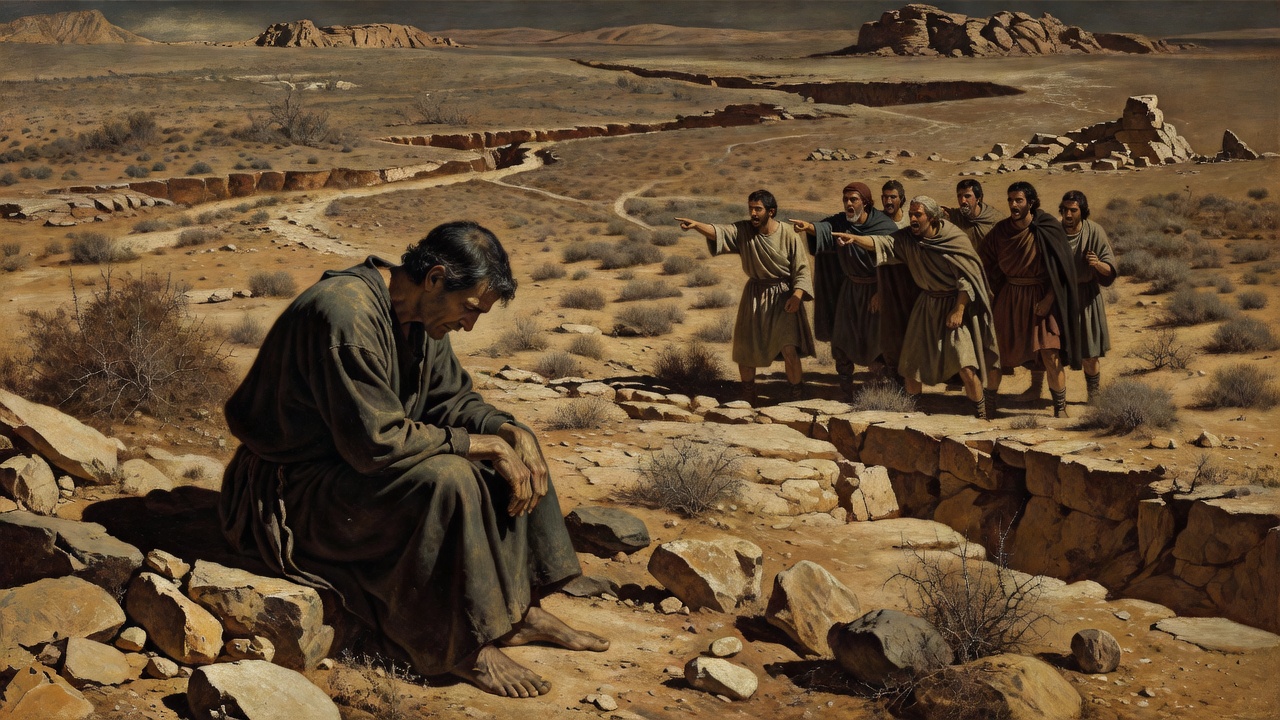
Humiliation, Physical Suffering, and Desert Outcasts
- In this chapter, Job contrasts his previous social standing with his current humiliation at the hands of impoverished outcasts. He describes these men as surviving on the margins of society, foraging for wild mallow and broom tree roots in desolate wadis and rock hollows.Sources: the Bible text itself
- Job uses vivid siege metaphors, picturing his attackers as an advancing army laying ramps and breaking through breaches against him, while he endures severe physical afflictions such as fever, gnawing pain, and blackened, peeling skin.Sources: the Bible text itself
- To convey the isolation and intensity of his grief, Job identifies with the mournful sounds of wilderness creatures, calling himself a companion to jackals and ostriches, while his musical instruments—the harp and flute—are turned entirely to weeping.Sources: the Bible text itself
Notes written with AI assistance from open sources (Theographic Bible Metadata, CC BY-SA 4.0; Easton’s Bible Dictionary, public domain) and reviewed before publishing.
Credits and license for this translation
Geeshsha Mas'aafaa
The Holy Bible in the Dawuro language of Ethiopia, Latin script
copyright © 2024 The Word for the World International
Language: (Dawro)
Contributor: The Word for the World International
This translation is made available to you under the terms of the
Creative Commons Attribution Share-Alike license 4.0.
You have permission to share and redistribute this Bible translation in any format and to make reasonable revisions and adaptations of this translation, provided that:
You include the above copyright and source information.
If you make any changes to the text, you must indicate that you did so in a way that makes it clear that the original licensor is not necessarily endorsing your changes.
If you redistribute this text, you must distribute your contributions under the same license as the original.
Pictures included with Scriptures and other documents on this site are licensed just for use with those Scriptures and documents.
For other uses, please contact the respective copyright owners.
Note that in addition to the rules above, revising and adapting God's Word involves a great responsibility to be true to God's Word. See Revelation 22:18-19.
2025-05-01
Source: http://ebible.org/dwrl/ · eBible.org