Job 17
Geeshsha Mas'aafaa · Tap a verse to see its cross-references.
1«Ta shemppatta kesaw; ta laytsay k'aammeedda; taw duufuu giigi utteedda. 2Taana k'iliic'iyaawanttu tumuwaappe ta yuushshuwaan de'iino; unttunttu taw hank'k'etiyaa hank'k'uwaa ubbaa gede taani be'ay.
3«Abeet S'oossaw, neeppe haray taana maaddiyaawe bayinna diraw, neeni ne huup'iyaan taw waase gida. 4Unttunttoo gelennaadan, neeni ta laggetsatuwaa wozanaa donc'c'ilisaadda. Hewaa diraw, neeni unttunttoo s'oonuwaa immoppa. 5Miishshaa demmana giide, bare laggetuwaa aatsi immiyaa asaa nagaray Aa naanatuwaa kaa'ana.
6«S'oossay taana asaa ubbaw k'iliic'iyaawaa kesseedda; Asay som"uwaan c'uchchiyaa asaa taani gidaaddi. 7Taani daro kayyotteedda diraw, ta ayifiikka galjjeedda; ta kumentsaa asatetsay laafiidde, s'ink'k'uwaa keeshshaa gideeddino. 8Keeka asatuu taana be'iide dagammeeddino; suuretuukka S'oossaa kaddiyaawanttu bolla yiloteeddino. 9Gidooppenne, s'illotuu barenttu ogiyaappe yaakka haakka simmikkino; suuretuu wolk'k'aa gujji gujji biino. 10Shin ha"i ubbaykka ane taakko haa yiite! Yinttokka, taani hintte giddon itti aad'd'eeda eranchcha asaakka demmikke.
11«Ta de'uwaa laytsay wureedda; ta halchcheedda halchchuukka ta wozanaa amuukka c'oo atteedda. 12Ta laggetuu k'ammaa gallassaa giino; d'umi utti de'ishshin, ‹Poo'ana hanee› yaagiino. 13Taani hidootaan naagiyaa ta gollii duufuwaa; ta hiis'aakka yaan d'uman hiis's'ana. 14Duufuwaa taani, ‹Neeni ta aawuwaa› yaagana; gus'uniyaakka, ‹Neeni ta aato› woy ‹Ta michchato› yaagana. 15Yaatina, ta hidootay hak'anee? Ooni Aa be'eeddee? 16Ta hidootay taananna duufuwaa banddee? Nuuni laa"uu ittippe biittan duge wod'd'aneeshsha?» yaageedda.
Did you know?
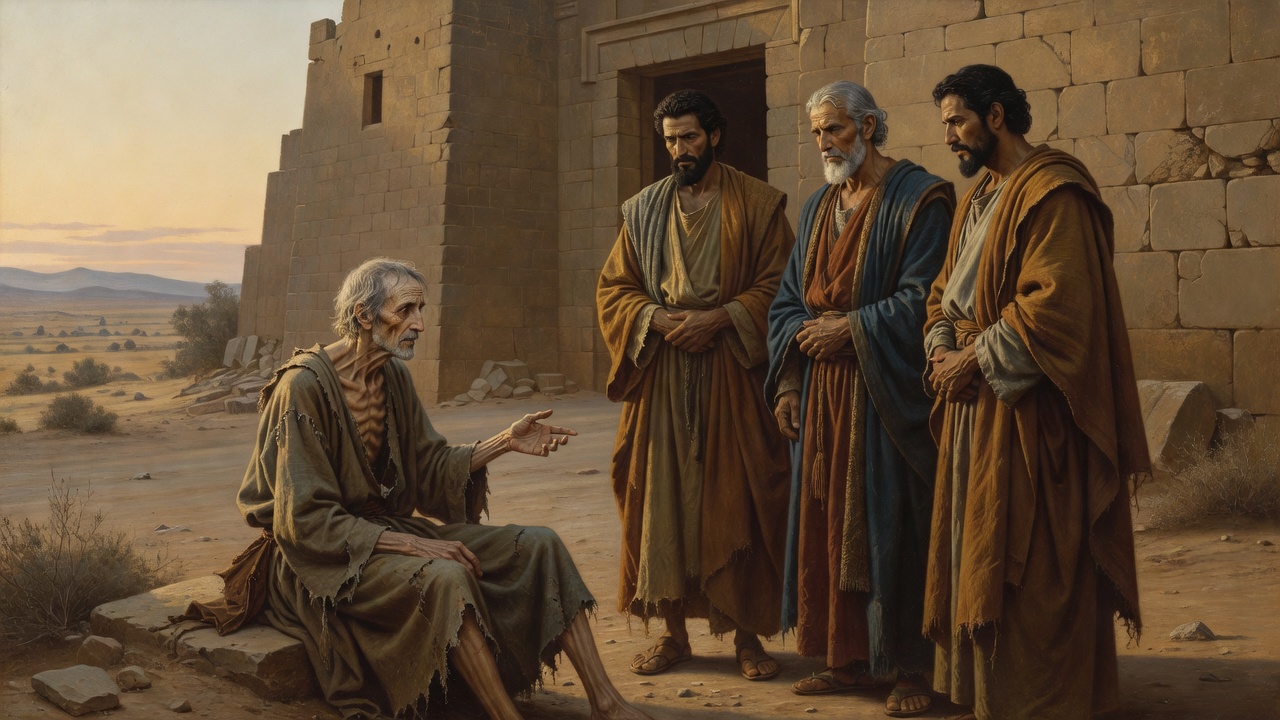
Job's Despair and the Prospect of the Grave
- Job appeals directly to God to act as his pledge or guarantor. In ancient legal practice, a guarantor assumed responsibility for someone accused or indebted, and Job found no human ally willing or able to defend him.Sources: the Bible text itself
- Job describes himself as becoming a byword among the people, a status where an individual's suffering turns into an object of public mockery, contempt, and proverb-like warning.Sources: the Bible text itself
- In his grief, Job speaks of the realm of the dead (Sheol) and the grave as his only remaining home, metaphorically adopting the pit and worms as his closest family members.Sources: the Bible text itself
Notes written with AI assistance from open sources (Theographic Bible Metadata, CC BY-SA 4.0; Easton’s Bible Dictionary, public domain) and reviewed before publishing.
Credits and license for this translation
Geeshsha Mas'aafaa
The Holy Bible in the Dawuro language of Ethiopia, Latin script
copyright © 2024 The Word for the World International
Language: (Dawro)
Contributor: The Word for the World International
This translation is made available to you under the terms of the
Creative Commons Attribution Share-Alike license 4.0.
You have permission to share and redistribute this Bible translation in any format and to make reasonable revisions and adaptations of this translation, provided that:
You include the above copyright and source information.
If you make any changes to the text, you must indicate that you did so in a way that makes it clear that the original licensor is not necessarily endorsing your changes.
If you redistribute this text, you must distribute your contributions under the same license as the original.
Pictures included with Scriptures and other documents on this site are licensed just for use with those Scriptures and documents.
For other uses, please contact the respective copyright owners.
Note that in addition to the rules above, revising and adapting God's Word involves a great responsibility to be true to God's Word. See Revelation 22:18-19.
2025-05-01
Source: http://ebible.org/dwrl/ · eBible.org