John 16
Beibel: okanisi tongo · Tap a verse to see its cross-references.
1Ne Masaa Jesesi taigi den taki: “Mi taigi u den sani ya a fesi fu u á buuya bakaten fu u lasi biibi. 2Bika den edeman o puu u a den keliki. Da a o kon seefi taki, den o kii u. Da te den kii u, da den o denki taki na Gadu den e du wan bun. 3Ma den o du den sani ya anga u, fu di den á sabi mi Tata. Da soseefi den á sabi mi tu. 4We, mi taigi u den sani ya, fu te a yuu o doo di den o pasa, fu u sabi taki, we, na so mi be taigi u. Da mi á be taigi u den sani ya a fesi, bika mi be de anga u ete.
A wooko fu a Jeje fu Masaa Gadu
5“Ma now mi o daai gwe na a sama di sende mi kon ya baka. Ma ná wan fu u e akisi moo na on se mi e go. 6Ma na den sani di mi taigi u de, na den meke gaan tyali kisi u? 7Ma mi e taigi u tuutuu taki, na wan gaan yeepi a de gi u, fa i si mi e gwe ya. Bika, efu mi á gwe, da a Yeepiman ná poi kon. Ma te mi go kaba, da mi o sende en kon gi u. 8Da, te a kon, da a sa soi kondee san na takuudu anga ogii. Da a o soi den san na a leti fasi fu libi anga fa Masaa Gadu o sitaafu libisama. 9Da a o soi den san na takuudu anga ogii, fu di den á biibi a mi. 10Da a o soi den san na a leti fasi fu libi, fu di mi e daai go baka a mi Tata. Da u ná o poi si mi moo. 11Da a o soi den fa Masaa Gadu o sitaafu kondee, bika a kuutu a edeman fu a goontapu fu a fende en sitaafu kaba.
12“Ma mi abi somen sani ete di mi wani taigi u. Ma, enke fa u de nownow, u ná o poi tyai den. 13Ma te a Jeje fu Masaa Gadu di e leli sama den tuutuu sani fu Gadu kon, da a o tii u, e tyai u a hii den sani di de tuutuu. Bika a ná o teke enseefi sani taigi u, ma san a be yee, na dati a o taki. Da soseefi a o taigi u den sani di de a fesi fu kon ete tu. 14We, da a o meke libisama si a hei anga a balinen di mi abi. Bika a o teke sani fu mi taigi u. 15Ala san mi Tata abi na fu mi. Na fu dati ede meke mi taigi u taki, a o teke sani fu mi taigi u.
A tyali fu den bakaman fu Masaa Jesesi o toon gaan piisii
16“Pikinso moo, da u ná o si mi moo. Ma pikinso moo, da u o si mi baka. Bika mi e go a mi Tata.”
17We, ne wantu fu den bakaman fi en akisi den na den taki, san na a sani di a taki de taki: “Pikinso moo, da u ná o si mi moo? Ma, pikinso moo, da u o si mi baka? Bika mi e go a mi Tata?” 18Ne den taki go doo taki: “San wani taki, pikinso moo? We, wi á sabi san a sani de wani taki.”
19We, di Masaa Jesesi si taki den wani akisi en wan sani, ne a akisi den taki: “We, fa u e kuutu anga useefi saafi saafi de? Na fu di mi taki: ‘Pikinso moo, da u ná o si mi moo. Ma pikinso moo, da u o si mi baka?’ U á sabi san dati wani taki, no? 20We, fu tuutuu mi e taigi u, u sa bali kee, ma goontapu sa piisii. Da gaan tyali o de a u ati. Ma a tyali fu u o kengi kon toon piisii. 21A de leti enke te wan uman de anga bee. Te a yuu fi en doo fu a meke, da a bee e nyanmi en, te ná sipowtu. Ma te a meke kaba, da a nái pakisei a pen moo. Piisii namo, di ai piisii so fu di wan sama kon a goontapu. 22We, na letiso a de anga u tu. Nownow, enke fa u de, gaan tyali de a u ati. Ma mi o si u baka. Da u ati sa piisii. Da ná wan sama o poi puu a piisii fu u ya. 23Da a yuu ten de, da u ná o akisi mi ná wan sani moo. Fu tuutuu mi e taigi u taki, ala sani di u begi akisi mi Tata a mi nen, da a sa gi u den. 24Fu te enke now, u á be begi akisi mi wan sani a mi nen ete. We, u begi akisi, no? U o fende. Da te u o fende, da a piisii fu u o goo kon te a pasa maiki.
Masaa Jesesi e taki moo fu a ten di // de a u fesi
25“We, ala den sani di mi be taigi u, mi be taigi anga ageisi toli. Ma a ten koosube, di mi ná o taki anga u a sowan fasi moo. Ma mi o taki anga u, wan kiin fasi e leli u den sani fu mi Tata. 26Da a yuu ten de, da u sa begi akisi mi Tata sani a mi nen. Da mi ná o taigi u taki, mi sa begi mi Tata gi u. 27Bika, mi Tata seefi lobi u, fu di u lobi mi e biibi taki ne en mi komoto kon ya. 28We, na mi Tata mi komoto kon a goontapu tuu. Da na soseefi mi o fika a goontapu ya baka go a mi Tata baka.”
29Ne den bakaman fi en taigi en taki: “Weeno! I si? Now yu e taki kiin anga u sondee fu taki anga ageisi toli. 30Now wi e si taki a á de fanowdu fu sama akisi sani, bika, i sabi ala sani. Na fu dati ede meke u e biibi taki na Masaa Gadu i komoto.”
31Ne Masaa Jesesi piki den taki: “A nowfosi u e biibi? 32We, fu tuutuu mi e taigi u taki, wan yuu e kon, da a de kaba, di u o paati fika mi wawan kodo. Ibiiwan fu u o go ne en osu. Ma toku seefi, a ná mi wawan de. Bika mi Tata de anga mi. 33We, mi be taigi u den sani ya fu u sa abi koo ati fu di mi anga u de wan. A ini goontapu ya gaan pina anga sitaafu e kon a tapu. Ma u á lasi ati. Bika, mi wini goontapu kaba.”
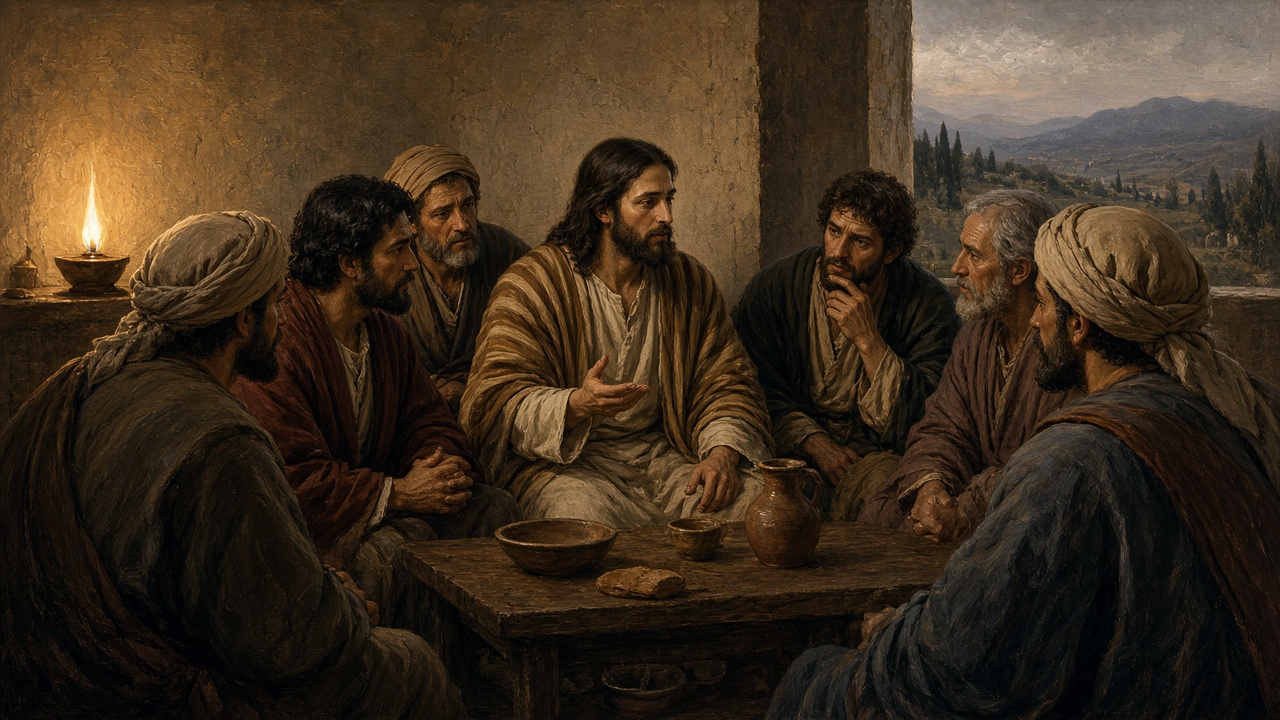
Did you know?
Departure, the Advocate, and joy after grief
- Event notes place this chapter in the Upper Room Discourse, a one-day episode within Holy Week, which those notes list as eight days.Sources: Upper Room Discourse · Holy Week
- Jesus tells the disciples they will be put out of the synagogues. He adds that a time is coming when anyone who kills them will think he is offering a service to God, because they have not known the Father or him.Sources: the Bible text itself
- He says it is for their benefit that he is going away, because unless he goes, the Advocate will not come. When the Spirit of truth comes, he will guide them into all truth, not speaking on his own but saying what he hears and declaring what is to come.Sources: the Bible text itself
Notes written with AI assistance from open sources (Theographic Bible Metadata, CC BY-SA 4.0; Easton’s Bible Dictionary, public domain) and reviewed before publishing.
Credits and license for this translation
Beibel: okanisi tongo
New Testament in Eastern Maroon Creole (NS:djk:Eastern Maroon Creole)
copyright © 2009 Wycliffe Bible Translators, Inc.
Language: Eastern Maroon Creole
Translation by: Wycliffe Bible Translators, Inc.
Eastern Maroon Creole
djk
Suriname
Copyright Information
© 2009, Wycliffe Bible Translators, Inc. All rights reserved.
This translation text is made available to you under the
terms of the Creative Commons License: Attribution-Noncommercial-No Derivative Works.
( http://creativecommons.org/licenses/by-nc-nd/3.0/ )
In addition, you have permission to port the text to different file formats, as long as you
do not change any of the text or punctuation of the Bible.
You may share, copy, distribute, transmit, and extract portions
or quotations from this work, provided that you include the above copyright
information:
You must give Attribution to the work.
You do not sell this work for a profit.
You do not make any derivative works that change any of the actual words or punctuation of the Scriptures.
Permissions beyond the scope of this license may be
available if you contact
us with your request.
The New Testament
in Eastern Maroon Creole
© 2009, Wycliffe Bible Translators, Inc. All rights reserved.
This translation is made available to you under the terms of the
Creative Commons Attribution-Noncommercial-No Derivatives license 4.0.
You may share and redistribute this Bible translation or extracts from it in any format, provided that:
You include the above copyright and source information.
You do not sell this work for a profit.
You do not change any of the words or punctuation of the Scriptures.
Pictures included with Scriptures and other documents on this site are licensed just for use with those Scriptures and documents.
For other uses, please contact the respective copyright owners.
2014-04-22
Source: http://ebible.org/djkNT/ · eBible.org