Galatians 5
Beibel: okanisi tongo · Tap a verse to see its cross-references.
Fa fu komoto a katibo fu weiti
1We, Kelestesi puu wi a katibo fu weiti tuu, meke den á poi wooko enke gaan basi a u tapu moo. Da meke u feti fu tan libi sondee u de saafu a katibo fu den.
2We, mi Pawlesi ya e wasikoi biibisama di sa komoto go koti a maiki a manpeesi taki, na fu toon bun sama gi Masaa Gadu. Yu o lasi a hii yeepi di Kelestesi tyai, fu meke i toon bun sama gi Masaa Gadu. 3Wan toon moo, mi e wasikoi! Biibisama di komoto go koti a maiki a manpeesi taki, na fu toon bun sama gi Masaa Gadu: “Luku ya!” Bakadati, da i mu wooko anga ala den weiti tu, sondee wan enkii fowtu. 4Da i naki paati anga Kelestesi tu. Bika yu teke fu wooko anga weiti, fu toon bun sama gi Masaa Gadu. Da yu daai baka gi fa Masaa Gadu poti nownow, fu teke gaan bun ati fasi namo luku sama, fu meke a toon bun sama gi enseefi.
5Bika wi dati na a Apaiti Jeje fu Masaa Gadu piki u, san fu biibi. A de so taki, na Masaa Gadu seefi e meke u toon bun sama gi enseefi. Da u e luku fu fende dati seefi na a dei di u o doo ne en fesi. 6Bika wi biibiwan mokisa libi anga Kelestesi Jesesi, meke Masaa Gadu nái si kengi fu biibisama di koti maiki a manpeesi, ofu den di á koti maiki. Kweti! Bika na sama di teke biibi, poti fitoow a Kelestesi namo, na dati e poi dini Masaa Gadu, fu lobi taawan.
7We, u be e waka bunbun kaba anga a Bun Nyunsu. Ma sama kon daai u ede ape, meke u nái fusutan a tuutuu fasi fi en moo? 8A ná Masaa Gadu sende a sama de fu kon buuya u, puu na a leti pasi pe a be teke u poti toon sama fi enseefi kaba! Kweti! 9Da u á mu si a falisi leli enke na wan pikin sani. Bika ai wooko enke a nongo di koti taki, wan pikintoin sowda taanga sai, fu faandi a hii bolon. 10We, mi anga u de, na sama fu Masaa makandii. Da mi sabi taki, u e denki enke mi, fu fa sama e toon bun sama gi Masaa Gadu. Ma den di e kon buuya u de, da Masaa Gadu musu sitaafu den, winsi sama a den.
11Biibiwan! Da fa sama sa kon lei gi mi de taki, mi e leli sama fu koti a maiki a manpeesi, fu toon bun sama gi Masaa Gadu? Bika, da Dyusama á be o lon du ogii anga mi moo. A be o switi gi den taki, mi e puu sama na a biibi di taki, na Kelestesi dede a koloisi enke paiman, fu meke sama toon bun sama gi Masaa Gadu. 12We, den sama di wani buuya u so, a gei den lobi koti a maiki a manpeesi tumisi! Ma saide na a buba mofu fu a manpeesi namo den e koti, mi á sabi. Bika den be sa koti a hii manpeesi puu wanten.
13Biibiwan! Masaa Gadu kai u kon toon sama fi enseefi, ne a puu u tuutuu na a katibo fu weiti. Ma fu komoto na a katibo libi fu weiti á wani taki, pasi opo fu waka du takuu losutu di fuu wi ati libisama fasi. Kweti! Ma na fu libi seefi soi taawan taki, u lobi den. 14Bika ala san Masaa Gadu weiti wani, dati e kai a wankodo weiti namo: “Lobi taawan enke fa i lobi iseefi.” 15Ma efu na ogii u e du anga taawan, enke takuu meti fu nyan taawan kii, da u luku bun! Bika u sa kaba anga useefi a soso de. U sa booko a hii kulu biibiwan.
San libisama fasi anga a Jeje fu // Masaa Gadu wani
16San mi wani taigi u na disi: U waka naamo enke fa a Apaiti Jeje wani. Ma noiti waka du takuu losutu di fuu wi ati libisama fasi. 17Bika takuu losutu fuu wi ati libisama fasi. Da den nái fiti anga san a Apaiti Jeje wani. Soseefi san Masaa Gadu Apaiti Jeje wani nái fiti anga den takuu losutu di fuu wi ati libisama fasi. Den e feti fu anga denseefi, a ini wi. Na so meke sama sa poti fu du wan sani, a á poi du en. 18Ma te wi e du naamo san a Apaiti Jeje wani, da weiti ná abi fu wooko enke basi a u tapu, fu katibo u.
19Bika takuu losutu di fuu wi ati libisama fasi, e de kiin fu si a wan sama libi:
Motyo fasi
Poli denki
Wakawaka libi
20Dini falisi gadu
Obiya ofu tofuu fasi, fu fuuku taawan
Feyanti fasi
Kwali
Bigi ain fu sama sani
Kaakeli feti anga taawan
Meke paitei, fu sitee anga taawan
Suku wini fi i wawan namo
Go teke kulu, fu dini falisi sani
21Dyalusu fu taawan sani
Diingi duungu
Teke gaan duungu kulu, waka wooko duunguman fasi, a kondee ganda.
Somen taa sowtu takuu losutu de ete seefi. Mi be bali u de kaba taki, sama di e du den sani ya, ná o poi fende a bun di de a ini a Nyun Tii fu Masaa Gadu.
22Ma te a Apaiti Jeje fu Masaa Gadu e tii i libi, da na den sani ya sama o si a yu:
Yu o lobi taawan
Yu o abi tuutuu piisii
Yu o abi switi fasi
Yu o abi langa pasensi
Yu go e du bun gi taawan
Yu o abi fitoow fasi.
23Yu o abi saka fasi
Yu o go e denki taawan nowtu
Yu o poi fu dwengi iseefi oli bun fasi.
Weiti á de fu sitaafu sama di e du san a Apaiti Jeje wani so. Kweti! 24Bika sama di de fu Kelestesi Jesesi e kaba anga takuu losutu di fuu sama ati, libisama fasi. Bika di den sipikii a Kelestesi kii a koloisi enke paiman, da denseefi mokisa dede anga en de. Meke den á de a goontapu ya moo, fu du ogii. 25We, efu a Apaiti Jeje gi wi wan hii nyun libi so, da meke u tan waka enke fa a wani. 26Ma u á mu meke enke u bigi pasa taawan fu dati. U á mu pee enke u letiopu moo taawan. Soseefi u á mu abi bigi ain a taawan sani.
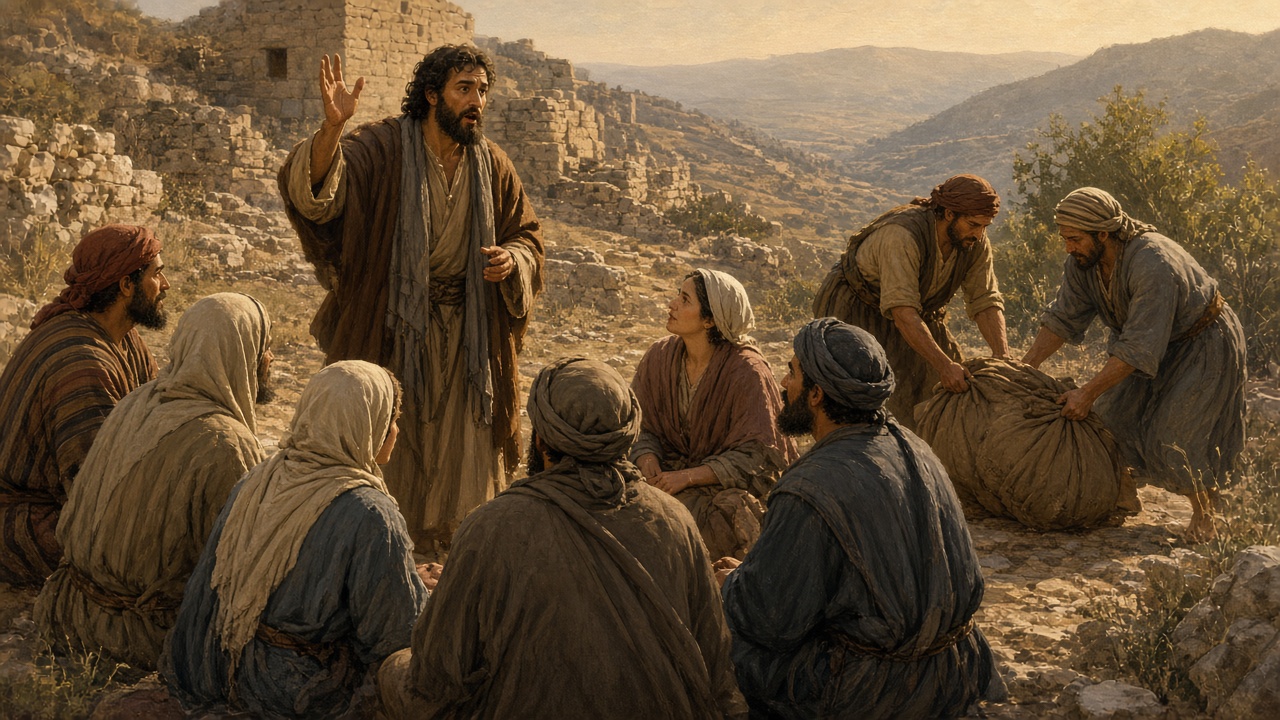
Did you know?
Freedom, the Law, and the Spirit
- The speaker identifies himself as Paul and warns that if those he addresses let themselves be circumcised, Christ will be of no value to them, and that every man who gets himself circumcised is obligated to obey the whole law. A biographical account says that Paul's circumcision-name was Saul, and that the name Paul was probably given to him in infancy for use in the Gentile world, while Saul would be his Hebrew home-name.Sources: the Bible text itself · Paul
- Freedom is set against a yoke of slavery: the chapter says Christ has set them free and tells them to stand firm and not be burdened again by that yoke. They were called to freedom, not as an opportunity for the flesh, but to serve one another in love, and the entire law is fulfilled in the single decree to love one's neighbor as oneself.Sources: the Bible text itself
- Walking by the Spirit is contrasted with gratifying the desires of the flesh, which are opposed to each other. If people are led by the Spirit, they are not under the law; the chapter lists the acts of the flesh and the fruit of the Spirit, and says that against such things there is no law.Sources: the Bible text itself
Notes written with AI assistance from open sources (Theographic Bible Metadata, CC BY-SA 4.0; Easton’s Bible Dictionary, public domain) and reviewed before publishing.
Credits and license for this translation
Beibel: okanisi tongo
New Testament in Eastern Maroon Creole (NS:djk:Eastern Maroon Creole)
copyright © 2009 Wycliffe Bible Translators, Inc.
Language: Eastern Maroon Creole
Translation by: Wycliffe Bible Translators, Inc.
Eastern Maroon Creole
djk
Suriname
Copyright Information
© 2009, Wycliffe Bible Translators, Inc. All rights reserved.
This translation text is made available to you under the
terms of the Creative Commons License: Attribution-Noncommercial-No Derivative Works.
( http://creativecommons.org/licenses/by-nc-nd/3.0/ )
In addition, you have permission to port the text to different file formats, as long as you
do not change any of the text or punctuation of the Bible.
You may share, copy, distribute, transmit, and extract portions
or quotations from this work, provided that you include the above copyright
information:
You must give Attribution to the work.
You do not sell this work for a profit.
You do not make any derivative works that change any of the actual words or punctuation of the Scriptures.
Permissions beyond the scope of this license may be
available if you contact
us with your request.
The New Testament
in Eastern Maroon Creole
© 2009, Wycliffe Bible Translators, Inc. All rights reserved.
This translation is made available to you under the terms of the
Creative Commons Attribution-Noncommercial-No Derivatives license 4.0.
You may share and redistribute this Bible translation or extracts from it in any format, provided that:
You include the above copyright and source information.
You do not sell this work for a profit.
You do not change any of the words or punctuation of the Scriptures.
Pictures included with Scriptures and other documents on this site are licensed just for use with those Scriptures and documents.
For other uses, please contact the respective copyright owners.
2014-04-22
Source: http://ebible.org/djkNT/ · eBible.org