1 Thessalonians 5
Beibel: okanisi tongo · Tap a verse to see its cross-references.
On yuu Masaa Jesesi o kon baka?
1Biibiwan! Ma fa fu den sani di o pasa fosi Masaa Jesesi kon teke wi so? Soseefi, on yuu dati o pasa? We, a á de, fu fanowdu fu piki ala dati. 2Bika useefi sabi taki, a o doo wan dei, te fu sama membee. Dati o pasa enke fa fufuuman e kon a neti haa, fosi fu sama poti pakisei.
3Leti na a yuu di sama o taki: “Goontapu sidon switi, ala sani e waka moi.” Fosi den poti pakisei, da sani kon banowtu den. Da den ná o poi kibii gi a gaan banowtu enke fa bee uman á poi kibii gi a bee ati fu go meke. Ai de fi en moi moi, ma te fu a denki, da a bee musu kon nyanmi en.
4Ma biibiwan! U dati á mu feele! Bika u a ná sama di de a dunguu fu nái si san e pasa. Da Masaa ná o doo a u tapu haa, enke fufuuman. 5Bika u ala anda e si sani enke sama a kiin fu dei, fu sabi san e pasa. U a ná sama a dunguu fu neti di nái si fu sabi san e pasa. Kweti!
6Da wi á mu libi enke sama e siibi, da a nái si sani. Na sama di á sabi Masaa Gadu tan so. Ma meke wi dati de anga ain, da poti ede bun tu. 7Bika son sama e kai a siibi a neti. Son fu den e diingi duungu. Da den nái sabi san e pasa.
8Ma wi na sama di e si enke u de a kiin fu dei, fu sabi san e pasa. Da meke wi poti ede bun. Meke wi wooko anga a biibi di wi abi. Meke wi wooko anga lobi tu. Meke wi tan luku a yeepi di Masaa o tyai kon. Den sani ya sa kibii wi enke insii sani di suudati e wei fu kibii den seefi a feti.
9Bika wi a ná sama di Masaa Gadu ati e boon moo fu gi sitaafu. Ma a tyai yeepi puu wi a takuudu anga a sitaafu ya. Bika wi Masaa Jesesi Kelestesi teke dede a wi peesi. 10Da te a kon baka, da biibiwan di de a libi sa tan libi anga en. Soseefi, biibiwan di dede kaba seefi o weki go libi anga en tu.
11We, da tan soi ala taa biibiwan anda so go doo enke fa u gwenti kaba. Da den taawan sa kisi moo taanga sikin na biibi. Soseefi, den futu sa moo taanga a ini a biibi.
Pawlesi e soi wantu taa sani moo
12Biibiwan! Mi wani begi u anda ete wan sani. Lesipeki den edeman di e tii u anda a ini a biibi fu Masaa. Bika den e wooko taanga fu soi u fa fu tyai useefi. 13Gi den gaandi pasa peesi. Libi meke den si taki u lobi den, fu a wooko di den e du. Meke kwali anga toobi á de a u mindii. Ma u ati mu de switi makandii.
14Biibiwan! Sende lesiman a u mindii de taki, den mu wooko. Suku fu gi sama di e pantan taanga sikin. Yeepi sama di futu swaki a ini a biibi. Pasensi anga ala sowtu sama.
15Kenisi taki, u á suku fu pai taawan ogii fu ogii baka. Ma suku fu wooko bun anga useefi ibii yuu. Wooko so anga ala taa taa sama tu.
16Piisii ala yuu naamo. 17Ná weli fu begi, ma begi naamo. 18Da winsi san, ma tan gi Masaa Gadu daa ete. Bika na so a wani si sama di e waka a Masaa Jesesi Kelestesi baka.
19U á mu tei Masaa Gadu Jeje de. Ma gi en pasi fu wooko faya faya. 20Da te apaiti takiman bali wan bosikopu, da u á mu oli dati fu soso sani. 21Ma keli luku san komoto a Masaa Gadu, da wooko anga dati. 22Wai a pasi gi ibii sowtu ogii naamo. 23Meke Masaa Gadu di e switi sama meke u libi de apaiti fasi gi en. Meke u hii libi, sikin fasi doo jeje fasi wooko sondee fowtu, te wi Masaa Jesesi Kelestesi sa kon baka. 24Masaa Gadu di kai u kon toon sama fi en, de fitoow fasi. Da ai du ala san a paamisi, meke a sa du den sani de gi u.
Den kiiboi bosikopu
25Biibiwan! Wi dise e akisi u anda fu begi gi wi dise tu. 26Bali ala biibiwan anda wan switi odi a ini a nen fu Masaa gi wi. 27Mi e teke a nen fu Masaa sende u taki: “Leisi a biifi ya gi ala taa biibiwan anda.”
28Meke wi Masaa Jesesi Kelestesi tan teke gaan bun ati fasi namo luku u anda go doo.
Did you know?
Awake for the Day of the Lord
- This chapter says the Day of the Lord will come like a thief in the night, and that destruction will arrive suddenly, like labor pains, while people are saying “Peace and security.” It calls the brothers sons of the light and sons of the day, and urges them not to sleep as others do, but to stay awake and sober.Sources: the Bible text itself
- Those who belong to the day are told to be sober, putting on the breastplate of faith and love and the helmet of the hope of salvation. The chapter says God has not appointed them to wrath, but to obtain salvation through the Lord Jesus Christ, who died so that, whether awake or asleep, they may live together with him.Sources: the Bible text itself
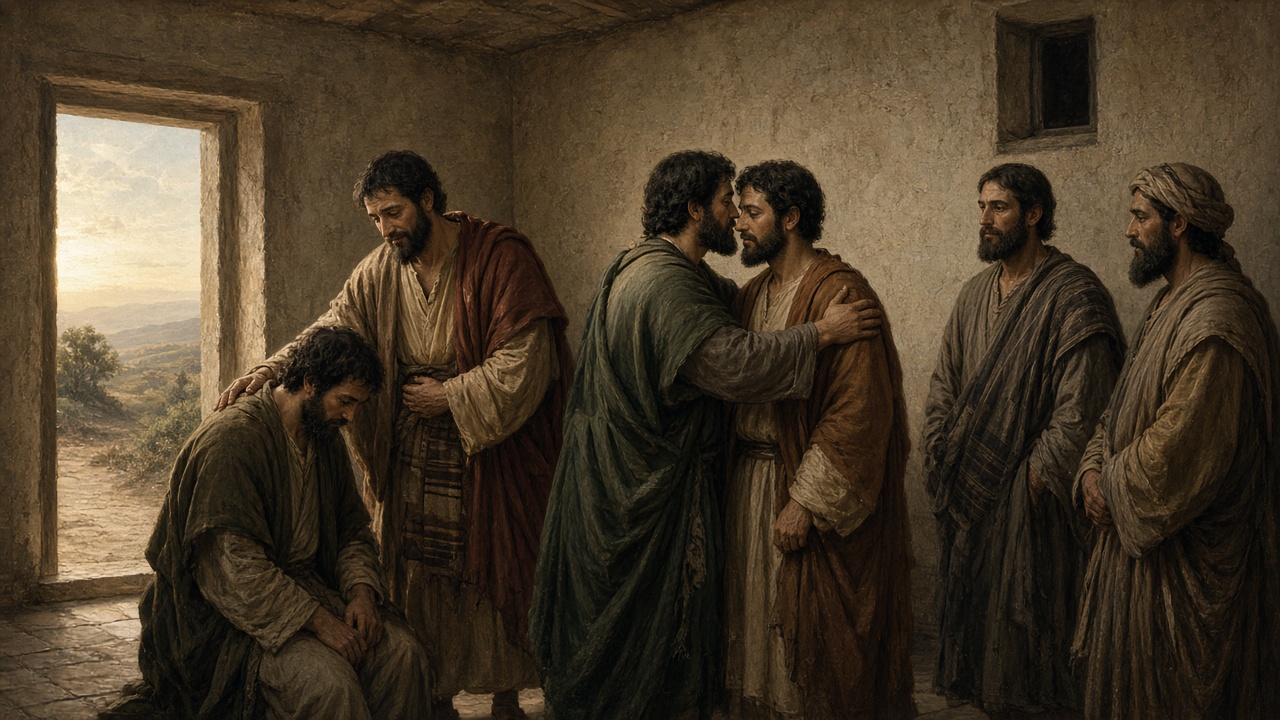
- The closing words ask the brothers to acknowledge those who work diligently among them, preside over them, and instruct them, holding them in highest regard because of their work. They are urged to admonish the unruly, encourage the fainthearted, help the weak, be patient with everyone, and not repay evil for evil. They are also told not to extinguish the Spirit or treat prophecies with contempt, but to test all things, to greet all the brothers with a holy kiss, and to have this letter read to all the brothers.Sources: the Bible text itself
Notes written with AI assistance from open sources (Theographic Bible Metadata, CC BY-SA 4.0; Easton’s Bible Dictionary, public domain) and reviewed before publishing.
Credits and license for this translation
Beibel: okanisi tongo
New Testament in Eastern Maroon Creole (NS:djk:Eastern Maroon Creole)
copyright © 2009 Wycliffe Bible Translators, Inc.
Language: Eastern Maroon Creole
Translation by: Wycliffe Bible Translators, Inc.
Eastern Maroon Creole
djk
Suriname
Copyright Information
© 2009, Wycliffe Bible Translators, Inc. All rights reserved.
This translation text is made available to you under the
terms of the Creative Commons License: Attribution-Noncommercial-No Derivative Works.
( http://creativecommons.org/licenses/by-nc-nd/3.0/ )
In addition, you have permission to port the text to different file formats, as long as you
do not change any of the text or punctuation of the Bible.
You may share, copy, distribute, transmit, and extract portions
or quotations from this work, provided that you include the above copyright
information:
You must give Attribution to the work.
You do not sell this work for a profit.
You do not make any derivative works that change any of the actual words or punctuation of the Scriptures.
Permissions beyond the scope of this license may be
available if you contact
us with your request.
The New Testament
in Eastern Maroon Creole
© 2009, Wycliffe Bible Translators, Inc. All rights reserved.
This translation is made available to you under the terms of the
Creative Commons Attribution-Noncommercial-No Derivatives license 4.0.
You may share and redistribute this Bible translation or extracts from it in any format, provided that:
You include the above copyright and source information.
You do not sell this work for a profit.
You do not change any of the words or punctuation of the Scriptures.
Pictures included with Scriptures and other documents on this site are licensed just for use with those Scriptures and documents.
For other uses, please contact the respective copyright owners.
2014-04-22
Source: http://ebible.org/djkNT/ · eBible.org