Luke 2
Djinang Bible · Tap a verse to see its cross-references.

About this book
About Luke
- Easton's Bible Dictionary (1897) presents the evangelist Luke as a Gentile; the date and circumstances of his conversion are unknown. According to his own statement, Easton notes, he was not an eyewitness and minister of the word from the beginning. Easton thinks it probable that he was a physician in Troas, converted there by Paul, to whom he then attached himself.Sources: Easton: Luke
- That dictionary does not date the Gospel. It places Luke with Paul at Philippi, later as his companion on the journey from Philippi to Jerusalem, then absent during the imprisonments at Jerusalem and Caesarea, and present again when Paul set out for Rome, remaining until the close of the first imprisonment; the last notice of the beloved physician is in 2 Timothy 4:11.Sources: Easton: Luke
- Under the Romans in the time of Jesus, Judea was the southernmost of the three divisions of Palestine and part of the province of Syria. Pontius Pilate, sixth procurator of Judea from A.D. 26 to 36, had his headquarters at Caesarea and often went up to Jerusalem; his rule covered the ministries of John the Baptist and of Jesus. Herod Antipas, Herod's son by Malthace, is named in Luke's narrative.Sources: Judea · Pontius Pilate · Herod Antipas
- Luke's opening narrative concerns John the Baptist, of priestly descent: his father Zacharias was a priest of the course of Abia, and his mother Elisabeth was of the daughters of Aaron; John's birth came six months before Jesus's. Mary, wife of Joseph, of the tribe of Judah and the lineage of David, was living at Nazareth when the angel Gabriel announced that she would be the mother of the Messiah; she afterward visited her cousin Elisabeth. The entry on Mary states that her genealogy is given in Luke 3.Sources: John the Baptist · Mary (Mother of Jesus) · Nazareth
- Easton cites many passages in Luke's writings and in Paul's letters as showing the extent and accuracy of Luke's medical knowledge. After Jesus was expelled from Nazareth, Capernaum, a Galilean city not mentioned in the Old Testament, became his own city and the scene of many acts of his life. Galilee had long been known as Galilee of the Gentiles.Sources: Easton: Luke · Capernaum · Galilee
Notes written with AI assistance from open sources (Theographic Bible Metadata, CC BY-SA 4.0; Easton’s Bible Dictionary, public domain) and reviewed before publishing.
Christmas Story
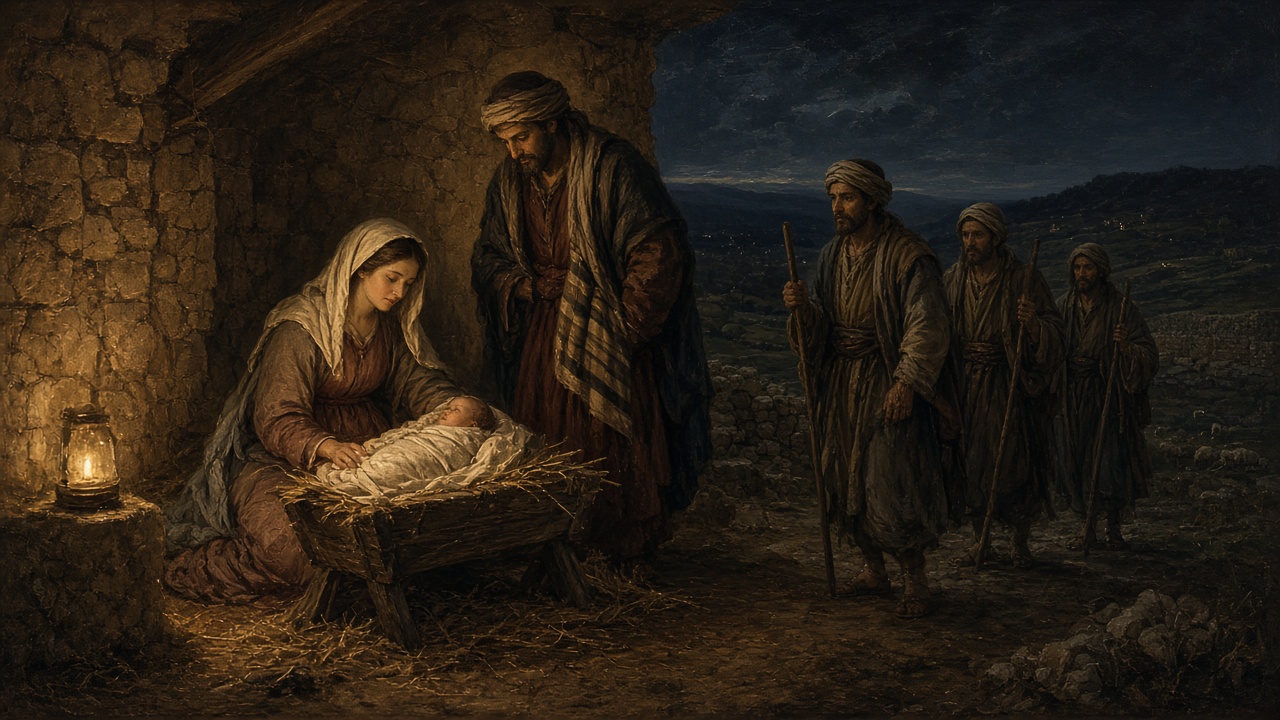
6A bilakiṉiŋ biliŋ ŋuḻi bil nyininyipm, waḻirr inga yulguŋiliban Merigi miri gurrulk inga buŋtjigi. 7Girri nyanŋaŋ miḻimiṯi djawal-giŋiniban, a Meridji marrŋili ŋunukima, girri garrpiniban mirikaldji giḻiwiḻiŋir, girri yakirr-galwupiṉi ŋunyili djapiḏili yurryarrkiṉiŋili nyaliŋiri buluki mala djin ḏirradjigi yurryarr ŋuli bulukiŋirar bala’mirri. Bilapilaŋirgi nyani yakirr-galwupiṉi djapiḏili bulukiŋiraŋ, gima wirr gadjigarr biliŋki ṉambiḏi bala’mirri yulpilŋiraŋ, gima ŋunuŋ bala’ŋurrum rarri inydji barŋiliban.
8Manymak, ŋidjirrkŋ Bitiliyim gurrbiwi, gar-gurryili murrurrtmirri nyibi maypal-djamagiṉpili djani djin nyininy kiriny, maypal bimbi mala djiny djin djagadjny kirinyban, a ŋunupan ŋurrum gar-maliridjiniban. 9Girri ŋunukiṉiŋban wurpmi Garrayaŋ djamagiṉiŋ wugiḻi nyani djina birraldjini, a Garrayar warrdjinirnir djiny ḻiwḻiwmiyŋili, a munutjaban warrpaḏaḏadjini ŋidjirrkŋ djanŋar biṯma maṉŋibirri. Wanaban inga djin ŋuy-yawŋiniban. 10Bil ŋunukima wugiḻi djina waŋini, djina binjin, ‘Iŋkiban ildji yawŋidji. Butjir inydji ildji kuwi, ŋarri ildjarr birruŋiliban djaŋuny buṯal, marrga bukmak yulpili wanaban djin ṉitjanydjidji ŋunukiṉiŋ djiniŋ djaŋuny djin marrŋirrdji. 11Gima djini’djiniŋ maliri, nyani Wanŋirnyakiṉiŋ ildja buŋtjiliban ŋildjaŋi, djiḻi gurrbiwi Dabidaŋ nyani Garray djawal-nyaŋiṉiban ŋunukima Godaŋ Yirryirrpinirbi yul. 12A bilapilaŋ djiniŋ warŋarri djaŋunygiṉiŋ djarri kirimban ŋildjiki, marrga ildji birraldjnyirdjigi ŋunuŋ yidjipili: ildji manyaŋi nyaninyi mirikaldji garrpini, a ŋurri kirim djapiḏimirri bulukiŋirar.’ Bilapilaŋ ŋunuŋ wugiḻ djina bindjini maypal-djagadjnyakiṉpilŋirgi.
Did you know?
The Birth and Early Years of Jesus
- Luke places Jesus’ birth at the time of a decree from Caesar Augustus that a census be taken of the whole empire. Augustus was the cognomen of the first Roman emperor, C. Julius Caesar Octavianus; the title, meaning “majesty” or “venerable,” was first given by the senate. Luke calls this the first census while Quirinius was governor of Syria—Cyrenius being the Greek form of Publius Sulpicius Quirinus.Sources: the Bible text itself · Augustus · Cyrenius
- Joseph lived in Nazareth in Galilee, and he went up from there to Judea, to Bethlehem, the city of David, because he belonged to David’s house and line. Bethlehem lies in the hill country of Judah and was David’s own city: David, the eighth and youngest son of Jesse, was a citizen of Bethlehem. Mary, pledged to Joseph in marriage and expecting a child, traveled with him to register.Sources: the Bible text itself · Joseph (Mary's Husband) · Bethlehem · David
- When the time of purification required by the Law of Moses was complete, the parents brought the child to Jerusalem to present him to the Lord, offering a pair of turtledoves or two young pigeons. In the temple they met Simeon and Anna, a prophetess, daughter of Phanuel, of the tribe of Asher. She had been married for seven years and then was a widow to the age of eighty-four, and she never left the temple, worshiping night and day, fasting and praying.Sources: the Bible text itself · Anna
Notes written with AI assistance from open sources (Theographic Bible Metadata, CC BY-SA 4.0; Easton’s Bible Dictionary, public domain) and reviewed before publishing.
Places in this chapter
- Syria · Today: Syria 2 · 33.511, 36.306 · verse 2
- Bethlehem · 31.704, 35.208 · verses 4, 11, 15
- Galilee · 32.760, 35.527 · verses 4, 39
- Judea · Today: Judea 1 · 31.777, 35.234 · verse 4
- Nazareth · 32.702, 35.298 · verses 4, 39, 43, 51
- Jerusalem · 31.777, 35.234 · verses 22, 25, 38, 41, 42, 43, 45
Only places identified with high confidence are shown (90% or more according to the scholarly sources compiled by OpenBible). Period map: DARE (Digital Atlas of the Roman Empire), CC BY 4.0; modern map: © OpenStreetMap contributors; places: OpenBible.info (CC BY 4.0).
Credits and license for this translation
Djinang Bible
Portions of the Holy Bible in the Djinang language of Australia
copyright © 1977-2021 Wycliffe Bible Translators
Language: Djinang
This translation is made available to you under the terms of the
Creative Commons Attribution Share-Alike license 4.0.
You have permission to share and redistribute this Bible translation in any format and to make reasonable revisions and adaptations of this translation, provided that:
You include the above copyright and source information.
If you make any changes to the text, you must indicate that you did so in a way that makes it clear that the original licensor is not necessarily endorsing your changes.
If you redistribute this text, you must distribute your contributions under the same license as the original.
Pictures included with Scriptures and other documents on this site are licensed just for use with those Scriptures and documents.
For other uses, please contact the respective copyright owners.
Note that in addition to the rules above, revising and adapting God's Word involves a great responsibility to be true to God's Word. See Revelation 22:18-19.
2023-07-26
Source: http://ebible.org/dji/ · eBible.org