Acts 5
Lëk yam · Tap a verse to see its cross-references.
Anyïköl Ananiath kek Thapira
1Mony cɔl Ananiath ë tɔ̈ thïn ku jɔl a tiɛŋde Thapira. Keek aake cï abɛ̈k käkken baai ɣaac wei. 2Ku yen Ananiath ëcï wɛ̈t mat yic kek tiɛŋde ku bïk wëëu abɛ̈k thiaan, ku yïkkë atuuc Jethu abɛ̈k. 3Go Pïtɛr Ananiath jäl thiëëc ëlä, “Yïn Ananiath, ë rin ŋö cɔl yïn rot alëu jɔŋrac, ku ba Wëi Nhialic bɛ̈n lɛ̈k lueth, ku yïn amuk abɛ̈k wëëu kek cï yïn ke käkku ɣaac wei? 4Tɛ̈wäär këc yïn käk paandu ɣaac, aake ye käkku, ku wëëu cï yïn ke ɣaac aa käkku aya. Ye rin ŋö tɛk yïn kë cït kënë ba looi? Yïïn aacie ɣok ca wëëŋ, ee Nhialic yen aca wëëŋ!” 5Kaam wën piŋ Ananiath ye, ke wiɛ̈ɛ̈k piny ku thou. Ku kɔc ke cï ye piŋ aacï bɛ̈n riɔ̈ɔ̈c. 6Go riënythii ke rɛ̈ɛ̈r ɣööt guäpde kuɔ̈th ku jɔtkë, ku lek thiɔ̈k.
7Kaam wën looi kënë rot, ke tiŋ Ananiath bɔ̈ ɣön wën tɔ̈ Pïtɛr thïn, ku ë kuc kë cï rot looi. 8Go Pïtɛr thiëëc ëlä, “Lɛ̈k ɣa yic, ye käkkä kek wëëu ëbën cï wek käŋ ɣaac wek muɔnydu?” Go Thapira bɛ̈ɛ̈r, “Ee tɛ̈den, aa kek wëëu ëbën.”
9Go Pïtɛr lɛ̈k Thapira ëlä, “Yeŋö tɛk wek ye wek muɔnydu bäk Wëi Nhialic them? Yeŋö looi wek këcït kënë, ca kɔc bɔ̈ kä piŋ cök? Aa kɔc ke cï muɔnydu la thiɔ̈k, ku ëmën aya aabï jɔt bïk yï la thiɔ̈k.” 10Kaam wën, ke Thapira wiɛ̈ɛ̈k piny ku thou nyin yic. Go riënythii bɛ̈n ɣöt, ku tïŋkë ke cï thou, gokë jɔt ku lek thiɔ̈k muɔnyde lɔ̈ɔ̈m. 11Kɔc ke tɔ̈ ɣön Nhialic ku kɔc kɔ̈k cï kë cï rot looi piŋ, aacï bɛ̈n riɔ̈ɔ̈c apɛidït.
Käkdït jäŋ gɔ̈i cï röt looi
12Käkdït jäŋ gɔ̈i apɛi aake cï atuuc Jethu aa looi kam kɔc. Kɔc ke cï wɛ̈t Jethu gam aake ye mat ke ya akut Kän Tholomon cök. 13Ee cïn raan tök kam kɔc cie kɔc akuɔ̈tden cï ye tak bï mɛt keyiic, cɔk aa lɔn ye kɔc juëc ke leec. 14Ku kɔc juëc apɛidït, yɔ̈ɔ̈m röör ku diäär ke cï wɛ̈t Jethu gam, aake ye röt mat akuɔ̈tden yic. 15Wɛ̈t käpuɔth ye kɔc Jethu looi, aake cï kɔc tuany cɔl aaye kɔc ruääi ke ke jat dhɔ̈l yiic, ke cï tääc biök yiic, ku bï Pïtɛr ke dɔɔc tɛ̈ ciɛth yen. Na cie këya, ku cɔk a atiɛ̈mde ke kum ke piny ku bïk pial. 16Ku kɔc juëc bɛ̈ɛ̈i thiääk kek Jeruthalem yiic, aacï kɔcken tuany ku kɔcken kɔ̈k la gup jakrɛc bɛ̈n aa bɛ̈ɛ̈i, ku aacï ke bɛ̈n aa kony.
Atuuc Jethu aacï gum
17Tɛ̈wën, ke raandït käk Nhialic, ku kɔcken rɛ̈ɛ̈r ke ye, ku jɔl aa kɔc ye buɔɔth tɔ̈ akut Thaduthï yic, aake cïï puɔ̈th mit tënë atuuc Jethu. Gokë tak ku bïk kërac looi tënë ke. 18Ku dɔmkë atuuc Jethu ku riitkë ke ɣön ye kɔc mac thïn. 19Ku ë wɛ̈ɛ̈r kënë, ka atuny Nhialic bɔ̈ ku tuërkë ke bei ɣööt, ku wɛt kenhïïm aɣeer, ku lëk ke ëlä, 20“Lakkë luaŋ Nhialic, ku bäk kɔc la piɔ̈ɔ̈c wɛ̈t pïr yam cï Jethu lɛ̈k we.” 21Go atuuc Jethu wɛ̈t cï lɛ̈k ke piŋ, ku lek luaŋ Nhialic durdur yic, ku jɔkkë piööc wɛ̈t Nhialic. Go raandït käk Nhialic kek kacke, kɔcdït baai Itharel cɔɔl ku bïk bɛ̈n luk yic, ku bïk mat. Ku jɔlkë thok tuɔɔc tënë apuruuk tit ɣön mɛ̈c, ku bïk atuuc Jethu kuɛ̈ɛ̈th luk yic. 22Tɛ̈wën ɣeet kɔc wën cï tooc, ke keek akëc atuuc Jethu la yök ɣöt, gokë dhuk ku lek thok lɛ̈k bäny luk ëlä, 23“Wën ɣeet ɣok, ɣok aacï ɣöt yök ke riɛɛt thook ku kɔc tït ke kääc yethok. Nawën ŋanyku thok ka cïn raan tööŋ cuk yök alɔŋthïn.” 24Nawën piŋ bɛ̈ny apuruuk luaŋ Nhialic tiit ku jɔl aa kɔcdït käk Nhialic, gokë gäi kë cï rot luɔ̈i atuuc Jethu. 25Kaam wën, ke raan bɔ̈ ɣöt ku lëk ke ëlä, “Piɛŋkë këdiɛ̈ɛ̈n, kɔc kek ke cäk riɛɛt ɣöt, aa rɛ̈ɛ̈r luaŋ Nhialic ëmën, ku aa piööc kɔc wɛ̈t Jethu!” 26Tɛ̈ɛ̈n, go bɛ̈ny apuruuk la kek apuruuk bïk ke diëc, ku bïïkë ke luk yic. Keek akëc atuuc Jethu kuaath, wɛ̈t riɔ̈ɔ̈c kek ciɛ̈t ke bï kɔc ke nhiar atuuc Jethu biɔ̈ɔ̈k aleel.
27Tɛ̈wën cï apuruuk atuuc Jethu jäl bɛ̈ɛ̈i luk yic, go raandït käk Nhialic ke thiëëc ëlä, 28“Wek aa we cï thɔn apɛidït ku bäk kɔc cïï ben piööc wɛ̈t Jethu. Tiɛ̈ŋkë kë cäk looi! Cï wek kɔc piɔ̈ɔ̈c ëbën Jeruthalem, ku week awiɛ̈ckë ku bï aa ɣok ye gɔ̈k lɔn nadë ka ɣok aa cɔl Jethu anäk.”
29Go Pïtɛr kek atuuc Jethu wɛ̈t raandït käk Nhialic dhuk nhom ëlä, “Ɣook, ee Nhialic yetök yen alëuku buk theek, ku aacie kɔc ë path. 30Wek aacï Jethu nɔ̈k, ku piäätkë tim cï rïïu kɔ̈u, ku yeen acï Nhialic wärkuan dït jɔt thou yic. 31Jethu acï Nhialic jɔ̈t bei raŋ yic, ku le nyuɔ̈ɔ̈c köŋden cuëc ku looi ye bɛ̈ny, ku ë raan bï kɔc kuɔ̈ny bei kärɛc yiic. Ku yeen abï kɔc Itharel päl kaam, ku bïk kenhïïm waar bïk cïï ben luui kärɛc, ku bï Nhialic adumuɔ̈ɔ̈mken päl piny. 32Ɣok aacï käk cï Nhialic looi tïŋ, ku Wëi Nhialic aya, yen cï Nhialic tuɔ̈c kɔcken wɛ̈tde gam, ee käk cï Nhialic looi nyuɔ̈th kɔc.”
33Tɛ̈wën piŋ bäny luk wɛ̈t cï atuuc Jethu lɛ̈k ke, gokë puɔ̈th riääk apɛidït, ku wïckë bïk ke nɔ̈k. 34Go raan tök kam bäny, Gamaliel, raan akut Parathï. Ku yeen ë ye raan piööc lööŋ. Ku ë ye raan theek kɔc Itharel apɛidït, rot jɔt luk yic ku lëk apuruuk ku bïk atuuc Jethu kuaath aɣeer luk yic. 35Ku jɔl bäny luk lɔ̈k jääm nhïïm ëlä, “Wek kɔc wuɔ̈nda Itharel, takkë wenhïïm apath kë wiɛ̈ckë bäk luɔ̈i ë kɔckä. 36Wäär ë run thiɔ̈kkä yiic raan cɔl Theudath ëcï tuɔ̈l, ku nyooth rot ke ya aciëŋ dït ril tör, abï raan buɔt kaŋuan röt mät ye. Yen Theudath acï bɛ̈n nɔ̈k, ku kɔc ke cï wɛ̈tde gam aacï bɛ̈n thiäi, ku ë yen thök wɛ̈tde. 37Raan cɔl Judath ku ë ye raan wun cɔl Galilia, ëcï bɛn tuɔ̈l aya ruɔ̈ɔ̈n ɣɔn kueen kɔc, ku yeen ëcï kɔc rac nhïïm agut bï raan tɛ̈dït wɛ̈tde gam, ku yekë buɔɔth cök. Yeen aya acï bɛ̈n nɔ̈k, ku wɛɛr kɔcken wäär ye buɔɔth. 38Ku ëmën alɛ̈k we, aŋuɛ̈ɛ̈n bï ciɛ̈n kërɛɛc luɔikë tënë ke. Aŋuɛ̈ɛ̈n bäk ke puɔ̈l! Na yekë loikë, kë cï raan tak bï looi, ka ŋuɔt bï guɔ yäi. 39Ku na ye Nhialic yen cï ke yiëk riɛl, ka cäk bï lëu. Rin wek aabï röt yök ke ye Nhialic yen thär kek we. Go bäny luk wɛ̈t Gamaliel gam.”
40Ku cɔ̈ɔ̈lkë atuuc Jethu ɣöt, ku tëmkë ke awuɔ̈c bï ke that, ku thönkë kenhïïm bïk cïï ben jam rin Jethu. Ku jɔlkë ke lony. 41Tɛ̈ɛ̈n atuuc Jethu aacï jal jäl luk yic ke cï puɔ̈th la yum wɛ̈t cï Nhialic ke cɔl agum, rin cï ke that wɛ̈t Jethu. 42Ku yekë kɔc piɔ̈ɔ̈c wɛ̈t Puɔth Yam Jethu Krïtho akölaköl luaŋ Nhialic kɔc Itharel, ku bääiken yiic aya.
Did you know?
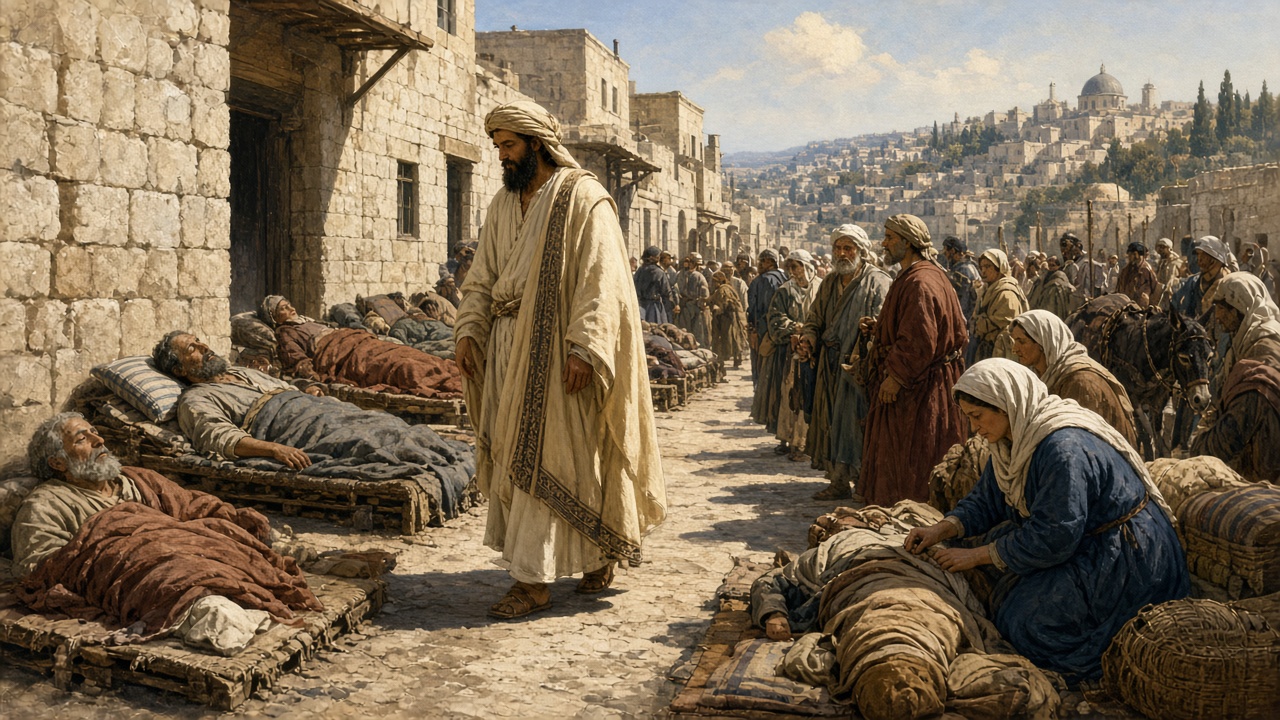
Deceit, wonders, and the Sanhedrin
- Ananias, a member of the Jerusalem church, and his wife Sapphira, whose name means beautiful, sold a piece of land and, with her knowledge, kept back part of the price while bringing the rest to the apostles. He could have kept the property; Peter reminded him that it remained at his disposal both before and after the sale. The wrong was the lie: he professed to give it all, Sapphira confirmed the false price, and both died, she sharing his guilt and his punishment.Sources: Ananias (Husband of Sapphira) · Sapphira · the Bible text itself
- The believers gathered with one accord in Solomon’s Colonnade, where the apostles performed many signs and wonders. That colonnade probably stood on the eastern side of the temple. It is not mentioned in connection with the first temple, though Josephus refers to a porch of that name in Herod’s temple.Sources: Solomon's Portico · the Bible text itself
- When the high priest and his associates, who belonged to the party of the Sadducees, had the apostles arrested, a Pharisee named Gamaliel stood up in the Sanhedrin. He is described as a teacher of the law honored by all the people, the son of Rabbi Simeon and grandson of the famous Rabbi Hillel, and as an opponent of the Sadducees; he urged the council to leave the men alone. He pointed to Theudas, who had led an insurrection against Roman authority and, as Gamaliel told it, gathered about four hundred men before the rising came to nothing—beyond that, nothing else is known of Theudas—and to Judas the Galilean, who perished in the days of the census.Sources: Gamaliel · Theudas · the Bible text itself
Notes written with AI assistance from open sources (Theographic Bible Metadata, CC BY-SA 4.0; Easton’s Bible Dictionary, public domain) and reviewed before publishing.
Places in this chapter
- Solomon’s Portico · Today: in Jerusalem · 31.777, 35.234 · verse 12
- Jerusalem · 31.777, 35.234 · verses 16, 28
- Galilee · 32.760, 35.527 · verse 37
Only places identified with high confidence are shown (90% or more according to the scholarly sources compiled by OpenBible). Period map: DARE (Digital Atlas of the Roman Empire), CC BY 4.0; modern map: © OpenStreetMap contributors; places: OpenBible.info (CC BY 4.0).
Credits and license for this translation
Lëk yam
New Testament in Dinka, Southwestern (SU:dik:Dinka, Southwestern)
copyright © 2006 Wycliffe Bible Translators, Inc.
Language: Dinka, Southwestern
Translation by: Wycliffe Bible Translators, Inc.
Dinka, Southwestern
dik
Sudan
Copyright Information
© 2006, Wycliffe Bible Translators, Inc. All rights reserved.
This translation text is made available to you under the
terms of the Creative Commons License: Attribution-Noncommercial-No Derivative Works.
( http://creativecommons.org/licenses/by-nc-nd/3.0/ )
In addition, you have permission to port the text to different file formats, as long as you
do not change any of the text or punctuation of the Bible.
You may share, copy, distribute, transmit, and extract portions
or quotations from this work, provided that you include the above copyright
information:
You must give Attribution to the work.
You do not sell this work for a profit.
You do not make any derivative works that change any of the actual words or punctuation of the Scriptures.
Permissions beyond the scope of this license may be
available if you contact
us with your request.
The New Testament
in Dinka, Southwestern
© 2006, Wycliffe Bible Translators, Inc. All rights reserved.
This translation is made available to you under the terms of the
Creative Commons Attribution-Noncommercial-No Derivatives license 4.0.
You may share and redistribute this Bible translation or extracts from it in any format, provided that:
You include the above copyright and source information.
You do not sell this work for a profit.
You do not change any of the words or punctuation of the Scriptures.
Pictures included with Scriptures and other documents on this site are licensed just for use with those Scriptures and documents.
For other uses, please contact the respective copyright owners.
2014-04-22
Source: http://ebible.org/dikNT/ · eBible.org