Revelation 6
Nǫ̀htsı̨̨ Nı̨̨htł'è · Tap a verse to see its cross-references.
Enı̨htł'èyeè łǫ̀hdı̨ ts'ǫ̀ wedaàdzeh
1Sahzǫ̀ą weghàehda ekò eyı enı̨htł'èyeè łǫ̀hdı̨ ts'ǫ̀ wedaàdzeh t'akwełǫ̀ǫ̀ wheɂǫǫ sìı nàyı̨ı̨zhì. Eyı tł'axǫǫ̀ t'asìı dı̨ godìı sìı ı̨łè eezhıı ladıì xàyaı̨htı, “Jǫ-ı̨tłe,” sèhdı. 2Hǫtsaa senadąą̀ tłı̨cho degoo wègoèht'į̀! Eyı tłı̨cho t'à-at'ı̨ı̨ sìı ı̨htį̀ daetı̨. Ededı̨ sìı sǫǫ̀mbaekwo kwìt'ıì weghǫ̀t'ǫ eyıts'ǫ eghǫǫ-dǫǫ̀ hoehnè ha nàhǫhoehwho lanì natłı̨yeèhchì.
3Eyı tł'axǫǫ̀ sahzǫ̀ą eyı enı̨htł'èyeè wedaàdzeh nàke t'à wheɂǫǫ sìı nàyı̨ı̨zhì. K'achı̨ t'asìı dı̨ godìı sìı wets'ǫ ı̨łè hadı, “Jǫ-ı̨tłe,” sèhdı. 4K'achı̨ tłı̨cho ı̨łè dek'o lanıı wègoèht'į̀. Eyı tłı̨cho t'à-at'ı̨ı̨ sìı dıı nèk'e ts'èwhı̨į̀ hòɂǫ-le ayele ha eyıts'ǫ dǫ ełaàłìdeè ayele ha weghàhòt'ǫ. Eyı gha behcho nechàa weghǫ̀t'ǫ.
5Eyı tł'axǫǫ̀ sahzǫ̀ą enı̨htł'èyeè wedaàdzeh taı t'à wheɂǫǫ sìı nàyı̨ı̨zhì. K'achı̨ t'asìı dı̨ godìı sìı wets'ǫ ı̨łè hadı, “Jǫ-ı̨tłe,” sèhdı. Hǫtsaa senadąą̀ tłı̨cho dezǫǫ wègoèht'į̀! Eyı tłı̨cho t'à-at'ı̨ı̨ sìı wet'à t'asìı wedaeda yàıtǫ̀. 6Eyı t'asìı dı̨ godìı sìı gıta ts'ǫ dıı hats'edıì hǫt'e, “Łè denahk'e dètì ha; łè nàke aı̨hda elı̨ı̨ sìı ı̨łè dzęę̀ gots'àɂeedì xètłǫ elı̨ ha, eyıts'ǫ łè eładı̨ı̨ xàɂaa ek'èta aı̨hdaa elı̨ı̨ sìı ı̨łè dzęę̀ gots'àɂeedì xètłǫ elı̨ ha. Hanìkò tłeh eyıts'ǫ jìetì sı wedıhoı̨htsı̨-le!” hats'edıì hǫt'e.
7Eyı tł'axǫǫ̀ sahzǫ̀ą eyı enı̨htł'èyeè wedaàdzeh dı̨ t'à wheɂǫǫ sìı nàyı̨ı̨zhì. K'achı̨ t'asìı dı̨ godìı sìı wets'ǫ ı̨łè hadı, “Jǫ-ı̨tłe,” sèhdı. 8Hǫtsaa senadąą̀ tłı̨cho dıìgà lanıı wègoèht'į̀! Eyı tłı̨cho t'à-at'ı̨ı̨ sìı “ełaàgòhde” wìyeh eyıts'ǫ yek'èè etłee sìı “dǫ ełaı̨dèe nèk'e” wìyeh. Dıı nèk'e tanı eyıts'ǫ k'achı̨ tanı ts'ǫ̀ dǫ nàdèe sìı ełaàgogìhde ha gıghàhòt'ǫ. Mǫ̀hdaa behcho t'à ełaàgogìhde ha, mǫ̀hdaa bò whìle t'à, mǫ̀hdaa tàda nàtsoo t'à eyıts'ǫ mǫ̀hdaa tıts'aàdìı wets'àhoejı̨ı̨ t'à ełaàgogìhde ha.
9Sahzǫ̀ą enı̨htł'èyeè wedaàdzeh sı̨làı t'à wheɂǫǫ sìı nàyı̨ı̨zhì. Kwe-ladà wek'e Nǫ̀htsı̨ ts'ǫ̀ t'asìı k'eek'ǫ̀ǫ sìı wetł'a dǫ gıdą̀ązhį̀ı̨ wègoèht'į̀. Nǫ̀htsı̨ weyatıì k'ę̀ę̀ geeda ts'ıhɂǫ̀ ełaàgogį̀ı̨hdèe agı̨ı̨t'e. 10Hòtł'ò gezeh xè hagedı, “Gots'ǫ̀ K'àowo, t'asìı negha dìì-le, nı̨ sìı degaı xè ehkw'ı anet'e. Dàı̨waà-ı̨dè dıı nèk'e gots'ǫ dǫ gısınìyanehtı ha? Ełaàgogį̀ı̨hdè k'èxa dàht'e nı̨dè nàgı̨ı̨hkwa ha?” gedıì yagìzeh. 11Eyı tł'axǫǫ̀ hazǫǫ̀ ɂeh degoo nedèe gıghǫ̀zha eyıts'ǫ dıı hagèts'edı, “Įłaà whaà hoògǫ gots'ǫ̀ naahɂı̨ ha. Dànì ełaànaxegį̀ı̨hdèe sìı eyı lanì, naxıxèht'eè Nǫ̀htsı̨ wecheekeè gı̨ı̨lı̨ı̨ sìı mǫ̀hdaa ełaàgede ha. Hazǫǫ̀ ełaàgogį̀ı̨hdè tł'axǫǫ̀ nı̨dè ayìı k'enaahɂı̨ ı̨lèe sìı wek'ę̀ę̀ agode ha,” gìts'edıì hǫt'e.
12Eyı tł'axǫǫ̀ sahzǫ̀ą weghàehda kò enı̨htł'èyeè wets'ǫdaàdzeh ek'ètaı t'à wheɂǫǫ sìı nàyı̨ı̨zhì. Hǫtsaa dèè hòtł'ò nàgoèhdǫ. Sa dezǫǫ̀ ajà, eyıts'ǫ adzęzah edoò lajà, 13eyıts'ǫ nı̨hts'ı nàtsoo t'à ts'ı hòtł'ò nàada nı̨dè jìecho dıìdìı sìı hodàetł'ì lanì whǫ̀ dèè k'e ts'ǫ̀ hodàètł'ı. 14Enı̨htł'èyeè deyìınats'eèwa lanì yat'a whìle ajà, shìh hazǫǫ̀ eyıts'ǫ dı whelaa sı hazǫǫ̀ wedıhòłı̨.
15Dıı nèk'e k'aodèe, gıza hazǫǫ̀, eghǫǫ-dǫǫ̀-gha-k'aodèe hazǫǫ̀, dǫ ahxee, dǫ wet'àaɂàa gı̨ı̨lı̨ı̨, dǫ edets'ǫ̀ k'agedè-le eyıts'ǫ dǫ edets'ǫ̀ k'agedèe hazǫǫ̀ kwe yìı eyıts'ǫ shìh ta kwe whelaa ta nàdegeeɂį̀. 16Shìh eyıts'ǫ kwe ts'ǫ̀ nagıìdzeh hagedı, “Gok'e hodàahtł'ì, eyı daèhchı̨cho k'e whedaa eyıts'ǫ Sahzǫ̀ą nàgoehkwa ch'à gok'èahdì. 17Hòt'a hoìla agogelee dzęę̀ weghǫnìhoı̨wo hǫt'e. Dànì edaxàts'ı̨ı̨de welì?” gedıì gezeh.
Did you know?
The Opening of the Six Seals
- The first four seals reveal four riders on white, bright red, black, and pale green horses, summoned one by one by the four living creatures. Each horseman brings a distinct affliction across the earth, ranging from conquest and the loss of peace to widespread famine, plague, and death.Sources: the Bible text itself
- The third horseman holds a pair of scales, accompanied by a proclamation setting the price of a quart of wheat or three quarts of barley at a denarius, reflecting severe inflation and food rationing while oil and wine are preserved.Sources: the Bible text itself
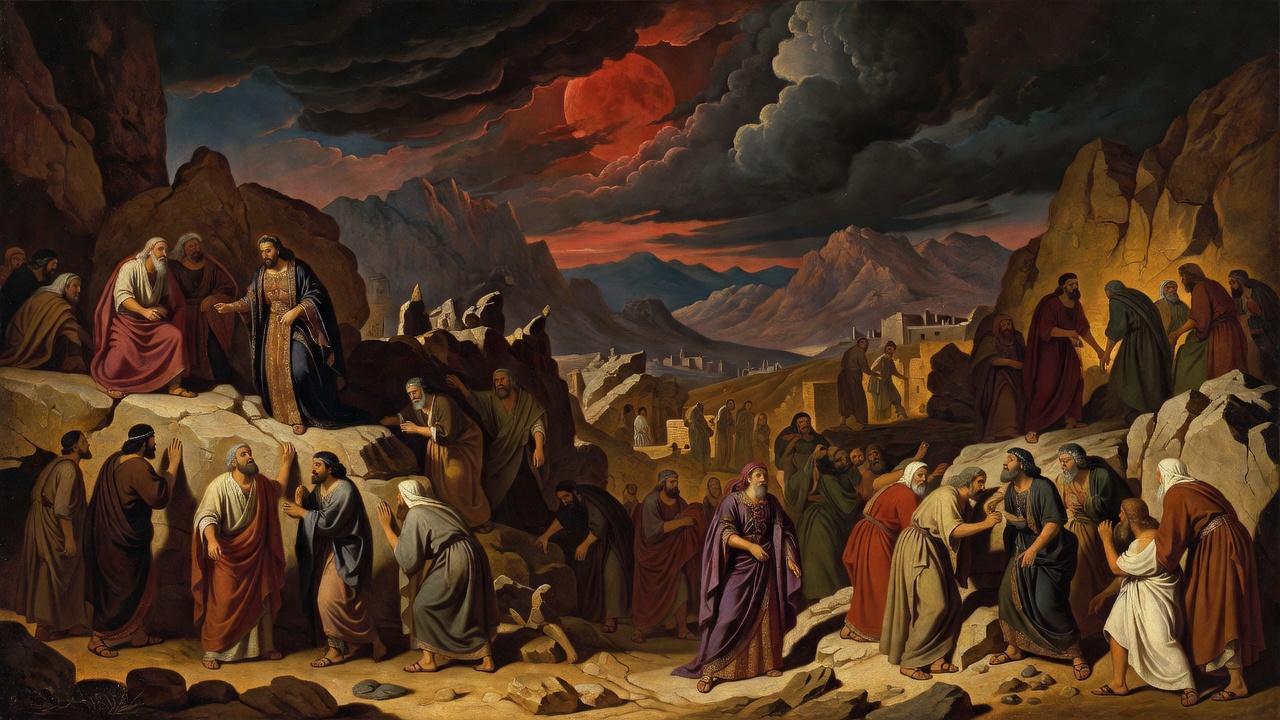
- When the fifth and sixth seals are opened, the focus shifts to the souls of slain believers waiting under the altar, followed by immense cosmic and earthly upheavals that lead people of every social station to hide in mountain caves.Sources: the Bible text itself
Notes written with AI assistance from open sources (Theographic Bible Metadata, CC BY-SA 4.0; Easton’s Bible Dictionary, public domain) and reviewed before publishing.
Credits and license for this translation
Nǫ̀htsı̨̨ Nı̨̨htł'è
Dogrib: Dogrib Genesis & New Testament New Testament & Portions of Old Testament
copyright © 2009 Canadian Bible Society
Language: Dogrib
Translation by: Canadian Bible Society
Tłı̨chǫ Genesis and New Testament
About Tłı̨chǫ
Tłı̨chǫ (Dogrib) is a Na-Dene (Athabaskan) language. It is spoken by the First Nations Tłı̨chǫ people in the Northwest Territories in Canada. It has the largest number of speakers of any of the Aboriginal language communities in the NWT, and is one of the official languages of the Northwest Territories.
About This Translation
This translation includes the book of Genesis and the New Testament in Tłı̨chǫ. The first edition of the Tłı̨chǫ New Testament was published in 2003. It was a historic event, as it was the first time in more than a hundred years that a complete New Testament was published for one of the Dene First Nations in the Territories. The first edition was well received and quickly sold out. In the meantime the book of Genesis had been completed. Consequently, the 2008 reprint of the Tłı̨chǫ New Testament included Genesis.
Though this translation of the New Testament and Genesis took a total of ten years, the people who worked on it built on years of labor invested by the Tłı̨chǫ people, elders, priests and missionaries, translators, educators, and linguists. The material contained in this book was checked and approved by consultants from Wycliffe Bible Translators and the Canadian Bible Society.
If you are interested in obtaining a printed copy of this Bible, please contact the Canadian Bible Society at http://www.biblescanada.com .
Copyright Information
Dogrib Genesis and New Testament © 2003, 2008 Canadian Bible Society
The text of the Bible in Tłı̨chǫ that appears in this electronic format or website is for personal use only.
Up to five hundred (500) verses of the Bible text in any form (written, visual, electronic or audio) may be quoted without permission. The quoted verses may not be more than 50% of a complete book of the Bible, or more than 25% of the total text of the work in which they are quoted. Prior written permission must be obtained for any other use of the text. Copyright acknowledgement must in all cases appear on the title or copyright page.
For more information on copyright conditions or to apply, visit http://www.biblesociety.ca/copyright .
This translation is made available to you under the terms of the
Creative Commons Attribution-Noncommercial-No Derivatives license 4.0.
You may share and redistribute this Bible translation or extracts from it in any format, provided that:
You include the above copyright and source information.
You do not sell this work for a profit.
You do not change any of the words or punctuation of the Scriptures.
Pictures included with Scriptures and other documents on this site are licensed just for use with those Scriptures and documents.
For other uses, please contact the respective copyright owners.
2014-04-22
Source: http://ebible.org/dgrDOGNT/ · eBible.org