John 17
Nǫ̀htsı̨̨ Nı̨̨htł'è · Tap a verse to see its cross-references.
Zezì edegha yahtı
1Zezì hadı tł'axǫǫ̀, ı̨dòo yak'e ts'ǫ̀ k'eet'į̀ xè yahtı, hadı,
“Setà, hòt'a eyı nèhòı̨wo, Neza weghàsǫhoedıì anele, hanì-ı̨dè Neza neghàsǫhoedıì ayele ha. 2Dǫ weghàneelaa sìı welǫ whìle ts'ǫ̀ geedaà agole ha t'à, dǫ hazǫǫ̀ ts'ǫ̀ k'àowo awènelà. 3Welǫ whìle ts'ǫ̀ ts'eedaa ts'edıı sìı dıı awèts'edı: Nı̨ nek'ègeezǫ ha, nı̨ zǫ Nǫ̀htsı̨ ehkw'ıı anet'e gık'èezǫ ha, eyıts'ǫ Zezì-Krı, jǫ ts'ǫ̀ weneehɂàa sìı, gık'èezǫ ha. 4La seghàneeɂǫǫ sìı weghǫ naht'e t'à dıı nèk'e neghàsǫhoedıì anèhłà. 5Setà, dıı nèè hòèlı̨ kwe nexè seghàsǫhoedı ı̨lè xèht'eè nexè seghàsǫhoedı ası̨ı̨le.
Zezì edecheekeè gha yahtı
6“Dıı nèk'e dǫ hazǫǫ̀ seghàneelaa sìı nek'ègeezǫǫ̀ agèhłà. Nets'ǫ agı̨ı̨t'e ı̨lèe sìı seghàgınèela, eyıts'ǫ neyatıì k'èagı̨ı̨t'e. 7T'asìı hazǫǫ̀ seghàneelaa sìı nets'ǫ zǫ hǫt'e, eyı gık'èezǫǫ̀ agejà. 8Yatı seghàneeɂǫǫ sìı gıghàehɂǫ xè gıgha ehkw'ı-ahodı. Nets'ǫ aht'ı̨ hotıì sek'ègeezǫ, eyıts'ǫ nı̨ seneehɂàa sìı gıgha ehkw'ı-ahodı. 9Dıì gıgha yahtı. Dıı nèk'e gots'ǫ dǫ hazǫǫ̀ gha yahtı ha dehsı̨į̀-aehsı̨-le, hanìkò dǫ seghàneelaa sìı gıgha yahtı, nets'ǫ agı̨ı̨t'e t'à. 10Hazǫǫ̀ sets'ǫ agı̨ı̨t'ee sìı nı̨ nets'ǫ agı̨ı̨t'e, eyıts'ǫ hazǫǫ̀ nets'ǫ agı̨ı̨t'ee sìı sı̨ sı sets'ǫ agı̨ı̨t'e. Eyı hazǫǫ̀ gıts'ıhɂǫ̀ seghàsǫhoedı hǫt'e. 11Hòt'a dıı nèk'e aht'e ha-le, nets'ǫ̀ anahde ha, hanìkò secheekeè ı̨łaà dıı nèk'e agı̨ı̨t'e. Setà Degaı, nıızì dahxà gıxonehdı; nıızì wedahxà eghàlaehdaà asèneelàa sìı t'à gıxonehdı. Hanì-ı̨dè ededı̨ sìı dǫ ı̨łè zǫ lagı̨ı̨t'e ha, goxı̨ ı̨łè lawììt'e lanì. 12Įłaà gıxè aht'e ekò nıızì dahxà gık'èhdì ı̨lè. Įłè kò seghǫ wedıhòłı̨-le. Įłè wedıhołè ha weghàhòt'ǫǫ sìı eyı zǫ wedıhołè ha. Hanì-ı̨dè ayìı dek'eèhtł'èe sìı wek'ę̀ę̀ agode ha.
13“Hòt'a nets'ǫ̀ ahde ha, hanìkò ı̨łaà dıı nèk'e whıhda et'ıì eyı hazǫǫ̀ ghǫ goıhde hǫt'e. Hanì-ı̨dè set'à sıì gınà ha. 14Neyatıì gıghàehɂǫ hǫt'e, eyıt'à dıı nèk'e ts'ǫ dǫ secheekeè dzagı̨ı̨hwhǫ, sexèht'eè dıı nèk'e gots'ǫ agı̨ı̨t'e-le t'à. 15Dıı nèk'e dǫ gots'ǫǫ̀ xàgı̨ı̨wa gha yahtı-le, hanìkò wehłı̨ı̨ ch'à gık'èı̨dì gha nets'ǫ̀ yahtı. 16Dıı nèk'e gots'ǫ aht'e-le, sexèht'eè ededı̨ sı dıı nèk'e gots'ǫ agı̨ı̨t'e-le. 17Nàowo ehkw'ıı t'à degaı agı̨ı̨le eyıts'ǫ nets'ǫ gı̨ı̨lı̨į̀ agı̨ı̨le; neyatıì sìı nàowo ehkw'ıı hǫt'e. 18Dıı nèk'e ts'ǫ̀ seneehɂà xèht'eè, ededı̨ sı dıı nèk'e dǫ ta ts'ǫ̀ gııhɂà hǫt'e. 19Gıgha neghàdìıhtı̨ hǫt'e, hanì-ı̨dè ededı̨ sı hotıì degaı gı̨ı̨lı̨ xè nets'ǫ gı̨ı̨lı̨ ha.
Zezì dǫ hazǫǫ̀ gıgha ehkw'ı-ahodıı sìı gogha yahtı
20“Secheekeèdeè zǫ gıgha yahtı nıìle. Secheekeèdeè gıyatıì t'à dǫ seghǫ gıgha ehkw'ı-ahodıı sìı hazǫǫ̀ gıgha yahtı hǫt'e. 21Hanì-ı̨dè hazǫǫ̀ ı̨łè zǫ lagı̨ı̨t'e ha. Setà, nexè aht'ı̨ eyıts'ǫ nı̨ sexè anet'ı̨, ededı̨ sı goxèht'eè ı̨łè lagı̨ı̨t'e ha. Goxè ı̨łè lagııt'è, hanì-ı̨dè dıı nèk'e gots'ǫ dǫ jǫ ts'ǫ̀ seneehɂà, gıgha ehkw'ı-ahodı ha. 22Sexè enıìyah hòɂǫ anelàa sìı ededı̨ sı gıxè hanì enıìyah hòɂǫ ahłà. Hanì-ı̨dè goxı̨ ı̨łè lawììt'e, goxèht'eè, ededı̨ ełexè ı̨łè lagı̨ı̨t'e ha. 23Sı̨ gıxè aht'ı̨, eyıts'ǫ nı̨ sexè anet'ı̨. Hotıì ı̨łè zǫ lagııt'è agı̨ı̨le, hanì-ı̨dè dıı nèk'e gots'ǫ dǫ sìı nı̨ seneehɂà, eyıts'ǫ seghǫneètǫ lanì gıghǫneehtǫ gık'èezǫ ha.
24“Setà, dǫ hazǫǫ̀ seghàneelaa sìı t'aats'ǫǫ̀ sexè agı̨ı̨t'e ha dehwhǫ, eyıts'ǫ sexè enıìyah hòɂǫ anelàa sìı geɂį̀ ha dehwhǫ. Dıı nèè hòèlı̨ kwe seghǫneètǫ t'à sexè enıìyah hòɂǫ anelà ı̨lè.
25“Setà, nı̨ sìı ehkw'ı anet'e. Dıı nèk'e dǫ nek'ègeezǫ-le kò, sı̨ nek'èehsǫ hǫt'e, eyıts'ǫ dıı dǫ seghàneelaa sìı jǫ ts'ǫ̀ asèneelà gık'èezǫ hǫt'e. 26Nek'ègeezǫ agèhłà, deɂǫ̀ǫ̀ nek'ègeezǫǫ̀ agehłe ha. Hanì-ı̨dè dànì seghǫneètǫǫ sìı ededı̨ sìı hanì ełeghǫnegeètǫǫ̀ agede ha, eyıts'ǫ sı̨ gıxè ı̨łè zǫ laht'e ha,” Zezì hadıì Edetà ts'ǫ̀ xàyahtı.
Did you know?
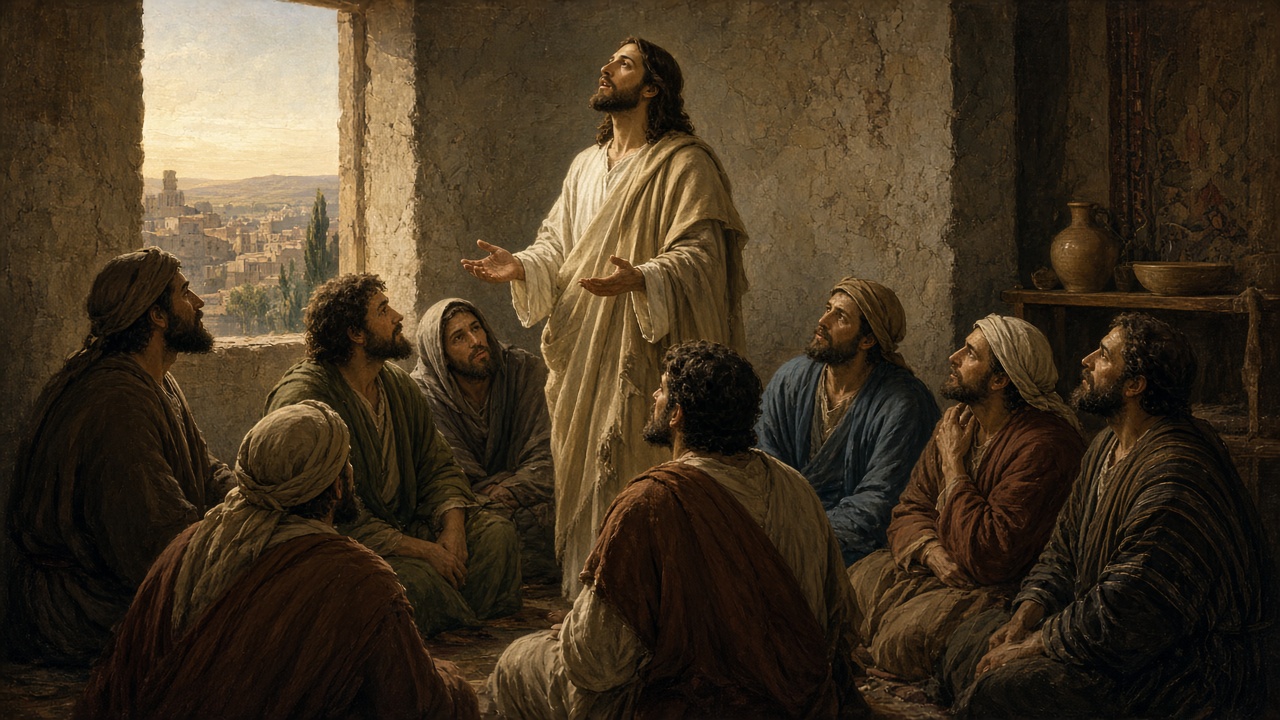
John 17: the hour has come
- The prayer opens when Jesus, having spoken these things, lifts his eyes to heaven and says that the hour has come. It is associated with the Upper Room Discourse, listed as lasting one day, and with Holy Week, listed as lasting eight days.Sources: the Bible text itself · Upper Room Discourse · Holy Week
- Here eternal life is knowing the only true God and Jesus Christ, whom the Father sent. Jesus also speaks of the glory he had with the Father before the world existed, and of the Father's love for him before the foundation of the world.Sources: the Bible text itself
- He prays for those the Father gave him out of the world, who have kept the word, and also for people who will believe through their message, asking that they may be one. He does not ask that they be taken out of the world, but that they be kept from the evil one and sanctified by the truth, which he identifies as the Father's word.Sources: the Bible text itself
Notes written with AI assistance from open sources (Theographic Bible Metadata, CC BY-SA 4.0; Easton’s Bible Dictionary, public domain) and reviewed before publishing.
Credits and license for this translation
Nǫ̀htsı̨̨ Nı̨̨htł'è
Dogrib: Dogrib Genesis & New Testament New Testament & Portions of Old Testament
copyright © 2009 Canadian Bible Society
Language: Dogrib
Translation by: Canadian Bible Society
Tłı̨chǫ Genesis and New Testament
About Tłı̨chǫ
Tłı̨chǫ (Dogrib) is a Na-Dene (Athabaskan) language. It is spoken by the First Nations Tłı̨chǫ people in the Northwest Territories in Canada. It has the largest number of speakers of any of the Aboriginal language communities in the NWT, and is one of the official languages of the Northwest Territories.
About This Translation
This translation includes the book of Genesis and the New Testament in Tłı̨chǫ. The first edition of the Tłı̨chǫ New Testament was published in 2003. It was a historic event, as it was the first time in more than a hundred years that a complete New Testament was published for one of the Dene First Nations in the Territories. The first edition was well received and quickly sold out. In the meantime the book of Genesis had been completed. Consequently, the 2008 reprint of the Tłı̨chǫ New Testament included Genesis.
Though this translation of the New Testament and Genesis took a total of ten years, the people who worked on it built on years of labor invested by the Tłı̨chǫ people, elders, priests and missionaries, translators, educators, and linguists. The material contained in this book was checked and approved by consultants from Wycliffe Bible Translators and the Canadian Bible Society.
If you are interested in obtaining a printed copy of this Bible, please contact the Canadian Bible Society at http://www.biblescanada.com .
Copyright Information
Dogrib Genesis and New Testament © 2003, 2008 Canadian Bible Society
The text of the Bible in Tłı̨chǫ that appears in this electronic format or website is for personal use only.
Up to five hundred (500) verses of the Bible text in any form (written, visual, electronic or audio) may be quoted without permission. The quoted verses may not be more than 50% of a complete book of the Bible, or more than 25% of the total text of the work in which they are quoted. Prior written permission must be obtained for any other use of the text. Copyright acknowledgement must in all cases appear on the title or copyright page.
For more information on copyright conditions or to apply, visit http://www.biblesociety.ca/copyright .
This translation is made available to you under the terms of the
Creative Commons Attribution-Noncommercial-No Derivatives license 4.0.
You may share and redistribute this Bible translation or extracts from it in any format, provided that:
You include the above copyright and source information.
You do not sell this work for a profit.
You do not change any of the words or punctuation of the Scriptures.
Pictures included with Scriptures and other documents on this site are licensed just for use with those Scriptures and documents.
For other uses, please contact the respective copyright owners.
2014-04-22
Source: http://ebible.org/dgrDOGNT/ · eBible.org