Genesis 8
Nǫ̀htsı̨̨ Nı̨̨htł'è · Tap a verse to see its cross-references.
Dèè whegǫǫ̀ ajà
1Hanìkò Nǫ̀htsı̨ Noah k'èdì, eyıts'ǫ tıts'aàdìı whatsǫǫ̀ edeedaa, tıts'aàdìı wek'èhodìı, hazǫǫ̀ wexè elàcho yìı geèhkw'ee sìı gok'èdì, eyıts'ǫ dèè k'e nawhets'ıì ayį̀į̀là t'à dèè k'e tı ı̨zhıì ajà. 2Dèè goyìı gots'ǫ tı xàewì-le agòjà eyıts'ǫ chǫh at'ı̨-le agòjà. 3K'èdaà dèè k'e tı whìle agodaade t'à, ı̨łèakw'eènǫ-daats'ǫ̀-sı̨laènǫ (150) dzęę̀ tł'axǫǫ̀ tı ı̨zhıì ajà. 4Łǫ̀hdı̨ sa xèhǫǫ̀wo gots'ǫ hoònǫ-daats'ǫ̀-łǫ̀hdı̨ dzęę̀ k'e elàcho shìh nechàa Adarat gòyeh weka dawhetǫǫ̀ ajà. 5Łǫǫ̀tǫ sa k'ehǫǫwo gots'ǫ̀ tı ı̨zhıì at'ı̨. Hoònǫ sa xèhoòwo ekò shìhdeè gòlaa weka xègoèht'į̀ agòjà.
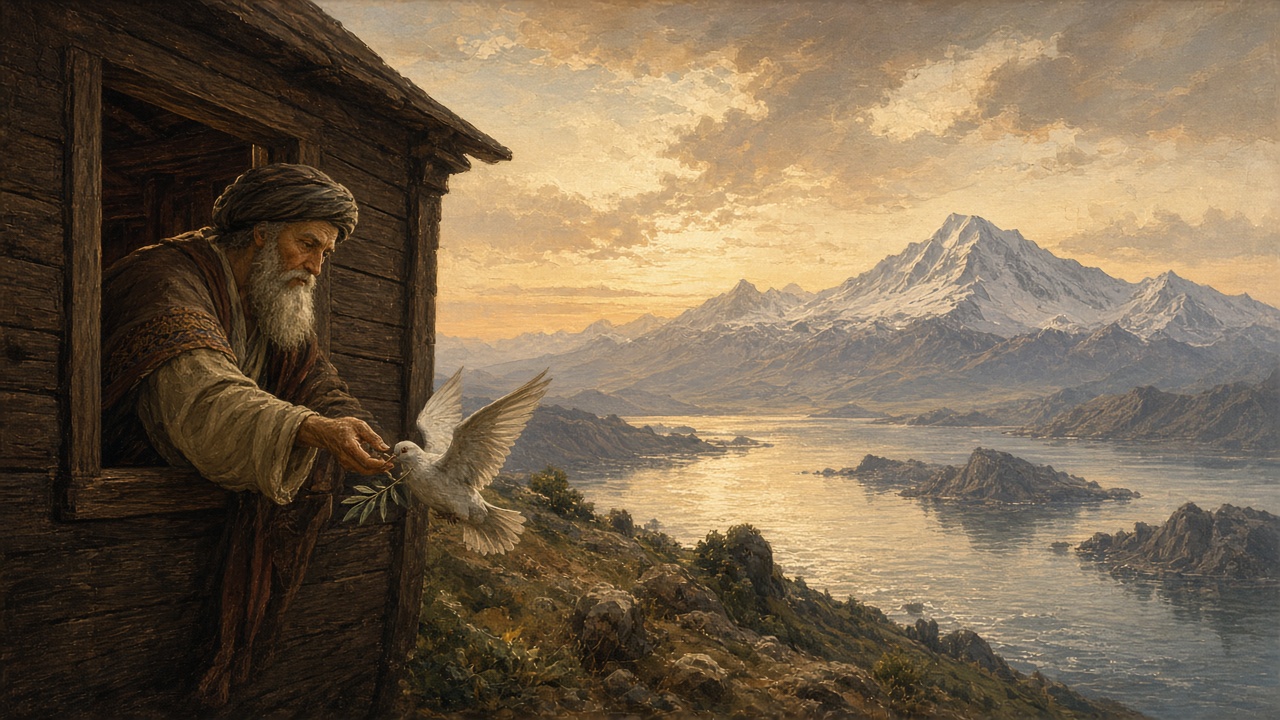
6Dı̨ènǫ dzęę̀ tł'axǫǫ̀ Noah elàcho yìı ejak'è gòhtsı̨ı̨ sìı enìxàyaachì 7gà tatsǫ̀ xàèht'oò ayį̀į̀là. Dèè k'e tı hazǫǫ̀ whìle agòjà gots'ǫ̀ elàcho ts'ǫ eht'òìt'a. 8Eyı tł'axǫǫ̀ asį̀į̀ dèè k'e tı whìle ajàa lì nıwǫ t'à k'àba lanıı xàèht'oò ayį̀į̀là. 9Hanìkò ı̨łaà dèè k'e tı łǫ t'à k'àba t'asìı k'e nàwo ha wegha gǫ̀hłı̨-le t'à elàcho ts'ǫ̀ naèht'o. Noah yets'ǫ̀ dadıìtso gà elàcho yìı nayaachì. 10Noah łǫ̀hdı̨ dzęę̀ ts'ǫ̀ naèhɂı̨ tł'axǫǫ̀ k'achı̨ k'àba xàèht'oò ayį̀į̀là. 11Xèhts'ǫ̀ k'àba yets'ǫ̀ nǫ̀ǫt'o ekò ts'ı “olıve” wìyeh wets'ǫ ı̨t'ǫ̀ą xàyı̨ı̨hdlaa sìı weèdà yìchı̨ı̨ɂa nǫǫ̀! Eyı weghàà Noah dèè k'e tı whìle agòjà yek'èhoèhzà. 12K'achı̨ łǫ̀hdı̨ dzęę̀ ts'ǫ̀ naèhɂı̨ tł'axǫǫ̀ k'achı̨ k'àba xàèht'oò ayį̀į̀là, hanìkò dıì t'à k'àba yets'ǫ̀ nǫ̀ǫt'o-le.
13Noah ek'ètaekw'eènǫ-daats'ǫ̀-ı̨łè (601) weghoò ekò, eyı xo xèhǫǫ̀wo gots'ǫ ı̨łè sa eyıts'ǫ ı̨łè dzęę̀ k'e dèè k'e tı whìle agòjà. Noah elàcho weka dahtèwhelaa sìı ı̨ɂǫ̀ǫ̀ ayį̀į̀là. Dèè k'e k'eet'į̀, dèè goka whegǫǫ̀ agòjà nǫǫ̀ yaɂı̨. 14Nàke sa xèhǫǫ̀wo gots'ǫ naènǫ-daats'ǫ̀-łǫ̀hdı̨ (27) dzęę̀ k'e dèè hǫt'ıì whegǫǫ̀ ajà.
15Eyıt'à Nǫ̀htsı̨ Noah ts'ǫ̀ hadı, 16“Nı̨, nets'èkeè eyıts'ǫ neza, gıts'èkeè xè, elàcho yìı gots'ǫ xàahdè. 17Tıts'aàdìı hazǫǫ̀ xàɂaa nexè geedaa sìı, yat'a k'edèe, tıts'aàdìı hazǫǫ̀, dèè k'e k'eɂàa gı̨ı̨lı̨ı̨ sìı hazǫǫ̀ xàgı̨ı̨wa, dıı nèk'e gıza yàgǫ̀hłı̨ı̨ xè gı̨ı̨tłǫǫ̀ agede ha t'à,” Nǫ̀htsı̨ Noah èhdı.
18Eyıt'à Noah edeza, edets'èkeè eyıts'ǫ weza gıts'èkeè xè elàcho yìı gots'ǫ xàgı̨ı̨de. 19Tıts'aàdìı hazǫǫ̀, dèè k'e k'eɂàa eyıts'ǫ yat'a k'edèe hazǫǫ̀, ełets'ǫ gı̨ı̨lı̨ı̨ sìı ełek'èdaà xàgeède.
20Eyı tł'axǫǫ̀ Noah Nǫ̀htsı̨ ts'ǫ̀ t'asìı k'eehk'ǫ̀ gha kwe ełeka nèyı̨ı̨wa t'à kwe-ladà whehtsı̨. Tıts'aàdìı nezı̨ı̨ xàɂaa sìı eyıts'ǫ yat'a k'edèe nezı̨ı̨ xàɂaa sìı mǫ̀hdaa neyı̨į̀wa gà Nǫ̀htsı̨ ts'ǫ̀ yek'eehk'ǫ̀. Noah Nǫ̀htsı̨ ts'ǫ̀ t'asìı k'eehk'ǫ̀ gha kwe ełeka nèyı̨ı̨wa t'à kwe-ladà whehtsı̨.|src="HK00251B.TIF" size="span" ref="8.20" 21Gots'ǫ̀ K'àowo t'asìı wets'ǫ̀ wek'eek'ǫ̀ǫ sìı wegha nezı̨ t'à edets'ǫ̀ hadı, “Dǫ negechà-lea gots'ǫ t'aats'ǫǫ̀ ededzeè t'à hołı̨ı̨ nàowoò zǫ danıgedè kò, k'achı̨ wı̨ı̨zìı dèè k'e hanì hoìla agohłe ha nıìle. Eyıts'ǫ k'achı̨ wı̨ı̨zìı t'asìı hazǫǫ̀ edaa sìı gıdıhohtsı̨ ha nıìle.
22“Dıı dèè gòɂǫ gots'ǫ̀ dèè k'e t'asìı dehshe ha, eyıts'ǫ t'asìı dehshee sìı dǫ nàgehtsį̀ ha, edzaa eyıts'ǫ edıı sìı t'aats'ǫǫ̀ hagot'ı̨ ha, ı̨mbè eyıts'ǫ xok'e agot'ı̨ ha, eyıts'ǫ t'aats'ǫǫ̀ dzę eyıts'ǫ to agot'ı̨ ha,” Nǫ̀htsı̨ edets'ǫ̀ hadı.
Did you know?
The Waters Recede
- The ark came to rest on the mountains of Ararat, a name meaning “sacred land” or “high land” for a country on whose mountains the ark settled after the flood. Easton's Bible Dictionary (1897) suggests those mountains were probably the Kurdish range of southern Armenia, though the name is also commonly applied to a high, almost inaccessible peak rising from the plain of the Araxes. In 2 Kings 19:37 and Isaiah 37:38 the Authorized Version renders the name “Armenia” and the Revised Version “land of Ararat,” while Jeremiah 51:27 uses it for central or southern Armenia.Sources: Ararat · the Bible text itself
- Noah’s Hebrew name means “rest,” and in this chapter the ark itself comes to rest as the waters go down. He was the son of Lamech and the grandson of Methuselah, and the father of Shem, Ham, and Japheth. Easton's Bible Dictionary describes him as the connecting link between the old world and the new, and as a second great progenitor of the human family.Sources: Noah · the Bible text itself
- Chronological notes place the Great Flood in 2347 BC, lasting one year; the subsiding of the waters in 2346 BC, over 220 days; and the leaving of the ark in 2346 BC, as a single day. In the chapter itself, the waters have gone down after 150 days and the ark rests on the seventeenth day of the seventh month; on the first day of the first month of Noah’s six hundred and first year the waters have dried up, and by the twenty-seventh day of the second month the earth is fully dry.Sources: The Great Flood · The flood subsides · Leaving the Ark · the Bible text itself
Notes written with AI assistance from open sources (Theographic Bible Metadata, CC BY-SA 4.0; Easton’s Bible Dictionary, public domain) and reviewed before publishing.
Places in this chapter
- Ararat · Today: Urartu · 39.703, 44.300 · verse 4
Only places identified with high confidence are shown (90% or more according to the scholarly sources compiled by OpenBible). Period map: DARE (Digital Atlas of the Roman Empire), CC BY 4.0; modern map: © OpenStreetMap contributors; places: OpenBible.info (CC BY 4.0).
Credits and license for this translation
Nǫ̀htsı̨̨ Nı̨̨htł'è
Dogrib: Dogrib Genesis & New Testament New Testament & Portions of Old Testament
copyright © 2009 Canadian Bible Society
Language: Dogrib
Translation by: Canadian Bible Society
Tłı̨chǫ Genesis and New Testament
About Tłı̨chǫ
Tłı̨chǫ (Dogrib) is a Na-Dene (Athabaskan) language. It is spoken by the First Nations Tłı̨chǫ people in the Northwest Territories in Canada. It has the largest number of speakers of any of the Aboriginal language communities in the NWT, and is one of the official languages of the Northwest Territories.
About This Translation
This translation includes the book of Genesis and the New Testament in Tłı̨chǫ. The first edition of the Tłı̨chǫ New Testament was published in 2003. It was a historic event, as it was the first time in more than a hundred years that a complete New Testament was published for one of the Dene First Nations in the Territories. The first edition was well received and quickly sold out. In the meantime the book of Genesis had been completed. Consequently, the 2008 reprint of the Tłı̨chǫ New Testament included Genesis.
Though this translation of the New Testament and Genesis took a total of ten years, the people who worked on it built on years of labor invested by the Tłı̨chǫ people, elders, priests and missionaries, translators, educators, and linguists. The material contained in this book was checked and approved by consultants from Wycliffe Bible Translators and the Canadian Bible Society.
If you are interested in obtaining a printed copy of this Bible, please contact the Canadian Bible Society at http://www.biblescanada.com .
Copyright Information
Dogrib Genesis and New Testament © 2003, 2008 Canadian Bible Society
The text of the Bible in Tłı̨chǫ that appears in this electronic format or website is for personal use only.
Up to five hundred (500) verses of the Bible text in any form (written, visual, electronic or audio) may be quoted without permission. The quoted verses may not be more than 50% of a complete book of the Bible, or more than 25% of the total text of the work in which they are quoted. Prior written permission must be obtained for any other use of the text. Copyright acknowledgement must in all cases appear on the title or copyright page.
For more information on copyright conditions or to apply, visit http://www.biblesociety.ca/copyright .
This translation is made available to you under the terms of the
Creative Commons Attribution-Noncommercial-No Derivatives license 4.0.
You may share and redistribute this Bible translation or extracts from it in any format, provided that:
You include the above copyright and source information.
You do not sell this work for a profit.
You do not change any of the words or punctuation of the Scriptures.
Pictures included with Scriptures and other documents on this site are licensed just for use with those Scriptures and documents.
For other uses, please contact the respective copyright owners.
2014-04-22
Source: http://ebible.org/dgrDOGNT/ · eBible.org