Genesis 48
Nǫ̀htsı̨̨ Nı̨̨htł'è · Tap a verse to see its cross-references.
Jacob Joseph weza nàke gok'eèyaı̨htı
1Edlaı̨wa hoòwo tł'axǫǫ̀ Joseph hagıìhdı, “Netà eyaelı̨,” gıìhdı. Eyıt'à edeza nàke, Manaseh eyıts'ǫ Efrayım edexè ayį̀į̀là. 2Jacob, “Neza Joseph nets'ǫ̀ nììtła,” gıìhdı ekò nàtso-le kò daèhte k'e whedaà adììdlà.
3Jacob, edeza Joseph ts'ǫ̀ hadı, “Kanan nèk'e Luz gòyeh ekǫ Nǫ̀htsı̨ t'asìı wegha dìì-le sìı sets'ǫ̀ wègoèht'į̀ xè yatı nezı̨ı̨ seghàı̨ɂǫ ı̨lè. 4Dıı hasèhdı ı̨lè, ‘Neza łǫǫ̀ ahłe ha, eyıts'ǫ nets'ıhɂǫ̀ǫ-dǫǫ̀ xàgeèɂaa gı̨ı̨tłǫǫ̀ ahłe ha, eyıts'ǫ netł'axǫǫ̀ dıı dèe sìı welǫ whìle ts'ǫ̀ gıghàehɂà ha,’ sèhdı ı̨lè.
5“Jǫ nets'ǫ̀ nèehtła kwe neza nàke Egypt nèk'e gıgǫ̀hłı̨ı̨ sìı seza gı̨ı̨lı̨ gha gııtà ha. Seza Ruben eyıts'ǫ Sımeyon lanì Efrayım eyıts'ǫ Manaseh seza gı̨ı̨lı̨ ha. 6Eyı neza nàke gık'èè k'achı̨ chekoa nets'ǫ nı̨dè neghagı̨ı̨lı̨ ha. Dèè gıǫ̀t'à ha nı̨dè gı̨ı̨de gınèk'e dèè gıǫ̀t'à ha. 7(Nemǫ Rachel wegha aht'ı̨.) Padan nèk'e gots'ǫ nats'eèhde ekò sıì sexè hoìla agòjà. Kanan nèk'e, Efrat ts'ǫ̀ gǫǫwà-lea nemǫ Rachel whìle ı̨lè. Eyıt'à ekǫ kǫ̀ta Efrat (dıì Bethlehem gòyeh) ts'ǫ̀ tı̨lı nıɂàa gà wekw'ǫǫ̀ nìıhtǫ ı̨lè,” Jacob Joseph èhdı.
8Israel Joseph weza nàke goaɂı̨ ekò, hadı, “Dıı amìı agı̨ı̨t'e?” dı.
9Joseph yets'ǫ̀ hadı, “Nǫ̀htsı̨ jǫ Egypt nèk'e chekoa nàke seghàı̨laa sìı eyı agı̨ı̨t'e,” yèhdı.
Eyıt'à Israel hadı, “Sets'ǫ̀ agııdeè agı̨ı̨le, gık'eèyahtı ha t'à,” yèhdı. 10Israel ǫhdah whelı̨ t'à wedaà goìle adaade. Eyıt'à Joseph edeza edetà ts'ǫ̀ goòwa, wetà edegoàdo xè goı̨ts'į̀.
11Israel, edeza Joseph ts'ǫ̀ hadı, “K'achı̨ naneht'į̀ ha honàehłı-le ı̨lè, hanìkò dıì sìı Nǫ̀htsı̨ neza geehɂı̨į̀ asį̀į̀là,” yèhdı.
12Hadı tł'axǫǫ̀, Joseph, weza wetà k'e geèhkw'e gots'ǫ hodàgoòwa gà wınì dèe xèedì ts'ǫ̀ edetà ts'ǫ̀ nàgòı̨hgè. 13Eyı tł'axǫǫ̀ Joseph edeza Efrayım, edetà gà ı̨hts'ǫts'ǫ whedaà ayį̀į̀là eyıts'ǫ Manaseh, edetà gà nàgots'ehnèe whedaà ayį̀į̀là, hanì Israel gà nègòı̨wa. 14Hanìkò Israel nàgòts'ehnèe ts'ǫ edılà t'à Efrayım wekwì k'e dawhehdì, Efrayım gochı elı̨ ne kò. Israel edegǫ̀ǫ̀ ełek'ète whelaà ayį̀į̀là gà ı̨hts'ǫts'ǫ edılà t'à Manaseh wekwì k'e dawhehdì, ededı̨ t'akwełǫ̀ǫ̀ wegǫ̀hłı̨ ne kò.
15Hanì t'aa Joseph gha nezı̨į̀ xàyaı̨htı, hadı, “Nǫ̀htsı̨, secho Abraham eyıts'ǫ Isaac gık'ę̀ę̀ geedaa sìı, dıı dzęę̀ ts'ǫ̀ sek'èdìı elı̨ı̨ sìı goxè sìghà ayııle, Yak'eet'ı̨į̀ hoìla hazǫǫ̀ ch'à edaxàsį̀ı̨htı̨ı̨ sìı dıı chekoa gıxè sìghà ayııle. Sıızì, secho Abraham eyıts'ǫ Isaac gıızì k'ę̀ę̀ gogıızı welè, eyıts'ǫ dıı nèk'e gıts'ıhɂǫ̀ǫ-dǫǫ̀ łǫ welè,” hadıì xàyaı̨htı.
17Joseph, wetà nàgòts'ehnèe ts'ǫ wılà Efrayım wekwì k'e daıhdı t'à wegha ehkw'ı-le, eyıt'à wılà Efrayım wekwì k'e gots'ǫ Manaseh wekwì k'e ts'ǫ̀ ayį̀į̀là. 18Joseph edetà ts'ǫ̀ hadı, “Età hanì-le, dıı sìı t'akwełǫ̀ǫ̀ wegǫ̀hłı̨ hǫt'e, nılà nàgòts'ehnèe wekwì k'e daı̨chı,” yèhdı.
19Hanìkò wetà į̀le yèhdı, “Wek'èehsǫ ne seza, wek'èehsǫ ne. Ededı̨ sìı dǫ ı̨łè xàɂaadeè elı̨ ha, eyıts'ǫ wets'ıhɂǫ̀ǫ-dǫǫ̀ łǫǫ̀ ade ha. Hanìkò wechı sìı yenahk'e elı̨ ha eyıts'ǫ wets'ıhɂǫ̀ǫ-dǫǫ̀ xàgeèɂaa łǫǫ̀ ade ha,” yèhdı. 20Eyıt'à eyı dzęę̀ k'e nezı̨į̀ gok'eè-xàyaı̨htı, hadı, “Naxızì t'à Israel got'ı̨į̀ yatı nezı̨ı̨ dǫ ghàgeɂà ha, dıı hagedı ha, ‘Nǫ̀htsı̨, Efrayım eyıts'ǫ Manaseh lanì anaxııle,’ gedı ha,” gòhdı. Jacob hanì xàyaı̨htı t'à Efrayım, Manaseh wenakweè whedaà ayį̀į̀là.
21Eyı tł'axǫǫ̀ Israel, Joseph ts'ǫ̀ hadı, “Hòt'a ełaehwhı ha nìkw'o, hanìkò Nǫ̀htsı̨ nexè at'ı̨ ha, eyıts'ǫ necho gınèk'e ts'ǫ̀ anele ha. 22Nı̨ı̨de gınahk'e nelı̨ k'ę̀ę̀ dèè nezı̨ı̨ dagòɂǫǫ sìı neghàehɂǫ. Eyı dèe sìı behcho eyıts'ǫ k'į̀ t'à Amor got'ı̨į̀ gıghǫ ìhchì ı̨lè hǫt'e,” Jacob yèhdı.
Did you know?
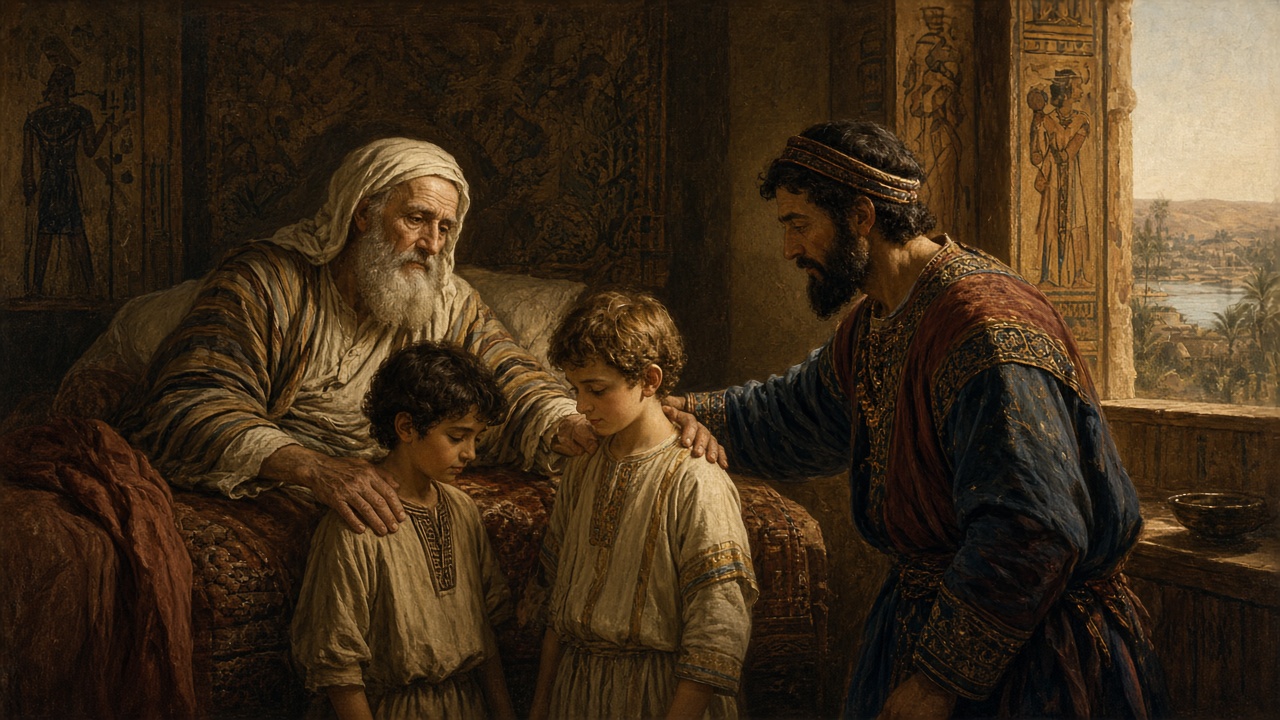
Adoption and Blessing of Ephraim and Manasseh
- Jacob reckons Joseph’s two sons, born to him in Egypt, as his own, on a level with Reuben and Simeon, Leah’s sons. Children born to Joseph after them were to remain Joseph’s, and were to be called by their brothers’ names in the territory they inherited.Sources: the Bible text itself · Manasseh (son of Joseph) · Reuben · Simeon
- Manasseh was the elder son and Ephraim the younger, born in Egypt. The name Ephraim means double fruitfulness, because God had made him fruitful in the land of his affliction. Though Israel could hardly see for age, he crossed his hands, laid his right hand on Ephraim, and insisted that the younger brother would be greater.Sources: the Bible text itself · Ephraim · Manasseh (son of Joseph)
- Jacob recalls that God Almighty appeared to him at Luz in the land of Canaan and blessed him there. Luz was the ancient name of a royal Canaanite city near Bethel, where Jacob halted and received a prophetic vision. He also remembers Rachel, Joseph’s mother, who died to his sorrow on the way back from Paddan—a name found only in this verse, for Padan-aram—and whom he buried beside the road to Ephrath, that is, Bethlehem.Sources: the Bible text itself · Luz · Paddan · Rachel
Notes written with AI assistance from open sources (Theographic Bible Metadata, CC BY-SA 4.0; Easton’s Bible Dictionary, public domain) and reviewed before publishing.
Places in this chapter
- Canaan · 32.767, 35.333 · verses 3, 4, 7, 21
- Luz · Today: Beitin · 31.923, 35.241 · verse 3
- Egypt · 30.129, 31.308 · verses 5, 9
- Bethlehem · 31.704, 35.208 · verse 7
- Ephrath · Today: Bethlehem · 31.704, 35.208 · verse 7
Only places identified with high confidence are shown (90% or more according to the scholarly sources compiled by OpenBible). Period map: DARE (Digital Atlas of the Roman Empire), CC BY 4.0; modern map: © OpenStreetMap contributors; places: OpenBible.info (CC BY 4.0).
Credits and license for this translation
Nǫ̀htsı̨̨ Nı̨̨htł'è
Dogrib: Dogrib Genesis & New Testament New Testament & Portions of Old Testament
copyright © 2009 Canadian Bible Society
Language: Dogrib
Translation by: Canadian Bible Society
Tłı̨chǫ Genesis and New Testament
About Tłı̨chǫ
Tłı̨chǫ (Dogrib) is a Na-Dene (Athabaskan) language. It is spoken by the First Nations Tłı̨chǫ people in the Northwest Territories in Canada. It has the largest number of speakers of any of the Aboriginal language communities in the NWT, and is one of the official languages of the Northwest Territories.
About This Translation
This translation includes the book of Genesis and the New Testament in Tłı̨chǫ. The first edition of the Tłı̨chǫ New Testament was published in 2003. It was a historic event, as it was the first time in more than a hundred years that a complete New Testament was published for one of the Dene First Nations in the Territories. The first edition was well received and quickly sold out. In the meantime the book of Genesis had been completed. Consequently, the 2008 reprint of the Tłı̨chǫ New Testament included Genesis.
Though this translation of the New Testament and Genesis took a total of ten years, the people who worked on it built on years of labor invested by the Tłı̨chǫ people, elders, priests and missionaries, translators, educators, and linguists. The material contained in this book was checked and approved by consultants from Wycliffe Bible Translators and the Canadian Bible Society.
If you are interested in obtaining a printed copy of this Bible, please contact the Canadian Bible Society at http://www.biblescanada.com .
Copyright Information
Dogrib Genesis and New Testament © 2003, 2008 Canadian Bible Society
The text of the Bible in Tłı̨chǫ that appears in this electronic format or website is for personal use only.
Up to five hundred (500) verses of the Bible text in any form (written, visual, electronic or audio) may be quoted without permission. The quoted verses may not be more than 50% of a complete book of the Bible, or more than 25% of the total text of the work in which they are quoted. Prior written permission must be obtained for any other use of the text. Copyright acknowledgement must in all cases appear on the title or copyright page.
For more information on copyright conditions or to apply, visit http://www.biblesociety.ca/copyright .
This translation is made available to you under the terms of the
Creative Commons Attribution-Noncommercial-No Derivatives license 4.0.
You may share and redistribute this Bible translation or extracts from it in any format, provided that:
You include the above copyright and source information.
You do not sell this work for a profit.
You do not change any of the words or punctuation of the Scriptures.
Pictures included with Scriptures and other documents on this site are licensed just for use with those Scriptures and documents.
For other uses, please contact the respective copyright owners.
2014-04-22
Source: http://ebible.org/dgrDOGNT/ · eBible.org