Genesis 44
Nǫ̀htsı̨̨ Nı̨̨htł'è · Tap a verse to see its cross-references.
Sǫǫ̀mba degoo lıbò Benjamın weɂǫhchì yìı wheɂǫ
1Joseph dǫ yegha kǫ̀-k'èdìı elı̨ı̨ sìı ts'ǫ̀ hadı, “Dǫzhìı gıɂǫhchì yìı tł'olà dàgoòɂǫǫ̀ aąle, t'aàtłǫ nageewa ha dìì-le sìı ts'ǫ̀, eyıts'ǫ hazǫǫ̀ gıtaàt'eè gısǫǫ̀mbaà degoo gıɂǫhchì wets'ǫdaà nìı̨wa. 2Eyı tł'axǫǫ̀-ı̨dè wesǫǫ̀mbaà xè sets'ǫ sǫǫ̀mba degoo lıbò gıchı nǫǫdea weɂǫhchì yìı wheɂǫǫ̀ anele,” yèhdı. Eyıt'à Joseph dàdıı sìı k'ę̀ę̀ ayį̀į̀là.
3K'omǫǫ̀dǫǫ̀ et'ıì ełechıke edetłı̨tsoa t'à nageèhde. 4Kǫ̀godeè gots'ǫ nıwà geède-le-t'ıì Joseph, dǫ yegha kǫ̀-k'èdìı elı̨ı̨ sìı ts'ǫ̀ hadı, “Eyı dǫ gık'èè-t'ıì aąde, gıt'àwhı̨ı̨tła nı̨dè gıts'ǫ̀ dıı haı̨dı, ‘Dànìghǫ naxıts'ǫ̀ nezı̨į̀ eghàlats'ı̨ı̨dà k'èxa ekǫ-le gots'ǫ̀ eghàlaahda? 5Dıı lıbò edexè naahxèe sìı sets'ǫ̀ k'àowo yet'à t'asìı edǫ hǫt'e, eyıts'ǫ yet'à nadąą̀ hok'èezǫ hǫt'e. Sets'ǫ̀ k'àowo wets'ǫ̀ sıì ekǫ-le eghàlaahda hǫt'e,’ gį̀ı̨dı ha,” Joseph edecheekeè ts'ǫ̀ hadı.
6Eyıt'à Joseph wecheekeè ełechıke ghǫ nììtła ekò, eyı yatı gots'ǫ̀ hadı. 7Hanìkò gıts'ǫ̀ hagedı, “K'àowo, dànìghǫ hanì gots'ǫ̀ goı̨de? Hanì eghàlats'eeda ha honàedı nıìle! 8Kanan nèk'e goɂǫhchì yìı sǫǫ̀mba degoo gots'į̀hɂǫǫ sìı eyı kò naxıts'ǫ̀ nìats'į̀ı̨wa ı̨lè. Eyıt'à ayìıha nets'ǫ̀ k'àowo wekǫ̀ gots'ǫ sǫǫ̀mba degoo, hanì-le-ı̨dè sǫǫ̀mba dekwoo weghǫ ets'eeɂį̀ welì? 9Gota gots'ǫ dǫ ı̨łè weɂǫhchì yìı sǫǫ̀mba degoo lıbò wheɂǫ nı̨dè ełaàwı ha, eyıts'ǫ goxı̨ hazǫǫ̀ negha eghàlats'eedaa-dǫǫ̀ ts'ı̨ı̨lı̨ ha,” gedı.
10“Tł'anǫǫ̀ naxıyatıì k'ę̀ę̀ welè,” gòhdı, “Hanìkò amìı wegòt'ǫǫ sìı segha eghàlaedaa-dǫǫ̀ elı̨ ha, weɂǫ̀ǫ̀ naxı̨ hazǫǫ̀ naahdè ha dìì-le eyıts'ǫ naxık'e nìdahoet'à ha-le,” gòhdı.
11Hazǫǫ̀ gıtaàt'eè ı̨whąą̀ edeɂǫhchì dèè k'e nègı̨ı̨wa gà gıts'ǫdaà xàı̨wa. 12Joseph wecheekeè ełek'èdaà gıɂǫhchì hazǫǫ̀ yìı k'eeta. Goı̨de ǫhdaà weɂǫhchì t'akwełǫ̀ǫ̀ ayį̀į̀là, gıchı nǫǫdea ts'ǫ̀ nèhòı̨wo ekò, Benjamın weɂǫhchì yìı lıbò wheɂǫǫ yegòhɂǫ. 13Ełechıke hanì gıchı wegòt'ǫǫ gık'èhoèhzà ts'ǫ̀et'ıì sıì gıgha dìì t'à edeɂeè tàgı̨ı̨hdla. T'asìı hazǫǫ̀ edetłı̨tsoa k'e nagı̨ı̨wa gà kǫ̀godeè ts'ǫ̀ ek'èt'à nageèhde.
14Joseph ı̨łaà edekǫ̀ wheda et'ıì Judah eyıts'ǫ wechı hazǫǫ̀ goyageède gà Joseph wenadąą̀ ı̨whąą̀ dèè k'e nàgògı̨ı̨hgè. 15Joseph gots'ǫ̀ hadı, “Dànìghǫ sets'ǫ̀ hanì eghàlaahdà? Sı̨ lanıı dǫǫ̀ sìı t'asìı deɂı̨į̀ whelaa sìı wegòhɂà ha dìì-le wek'èahsǫ-le nì?” gòhdı.
16Judah yets'ǫ̀ hadı, “K'àowo, edegha nets'ǫ̀ dàts'edı lì? Ats'ııdì whìle! Ekǫ-le hots'èhtsı̨ nıìle hanìkò dànì nets'ǫ̀ hats'edı lì? Įnę̀ę sìı ekǫ-le eghàlats'ı̨ı̨dà k'èxa Nǫ̀htsı̨ nàgǫǫhkwa hǫt'e. K'àowo, dıì goxı̨ eyıts'ǫ gochı weɂǫhchì yìı lıbò gogį̀į̀hɂǫǫ sìı negha eghàlats'eedaa-dǫǫ̀ ats'ı̨ı̨t'e,” yèhdı.
17Hanìkò Joseph gots'ǫ̀ hadı, “Į̀le, hanaxèehłe ha honàedı nıìle! Amìı selıbò weɂǫhchì yìı wheɂǫǫ sìı, ededı̨ zǫ segha eghàlaedaa-dǫǫ̀ elı̨ ha. Wedę naxı̨ hazǫǫ̀ naxıtà ts'ǫ̀ ts'èwhı̨į̀ anaahde,” gòhdı.
18Judah yets'ǫ̀ nıwà-lea nììtła, hayèhdı, “Sets'ǫ̀ k'àowo, whaà-lea ts'ǫ̀ nets'ǫ̀ gohde ası̨ı̨le. K'àowocho Faraoh wexèht'eè k'àowo nelı̨ kò sets'ǫ̀ nek'èch'a welè-le. 19K'àowo, ‘Asį̀į̀ naxıtà hanì-le-ı̨dè naxıchı gǫ̀hłı̨?’ nı̨ı̨dıì dagoı̨hke ı̨lè. 20Dıı hanèts'edı ı̨lè, ‘Gotà gǫ̀hłı̨, sıì ǫhdah hǫt'e. Eneèko whelı̨ tł'axǫǫ̀ weza gǫ̀hłı̨. Weza nǫǫdea wı̨ı̨de ełaı̨wo, eyıt'à wemǫ ts'ǫ weza ı̨łàet'ea zǫ ı̨łaà eda hǫt'e, eyıts'ǫ wetà yeghǫneètǫ,’ nèts'edı ı̨lè.
21“Eyıt'à dıı hagòı̨dı ı̨lè, ‘Sets'ǫ̀ nèweahchı, hanì-ı̨dè sı̨ xàè weehɂį̀ ha,’ gòı̨dı ı̨lè. 22Eyıt'à dıı hanèts'edı ı̨lè, ‘Eyı cheko edetà ts'ǫǫ̀ ade ha dìì. Yets'ǫǫ̀ ajà nı̨dè wetà ełaàwı ha hǫt'e,’ nèts'edı ı̨lè. 23Hanìkò k'àowo dıı hagòı̨dı ı̨lè, ‘Naxıchı nǫǫdea naxıxè ajà lenǫsıı k'achı̨ seahɂį̀ ha-le,’ gòı̨dı ı̨lè. 24Setà ts'ǫ̀ nats'eèhde ekò, dàgòı̨dıı sìı wets'ǫ̀ hats'edı ı̨lè.
25“Sìghaı̨waà hoòwo tł'axǫǫ̀ gotà gots'ǫ̀ hadı, ‘Ekǫ ts'ǫ̀ anaahde gà k'achı̨ tł'olà naahdì,’ gòhdı. 26Hanìkò hawèts'edı, ‘Ekǫ nǫǫ̀ts'edè ha dìì. Gochı nǫǫdea goxè ajà nı̨dè zǫ ekǫ nàts'edè ha. Goxè at'ı̨ lenǫsıı eyı k'àowo wets'eɂį̀ ha dìì,’ wèts'edı ı̨lè.
27“K'àowo, setà gots'ǫ̀ hadı, ‘Sets'èkeè seza nàke segha nìı̨la ı̨lè. 28Įłè sìı sets'ǫǫ̀ ajà. Tıts'aàdìı yetanı̨ı̨hdla sǫnı dehwhǫ ı̨lè. Ekò gots'ǫ naweeht'ı̨ whìle. 29Dıı seza nǫǫdea seghǫ neàhchı t'à wets'ǫ̀ hoìla agòjà nı̨dè, sedzeè nànııtì t'à sekwìghàagaà xè dèè goyìı seahtè ha,’ gotà hagòhdı ı̨lè.
30“Gotà edeza nǫǫdea dę eda ha dìì hǫt'e, eyıt'à weza gotà ts'ǫ̀ goxè nǫ̀ǫtła-le yek'èhoèhzà nı̨dè ełaàwı ha. Gotà wedzeè nànııtì t'à wekwìghàagaà xè dèè goyìı wets'ehtè ha. 32Setà weza nǫǫdea nezı̨į̀ wets'ǫ̀ nìaehtè gha yatı weghàehɂǫ ı̨lè. Wets'ǫ̀ dıı haehsı̨ ı̨lè, ‘Neza nets'ǫ̀ nawèehtı̨-le nı̨dè t'aats'ǫǫ̀ ehda gots'ǫ̀ edek'e nìdahoehɂà ha!’ setà hawèehsı̨ ı̨lè.
33“Sets'ǫ k'àowo, eyı cheko wetł'axǫǫ̀ sı̨ negha eghàlaedaa-dǫǫ̀ ehłı̨ gha jǫ wehdà. Eyı cheko edı̨ı̨de xè naetłaà awı̨ı̨le. 34Eyı cheko sexè at'ı̨-le nı̨dè dànì setà ts'ǫ̀ anahjà lì? Į̀le, hahde ha dìì! Setà hanì wedzeè nànııtì weghàehda ha segha dìì,” Judah, Joseph ts'ǫ̀ hadı.
Did you know?
The Hidden Cup and Judah's Plea
- Judah, Jacob's fourth son by Leah, speaks for the brothers and offers to remain as a slave in the boy's place so that Benjamin may return with his brothers. Easton's Bible Dictionary (1897) notes that Judah had earlier intervened to spare Joseph's life, and that he took the lead in the family's affairs, including in the appeal recorded in this chapter.Sources: Judah (patriarch) · the Bible text itself
- Benjamin was the younger of Jacob's two sons by Rachel; she died giving birth to him and called him Ben-oni, "son of my pain," before his father named him Benjamin. The brothers tell Joseph that the boy is the only son of his mother still living, and that their father believes the other was torn to pieces. They say this to Joseph himself—Rachel's elder son, loved by Jacob as the child of his old age—while still speaking to him as a lord equal to Pharaoh.Sources: Benjamin (patriarch) · Joseph (son of Jacob) · the Bible text itself
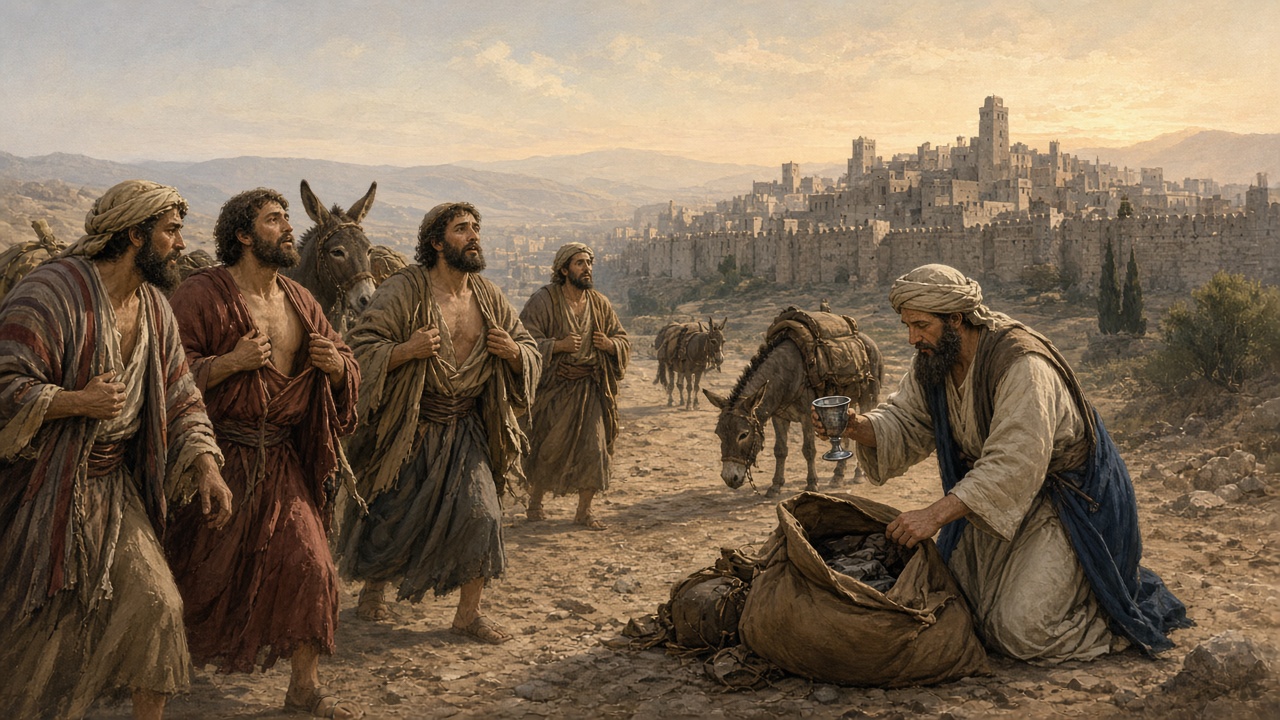
- On Joseph's orders, the steward hid Joseph's silver cup—the cup he drank from and used for divination—in Benjamin's sack, along with the silver paid for the grain. When it was found, the brothers tore their clothes and returned to the city. Joseph then asked whether they did not know that a man like him could divine the truth, although the narrative shows that he had arranged for the cup to be found.Sources: the Bible text itself
Notes written with AI assistance from open sources (Theographic Bible Metadata, CC BY-SA 4.0; Easton’s Bible Dictionary, public domain) and reviewed before publishing.
Places in this chapter
- Canaan · 32.767, 35.333 · verse 8
Only places identified with high confidence are shown (90% or more according to the scholarly sources compiled by OpenBible). Period map: DARE (Digital Atlas of the Roman Empire), CC BY 4.0; modern map: © OpenStreetMap contributors; places: OpenBible.info (CC BY 4.0).
Credits and license for this translation
Nǫ̀htsı̨̨ Nı̨̨htł'è
Dogrib: Dogrib Genesis & New Testament New Testament & Portions of Old Testament
copyright © 2009 Canadian Bible Society
Language: Dogrib
Translation by: Canadian Bible Society
Tłı̨chǫ Genesis and New Testament
About Tłı̨chǫ
Tłı̨chǫ (Dogrib) is a Na-Dene (Athabaskan) language. It is spoken by the First Nations Tłı̨chǫ people in the Northwest Territories in Canada. It has the largest number of speakers of any of the Aboriginal language communities in the NWT, and is one of the official languages of the Northwest Territories.
About This Translation
This translation includes the book of Genesis and the New Testament in Tłı̨chǫ. The first edition of the Tłı̨chǫ New Testament was published in 2003. It was a historic event, as it was the first time in more than a hundred years that a complete New Testament was published for one of the Dene First Nations in the Territories. The first edition was well received and quickly sold out. In the meantime the book of Genesis had been completed. Consequently, the 2008 reprint of the Tłı̨chǫ New Testament included Genesis.
Though this translation of the New Testament and Genesis took a total of ten years, the people who worked on it built on years of labor invested by the Tłı̨chǫ people, elders, priests and missionaries, translators, educators, and linguists. The material contained in this book was checked and approved by consultants from Wycliffe Bible Translators and the Canadian Bible Society.
If you are interested in obtaining a printed copy of this Bible, please contact the Canadian Bible Society at http://www.biblescanada.com .
Copyright Information
Dogrib Genesis and New Testament © 2003, 2008 Canadian Bible Society
The text of the Bible in Tłı̨chǫ that appears in this electronic format or website is for personal use only.
Up to five hundred (500) verses of the Bible text in any form (written, visual, electronic or audio) may be quoted without permission. The quoted verses may not be more than 50% of a complete book of the Bible, or more than 25% of the total text of the work in which they are quoted. Prior written permission must be obtained for any other use of the text. Copyright acknowledgement must in all cases appear on the title or copyright page.
For more information on copyright conditions or to apply, visit http://www.biblesociety.ca/copyright .
This translation is made available to you under the terms of the
Creative Commons Attribution-Noncommercial-No Derivatives license 4.0.
You may share and redistribute this Bible translation or extracts from it in any format, provided that:
You include the above copyright and source information.
You do not sell this work for a profit.
You do not change any of the words or punctuation of the Scriptures.
Pictures included with Scriptures and other documents on this site are licensed just for use with those Scriptures and documents.
For other uses, please contact the respective copyright owners.
2014-04-22
Source: http://ebible.org/dgrDOGNT/ · eBible.org