Genesis 4
Nǫ̀htsı̨̨ Nı̨̨htł'è · Tap a verse to see its cross-references.
Caın edechı Abel ełaı̨hwho
1Adam edets'èkeè Eve xè dètı̨ t'à wets'èkeè chekoa wets'ǫ ajà, dǫzhìa Caın wìyeh nìı̨htı̨. Wets'èkeè hadı, “Nǫ̀htsı̨ sets'àı̨dì t'à dǫzhìa nìıhtı̨,” hadı. 2Eyı tł'axǫǫ̀ Caın wechı Abel wegǫ̀hłı̨.
Negechà agejà tł'axǫǫ̀ Abel sahzǫ̀ą-k'èdìı whelı̨, eyıts'ǫ wı̨ı̨de Caın dèè k'e t'asìı dehshee dǫǫ̀ whelı̨. 3Whaà hoòwo tł'axǫǫ̀ Caın dèè gots'ǫ t'asìı dehshee mǫ̀hdaa gots'ǫ̀ K'àowo Nǫ̀htsı̨ ts'ǫ̀ yek'eehk'ǫ̀. 4Hanìkò Abel wets'ǫ sahzǫ̀ą t'akwełǫ̀ǫ̀ gıgǫ̀hłı̨ı̨ xè łegek'àa sìı gıkwǫ̀ mǫ̀hdaa Nǫ̀htsı̨ ts'ǫ̀ yek'eehk'ǫ̀. Gots'ǫ̀ K'àowo Abel ghǫ, eyıts'ǫ sahzǫ̀ą-kwǫ̀ yets'ǫ̀ yek'eehk'ǫ̀ǫ sìı ghǫ sìghà nıwǫ. 5Hanìkò Caın ghǫ, eyıts'ǫ ayìı yets'ǫ̀ yek'eehk'ǫ̀ǫ sìı ghǫ sìghà nıwǫ-le. Eyıt'à Caın sıì ìch'è, wek'èch'a k'ę̀ę̀ wègoèht'į̀.
6Eyıt'à gots'ǫ̀ K'àowo Caın ts'ǫ̀ hadı, “Dànìghǫ į̀į̀ch'è? Dànìghǫ nek'èch'a k'ę̀ę̀ nègaat'ı̨? 7Ehkw'ı k'ehoı̨ɂa nı̨dè neghǫ sìghà dehwhǫ ha-le nì? Hanìkò ehkw'ı k'ehoı̨ɂa-le nı̨dè hołı̨ı̨ negà nìdaı̨hɂa hǫt'e. Nets'ǫ̀ k'ahowo ha nıwǫ, hanìkò nı̨ sìı wets'ǫ̀ k'àı̨wo ha hǫt'e,” Nǫ̀htsı̨ yèhdı.
8Hagòjà tł'axǫǫ̀ Caın edechı ts'ǫ̀ hadı, “Dèè k'e t'asį̀ı̨ k'ełıìtło,” yèhdı. Dèè k'e k'eget'à ekò Caın hǫtsaa edechı Abel gà nàatła t'à ełaàyį̀ı̨hwho.
9Eyıt'à gots'ǫ̀ K'àowo Caın ts'ǫ̀ hadı, “Nechı Abel welaedì?” yèhdı.
“Wek'èehsǫ-le. Sechı wek'èhdìı aht'e nıìle,” Caın hadı.
10Gots'ǫ̀ K'àowo hayèhdı, “Sıì ekǫ-le eghàlaneedà. Seę̀hkw'ǫ! Nechı wedoò dèè k'e nałaètł'ıì anelà t'à neghǫ nàyaetı ha. 11Jǫ gots'ǫ ı̨daà nexè gots'eèdı hòɂǫ ha. Nechı wedoò dèè k'e nałaètł'ıì anelà t'à dıı dèè gots'ǫǫ̀ xànedeezhı ha. 12Dèè k'e eghàlaı̨da nı̨dè negha t'asìı nezı̨ı̨ xàehshe ha nıìle. Dıı nèk'e nexè ts'èwhı̨į̀ hòɂǫ ha nıìle, ekìı t'aats'ǫǫ̀ t'asį̀ı̨ k'ehoı̨hwho ha,” Nǫ̀htsı̨ hayèhdı.
13Caın Nǫ̀htsı̨ ts'ǫ̀ hadı, “Sıì hoìla seghàhoneeɂǫ t'à segha dìì. 14Dıı dzęę̀ k'e dıı dèè gots'ǫǫ̀ xàseneèzhì, sets'àądı gha nets'ǫ̀ ahde ha dìì asèneelà. Dıı nèk'e sexè ts'èwhı̨į̀ hòɂǫ ha-le t'à hazǫǫ̀ nèk'e sek'eèhoowo ha, eyıt'à amìı segòhɂǫǫ sìı ełaàsèhwhı ha,” Caın hadı.
15Hanìkò gots'ǫ̀ K'àowo Caın ts'ǫ̀ hadı, “Hanì ha nıìle! Amìı Caın ełaı̨hwhoo sìı łǫ̀hdı̨ ts'ǫ̀ ek'èt'à weghàhòt'à ha,” Nǫ̀htsı̨ hadı. Amìı yegòhɂǫǫ sìı ełaàyèhwhı ch'à Caın wek'e t'asìı wheɂǫǫ̀ ayį̀į̀là. 16Eyıt'à Caın Nǫ̀htsı̨ ts'ǫǫ̀ naèhtła. Eden nèk'e sa kàɂàa ts'ǫnèe, Nod gòyeh ekǫ nàı̨dè.
17Caın edets'èkeè t'àı̨tè t'à wets'èkeè chekoa wets'ǫ ajà, eyıts'ǫ bebìa nìı̨htı̨, Enoch wìyeh. Ekò k'e Caın kǫ̀godeè gòhtsı̨, weza wıızì k'ę̀ę̀ Enoch gòyeh ayį̀į̀là. 18Enoch weza Irad wegǫ̀hłı̨, Irad, Mehujel wetà hǫt'e, Mehujel, Metushel wetà hǫt'e, eyıts'ǫ Metushel, Lamek wetà hǫt'e.
19Lamek ts'èko nàke xè hoet'ı̨ ı̨lè, ı̨łè Adah wìyeh, eyıts'ǫ ı̨łè Zılah wìyeh. 20Wets'èkeè Adah, Jabal nìı̨htı̨. Dǫ nı̨hbàa yìı nàgedèe xè tıts'aàdìı k'ègedìı dǫǫ̀ gha gocho elı̨. 21Jabal wechı sìı Jubal wìyeh. Dǫ tł'ık'eetı̨ı̨ lanıı k'ègeezǫǫ eyıts'ǫ dechı̨shì t'à sǫnàgedèe k'ègeezǫǫ sìı gha gocho elı̨. Tł'ık'eetı̨ı̨ lanıı|src="BK00175B.TIF" size="span" ref="4.21" 22Wets'èkeè Zılah ededı̨ sı weza gǫ̀hłı̨, Tubal-Caın wìyeh. Ededı̨ sìı satsǫ̀ dekwoo eyıts'ǫ satsǫ̀ dezhìı t'à wet'à eghàlats'eedaa xàɂaa yàèhtsı̨. Tubal-Caın weba Naamah wìyeh.
23Lamek edets'èkeè į̀łah gots'ǫ̀ hadı,
“Adah, Zılah, Lamek wets'èkeè aahłı̨ı̨ sìı seàhkw'ǫ.
Dǫ ı̨łè naka sèhtsı̨ t'à ełaàwìıhwho.
Cheko hoìla asį̀į̀là t'à ełaàwìıhwho hǫt'e.
24Caın dǫ t'asayį̀į̀là nı̨dè eyı dǫ łǫ̀hdı̨ ts'ǫ̀ weghàhòt'à ha,
hanìkò Lamek dǫ t'asayį̀į̀là nı̨dè eyı dǫ łǫ̀hdı̨ènǫ-daats'ǫ̀-łǫ̀hdı̨ (77) ts'ǫ̀ weghàhòt'à ha hǫt'e,” edets'èkeè gòhdı.
25Adam k'achı̨ edets'èkeè t'àı̨tè t'à wets'èkeè Eve k'achı̨ dǫzhìa nìı̨htı̨, Set wìyeh ayį̀į̀là. Eve hadı, “Caın, Abel ełaı̨hwho t'à wetł'axǫǫ̀ Nǫ̀htsı̨ k'achı̨ chekoa saı̨htı̨,” hadı. 26Set ededı̨ sı weza gǫ̀hłı̨, Enosh wìyeh ayį̀į̀là.
Ekìıyeè k'e sìı dǫ gots'ǫ̀ K'àowo ts'ǫ̀ yagehtıì agejà.
Did you know?
Cain, Abel, and Life East of Eden
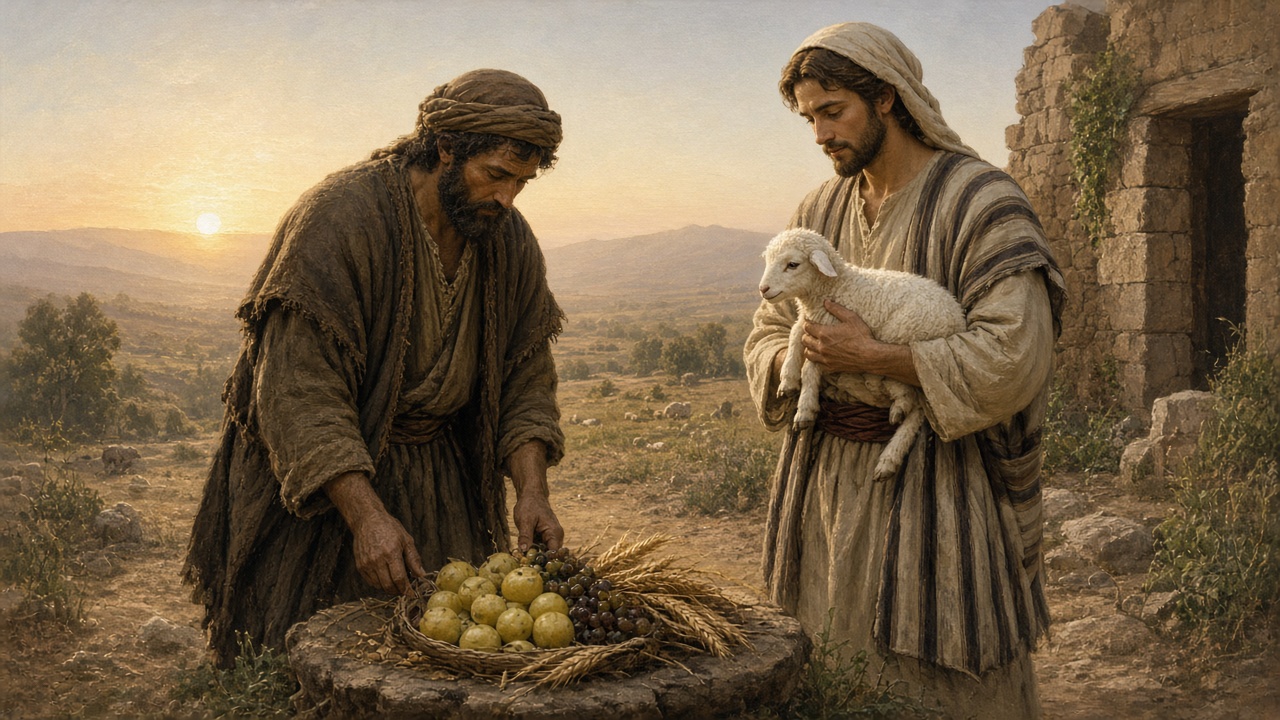
- Abel’s Hebrew name means “breath” or “vanity.” He kept sheep, while his brother Cain tilled the soil: Abel brought the best portions of the firstborn of his flock, and Cain brought fruit of the ground. Easton's Bible Dictionary (1897) reads the phrase “in process of time” (margin, “at the end of days”) as probably referring to the Sabbath.Sources: Abel · Cain · the Bible text itself
- After Abel’s death, Cain settled in the land of Nod, east of Eden, a name meaning exile, wandering, or unrest. There he built a city and named it after his son Enoch. Easton's Bible Dictionary notes that this is the first city mentioned in Scripture.Sources: Nod · Enoch (son of Cain) · the Bible text itself
- Lamech, fifth in descent from Cain, married two women, Adah and Zillah. Easton's Bible Dictionary calls his address to them the only extant example of antediluvian poetry, sometimes known as “Lamech’s sword-song.” Their children are tied to early ways of life: Jabal with tents and livestock, Jubal with the harp and flute, and Tubal-cain with forging bronze and iron.Sources: Lamech (descendant of Cain) · Adah (wife of Lamech) · Zillah · the Bible text itself
Notes written with AI assistance from open sources (Theographic Bible Metadata, CC BY-SA 4.0; Easton’s Bible Dictionary, public domain) and reviewed before publishing.
Credits and license for this translation
Nǫ̀htsı̨̨ Nı̨̨htł'è
Dogrib: Dogrib Genesis & New Testament New Testament & Portions of Old Testament
copyright © 2009 Canadian Bible Society
Language: Dogrib
Translation by: Canadian Bible Society
Tłı̨chǫ Genesis and New Testament
About Tłı̨chǫ
Tłı̨chǫ (Dogrib) is a Na-Dene (Athabaskan) language. It is spoken by the First Nations Tłı̨chǫ people in the Northwest Territories in Canada. It has the largest number of speakers of any of the Aboriginal language communities in the NWT, and is one of the official languages of the Northwest Territories.
About This Translation
This translation includes the book of Genesis and the New Testament in Tłı̨chǫ. The first edition of the Tłı̨chǫ New Testament was published in 2003. It was a historic event, as it was the first time in more than a hundred years that a complete New Testament was published for one of the Dene First Nations in the Territories. The first edition was well received and quickly sold out. In the meantime the book of Genesis had been completed. Consequently, the 2008 reprint of the Tłı̨chǫ New Testament included Genesis.
Though this translation of the New Testament and Genesis took a total of ten years, the people who worked on it built on years of labor invested by the Tłı̨chǫ people, elders, priests and missionaries, translators, educators, and linguists. The material contained in this book was checked and approved by consultants from Wycliffe Bible Translators and the Canadian Bible Society.
If you are interested in obtaining a printed copy of this Bible, please contact the Canadian Bible Society at http://www.biblescanada.com .
Copyright Information
Dogrib Genesis and New Testament © 2003, 2008 Canadian Bible Society
The text of the Bible in Tłı̨chǫ that appears in this electronic format or website is for personal use only.
Up to five hundred (500) verses of the Bible text in any form (written, visual, electronic or audio) may be quoted without permission. The quoted verses may not be more than 50% of a complete book of the Bible, or more than 25% of the total text of the work in which they are quoted. Prior written permission must be obtained for any other use of the text. Copyright acknowledgement must in all cases appear on the title or copyright page.
For more information on copyright conditions or to apply, visit http://www.biblesociety.ca/copyright .
This translation is made available to you under the terms of the
Creative Commons Attribution-Noncommercial-No Derivatives license 4.0.
You may share and redistribute this Bible translation or extracts from it in any format, provided that:
You include the above copyright and source information.
You do not sell this work for a profit.
You do not change any of the words or punctuation of the Scriptures.
Pictures included with Scriptures and other documents on this site are licensed just for use with those Scriptures and documents.
For other uses, please contact the respective copyright owners.
2014-04-22
Source: http://ebible.org/dgrDOGNT/ · eBible.org