Genesis 36
Nǫ̀htsı̨̨ Nı̨̨htł'è · Tap a verse to see its cross-references.
Esau wets'ıhɂǫ̀ǫ-dǫǫ̀
1Esau (Edom sı wìyeh) wegodıì dıı hanì dek'eèhtł'è:
2Esau, Kanan got'ı̨į̀ gots'ǫ ts'èko gòį̀hchìı sìı dıı hagìyeh: Het got'ı̨į̀ Elon wetì Adah, eyıts'ǫ Anah wetì Oholıbamah, Hıv got'ı̨į̀ Zıbeyon wekwı sı hǫt'e. 3Eyıts'ǫ Ishmael wetì Basamat, Nebayot wedè.
4Adah yegha Elıfaz nìı̨htı̨, Basamat yegha Ruyel nìı̨htı̨, 5eyıts'ǫ Oholıbamah yegha chekoa taı nìı̨la: Jeyush, Jalam eyıts'ǫ Korah. Esau weza hageètłǫǫ Kanan nèk'e gıgǫ̀hłı̨.
6Esau, edets'èkeè, edeza, edetì eyıts'ǫ dǫ hazǫǫ̀ gıxè nàdèe sìı xè tàèhtła. Edets'ǫ tıts'aàdìı eyıts'ǫ t'asìı hazǫǫ̀ Kanan nèk'e gots'ǫ ełèyį̀ı̨laa sìı edexè ayį̀į̀là gà edechı Jacob ts'ǫǫ̀ nıwà eyıì-le nèk'e ts'ǫ̀ tàèhtła. 7Ełechıke gıts'ǫ tıts'aàdìı sıì łǫ ajà t'à ełexè nàgedè ha dìì agòjà. Gıts'ǫ tıts'aàdìı shègezhe ha gıgha gòɂǫ-le agòjà. 8Eyıt'à Esau (Edom sı wìyeh) shìhta Seyır nèk'e nàdè ajà.
9Esau, Edom got'ı̨į̀ gıcho hǫt'e, wets'ıhɂǫ̀ǫ-dǫǫ̀ shìhta Seyır nèk'e nàgedèe sìı dıı gıgodıì hǫt'e:
10Dıı sìı Esau weza agı̨ı̨t'e:
Elıfaz, Esau wets'èkeè Adah weza hǫt'e, eyıts'ǫ Ruyel, Esau wets'èkeè Basamat weza hǫt'e.
11Dıı sìı Elıfaz weza agı̨ı̨t'e:
Teman, Omar, Zefo, Gatam eyıts'ǫ Kenaz.
12Elıfaz wets'èkeè eyıì-le Tıma wìyeh sìı yeza Amalek nìı̨htı̨. Eyı hazǫǫ̀ sìı Esau wets'èkeè Adah wechaà agı̨ı̨t'e.
13Dıı sìı Ruyel weza agı̨ı̨t'e:
Nahat, Zerah, Shamah eyıts'ǫ Mızah. Eyı sìı Esau wets'èkeè Basamat wechaà agı̨ı̨t'e.
14Esau wets'èkeè Oholıbamah (Anah wetì eyıts'ǫ Zıbeyon wekwı sìı) Esau gha dǫzhìı taı nìı̨la:
Jeyush, Jalam eyıts'ǫ Korah gìyeh.
15Dıı sìı Esau wets'ıhɂǫ̀ǫ-dǫǫ̀ ts'ǫ k'àowo gı̨ı̨lı̨ı̨ agı̨ı̨t'e:
Esau weza ǫhdaà Elıfaz weza dıı hagìyeh:
Teman, Omar, Zefo, Kenaz, 16Korah, Gatam eyıts'ǫ Amalek. Eyı dǫ haàtłǫǫ sìı Edom nèk'e ts'ǫ Elıfaz weza agı̨ı̨t'e. Eyı sìı Esau wets'èkeè Adah wechaà agı̨ı̨t'e.
17Esau weza Ruyel dıı weza agı̨ı̨t'e:
Nahat, Zerah, Shamah, eyıts'ǫ Mızah. Eyı dǫ dı̨ edèot'ı̨ gha k'àowo gı̨ı̨lı̨ı̨ sìı Edom nèk'e ts'ǫ Ruyel wets'ıhɂǫ̀ǫ-dǫǫ̀ agı̨ı̨t'e. Esau wets'èkeè Basamat wechaà agı̨ı̨t'e.
18Esau wets'èkeè Oholıbamah dıı weza agı̨ı̨t'e:
Jeyush, Jalam eyıts'ǫ Korah. Eyı dǫ taı edèot'ı̨ gha k'àowo gı̨ı̨lı̨ı̨ sìı Anah wetì Oholıbamah wets'ıhɂǫ̀ǫ-dǫǫ̀ agı̨ı̨t'e.
19Eyı dǫ hageètłǫǫ sìı Esau (Edom sı wìyeh) weza agı̨ı̨t'e eyıts'ǫ edèot'ı̨ gha k'àowo gı̨ı̨lı̨.
20Horı got'ı̨į̀ Seyır wìyeh sìı weza eyı nèk'e nàgedè ı̨lè. Dıı Seyır weza agı̨ı̨t'e:
Lotan, Shobal, Zıbeyon, Anah, 21Dıshon, Ezer, eyıts'ǫ Dıshan. Eyı dǫ łǫ̀hdı̨ sìı edèot'ı̨ gha k'àowo gı̨ı̨lı̨.
22Lotan weza dıı hagìyeh:
Horı eyıts'ǫ Homan. Lotan wedè Tıma wìyeh.
23Shobal weza dıı hagìyeh:
Alvan, Manahat, Ebal, Shefo eyıts'ǫ Onam.
24Zıbeyon weza nàke dıı hagìyeh:
Ayah eyıts'ǫ Anah. Anah, t'asį̀ı̨ ekìı-ka nèk'e edetà Zıbeyon ts'ǫ tłı̨tsoa k'èdì t'à dèè goyìı gots'ǫ tı whekǫ̀ǫ xàewìı k'è yegòhɂǫ ı̨lèe, eyı hǫt'e.
25Anah weza Dıshon wìyeh, eyıts'ǫ wetì Oholıbamah wìyeh.
26Dıı sìı Dıshon weza agı̨ı̨t'e:
Hemdan, Eshban, Itran eyıts'ǫ Keran.
27Dıı sìı Ezer weza agı̨ı̨t'e:
Bılan, Zavan eyıts'ǫ Akan.
28Dıı sìı Dıshan weza agı̨ı̨t'e:
Uz eyıts'ǫ Aran.
29Dıı sìı Horı got'ı̨į̀ gha k'àowo gı̨ı̨lı̨:
Lotan, Shobal, Zıbeyon, Anah, 30Dıshon, Ezer eyıts'ǫ Dıshan. Seyır nèk'e edèot'ı̨ gha k'àowo gı̨ı̨lı̨ı̨ sìı k'ę̀ę̀ Horı got'ı̨į̀ gıızì gǫ̀hłı̨ hǫt'e.
Edom got'ı̨į̀ k'àowocho gı̨ı̨lı̨ı̨
31Israel got'ı̨į̀ ts'ǫ k'àowocho gòı̨lè kwe Edom nèk'e k'àowocho gı̨ı̨lèe sìı dıı hagìyeh:
32Beyor weza Bela Edom nèk'e k'àowocho ı̨lè. Wets'ǫ kǫ̀godeè Dınabah gòyeh.
33Bela ełaı̨wo tł'axǫǫ̀ kǫ̀ta Bozrah gots'ǫ dǫ Zerah weza Jobab yetł'axǫǫ̀ k'àowocho whelı̨.
34Jobab ełaı̨wo tł'axǫǫ̀ Teman got'ı̨į̀ gınèk'e gots'ǫ dǫ Husham yetł'axǫǫ̀ k'àowocho whelı̨.
35Husham ełaı̨wo tł'axǫǫ̀ Bedad weza Hadad yetł'axǫǫ̀ k'àowocho whelı̨. Hadad, Moab nèk'e ełegegǫ t'à Mıdıyan got'ı̨į̀ goghǫèhnǫ ı̨lè. Wets'ǫ kǫ̀godeè Avıt gòyeh.
36Hadad ełaı̨wo tł'axǫǫ̀ Masekah nèk'e gots'ǫ Samlah, yetł'axǫǫ̀ k'àowocho whelı̨.
37Samlah ełaı̨wo tł'axǫǫ̀ deh gà kǫ̀ta Rehobot gots'ǫ dǫ Shayul yetł'axǫǫ̀ k'àowocho whelı̨.
38Shayul ełaı̨wo tł'axǫǫ̀ Akbor weza Bayal-Hanan yetł'axǫǫ̀ k'àowocho whelı̨.
39Akbor weza Bayal-Hanan ełaı̨wo tł'axǫǫ̀ Hadad yetł'axǫǫ̀ k'àowocho whelı̨. Wets'ǫ kǫ̀godeè Payu gòyeh, wets'èkeè Metabel wìyeh, Matreb wetì hǫt'e eyıts'ǫ Mezahab wesah hǫt'e.
40Esau wets'ıhɂǫ̀ǫ-dǫǫ̀ gha k'àowo gı̨ı̨lı̨ı̨ sìı dıı hagìyeh: Tıma, Alvah, Jetet, 41Oholıbamah, Elah, Pınon, 42Kenaz, Teman, Mıbzar, 43Magdel eyıts'ǫ Iram. Eyı dǫ k'àowo gı̨ı̨lı̨ı̨ sìı Edom got'ı̨į̀ gıcho gı̨ı̨lè. Eyı nèk'e edı̨į̀ nàgedèe sìı gıızì k'ę̀ę̀ gıkǫ̀ta yàgòla.
Eyı dǫ Esau Edom got'ı̨į̀ gıcho hǫt'e.
Did you know?
Esau, Father of the Edomites
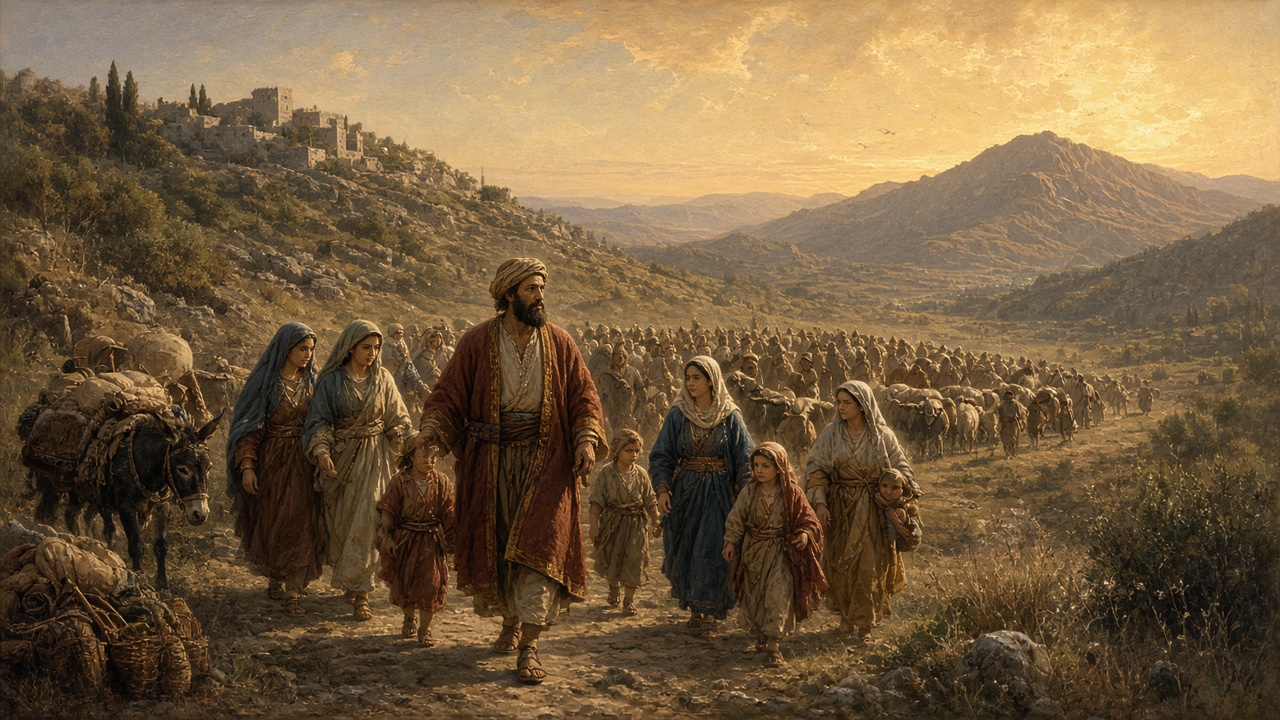
- Genesis 36 is the family record of Esau, also called Edom, a name meaning “red,” linked to the red lentil stew for which he sold his birthright. Because his household and Jacob’s had more livestock than the land could support together, Esau left Canaan and settled in the mountainous region of Seir, east of the Arabah, which became the land of Edom.Sources: the Bible text itself · Esau (Edom) · Seir · Edom
- Easton's Bible Dictionary (1897) notes that Esau’s three wives receive different names in this genealogy from those in the earlier narrative. Adah, daughter of Elon the Hittite, is also called Bashemath; Basemath, daughter of Ishmael, is also called Mahalath; and the wife identified as the daughter of Beeri the Hittite appears here as Oholibamah, daughter of Anah and granddaughter of Zibeon the Hivite.Sources: Bashemath · Adah · Aholibamah · the Bible text itself
- Mount Seir was first occupied by the Horites, whom the Edomites later drove out, yet this chapter still lists the Horite chiefs in the land of Edom. It also names kings who reigned in Edom before any king reigned over the Israelites, including Bela, whose city was Dinhabah, and Jobab of Bozrah, a city later mentioned by the prophets.Sources: the Bible text itself · Seir · Dinhabah · Bozrah
Notes written with AI assistance from open sources (Theographic Bible Metadata, CC BY-SA 4.0; Easton’s Bible Dictionary, public domain) and reviewed before publishing.
Places in this chapter
- Canaan · 32.767, 35.333 · verses 2, 5, 6
- Edom · 30.746, 35.604 · verses 9, 16, 17, 20, 21, 31, 32, 40, 43
- Midian · 28.495, 35.012 · verse 35
- Moab · Today: Moab 1 · 31.181, 35.701 · verse 35
Only places identified with high confidence are shown (90% or more according to the scholarly sources compiled by OpenBible). Period map: DARE (Digital Atlas of the Roman Empire), CC BY 4.0; modern map: © OpenStreetMap contributors; places: OpenBible.info (CC BY 4.0).
Credits and license for this translation
Nǫ̀htsı̨̨ Nı̨̨htł'è
Dogrib: Dogrib Genesis & New Testament New Testament & Portions of Old Testament
copyright © 2009 Canadian Bible Society
Language: Dogrib
Translation by: Canadian Bible Society
Tłı̨chǫ Genesis and New Testament
About Tłı̨chǫ
Tłı̨chǫ (Dogrib) is a Na-Dene (Athabaskan) language. It is spoken by the First Nations Tłı̨chǫ people in the Northwest Territories in Canada. It has the largest number of speakers of any of the Aboriginal language communities in the NWT, and is one of the official languages of the Northwest Territories.
About This Translation
This translation includes the book of Genesis and the New Testament in Tłı̨chǫ. The first edition of the Tłı̨chǫ New Testament was published in 2003. It was a historic event, as it was the first time in more than a hundred years that a complete New Testament was published for one of the Dene First Nations in the Territories. The first edition was well received and quickly sold out. In the meantime the book of Genesis had been completed. Consequently, the 2008 reprint of the Tłı̨chǫ New Testament included Genesis.
Though this translation of the New Testament and Genesis took a total of ten years, the people who worked on it built on years of labor invested by the Tłı̨chǫ people, elders, priests and missionaries, translators, educators, and linguists. The material contained in this book was checked and approved by consultants from Wycliffe Bible Translators and the Canadian Bible Society.
If you are interested in obtaining a printed copy of this Bible, please contact the Canadian Bible Society at http://www.biblescanada.com .
Copyright Information
Dogrib Genesis and New Testament © 2003, 2008 Canadian Bible Society
The text of the Bible in Tłı̨chǫ that appears in this electronic format or website is for personal use only.
Up to five hundred (500) verses of the Bible text in any form (written, visual, electronic or audio) may be quoted without permission. The quoted verses may not be more than 50% of a complete book of the Bible, or more than 25% of the total text of the work in which they are quoted. Prior written permission must be obtained for any other use of the text. Copyright acknowledgement must in all cases appear on the title or copyright page.
For more information on copyright conditions or to apply, visit http://www.biblesociety.ca/copyright .
This translation is made available to you under the terms of the
Creative Commons Attribution-Noncommercial-No Derivatives license 4.0.
You may share and redistribute this Bible translation or extracts from it in any format, provided that:
You include the above copyright and source information.
You do not sell this work for a profit.
You do not change any of the words or punctuation of the Scriptures.
Pictures included with Scriptures and other documents on this site are licensed just for use with those Scriptures and documents.
For other uses, please contact the respective copyright owners.
2014-04-22
Source: http://ebible.org/dgrDOGNT/ · eBible.org