Genesis 28
Nǫ̀htsı̨̨ Nı̨̨htł'è · Tap a verse to see its cross-references.
1Eyıt'à Isaac edeza Jacob kayaı̨htı. Naetła kwe yatı nezı̨ı̨ yàı̨ɂǫ, dıı hayèhdı, “Jǫ Kanan got'ı̨į̀ gots'ǫ ts'èko į̀hchı-le. 2Dıì-t'ıì Padan-Aram nèk'e ts'ǫ̀ aąde. Nemǫ wetà Betuyel wekǫ̀ ts'ǫ̀ aąde. Ekǫ gots'ǫ nemǫ wı̨ı̨de Laban wetìke gots'ǫ ts'èko edegha į̀hchı. 3Nǫ̀htsı̨ t'asìı wegha dìì-le sìı nexè sìghà ayııle, eyıts'ǫ dǫ xàgeèɂaa łǫ nets'ǫ xàhohwhıì ayııle. 4Abraham ts'ǫ̀ dànì xàyaı̨htı ı̨lèe sìı nı̨ eyıts'ǫ nets'ıhɂǫ̀ǫ-dǫǫ̀ wek'ę̀ę̀ gıxè sìghà hòɂǫǫ̀ ayııle. Dıı dèè k'e xàhtǫ lanì nàądèe sìı wets'ǫ̀ k'àı̨woò awı̨ı̨de. Dıı dèè Nǫ̀htsı̨ Abraham ghàyı̨ı̨ɂǫ ı̨lè,” Isaac hadıì Jacob k'eèyaı̨htı. 5Eyı tł'axǫǫ̀ Isaac edeza Jacob ekǫ ts'ǫ̀ ayį̀į̀là. Eyıt'à Padan-Aram nèk'e Aram got'ı̨į̀ Betuyel weza Laban ts'ǫ̀ ajà. Laban, Rebekah wı̨ı̨de hǫt'e, eyıts'ǫ Rebekah, Jacob eyıts'ǫ Esau gımǫ hǫt'e.
6Isaac, Jacob Padan-Aram nèk'e gots'ǫ ts'èko ìhchı yèhdıì yatı nezı̨ı̨ yeghàı̨ɂǫ xè ekǫ ts'ǫ̀ yeèhɂà eyıts'ǫ “Kanan got'ı̨į̀ gots'ǫ ts'èko į̀hchı ha-le,” yèhdıı sìı Esau yeghǫ ıìkw'o. 7Jacob edetà eyıts'ǫ edemǫ k'èı̨t'e t'à Padan-Aram nèk'e ts'ǫ̀ ajà, eyı sı yeghǫ ıìkw'o. 8Esau, Kanan got'ı̨į̀ gots'ǫ ts'èko wetà wegha nezı̨-le, yek'èhoèhzà t'à, 9t'akwe gots'ǫ wets'èkeè gǫ̀hłı̨ kò Ishmael wetì Mahalat xè honìdza. Mahalat, Abraham weza Ishmael wetì hǫt'e, eyıts'ǫ Nebayot wedè hǫt'e.
Jacob nàwhetı̨
10Jacob Bersheba nèk'e gots'ǫ naèhtła, kǫ̀ta Haran ts'ǫ̀ dèhtła. 11Dzę ghàà k'eeda tł'axǫǫ̀ sa nàı̨ɂǫ t'à t'asį̀ı̨ dèè k'e detè ha nıwǫ. Eyı dèè k'e kwe whelaa sìı ı̨łè neyıìchì gà edekwì tł'a nèyeechı gà dètı̨. 12Eyı toò nàwhetı̨. Dèè gots'ǫ yak'e ts'ǫ̀ dechı̨ehka dekı̨ı̨ɂà ghǫ nàwhetı̨. Gots'ǫ̀ K'àowo weyak'eet'ı̨į̀ dechı̨ehka k'e ı̨dòo dekegı̨į̀de eyıts'ǫ ı̨zhıì hodàgeède. 13Įdòo dechı̨ehka weka gots'ǫ̀ K'àowo nàwo, yets'ǫ̀ dıı hadı, “Nets'ǫ̀ K'àowo aht'e, necho Abraham Wenǫ̀htsı̨ aht'e, eyıts'ǫ Isaac Wenǫ̀htsı̨ aht'e. Nı̨ eyıts'ǫ nets'ıhɂǫ̀ǫ-dǫǫ̀ dıı dèè wek'e wheętı̨ı̨ sìı naxıghàehɂà ha. 14Nets'ıhɂǫ̀ǫ-dǫǫ̀ sìı dèè k'e ehtł'è whetł'ıı xètłǫ lagede ha. Hazǫǫ̀ nemǫǫ̀ goòɂà ts'ǫ̀ nenèè gǫchà agode ha. Nı̨ eyıts'ǫ nets'ıhɂǫ̀ǫ-dǫǫ̀ gıts'ıhɂǫ̀ dıı nèk'e dǫ hazǫǫ̀ xàɂaa xè sìghà hòɂǫǫ̀ agode ha. 15Nexè aht'e ha. Edı̨į̀ ts'ǫ̀ k'ehoı̨hwhoo sìı nexoehdı ha, eyıts'ǫ jǫ nèk'e ts'ǫ̀ naneehchı ha. Seyatıì neghàehɂǫǫ sìı wek'ę̀ę̀ hòèhtsı̨ gots'ǫ̀ nets'ǫǫ̀ anahde ha-le,” yèhdı.
16Jacob ts'ı̨ı̨wo ekò hanıwǫ, “Ehkw'ı t'à gots'ǫ̀ K'àowo jǫ ts'ǫ̀ èlı̨ hǫt'e nǫǫ̀!” edets'ǫ̀ hanıwǫ. 17Gots'ǫ̀ K'àowo yegà nàwo ghǫ nàwhetı̨ t'à dejı̨į̀ lajà, hadı, “Jǫ agǫ̀ht'ee sìı enıìyah lagǫ̀ht'e! Xàè Nǫ̀htsı̨ wekǫ̀ agǫ̀ht'e! Yak'e ts'ǫ̀ goyagoòɂà agǫ̀ht'e,” hadı.
18K'omǫǫ̀dǫǫ̀ et'ıì Jacob kwe k'e kwìhɂǫ ı̨lèe sìı neyıìchı gà nàchı̨į̀ɂaà ayį̀į̀là gà tłeh łekǫǫ yek'e nałaèhtł'ı. 19Eyı dèe sìı Bethel wìyeh ayį̀į̀là. T'akwełǫ̀ǫ̀ eyı kǫ̀ta gòɂǫǫ sìı Luz wìyeh ı̨lè.
20Eyı tł'axǫǫ̀ Jacob Nǫ̀htsı̨ nadąą̀ yatı nàtsoo whehtsı̨, hadı, “Nǫ̀htsı̨ sexè at'ı̨ nı̨dè, t'aa ts'ǫ̀ sek'ehowoo sìı sexoehdı nı̨dè, eyıts'ǫ shèhtı̨ ha seghàɂeedı xè goht'ǫ yìı whıhdaa seghàyele t'à setà wekǫ̀ ts'ǫ̀ anasį̀į̀là nı̨dè Senǫ̀htsı̨ elı̨ ha. 22Eyıts'ǫ dıı kwe nàıhgèe sìı Nǫ̀htsı̨ ts'ǫ̀ yats'ehtıı k'è gòɂǫ ha, eyıts'ǫ t'asìı hazǫǫ̀ seghàyelee sìı wets'ǫ hoònǫ-ı̨łè Nǫ̀htsı̨ ghàehłe ha,” Jacob hadı, yatı nàtsoo whehtsı̨.
Did you know?
Jacob's Journey and Dream at Bethel
- Isaac sent Jacob from Beersheba to Paddan-aram to take a wife from the daughters of Laban, his mother Rebekah's brother, rather than from the Canaanite women. Paddan-aram, called the plain of Aram, is commonly regarded as the Mesopotamian district around Haran, where Laban lived; Haran, also called the city of Nahor, was where Abraham stayed after leaving Ur until his father Terah died.Sources: the Bible text itself · Paddan-aram · Haran · Laban
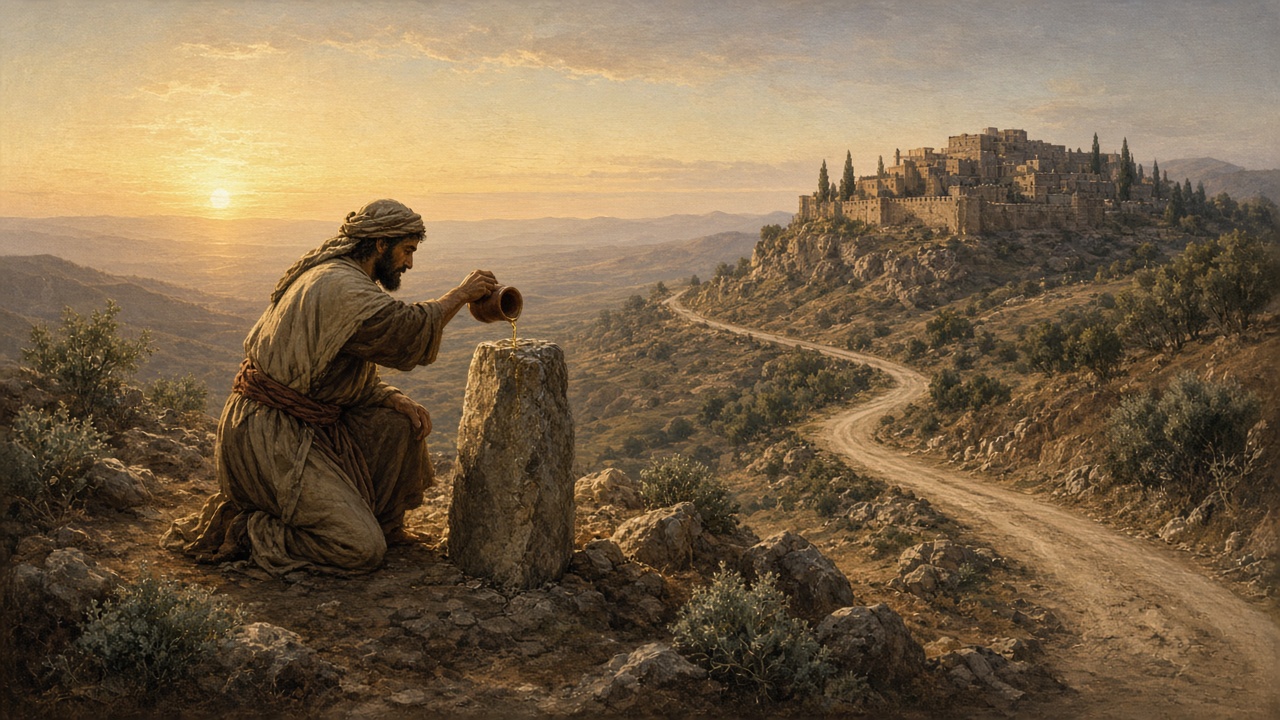
- The place where Jacob dreamed, set up as a pillar the stone he had put under his head, and poured oil on it was the royal Canaanite city of Luz; he renamed it Bethel. Easton's Bible Dictionary (1897) locates Bethel in central Palestine, about ten miles north of Jerusalem, and notes that the name was at first apparently given to a sanctuary in the neighborhood of Luz, and was not given to the city itself until after the tribe of Ephraim conquered it.Sources: the Bible text itself · Luz · Bethel (of Palestine)
- When Esau learned that Isaac had blessed Jacob and ordered him not to marry a Canaanite woman, he went to Ishmael and married Mahalath, sister of Nebaioth and daughter of Abraham's son Ishmael, in addition to the wives he already had. Easton's Bible Dictionary (1897) also calls her Bashemath and notes that Esau's three wives receive different names in the Edomite genealogy of Genesis 36 from those given in the narrative of Genesis 26 and 28.Sources: the Bible text itself · Bashemath
Notes written with AI assistance from open sources (Theographic Bible Metadata, CC BY-SA 4.0; Easton’s Bible Dictionary, public domain) and reviewed before publishing.
Places in this chapter
- Canaan · 32.767, 35.333 · verses 1, 6, 8
- Haran · Today: Harran · 36.864, 39.033 · verse 10
- Luz · Today: Beitin · 31.923, 35.241 · verse 19
Only places identified with high confidence are shown (90% or more according to the scholarly sources compiled by OpenBible). Period map: DARE (Digital Atlas of the Roman Empire), CC BY 4.0; modern map: © OpenStreetMap contributors; places: OpenBible.info (CC BY 4.0).
Credits and license for this translation
Nǫ̀htsı̨̨ Nı̨̨htł'è
Dogrib: Dogrib Genesis & New Testament New Testament & Portions of Old Testament
copyright © 2009 Canadian Bible Society
Language: Dogrib
Translation by: Canadian Bible Society
Tłı̨chǫ Genesis and New Testament
About Tłı̨chǫ
Tłı̨chǫ (Dogrib) is a Na-Dene (Athabaskan) language. It is spoken by the First Nations Tłı̨chǫ people in the Northwest Territories in Canada. It has the largest number of speakers of any of the Aboriginal language communities in the NWT, and is one of the official languages of the Northwest Territories.
About This Translation
This translation includes the book of Genesis and the New Testament in Tłı̨chǫ. The first edition of the Tłı̨chǫ New Testament was published in 2003. It was a historic event, as it was the first time in more than a hundred years that a complete New Testament was published for one of the Dene First Nations in the Territories. The first edition was well received and quickly sold out. In the meantime the book of Genesis had been completed. Consequently, the 2008 reprint of the Tłı̨chǫ New Testament included Genesis.
Though this translation of the New Testament and Genesis took a total of ten years, the people who worked on it built on years of labor invested by the Tłı̨chǫ people, elders, priests and missionaries, translators, educators, and linguists. The material contained in this book was checked and approved by consultants from Wycliffe Bible Translators and the Canadian Bible Society.
If you are interested in obtaining a printed copy of this Bible, please contact the Canadian Bible Society at http://www.biblescanada.com .
Copyright Information
Dogrib Genesis and New Testament © 2003, 2008 Canadian Bible Society
The text of the Bible in Tłı̨chǫ that appears in this electronic format or website is for personal use only.
Up to five hundred (500) verses of the Bible text in any form (written, visual, electronic or audio) may be quoted without permission. The quoted verses may not be more than 50% of a complete book of the Bible, or more than 25% of the total text of the work in which they are quoted. Prior written permission must be obtained for any other use of the text. Copyright acknowledgement must in all cases appear on the title or copyright page.
For more information on copyright conditions or to apply, visit http://www.biblesociety.ca/copyright .
This translation is made available to you under the terms of the
Creative Commons Attribution-Noncommercial-No Derivatives license 4.0.
You may share and redistribute this Bible translation or extracts from it in any format, provided that:
You include the above copyright and source information.
You do not sell this work for a profit.
You do not change any of the words or punctuation of the Scriptures.
Pictures included with Scriptures and other documents on this site are licensed just for use with those Scriptures and documents.
For other uses, please contact the respective copyright owners.
2014-04-22
Source: http://ebible.org/dgrDOGNT/ · eBible.org