Genesis 10
Nǫ̀htsı̨̨ Nı̨̨htł'è · Tap a verse to see its cross-references.
Dǫ łǫ xàgeèɂaa
1Dıı godı dek'eèhtł'èe sìı Noah weza Shem, Ham eyıts'ǫ Jafet gıgodıì hǫt'e: Tı dèè goteètł'ı tł'axǫǫ̀ ededı̨ sı gıza łǫ gòı̨lè.
Jafet got'ı̨į̀
2Dıı Jafet weza agı̨ı̨t'e: Gomer, Magog, Madaı, Javan, Tubal, Meshek eyıts'ǫ Tıras.
3Dıı Gomer weza agı̨ı̨t'e: Ashkena, Rıfat eyıts'ǫ Togamah.
4Dıı Javan weza agı̨ı̨t'e: Elısha, Tarshısh, Kıtım eyıts'ǫ Rodanım. 5(Dǫ tıcho gà nàgedèe sìı eyı dǫ haàtłǫǫ gıts'ıhɂǫ̀ǫ-dǫǫ̀ agı̨ı̨t'e. Hazǫǫ̀ edenèk'e, gıts'ǫ dǫ xàgeèɂaa ta edèot'ı̨ xè łą̀ą nàgedè, eyıts'ǫ edeyatıì k'ę̀ę̀ gogede.)
Ham got'ı̨į̀
6Dıı Ham weza agı̨ı̨t'e: Kush, Mızram, Put eyıts'ǫ Kanan.
7Dıı Kush weza agı̨ı̨t'e: Seba, Havılah, Sabtah, Ramah eyıts'ǫ Sabteka.
Dıı Ramah weza agı̨ı̨t'e: Sheba eyıts'ǫ Dedan.
8Kush Nımrod wetà hǫt'e. Ekò k'e Nımrod dıı nèk'e eghǫǫ-dǫǫ̀ nàtsoo elı̨į̀ ajà. 9Gots'ǫ̀ K'àowo nadąą̀ nàzèe-dǫǫ̀-deè ı̨lè, eyıt'à dıı hats'edı, “Nımrod lanì gots'ǫ̀ K'àowo nadąą̀ nàzèe-dǫǫ̀-deè elı̨,” ts'edı. 10Nımrod, Shınar nèk'e k'àowo elı̨ ekò wets'ǫ kǫ̀godeè t'akwełǫ̀ǫ̀ gòı̨làa sìı dıı hagìyeh ı̨lè: Babylon, Erek, Akad eyıts'ǫ Kalneh. 11Nımrod eyı nèk'e gots'ǫ Asyrıa nèk'e ts'ǫ̀ k'àowo elı̨į̀ ajà. Ekǫ kǫ̀godeè Nıneveh, kǫ̀godeè Rehobot-Ir, kǫ̀godeè Kalah, 12eyıts'ǫ kǫ̀godeè Resen gòhtsı̨. Eyı sìı kǫ̀godeè Nıneveh eyıts'ǫ kǫ̀godeè nechàa Kalah wege gòı̨ɂà hǫt'e.
13Mızram wets'ǫ dıı dǫ xàgeèɂaa agı̨ı̨t'e: Lud got'ı̨į̀, Anam got'ı̨į̀, Lehab got'ı̨į̀, Naftuh got'ı̨į̀, 14Patrus got'ı̨į̀, Kasluh got'ı̨į̀ (eyı dǫ xàgeèɂaa gots'ǫ Fılıstea got'ı̨į̀ gǫ̀hłı̨), eyıts'ǫ Kaftor got'ı̨į̀. Eyı dǫ xàgeèɂaa hazǫǫ̀ sìı Mızram gots'ǫ dǫ agı̨ı̨t'e.
15Kanan t'akwełǫ̀ǫ̀ weza sìı Sıdon wìyeh, eyıts'ǫ dıı dǫ haàtłǫǫ xàgeèɂaa sìı Kanan wets'ıhɂǫ̀ǫ-dǫǫ̀ agı̨ı̨t'e: Het got'ı̨į̀, 16Jebus got'ı̨į̀, Amor got'ı̨į̀, Gırgash got'ı̨į̀, 17Hıv got'ı̨į̀, Ark got'ı̨į̀, Sen got'ı̨į̀, 18Arvad got'ı̨į̀, Zemar got'ı̨į̀, eyıts'ǫ Hamat got'ı̨į̀.
Eyı tł'axǫǫ̀ Kanan gots'ǫ dǫ xàgeèɂaa sìı eyı nèk'e hazǫǫ̀ ts'ǫ̀ agejà. 19Eyıt'à gınèè sìı kǫ̀ta Sıdon gots'ǫ kǫ̀ta Gerar gots'ǫ̀ nıɂà, eyıts'ǫ kǫ̀ta Gaza haı̨wa ts'ǫ̀, eyıts'ǫ kǫ̀ta Sodom, kǫ̀ta Gomorah, kǫ̀ta Admah, eyıts'ǫ kǫ̀ta Zeboyım gots'ǫ̀ nıɂà, eyıts'ǫ kǫ̀ta Lasha haı̨wa ts'ǫ̀ gınèè nıɂà hǫt'e.
20Eyı dǫ haàtłǫǫ xàgeèɂaa sìı Ham wets'ıhɂǫ̀ǫ-dǫǫ̀ agı̨ı̨t'e. Edèot'ı̨ k'ę̀ę̀ gıızì gǫ̀hłı̨ eyıts'ǫ hazǫǫ̀ edeyatıì k'ę̀ę̀ gogede, eyıts'ǫ hazǫǫ̀ edenèk'e nàgedè.
Shem got'ı̨į̀
21Jafet wechı Shem ededı̨ sı weza łǫ gòı̨lè. Shem, Eber weza hazǫǫ̀ gogha gıcho hǫt'e.
22Dıı Shem weza agı̨ı̨t'e: Elam, Ashur, Arfakad, Lud eyıts'ǫ Aram.
23Dıı Aram weza agı̨ı̨t'e: Uz, Hul, Geter eyıts'ǫ Meshek.
24Arfakad, Shelah wetà hǫt'e, eyıts'ǫ Shelah, Eber wetà hǫt'e.
25Eber weza nàke gǫ̀hłı̨: Įłè Peleg wìyeh. Ekò k'e dǫ ełets'ǫǫ̀ agejà t'à hawìyeh adlà. Peleg wechı Joktan wìyeh.
26Dıı Joktan weza agı̨ı̨t'e: Almodad, Shelef, Hazavet, Jerah, 27Hadoram, Uzal, Dıklah, 28Obal, Abımel, Sheba, 29Ofır, Havılah eyıts'ǫ Jobab. Eyı hazǫǫ̀ Joktan weza agı̨ı̨t'e.
30Gınèè sìı kǫ̀ta Mesha gots'ǫ kǫ̀ta Sefar ts'ǫ̀ nıɂà ı̨lè. Ekǫ sa kàɂàa ts'ǫnèe shìh deèla nèk'e agǫ̀ht'e.
31Eyı dǫ haàtłǫǫ xàgeèɂaa sìı Shem wets'ıhɂǫ̀ǫ-dǫǫ̀ agı̨ı̨t'e. Edèot'ı̨ k'ę̀ę̀ gıızì gǫ̀hłı̨ eyıts'ǫ hazǫǫ̀ edeyatıì k'ę̀ę̀ gogede, eyıts'ǫ hazǫǫ̀ edenèk'e nàgedè.
32Eyı hazǫǫ̀ Noah weza gıts'ıhɂǫ̀ǫ-dǫǫ̀ agı̨ı̨t'e. Hazǫǫ̀ gıcho gıızì k'ę̀ę̀ ełek'èdaà gıadè. Tı dèè goteètł'ı tł'axǫǫ̀ eyı dǫ xàgeèɂaa haàtłǫǫ sìı hazǫǫ̀ nèk'e ts'ǫ̀ ehkègı̨ı̨de.
Did you know?
The Nations after the Flood
- Genesis 10 follows the families of Noah’s three sons, Shem, Ham, and Japheth, and says that after the flood the nations of the earth spread out from them, grouped by clans, languages, lands, and nations. Japheth’s line is linked with peoples of eastern Europe and northern Asia: Gomer is generally regarded as an ancestor of the Celts and the Cimmerians, who in early times settled north of the Black Sea, and Javan became the Hebrew name that the peoples of the East used for the Greeks, especially those of Ionia.Sources: the Bible text itself · Japheth · Gomer (son of Japheth) · Javan
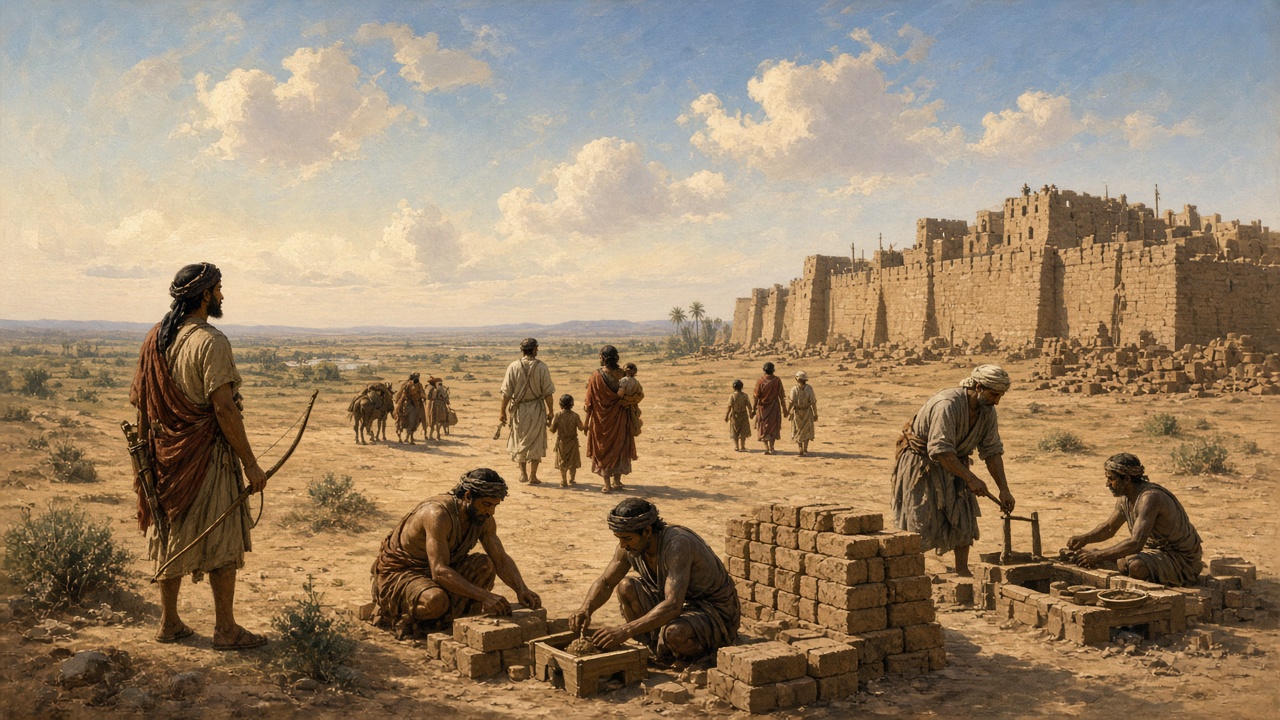
- Cush, a son of Ham, was the father of Nimrod, remembered as a mighty hunter before the Lord, whose kingdom began at Babylon, Erech, Accad, and Calneh in the land of Shinar, probably Babylonia or southern Mesopotamia. From that land he went into Assyria and built Nineveh, Rehoboth-Ir, Calah, and Resen; Calah’s site is probably the Nimrud ruins on the left bank of the Tigris.Sources: the Bible text itself · Shinar · Nineveh · Calah
- Mizraim, the dual form of a Hebrew word for a mound or fortress, may point to Upper and Lower Egypt and is the name the Hebrews usually gave that country; Arabic still calls it Muzr. Shem is called the older brother of Japheth and the forefather of all the sons of Eber, regarded as the founder of the Hebrew people, while an Arab tradition remembers Eber’s son Joktan, Kahtan in Arabic, as the ancestor of tribes of central and southern Arabia.Sources: the Bible text itself · Mizraim · Eber (Heber) · Joktan
Notes written with AI assistance from open sources (Theographic Bible Metadata, CC BY-SA 4.0; Easton’s Bible Dictionary, public domain) and reviewed before publishing.
Places in this chapter
- Erech · Today: Uruk · 31.322, 45.636 · verse 10
- Shinar · Today: Babylonia · 32.543, 44.422 · verse 10
- Assyria · 36.359, 43.153 · verse 11
- Calah · Today: Nimrud · 36.098, 43.329 · verses 11, 12
- Nineveh · 36.359, 43.153 · verses 11, 12
- Canaan · 32.767, 35.333 · verse 19
- Gaza · Today: Tell Harube · 31.504, 34.464 · verse 19
- Sidon · Today: Sandikli archaeological site in Sidon · 33.561, 35.372 · verse 19
Only places identified with high confidence are shown (90% or more according to the scholarly sources compiled by OpenBible). Period map: DARE (Digital Atlas of the Roman Empire), CC BY 4.0; modern map: © OpenStreetMap contributors; places: OpenBible.info (CC BY 4.0).
Credits and license for this translation
Nǫ̀htsı̨̨ Nı̨̨htł'è
Dogrib: Dogrib Genesis & New Testament New Testament & Portions of Old Testament
copyright © 2009 Canadian Bible Society
Language: Dogrib
Translation by: Canadian Bible Society
Tłı̨chǫ Genesis and New Testament
About Tłı̨chǫ
Tłı̨chǫ (Dogrib) is a Na-Dene (Athabaskan) language. It is spoken by the First Nations Tłı̨chǫ people in the Northwest Territories in Canada. It has the largest number of speakers of any of the Aboriginal language communities in the NWT, and is one of the official languages of the Northwest Territories.
About This Translation
This translation includes the book of Genesis and the New Testament in Tłı̨chǫ. The first edition of the Tłı̨chǫ New Testament was published in 2003. It was a historic event, as it was the first time in more than a hundred years that a complete New Testament was published for one of the Dene First Nations in the Territories. The first edition was well received and quickly sold out. In the meantime the book of Genesis had been completed. Consequently, the 2008 reprint of the Tłı̨chǫ New Testament included Genesis.
Though this translation of the New Testament and Genesis took a total of ten years, the people who worked on it built on years of labor invested by the Tłı̨chǫ people, elders, priests and missionaries, translators, educators, and linguists. The material contained in this book was checked and approved by consultants from Wycliffe Bible Translators and the Canadian Bible Society.
If you are interested in obtaining a printed copy of this Bible, please contact the Canadian Bible Society at http://www.biblescanada.com .
Copyright Information
Dogrib Genesis and New Testament © 2003, 2008 Canadian Bible Society
The text of the Bible in Tłı̨chǫ that appears in this electronic format or website is for personal use only.
Up to five hundred (500) verses of the Bible text in any form (written, visual, electronic or audio) may be quoted without permission. The quoted verses may not be more than 50% of a complete book of the Bible, or more than 25% of the total text of the work in which they are quoted. Prior written permission must be obtained for any other use of the text. Copyright acknowledgement must in all cases appear on the title or copyright page.
For more information on copyright conditions or to apply, visit http://www.biblesociety.ca/copyright .
This translation is made available to you under the terms of the
Creative Commons Attribution-Noncommercial-No Derivatives license 4.0.
You may share and redistribute this Bible translation or extracts from it in any format, provided that:
You include the above copyright and source information.
You do not sell this work for a profit.
You do not change any of the words or punctuation of the Scriptures.
Pictures included with Scriptures and other documents on this site are licensed just for use with those Scriptures and documents.
For other uses, please contact the respective copyright owners.
2014-04-22
Source: http://ebible.org/dgrDOGNT/ · eBible.org