Galatians 6
Nǫ̀htsı̨̨ Nı̨̨htł'è · Tap a verse to see its cross-references.
Dànì eghàlats'eeda k'ę̀ę̀ goghàhòt'à ha
1Sèot'ı̨ı̨, naxı̨ Yedàyeh Nezı̨ı̨ k'ę̀ę̀ aahdaa sìı dǫ hołı̨ı̨ hòèhtsı̨ wek'èahsǫ nı̨dè, eyı dǫ wets'ǫ̀ naxıdzeè nezı̨ı̨ t'à ehkw'ı edaà aweahłe. Hanìkò edexoahdı, naxı̨ sı hołı̨ı̨ nàowoò t'à naxeèdzà ha sǫnı. 2Naxıgha hoìla nı̨dè ełets'àahdı. Haaht'ı̨ nı̨dè Zezì-Krı wenàowoò k'ę̀ę̀ deghàà aahda hǫt'e. 3Dǫ t'asìı elı̨-le kò t'asìı aht'e edeewǫ nı̨dè edeghǫyaeɂà hǫt'e. 4Hazǫǫ̀ naxıtaàt'eè dànì k'ehoahɂaa sìı ededaànıahdè ha hǫt'e. Dǫ hat'ı̨ı̨ sìı edeghǫ nezı̨į̀ anıwǫ ha, eyıts'ǫ dǫ eyıì-le nahk'e aht'e edeewǫ ha nıìle. 5Hazǫǫ̀ gotaàt'eè dànì k'ehots'eɂaa sìı gots'ǫ̀ hoèlı̨ hǫt'e.
6Dǫ Nǫ̀htsı̨ yatıì hoghàweètǫǫ sìı t'asìı hazǫǫ̀ nezı̨ı̨ wets'ǫ t'à dǫ hoghàyeehtǫǫ sìı ts'àdı ha hǫt'e.
7Edeghǫyaahɂà sǫ̀ǫ̀. Dǫ wı̨ı̨zìı Nǫ̀htsı̨ ghǫyaeɂà ha dìì hǫt'e. Dǫ dànì k'ehoɂa k'ę̀ę̀ weghàhòt'à ha hǫt'e. 8Dǫ wınìłı̨ı̨ k'ę̀ę̀ eghàlaeda nı̨dè wınìłı̨ı̨ ts'ıhɂǫ̀ wedıhołè ha. Ekò dǫ Yedàyeh Nezı̨ı̨ dànıwǫ k'ę̀ę̀ eghàlaeda nı̨dè Yedàyeh Nezı̨ı̨ ts'ıhɂǫ̀ welǫ whìle ts'ǫ̀ eda ha hǫt'e. 9T'asìı nezı̨ı̨ ghàlats'eeda ghǫ nèts'ııtsǫǫ̀ ats'ııde-le. Weghǫ enats'et'è-le nı̨dè nezı̨į̀ eghàlats'ı̨ı̨dàa k'èxa ı̨daà t'asìı nezı̨ı̨ goghǫet'a ha hǫt'e. 10Eyıt'à gogha hòɂǫ taàt'eè dǫ hazǫǫ̀ gıts'ǫ̀ nezı̨į̀ eghàlats'ııdà, eyıts'ǫ goxè Nǫ̀htsı̨ wecheekeè gı̨ı̨lı̨ı̨ sìı denahk'e gıts'ǫ̀ nezı̨į̀ eghàlats'ııdà.
Eładı̨ı̨ dǫǫ̀ ts'ìhłèe sìı deɂǫ̀ǫ̀ wet'àaɂà hǫt'e
11Dıı yatı nechàa dek'eèhtł'è ghàahda nì? Xàè sılà t'à naxıts'ǫ̀ eehtł'è hǫt'e.
12Dǫ daà nezı̨į̀ gògaat'ı̨ ha gı̨ı̨wǫǫ sìı Moses wenàowoò k'ę̀ę̀ naxıkwǫ̀ nàt'à anaxegele ha hogeèhdzà hǫt'e. Zezì-Krı dechı̨et'aa k'e gogha ełaı̨wo ghǫ gogede k'èxa dǫ dagòı̨hɂa ha gı̨ı̨wǫ-le t'à aget'ı̨. 13Ededı̨ gıkwǫ̀ nàat'àa dǫǫ̀ agı̨ı̨t'e kò Moses wenàowoò k'èagı̨ı̨t'e nıìle, hanìkò ı̨łaà naxıkwǫ̀ nàt'à ahłe naxègedı, hanì-ı̨dè naxıkwǫ̀ ghǫ xàdahogedì ha gı̨ı̨wǫ. 14Sı̨ segha sìı t'asìı wı̨ı̨zìı ghǫ xàdahohdì ha dehwhǫ-le. Gots'ǫ̀ K'àowo Zezì-Krı dechı̨et'aa k'e gogha ełaı̨wo eyı zǫ ghǫ xàdahohdì ha dehwhǫ. Ededı̨ wet'ǫ̀ǫ̀ dıı nèk'e t'asìı hazǫǫ̀ segha ełaı̨dèe lajà, eyıts'ǫ sı̨ sı dıı nèk'e t'asìı hazǫǫ̀ ts'ǫ̀ ełaı̨hwho lahjà hǫt'e. 15Gokwǫ̀ nàt'àa, gokwǫ̀ nàt'à-le, eyı t'asìı gha ıtà nıìle, hanìkò eładı̨ı̨ dǫǫ̀ ts'ìhłèe sìı eyı deɂǫ̀ǫ̀ wet'àaɂà hǫt'e. 16Dǫ hazǫǫ̀ eyı nàowo k'ę̀ę̀ geedaa sìı gıxè sìghà welè, eyıts'ǫ Nǫ̀htsı̨ etegoòɂı̨ welè. Xàè Nǫ̀htsı̨ wets'ǫ Israel got'ı̨į̀ agı̨ı̨t'e.
17Eyı weghǫ nǫǫde dıı haehsı̨ ha dehwhǫ, dǫ wı̨ı̨zìı segha hoìla hogıhtsį̀-le. Zezì wegha eghàlaehda k'èxa sezhį̀į̀ k'e seghoò whela hǫt'e.
18Sèot'ı̨ı̨, gots'ǫ̀ K'àowo Zezì-Krı wesǫnıwǫ naxıts'ǫ ınì xè welè. Amen.
Did you know?
Burdens, the Harvest, and the Cross
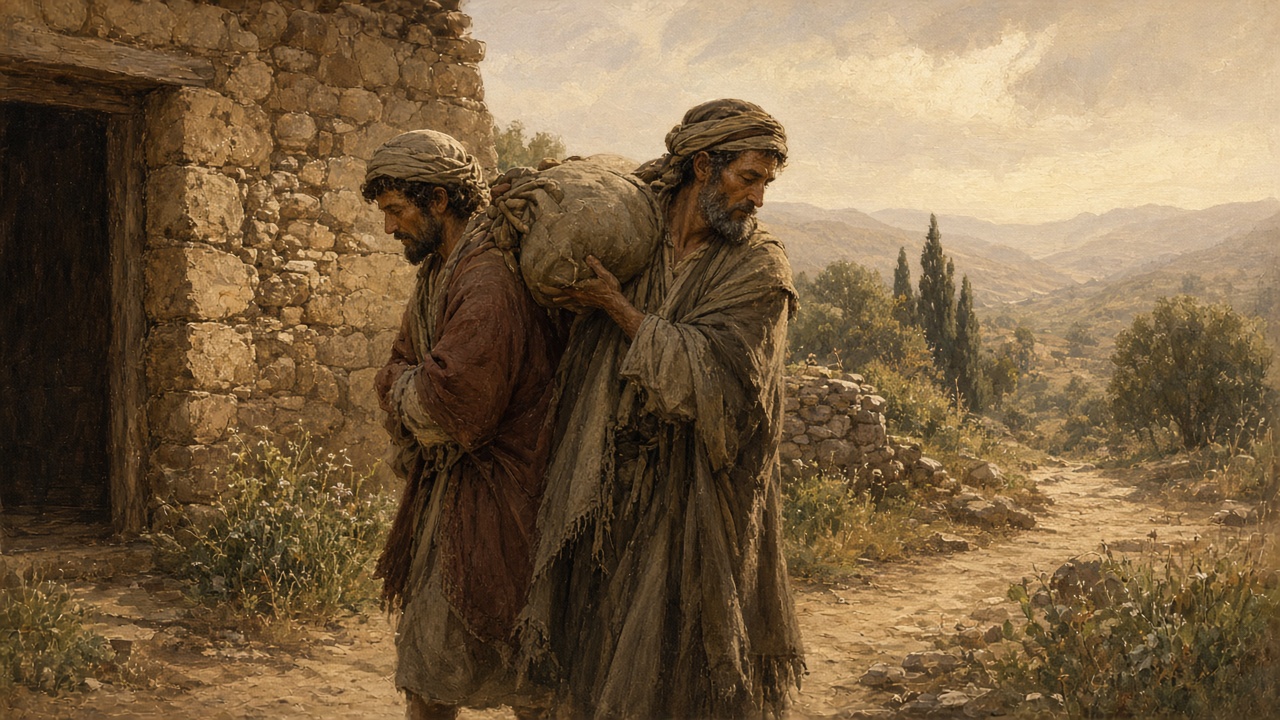
- The chapter sets two duties side by side. Those who are spiritual should restore with gentleness someone caught in a trespass, and carry one another's burdens, which the letter calls fulfilling the law of Christ. Each person, however, should test his own work and carry his own load, rather than think he is something when he is nothing and boast by comparing himself with someone else.Sources: the Bible text itself
- The writer uses the image of sowing and reaping: God is not to be mocked, and a person reaps what he sows. The one who sows to please the flesh reaps destruction from the flesh; the one who sows to please the Spirit reaps eternal life from the Spirit. Readers are urged not to grow weary in doing good, for in due time they will reap a harvest if they do not give up, and to do good to all, especially to the family of faith.Sources: the Bible text itself
- The writer calls attention to the large letters he is using as he writes with his own hand. He says that some try to compel circumcision in order to make a good outward impression, to avoid persecution for the cross of Christ, and to boast in the flesh of others, though the circumcised do not themselves keep the law. He asks never to boast except in the cross of our Lord Jesus Christ, says that neither circumcision nor uncircumcision means anything and that what counts is a new creation, and states that he bears on his body the marks of Jesus.Sources: the Bible text itself
Notes written with AI assistance from open sources (Theographic Bible Metadata, CC BY-SA 4.0; Easton’s Bible Dictionary, public domain) and reviewed before publishing.
Credits and license for this translation
Nǫ̀htsı̨̨ Nı̨̨htł'è
Dogrib: Dogrib Genesis & New Testament New Testament & Portions of Old Testament
copyright © 2009 Canadian Bible Society
Language: Dogrib
Translation by: Canadian Bible Society
Tłı̨chǫ Genesis and New Testament
About Tłı̨chǫ
Tłı̨chǫ (Dogrib) is a Na-Dene (Athabaskan) language. It is spoken by the First Nations Tłı̨chǫ people in the Northwest Territories in Canada. It has the largest number of speakers of any of the Aboriginal language communities in the NWT, and is one of the official languages of the Northwest Territories.
About This Translation
This translation includes the book of Genesis and the New Testament in Tłı̨chǫ. The first edition of the Tłı̨chǫ New Testament was published in 2003. It was a historic event, as it was the first time in more than a hundred years that a complete New Testament was published for one of the Dene First Nations in the Territories. The first edition was well received and quickly sold out. In the meantime the book of Genesis had been completed. Consequently, the 2008 reprint of the Tłı̨chǫ New Testament included Genesis.
Though this translation of the New Testament and Genesis took a total of ten years, the people who worked on it built on years of labor invested by the Tłı̨chǫ people, elders, priests and missionaries, translators, educators, and linguists. The material contained in this book was checked and approved by consultants from Wycliffe Bible Translators and the Canadian Bible Society.
If you are interested in obtaining a printed copy of this Bible, please contact the Canadian Bible Society at http://www.biblescanada.com .
Copyright Information
Dogrib Genesis and New Testament © 2003, 2008 Canadian Bible Society
The text of the Bible in Tłı̨chǫ that appears in this electronic format or website is for personal use only.
Up to five hundred (500) verses of the Bible text in any form (written, visual, electronic or audio) may be quoted without permission. The quoted verses may not be more than 50% of a complete book of the Bible, or more than 25% of the total text of the work in which they are quoted. Prior written permission must be obtained for any other use of the text. Copyright acknowledgement must in all cases appear on the title or copyright page.
For more information on copyright conditions or to apply, visit http://www.biblesociety.ca/copyright .
This translation is made available to you under the terms of the
Creative Commons Attribution-Noncommercial-No Derivatives license 4.0.
You may share and redistribute this Bible translation or extracts from it in any format, provided that:
You include the above copyright and source information.
You do not sell this work for a profit.
You do not change any of the words or punctuation of the Scriptures.
Pictures included with Scriptures and other documents on this site are licensed just for use with those Scriptures and documents.
For other uses, please contact the respective copyright owners.
2014-04-22
Source: http://ebible.org/dgrDOGNT/ · eBible.org